
Forty Whacks: 15 Fascinating Facts About Lizzie Borden
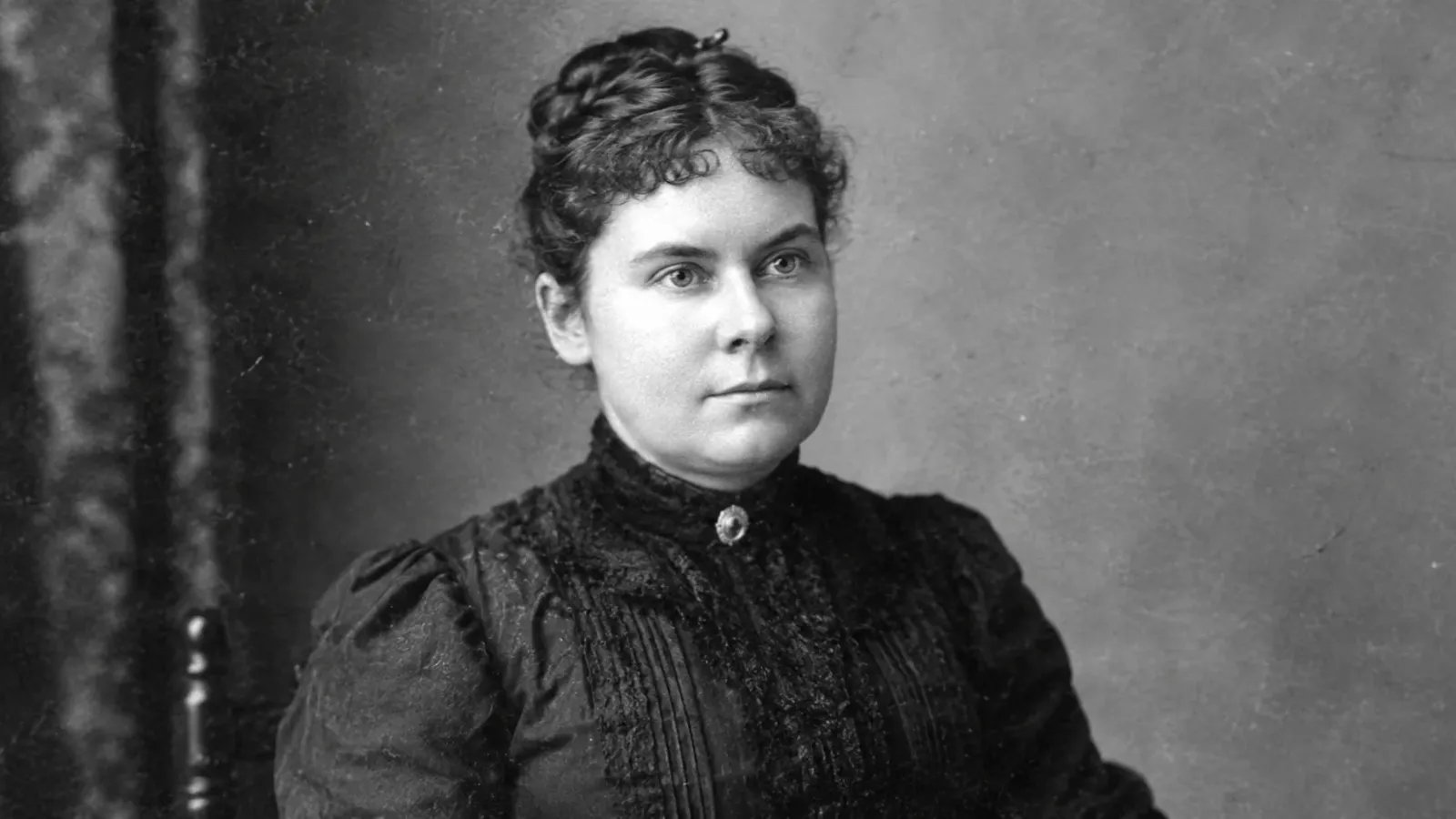
On a sweltering August morning in 1892, Andrew and Abby Borden were hacked to death inside their home in Fall River, Massachusetts. Andrew's daughter Lizzie was charged, tried and acquitted, yet a schoolyard rhyme convicted her in the court of public opinion. Here is what really happened in America's most famous unsolved axe murder.
1. The murders happened on a scorching summer morning in 1892.
On August 4, 1892, Andrew Jackson Borden, 69, and his wife Abby, 64, were killed with a hatchet inside their house on Second Street in Fall River, Massachusetts. Only two other people were known to be at home that morning: Andrew's 32-year-old daughter Lizzie and the family's maid, Bridget Sullivan.
2. The famous rhyme gets almost everything wrong.
Soon after the case made headlines, children began chanting a rhyme claiming that Lizzie gave her mother forty whacks and her father forty-one. In reality, Abby was Lizzie's stepmother, not her mother. She was struck about 18 or 19 times, and Andrew about 10 or 11 times. And, of course, Lizzie was found not guilty.
3. Abby was killed about an hour and a half before Andrew.
Abby was attacked first, in the upstairs guest room where she had been making the bed, at around 9:30 a.m. Andrew came home from his morning business rounds at about 10:45 and was killed shortly before 11:00 while napping on the sitting room sofa. Whoever killed Abby either stayed hidden in the house for well over an hour or was someone who lived there.
4. Andrew Borden was rich, but he lived like a man who wasn't.
Andrew was a successful businessman and property owner, worth an estimated $300,000, roughly $10 million in today's money. Yet he kept his family in a modest house without electricity, instead of a mansion on The Hill, the fashionable part of town. His frugality was a constant source of tension with Lizzie and her older sister Emma.
5. The family had been violently ill just days before the murders.
Earlier that week, Andrew, Abby and Bridget suffered severe vomiting, and Abby told a doctor she feared they had been poisoned. A local pharmacist later said that on August 3, Lizzie tried to buy prussic acid, a deadly poison, claiming she needed it to clean a sealskin cape. He refused to sell it, and the judge did not allow his testimony at trial.
6. The family called the maid by a different name.
Bridget Sullivan, a 26-year-old Irish immigrant, was often called "Maggie" by Lizzie and Emma, reportedly after a previous maid. On the morning of the murders, she was washing windows and then went to rest in her attic room. Shortly after 11:00, she heard Lizzie shouting that someone had come in and killed her father.
7. Lizzie said she had been in the barn, eating pears.
Lizzie told police she had spent the crucial minutes in the barn loft, looking for pieces of iron or lead to use as fishing sinkers, and had eaten some pears there. The loft was stiflingly hot that day, and a police officer later testified that he found no footprints in the thick dust on its floor.
8. She burned a dress three days after the murders.
On August 7, Lizzie's friend Alice Russell saw her burning a dress in the kitchen stove. Lizzie explained that it was stained with paint. Russell later told a grand jury about it, and the dress became one of the most damaging pieces of evidence against Lizzie.
9. The likely murder weapon was missing its handle.
In the basement, police found a hatchet head with a freshly broken handle, covered in what appeared to be ash or dust, as if it had been deliberately dirtied. The missing part of the handle was never found. No blood-stained clothing or other weapon was ever discovered.
10. Her own words were kept out of the trial.
At the inquest held days after the murders, Lizzie gave confused and contradictory testimony about where she had been. At the trial, however, the judges ruled that this testimony could not be used, because she had not been properly warned of her rights while effectively already a suspect.
11. The victims' skulls were shown in court.
During the autopsies, the heads of Andrew and Abby were removed and the skulls preserved as evidence. They were shown in the courtroom so experts could explain how the hatchet blows had been struck. Lizzie reportedly fainted at one point during the trial.
12. The jury took only about 90 minutes to acquit her.
Lizzie's trial in New Bedford in June 1893 became a national sensation. Her lead defense lawyer was George D. Robinson, a former governor of Massachusetts who had appointed one of the three judges hearing the case. On June 20, 1893, after about an hour and a half of deliberation, the jury found her not guilty.
13. With her inheritance, she bought the mansion her father never did.
Shortly after the trial, Lizzie and Emma used their inheritance to buy a large house in the wealthy Hill district, which they named Maplecroft. Lizzie began calling herself Lizbeth. Despite her acquittal, much of Fall River society shunned her for the rest of her life, and Emma moved out in 1905.
14. The sisters died nine days apart.
Lizzie died of pneumonia on June 1, 1927, at the age of 66. Emma, who had not seen her sister in years, died on June 10. They were buried next to their father and stepmother in Fall River's Oak Grove Cemetery. Lizzie left part of her fortune to the Animal Rescue League of Fall River.
15. You can spend the night where the murders happened.
The Borden house on Second Street now operates as the Lizzie Borden Bed & Breakfast Museum. Guests can book the very room where Abby was killed, and the house offers tours and ghost hunts, making it one of the most famous haunted destinations in New England.
Sources & References
This AI-assisted post was rigorously curated and fact-checked for accuracy by:
 Martin Roháček
How fun was this article? 🤔
Tap a star to rate it
🧠 Quiz: How closely were you paying attention?
10 questions — all answers are in the article above!
Enjoyed these facts? There's more! 💌
Fresh fun facts in your inbox. No spam, ever.