15 Fascinating Facts About Isabella I of Castile
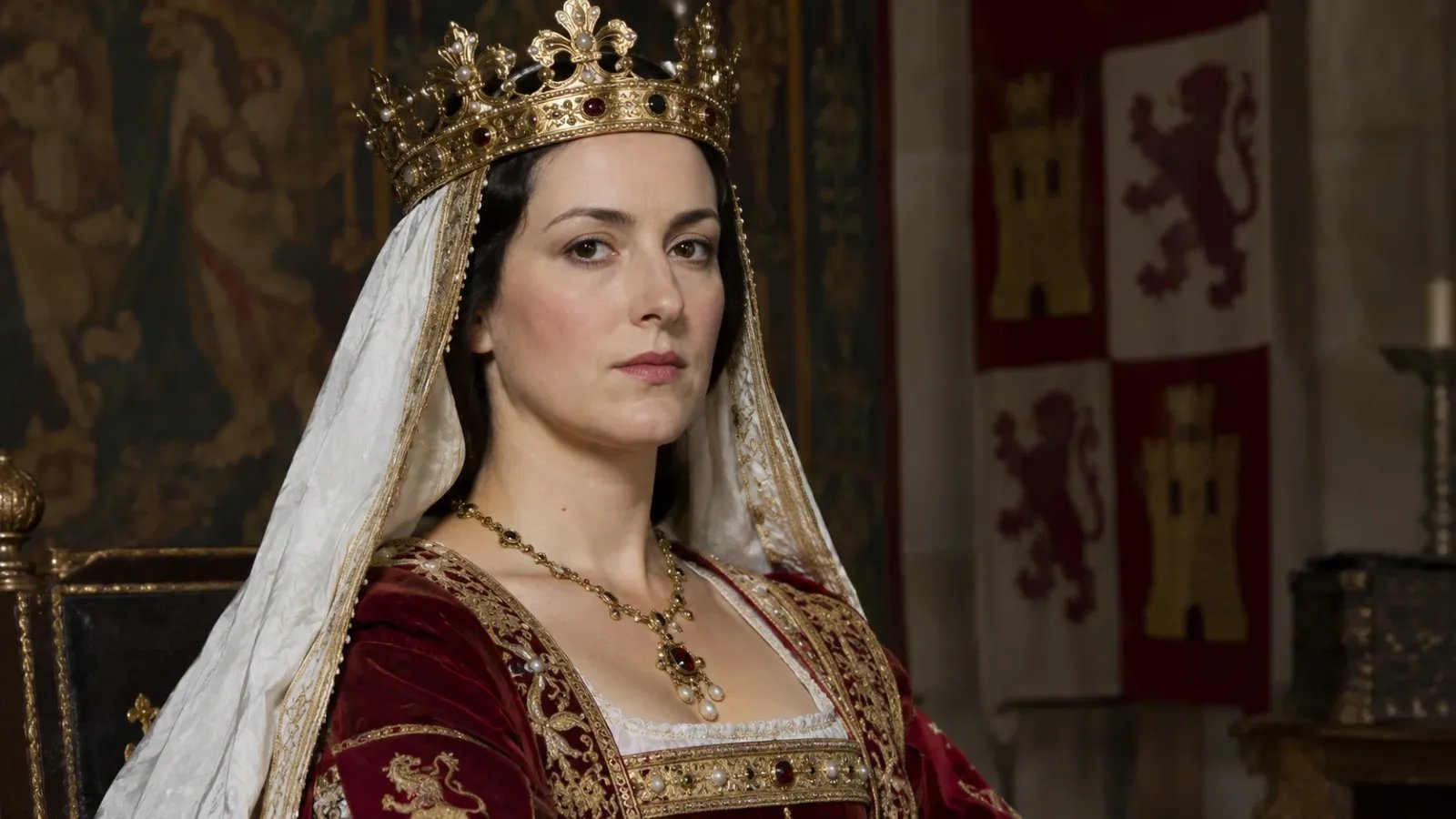
Isabella I of Castile was a determined state-builder who seized her throne in a civil war, reformed her kingdom's justice and finances, and helped complete the Reconquista. Beyond the myths, discover the complex reality of the queen who helped create modern Spain.
1. Isabella organized some of the earliest field hospitals in Europe.
During the Granada War, Isabella ordered large movable tents with surgeons, supplies, and beds to be set up behind the lines to treat wounded soldiers. They were known as the "queen's hospitals," and they are often described as the first recorded attempt to organize camp hospitals. They helped wounded soldiers receive care close to the front and were a notable innovation in military medicine.
2. She refused to merge Castile with her husband's Aragon.
Isabella married Ferdinand of Aragon in 1469, but the marriage did not create a single kingdom. Under their prenuptial agreement and the later agreement on joint rule, both were monarchs of their own realms, and Isabella kept control of Castile. Their motto, "Tanto Monta" ("they amount to the same"), refers to this equality. Castile and Aragon kept their own laws, institutions, and treasuries for generations after her death.
3. She raised money for her wars by pledging her jewels.
Her reign was marked by expensive wars. Tradition holds that to raise cash quickly, she pledged some of her jewels, including during the Granada War. The popular claim that she sold her jewels to pay for Columbus's first voyage is a myth: the expedition was financed largely with funds from the crown's Aragonese treasury and loans, and it was relatively cheap.
4. She was a constant presence in the military camps during the Granada War.
The war against the Emirate of Granada began in 1482 and lasted ten years. While Ferdinand commanded the troops, Isabella took charge of recruitment, supplies, and finances, and she often visited the army in person. The siege camp outside Granada was later rebuilt in stone as the town of Santa Fe. Granada surrendered in January 1492, ending almost eight hundred years of Muslim rule in the Iberian Peninsula.
5. Some historians believe the modern chess queen was inspired by her.
In medieval chess, the queen was a weak piece that could move only one square diagonally. In the late fifteenth century, new rules appeared in Spain that made her the most powerful piece on the board. Some chess historians have suggested that this was inspired by the power of Isabella, although the theory cannot be proven. The new rules soon spread across Europe.
6. She created a national police force to restore order.
When Isabella became queen, Castile was plagued by violence and banditry. At the Cortes of Madrigal in 1476 she reformed the Santa Hermandad ("Holy Brotherhood"), a force of local police that patrolled roads and punished crime, paid for by a tax on households. It reported to the crown rather than to local nobles, strengthening royal authority. It is often seen as an early example of organized police in Europe.
 Rulers, Kings and Emperors
Discover the captivating truths behind history's most iconic rulers, kings, and emperors. From eccentric geniuses and tactical masterminds to deeply flawed sovereigns, explore the hidden lives of those who shaped the modern world.
See All Facts
Rulers, Kings and Emperors
Discover the captivating truths behind history's most iconic rulers, kings, and emperors. From eccentric geniuses and tactical masterminds to deeply flawed sovereigns, explore the hidden lives of those who shaped the modern world.
See All Facts
7. She governed from the road.
Rather than ruling from a fixed capital, Isabella and Ferdinand traveled constantly with their court. This allowed her to hear complaints and dispense justice in person, and to remind distant towns and nobles of royal power. Itinerant courts were common in medieval Europe, but Isabella used hers energetically, and chroniclers praised her for the stern justice she dispensed.
8. She encouraged the printing press and the study of the Castilian language.
Printing came to Spain in the 1470s, and Isabella's government supported it. In 1480 the Cortes of Toledo exempted imported books from taxes. In 1492, the scholar Antonio de Nebrija dedicated to Isabella his Gramática de la lengua castellana, the first printed grammar of a modern European language. According to tradition, when the queen asked what use it was, the bishop of Ávila said that language is the companion of empire.
9. She delayed the start of the Spanish Inquisition.
In 1478, Pope Sixtus IV granted Isabella and Ferdinand the right to appoint inquisitors in Castile. The first inquisitors were appointed only in 1480. In the meantime, the crown had tried to teach converts from Judaism about Christian doctrine. When the Inquisition began, it targeted conversos suspected of secretly practicing Judaism, and it became one of the darkest chapters of her reign. In 1492 she and Ferdinand also ordered the Jews of Spain to convert or leave.
10. Her experts advised her against Columbus, and they were right about the numbers.
A popular myth says that Columbus had to convince the court that the Earth was round. In reality, educated Europeans knew this. Commissions of experts, including one at Talavera, were skeptical because Columbus had underestimated the size of the Earth, and the voyage to Asia would be much longer than he claimed. Isabella finally agreed in 1492, after the fall of Granada, and signed the agreement of Santa Fe. Neither Columbus nor his critics knew that a new continent lay in between.
11. She learned Latin as an adult.
Isabella, who was not expected to rule when young, had little formal education in Latin. In 1486 she brought the young scholar Beatriz Galindo, known as "La Latina," to court to teach her Latin. Isabella's court became a place of learning for her children, and she became a patron of female scholars such as Luisa de Medrano, who taught at Salamanca.
12. She brought the military orders under royal control.
The military orders of Santiago, Calatrava, and Alcántara owned large estates and could field private armies. As the positions of grand master fell vacant, the monarchs arranged to hold them: Ferdinand became master of Santiago in 1476, Calatrava in 1487, and Alcántara in 1494. This gave the crown access to the orders' revenues and removed a potential source of noble power.
13. She reformed the currency.
Under her predecessor Henry IV, the number of mints had grown from five to about 150, and much of the coinage was almost worthless. In the first year of her reign Isabella established a royal monopoly over the mints and fixed a legal standard for the coinage. In 1497 she and Ferdinand introduced the gold excelente de Granada in the Pragmatic of Medina del Campo, helping to stabilize Castile's currency.
14. She opposed the enslavement of the Native peoples brought by Columbus, but her wishes were largely ignored.
Isabella was not in favor of enslaving the Native peoples of the Americas, and she regarded them as her subjects. When Columbus's ships brought enslaved Taíno people to Spain, she reportedly objected and ordered many of them released and returned. In a codicil to her will in 1504 she asked her heirs to ensure just treatment of the Indigenous inhabitants. In practice, the colonial system developed brutal forced-labor regimes that violated her wishes.
15. The Pope gave her and Ferdinand the title "Catholic Monarchs."
In 1496, the Spanish-born Pope Alexander VI granted Isabella and Ferdinand the title of "Catholic Monarchs" in recognition of their service to the Church. They are still known by this title. Isabella died in 1504 and was buried in Granada, the city whose conquest she regarded as her great achievement. She and Ferdinand now rest side by side in the Royal Chapel of Granada. The Catholic Church opened a cause for her canonization in 1958 and gave her the title "Servant of God."
Sources & References
This AI-assisted post was rigorously curated and fact-checked for accuracy by:
 Martin Roháček
How fun was this article? 🤔
Tap a star to rate it
🧠 Quiz: How closely were you paying attention?
10 questions — all answers are in the article above!
Enjoyed these facts? There's more! 💌
Fresh fun facts in your inbox. No spam, ever.