
The Relentless Visionary: 15 Fascinating Facts About Alexander Hamilton
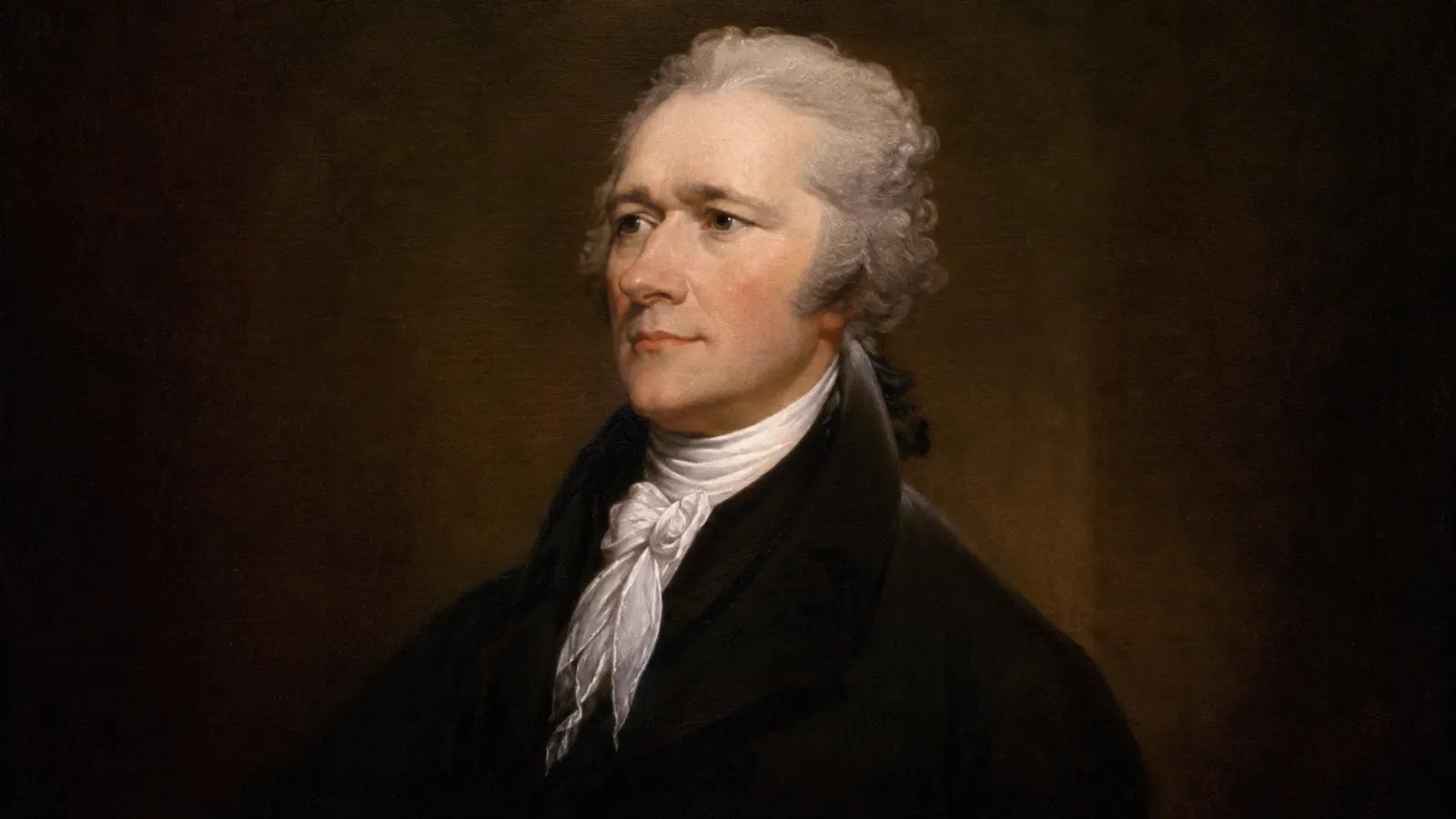
Alexander Hamilton is often reduced to a pop-culture icon, but this ignores his combative reality. He wasn't just a financier; he was a ruthless political operator who engineered the American capitalist machine. Forget the flawless hero myth; discover 15 obscure, shocking facts about his truly astonishing life.
1. Alexander Hamilton likely lied about his age to escape poverty, making his exact year of birth a subject of historical debate.
He claimed to be born in 1757, but historical probate records from St. Croix strongly suggest he was born in 1755. After his mother died, altering his age may have been a brilliant survival tactic to make himself appear as a highly precocious teenager, thereby securing a mercantile apprenticeship and the charitable funding that eventually sent him to America.
2. He essentially founded the United States Coast Guard to combat rampant maritime smuggling.
In 1790, as the first Secretary of the Treasury, Hamilton realized the new nation was hemorrhaging tax revenue due to piracy and smuggling. He proposed a fleet of ten armed cutter ships to patrol the waters and rigorously enforce tariff laws, creating the Revenue Marine, which operated as the only armed US maritime force until the Navy was established and eventually evolved into the modern Coast Guard.
3. Hamilton established the New York Post as a partisan mouthpiece to attack Thomas Jefferson.
In 1801, frustrated by his waning political influence and the rise of Jefferson's Democratic-Republicans, Hamilton raised ten thousand dollars from a group of investors to launch the New-York Evening Post. He dictated blistering, highly partisan editorials to the paper's editor, using the publication to relentlessly criticize his political adversaries and shape public opinion.
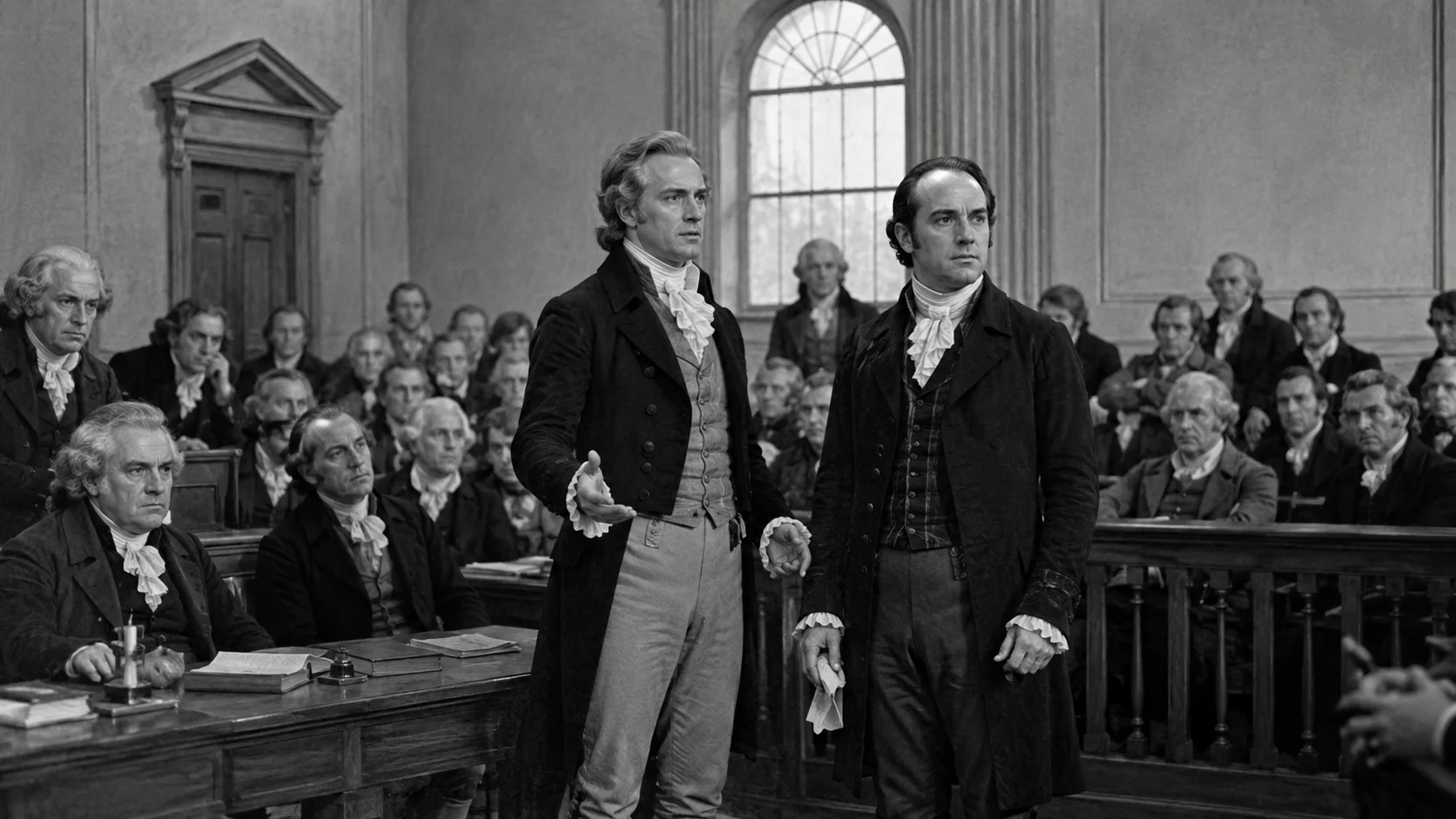
4. He served as the defense attorney in the first official murder trial in the history of the United States.
In 1800, Hamilton co-counseled with his future killer, Aaron Burr, to defend Levi Weeks, a carpenter accused of murdering his fiancée, Elma Sands, and throwing her down a well. The legal dream team introduced the concept of reasonable doubt so effectively that the jury acquitted Weeks in just five minutes, setting a major precedent in American criminal law.
5. He physically faced down a mutiny of armed Continental soldiers who surrounded Congress demanding back pay.
During the Pennsylvania Mutiny of 1783, hundreds of unpaid Revolutionary War veterans marched on the State House in Philadelphia where the national government was meeting. Hamilton, acting as a delegate, bravely confronted the angry mob, eventually helping to negotiate their dispersal and subsequently using the frightening event to argue for a stronger federal government capable of paying its debts.
6. Despite his reputation as a staunch abolitionist, Hamilton's record on slavery was deeply contradictory.
While he was a founding member of the New York Manumission Society, which advocated for the gradual abolition of slavery, Hamilton also negotiated the purchase and sale of enslaved people for his wealthy in-laws, the Schuyler family. He consistently prioritized elite property rights, financial stability, and national unity over the immediate eradication of the institution.
7. A severe bout of yellow fever nearly killed him and sparked a massive medical debate about bloodletting.
During the horrific 1793 Philadelphia yellow fever epidemic, Hamilton contracted the disease. He credited his miraculous recovery to cold baths and Peruvian bark administered by his childhood friend, Dr. Edward Stevens, publicly contradicting Dr. Benjamin Rush's popular yet lethal treatment of extreme bloodletting and turning a medical crisis into a partisan political battle.
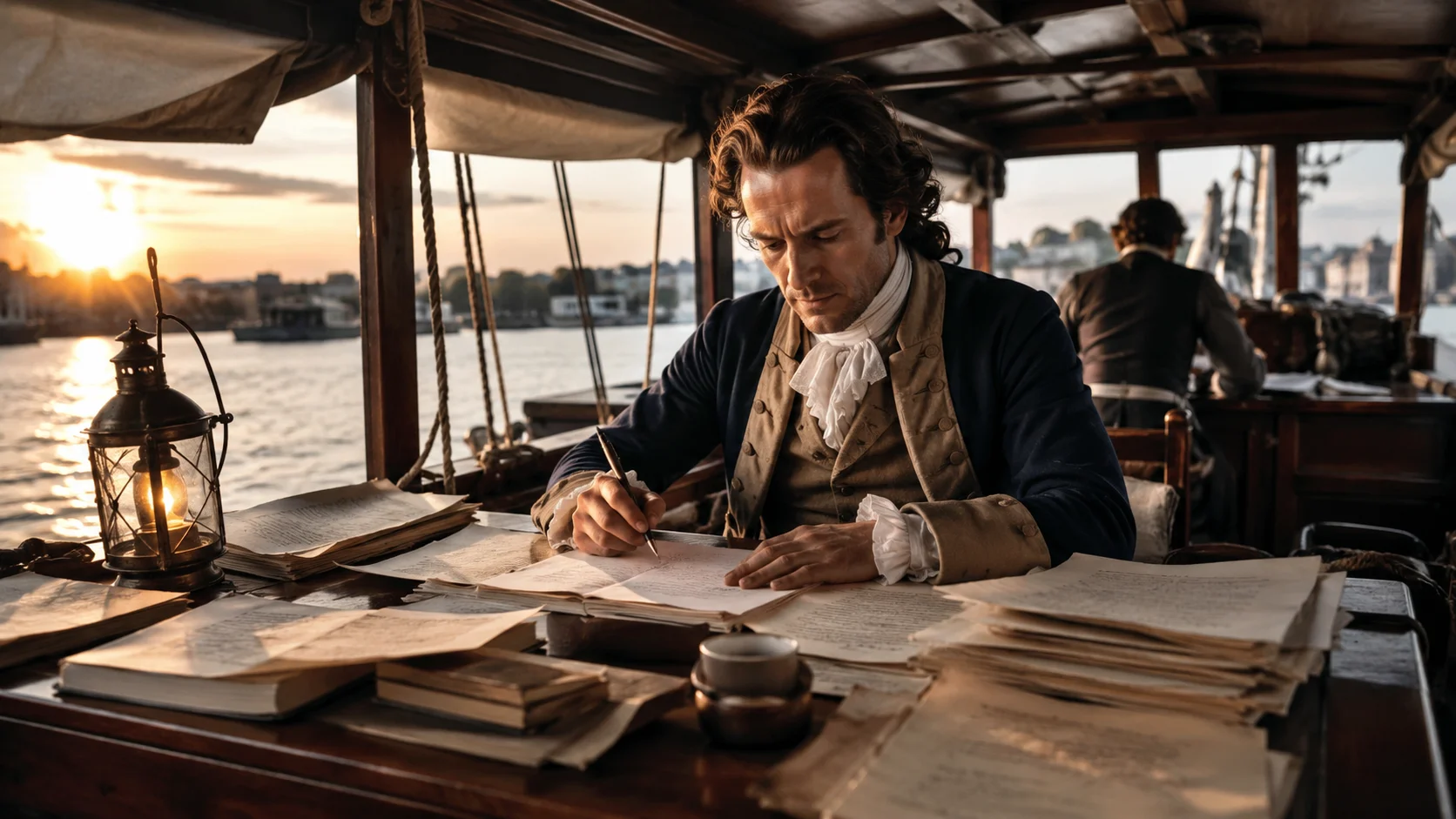
8. He wrote fifty-one of the eighty-five Federalist Papers in a span of just six months.
Working at a blistering, almost superhuman pace, Hamilton produced the vast majority of these foundational constitutional essays while traveling on river sloops and bouncing between active legal cases. His prodigious output provided the definitive legal interpretations of the United States Constitution that Supreme Court justices still rely upon and cite today.
9. Hamilton's confession to an extramarital affair in the Reynolds Pamphlet was a calculated mathematical defense against charges of embezzlement.
When political enemies accused him of illegal financial speculation using Treasury funds, Hamilton published a 95-page document detailing his affair with Maria Reynolds. He provided exhaustive receipts and blackmail letters to prove his mysterious payments were hush money for adultery, willingly destroying his marriage's public image to protect his political and financial integrity.
10. The fatal encounter with Aaron Burr was actually the eleventh challenge to a duel Hamilton had been involved in.
Honor culture was deeply ingrained in early American politics, and Hamilton was notoriously combative. Over his career, he was involved in ten previous affair of honor disputes, including near-duels with future presidents James Monroe and John Adams. Most were resolved peacefully through designated mediators known as seconds, making the deadly outcome with Burr an anomaly.
11. He planned and founded the first planned industrial city in the United States to reduce reliance on British manufacturing.
In 1791, Hamilton helped establish the Society for Establishing Useful Manufactures, which selected the Great Falls of the Passaic River in New Jersey as the site for Paterson. He envisioned the city as the technological hub of early America, harnessing massive water power for textile mills to ensure the new nation's total economic independence from Europe.
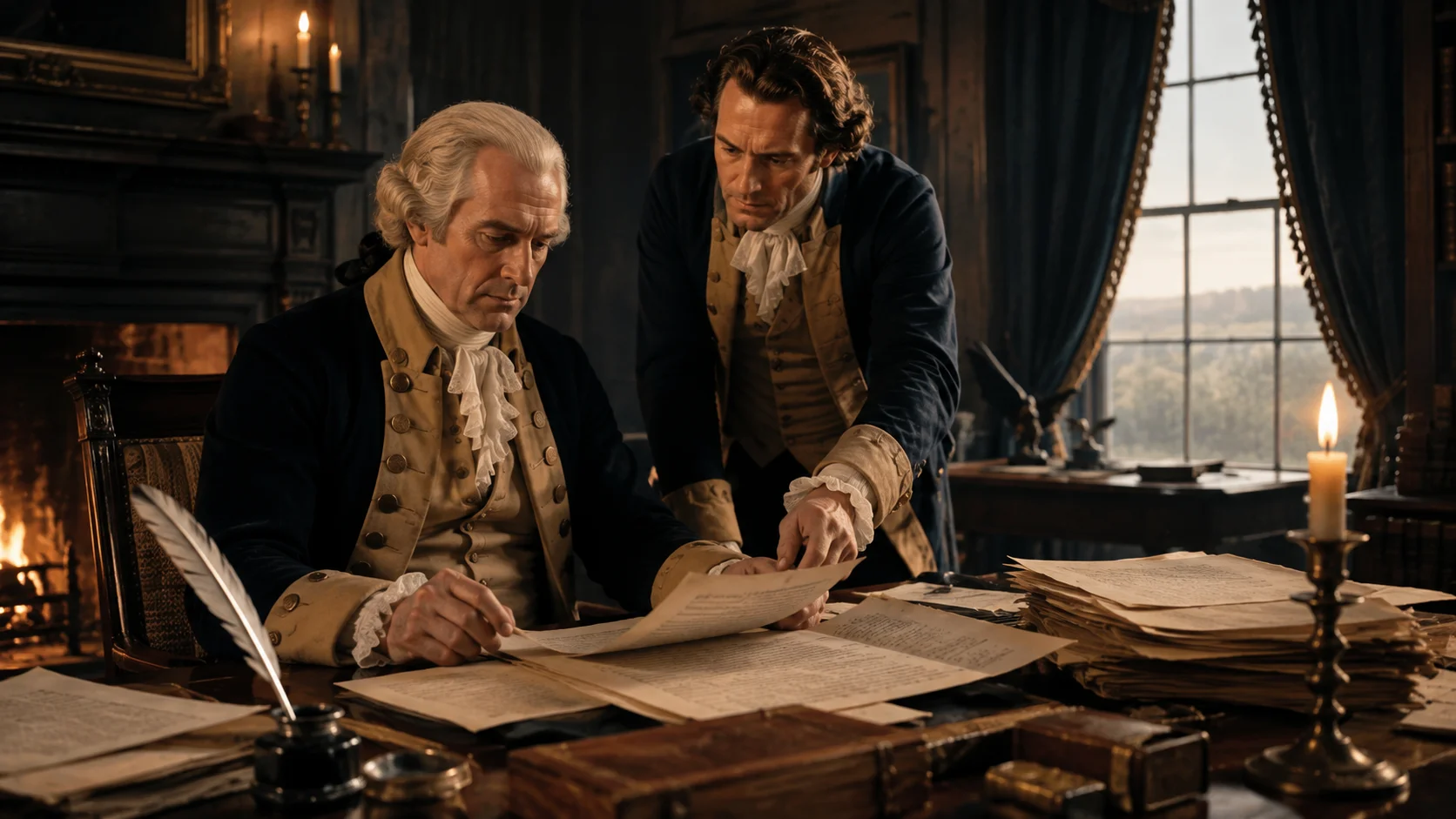
12. He secretly drafted George Washington's legendary Farewell Address, cementing the outgoing president's historical legacy.
Washington relied heavily on Hamilton's eloquent prose and political acumen as he prepared to leave office. Hamilton completely rewrote an earlier draft by James Madison, injecting his own philosophies about the dangers of avoiding foreign entanglements and the perils of partisan division, thereby framing the rhetorical foundation of American foreign policy for the next century.
13. Three years before his own death, Hamilton's eldest son was killed in a duel at the exact same dueling grounds in New Jersey.
In 1801, Philip Hamilton challenged George Eacker to a duel to defend his father's honor after Eacker gave a speech criticizing Alexander. Using the same set of matched pistols Alexander would later use against Burr, Philip was fatally shot at the Weehawken dueling grounds, a tragedy that profoundly traumatized Hamilton and likely influenced his decision to purposefully miss Burr.
14. Hamilton single-handedly established the United States Mint and tied the new nation's currency to a decimal system.
In his 1791 Report on the Establishment of a Mint, he rejected the complicated British system of pounds, shillings, and pence. Instead, drawing on ideas from Thomas Jefferson and Robert Morris, Hamilton successfully argued for a bimetallic standard and a currency strictly divided by tens, making American commerce far more mathematically efficient for ordinary citizens.
15. The American Revolution permanently interrupted his formal education, preventing him from ever officially graduating from college.
Hamilton was a brilliant and voracious student at King's College, which is now Columbia University, but when the Revolutionary War broke out, he dropped out to join a New York militia artillery company. Despite never formally earning his degree, his self-taught mastery of law, global economics, and military strategy allowed him to become one of the most educated of the Founding Fathers.
Sources & References
This AI-assisted post was rigorously curated and fact-checked for accuracy by:
 Martin Roháček
How fun was this article? 🤔
Tap a star to rate it
🧠 Quiz: How closely were you paying attention?
10 questions — all answers are in the article above!
Enjoyed these facts? There's more! 💌
Fresh fun facts in your inbox. No spam, ever.