The Defiant Founder: 15 Fascinating Facts About John Adams
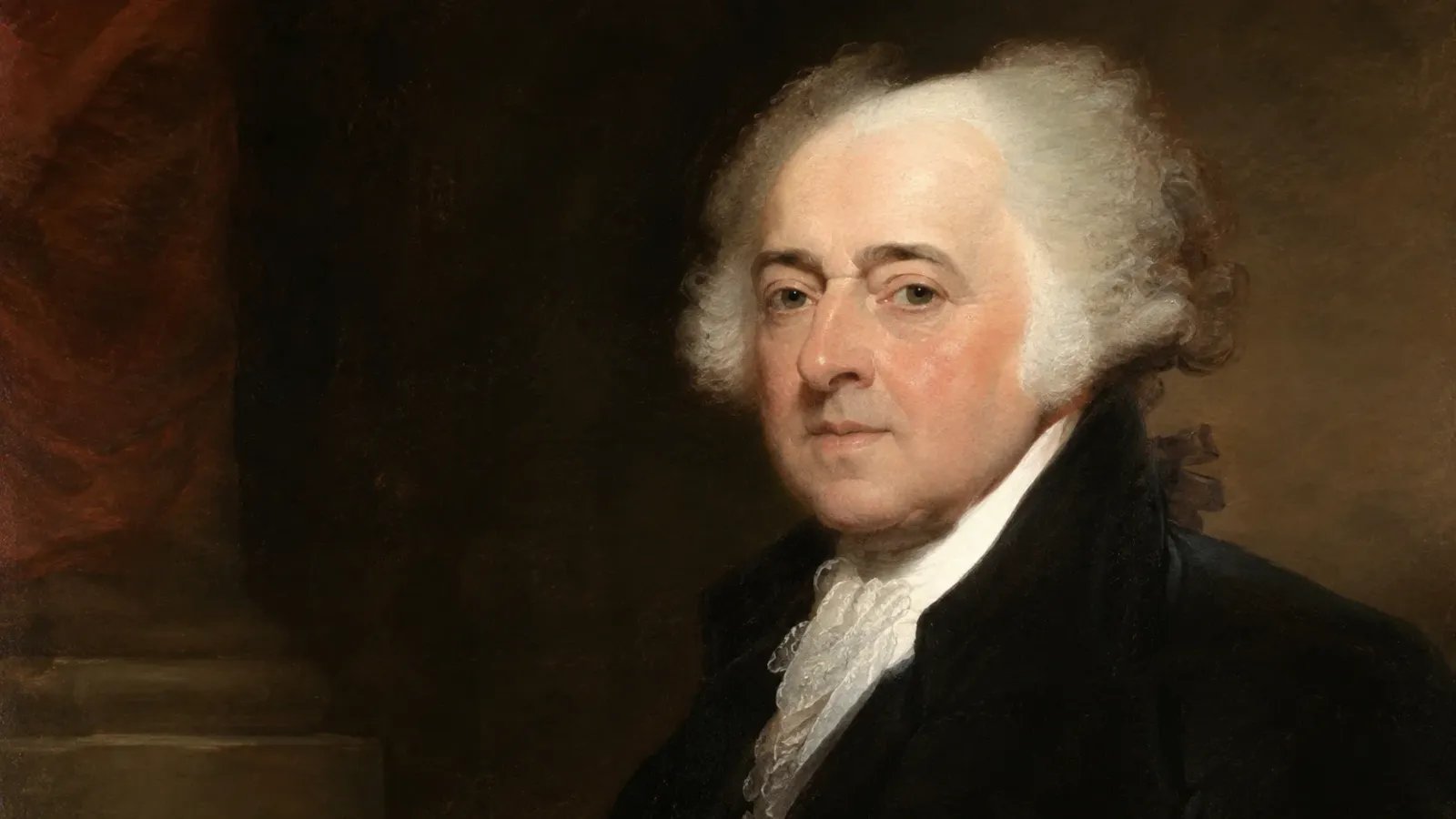
Often dismissed as a grumpy sidekick to Washington, John Adams was the true engine of the American Revolution. Far from a blind zealot, he famously defended British soldiers to uphold justice. From dangerous diplomatic missions to his brilliant political philosophy, Adams was a complex intellect. Prepare to discover the surprisingly rebellious history of America’s most underrated patriot.
1. John Adams defended the British soldiers involved in the Boston Massacre because he believed everyone deserved a fair trial.
Despite being a staunch patriot, Adams risked his career and physical safety by serving as defense counsel for the soldiers accused of murder in 1770. He famously argued that facts are stubborn things, successfully proving that the soldiers were largely acting in self-defense against a violent mob. This unpopular decision cost him some temporary public standing, but it ultimately cemented his reputation as a man of unwavering integrity. Adams later called this legal defense one of the most gallant, generous, and disinterested actions of his entire life. He firmly established the revolutionary ideal that the law should remain independent of popular passions.
2. He was the first president to live in the White House, arriving before the building was even fully finished.
In November 1800, Adams moved into the newly constructed executive mansion in Washington, D.C., which was then known simply as the President's House. The structure was damp, drafty, and smelled of wet plaster, with only a few rooms habitable for the president and his wife, Abigail. Firewood was scarce, and Abigail famously had to hang the family's laundry to dry in the unfinished East Room. Before his first night in the building, Adams wrote a letter to his wife containing a famous blessing for the house. He prayed that only honest and wise men would ever rule under its roof, a quote later carved into the State Dining Room's fireplace.
3. Adams did not own enslaved people and consistently spoke out against the institution of slavery.
Unlike Washington, Jefferson, and many other founding fathers, John Adams and his wife Abigail adamantly refused to utilize slave labor on their farm in Braintree, Massachusetts. He viewed slavery as a foul contagion in the human character and believed it contradicted the core principles of the American Revolution. While he recognized that pressing the issue too hard might fracture the fragile colonial alliance against Britain, he never compromised his personal ethics. Abigail was even more outspoken, writing letters to her husband that pointed out the hypocrisy of demanding liberty while denying it to others. They hired free laborers to work their fields, standing as a rare moral exception among early American leaders.
4. He was the principal author of the Massachusetts Constitution, the oldest functioning written constitution in the world.
Drafted in 1779, Adams's legal masterpiece established a framework of government that would heavily influence the United States Constitution written nearly a decade later. He introduced the revolutionary concept of a bicameral legislature, an independent judiciary, and a strong executive branch endowed with veto power. More importantly, his text explicitly stated that the government must be one of laws and not of men, an enduring phrase that became a cornerstone of American legal philosophy. The document also included a declaration of rights that protected freedom of religion and speech. Because of its robust design, the state of Massachusetts still operates under this very document today.
5. Adams nominated George Washington to lead the Continental Army because he strategically needed a Virginian to unite the colonies.
During the Second Continental Congress, the New England colonies were already deep into armed conflict with the British, while the southern colonies remained hesitant. Adams recognized that an army led by a New Englander would look like a regional rebellion rather than a unified continental cause. To bridge this geographic divide, he proposed the towering, experienced Virginian George Washington for the role of commander in chief. This brilliant political maneuver effectively locked the wealthy and populous southern colonies into the war effort. Without Adams's foresight to put national unity above regional pride, the American Revolution might have splintered before it even truly began.
6. He cast twenty-nine tie-breaking votes as Vice President, profoundly shaping the mechanics of the new federal government.
During his eight years serving as George Washington's Vice President, Adams found himself breaking deadlocks in the Senate an astonishing twenty-nine times. His votes were not merely procedural; they shaped the foundational mechanics of the young republic, including the president's authority to dismiss cabinet officers without Senate approval. Despite holding this crucial power, Adams despised the vice presidency, famously calling it the most insignificant office that ever the invention of man contrived. He was strictly forbidden from joining debates on the Senate floor, which tortured his highly opinionated, argumentative nature. His staggering number of tie-breaking votes remains one of the highest totals for any vice president in American history.
 US Presidents
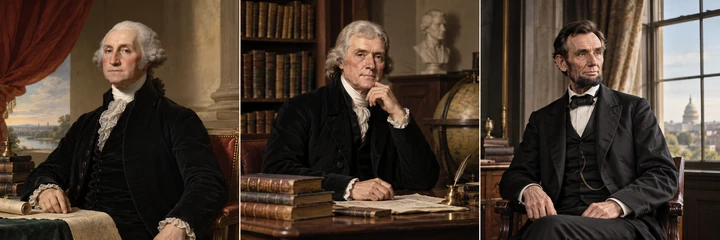
Discover the eccentricities, secret talents, and surprising hidden lives of America's most influential presidents, from frontier wrestlers to covert strategists.
See All Facts
US Presidents
Discover the eccentricities, secret talents, and surprising hidden lives of America's most influential presidents, from frontier wrestlers to covert strategists.
See All Facts
7. Adams single-handedly negotiated a massive loan from Dutch bankers that saved the United States from financial ruin.
In 1782, the fledgling American government was practically bankrupt and desperately needed capital to sustain its war for independence. Sent to the Netherlands as a diplomat, Adams relentlessly lobbied cautious Dutch investors and government officials to recognize American sovereignty. Through sheer persistence and diplomatic maneuvering, he secured a loan of five million guilders, which provided the vital financial lifeline needed to keep the revolutionary government afloat. He also negotiated a treaty of amity and commerce, securing the Netherlands as the second European nation to officially recognize the United States.
8. He was arguably the first true proponent and political father of an American Navy.
While other founders focused strictly on land militias, Adams aggressively championed the creation of a continental naval force to disrupt British supply lines. During the Continental Congress, he authored the first set of rules and regulations for the fledgling fleet, effectively laying the administrative groundwork for the future United States Navy. Years later, during his presidency, he formalized this vision by establishing the Department of the Navy in response to the Quasi-War with France. He ordered the construction of several powerful frigates, including the famous USS Constitution, to protect American merchant ships. His foresight ensured that the young nation could project power and defend its lucrative maritime commerce on the global stage.
9. A disastrous set of laws known as the Alien and Sedition Acts permanently damaged his political legacy.
In 1798, amidst fears of an impending war with France, Adams signed a controversial package of laws designed to suppress domestic dissent and limit the influence of foreign nationals. The Sedition Act made it illegal to publish false, scandalous, or malicious writing against the government, leading to the arrest of several prominent journalists who criticized the administration. Although Adams believed the measures were necessary for national security, they were wildly unpopular and viewed as a tyrannical violation of the First Amendment. This heavy-handed legislation fractured his Federalist party and handed Thomas Jefferson the ultimate political ammunition for the election of 1800. Historians still view this episode as the greatest stain on Adams's otherwise principled career.
10. Adams and Thomas Jefferson died on the exact same day, which happened to be the fiftieth anniversary of the Declaration of Independence.
In one of the most astonishing coincidences in recorded history, both former presidents passed away on July 4, 1826. The two men had been fierce political rivals who spent years trading bitter insults, yet they reconciled in their twilight years to exchange hundreds of deeply philosophical letters. As the ninety-year-old Adams lay dying in his Massachusetts home, his legendary final words were reported to be that Thomas Jefferson still survives. He was entirely unaware that his great friend and rival had succumbed to illness in Virginia just a few hours earlier. This dual passing on the nation's golden jubilee was viewed by the American public as a divine endorsement of the country's founding.
11. He conducted a grueling, dangerous winter crossing of the Pyrenees mountains to secure peace with Great Britain.
During a diplomatic mission in 1779, Adams's leaking ship was forced to dock in northern Spain, leaving him a thousand miles from his destination in Paris. Rather than wait out the winter, Adams, his two young sons, and his diplomatic team rode mules through the treacherous, freezing passes of the Pyrenees. The agonizing journey took over a month, subjecting the party to severe illness, abysmal lodging, and the constant threat of mountain bandits. This harrowing trek demonstrated Adams's relentless determination to serve his country, regardless of the personal physical cost.
12. He defended the controversial concept of a strong, independent executive branch when most Americans feared a new monarchy.
Following the tyranny of King George III, early American political sentiment heavily favored granting absolute power to legislative assemblies while keeping executives weak. Adams fundamentally disagreed, arguing through his extensive writings that unchecked legislative power would inevitably lead to mob rule and democratic despotism. He advocated for a tripartite system of government with a powerful, independent executive who possessed an absolute veto to serve as a check on legislative whims. His persistent championing of this balance of powers heavily influenced the final design of the United States presidency. While critics accused him of harboring monarchist sympathies, Adams simply understood human nature and the historical necessity of checks and balances.
13. Adams was deeply unpopular during his presidency because he chose peaceful diplomacy over war with France.
During the late 1790s, the United States was locked in an undeclared naval conflict with France known as the Quasi-War, and the American public was screaming for a full-scale declaration of war. Adams's own Federalist party, led by Alexander Hamilton, aggressively pressured the president to mobilize a massive army. Knowing the young, fragile nation could not survive a major European conflict, Adams defied his entire cabinet and sent a peace envoy to Paris. This courageous diplomatic maneuver successfully ended hostilities but entirely alienated his political base, costing him his bid for a second presidential term. Adams considered keeping America out of this war to be his finest hour, requesting that his epitaph mention his success in making peace with France.
14. He wrote extensively about the likelihood of life on other planets.
Beyond his political genius, Adams possessed a deep fascination with astronomy and natural philosophy, frequently pondering the vastness of the cosmos. In his personal letters and journals, he expressed the belief that the universe was populated by countless other star systems harboring intelligent life. He argued that it would be arrogant to assume that God had created an infinite universe merely for the benefit of the inhabitants of a single, tiny planet. This cosmic perspective influenced his political humility, reminding him that human squabbles were incredibly small in the grand scheme of the universe. His speculations reveal an imaginative, scientifically curious mind that stretched far beyond the confines of eighteenth-century legal theory.
15. He was an obsessive diarist who documented his insecurities, vanities, and flaws with stunning transparency.
Unlike Washington, who carefully cultivated a stoic public image, Adams poured his raw, unfiltered emotions into thousands of journal entries and letters. He frequently complained about being underappreciated, admitted to bouts of intense jealousy regarding his peers, and openly criticized his own stubborn, irritable nature. This extraordinary self-awareness provides modern historians with the most psychologically rich portrait of any founding father. Because he refused to censor his own historical record, we see the American Revolution not just through the eyes of a marble statue, but through a deeply flawed, passionate human being. His writings prove that the nation was not built by perfect demigods, but by brilliant, temperamental individuals.
Sources & References
This AI-assisted post was rigorously curated and fact-checked for accuracy by:
 Martin Roháček
How fun was this article? 🤔
Tap a star to rate it
🧠 Quiz: How closely were you paying attention?
10 questions — all answers are in the article above!
Enjoyed these facts? There's more! 💌
Fresh fun facts in your inbox. No spam, ever.