The Unstoppable Pop Phenomenon: 15 Fascinating Facts About ABBA
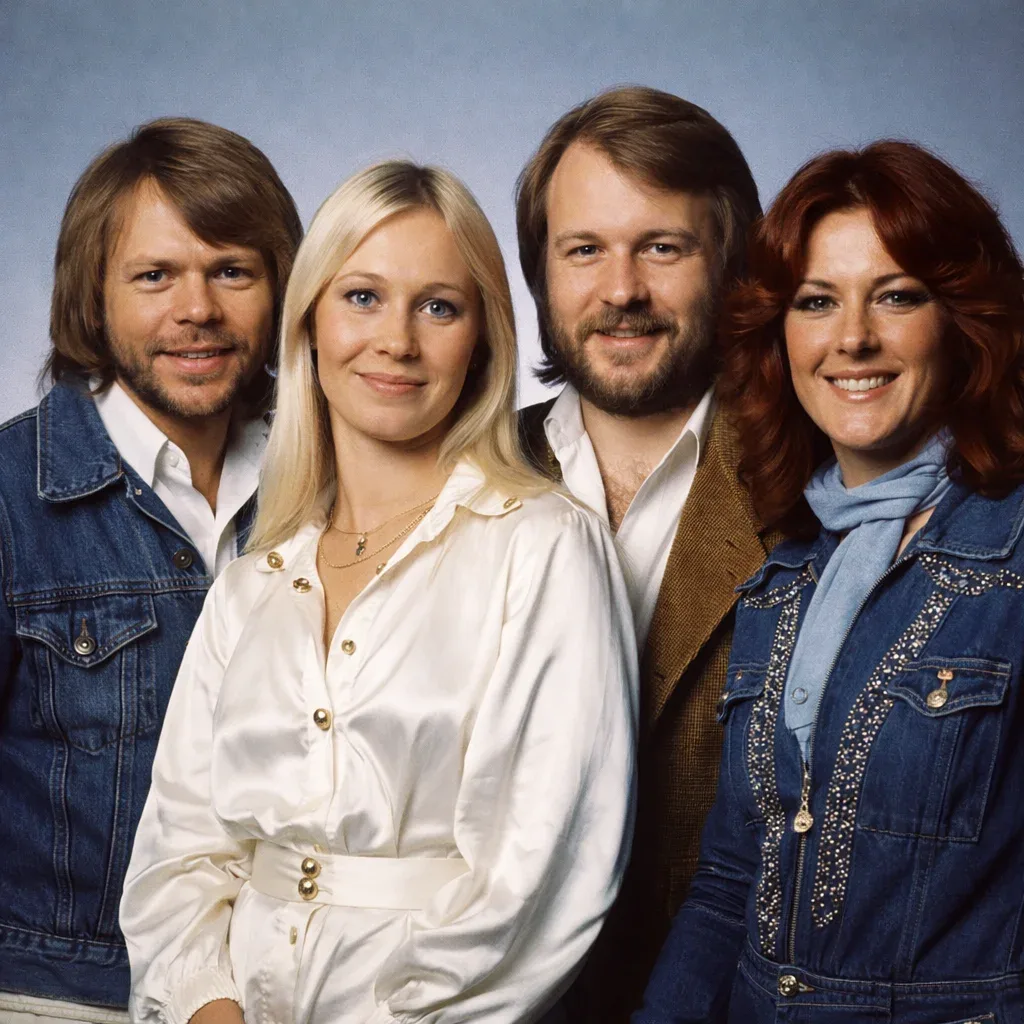
With over 380 million records sold worldwide, ABBA is one of the most successful pop groups in music history, yet their journey is filled with unexpected twists. Beyond their infectious hooks and dazzling outfits lies a story involving Cold War trade negotiations, clever tax strategies, and groundbreaking digital concert technology. From performing for United Nations troops to turning down a staggering one-billion-dollar reunion offer, the Swedish quartet reshaped global pop culture. Discover fifteen surprising truths about Agnetha, Björn, Benny, and Anni-Frid.
1. The Band Negotiated Their Name with a Canned Seafood Company
When Agnetha, Björn, Benny, and Anni-Frid decided to combine their first initials to form the acronym ABBA in 1973, they hit a legal snag. A famous Swedish canned fish company called Abba Seafood had been producing pickled herring since 1838 and held the rights to the name. The band's manager, Stig Anderson, had to officially ask the seafood company for permission to share the trademark. Fortunately, the executive board agreed to the arrangement under one funny condition: the pop group had to promise never to make the brand feel ashamed. The seafood company later admitted that sharing a name with the world's biggest pop group brought them incredible publicity.
2. Their Outrageous Wardrobe Was a Clever Tax-Saving Strategy
ABBA’s iconic stage outfits were legendary for their glittering sequins, wild patterns, metallic capes, and towering platform boots. While these eccentric clothes defined 1970s glam pop, they were actually designed for practical financial reasons. Under Swedish tax laws at the time, the cost of performance costumes was tax-deductible only if the garments were so outlandish that they could never be worn on the street as everyday clothing. Björn Ulvaeus later confessed in his memoir that the group deliberately pushed fashion boundaries to ensure their accountant could legally write off the wardrobe expenses. Consequently, economic necessity helped create one of the most distinctive aesthetic styles in music history.
3. The United Kingdom Awarded "Waterloo" Zero Points at Eurovision
ABBA made global history in 1974 by winning the Eurovision Song Contest with their energetic hit "Waterloo," but the victory was not unanimous. The United Kingdom national jury notoriously awarded ABBA zero points during the voting ceremony. Björn Ulvaeus later revealed his belief that the British jury intentionally scored them "nul points" as a tactical maneuver because they recognized ABBA as the primary threat to the UK's entry, Olivia Newton-John. Despite the deliberate snub by British judges, "Waterloo" went straight to number one on the UK singles chart and launched the band into international stardom. The song was ultimately voted the best entry in Eurovision's 50-year history in 2005.
4. ABBA Was Once Sweden's Second Most Profitable Export After Volvo
During the height of their global fame in the late 1970s, ABBA was not just a pop music band; they were a massive economic power. The international revenues generated by their record sales, concert tours, and merchandise poured huge amounts of foreign capital into Sweden. At their absolute financial peak, ABBA ranked second only to automotive giant Volvo in terms of Swedish export earnings. To manage their vast profits, their management company Polar Music invested in diverse ventures including art galleries, petroleum companies, real estate, and bicycle manufacturers. Their unprecedented commercial success established Swedish pop as a dominant force in the global economy.
5. The Soviet Union Paid ABBA Royalties in Petroleum and Commodities
Navigating the complexities of international finance during the Cold War proved tricky when selling music behind the Iron Curtain. ABBA was immensely popular across Eastern Europe, but the Soviet ruble was heavily embargoed and could not be legally converted or exported out of the USSR. To solve this financial deadlock, the band's management negotiated an unconventional barter trade agreement with Soviet authorities. Instead of cash, ABBA accepted royalty payments in foreign commodities, primarily crude oil contracts and agricultural goods like corned beef. These raw commodities were then resold on Western commodity markets to secure standard currency for the group.
6. They Turned Down a Staggering $1 Billion Reunion Offer
In the year 2000, as nostalgia for 1970s pop reached an all-time high, an American-British private equity consortium made ABBA a historic offer. The investors offered the four band members a staggering one billion dollars to reunite for a 100-date worldwide concert tour. Despite the unfathomable financial payout, all four members flatly declined the offer without hesitation. Benny Andersson explained that remaining inactive kept their artistic legacy intact, remarking that fans should remember them as young, energetic performers rather than as four old turnips on stage. The group held fast to this stance for two decades until developing their digital avatar concert format.
7. The Iconic Mirrored "B" Logo Was Born from an Accidental Photo Shoot
The band’s famous official logo features two mirrored letter B's facing outward, creating a perfectly balanced aesthetic symmetry between the two couples. However, this classic graphic design was actually created by pure accident during a 1976 promotional photo shoot. While posing with large velvet letters representing their initials, Benny Andersson held his letter "B" backwards without realizing it. Photographer Wolfgang Heilemann noticed the mistake while developing the film and realized how striking the mirrored layout looked with Agnetha and Björn flanking Benny and Anni-Frid. The group instantly fell in love with the symmetrical imagery and trademarked the reversed layout that same year.
8. Madonna Had to Personally Implore ABBA for Sampling Permission
ABBA is notoriously protective of their songwriting catalog and has almost universally denied permission for other artists to sample their music. However, when Madonna wanted to sample the famous synthesizer hook from "Gimme! Gimme! Gimme! (A Man After Midnight)" for her 2005 hit "Hung Up," she took extra measures. The American pop star wrote a passionate personal letter to Benny and Björn in Stockholm, literally imploring them to grant her permission. She even dispatched her representative to Sweden with the completed track to showcase how respectfully the sample was integrated. Impressed by her dedication and artistic execution, ABBA granted rare authorization, resulting in a chart-topping global smash.
9. Their Very First Concert as a Quartet Was Held for UN Peacekeepers
Before becoming global superstars, Agnetha, Björn, Benny, and Anni-Frid first performed together live in a surprisingly remote location. In April 1970, while taking a joint holiday on the Mediterranean island of Cyprus, the four musicians gave an impromptu concert on a beach. Their audience consisted entirely of United Nations peacekeeping soldiers stationed along the island's buffer zone. At the time, the quartet had not yet adopted the name ABBA and performed under the comedic Swedish cabaret moniker "Festfolk," which translates roughly to "Party People." The overwhelmingly positive reaction from the troops convinced them that their vocal harmony had commercial potential.
10. Over 3.5 Million People Applied for Tickets to Two London Shows in 1977
The sheer scale of ABBA’s live popularity in the late 1970s was demonstrated during their 1977 European tour. When ticket applications opened for just two concert dates at London's Royal Albert Hall, the box office was overwhelmed by over 3.5 million mail-in ticket requests. This staggering demand meant the band could have filled the 5,200-seat venue 580 times over. To put that figure in context, nearly half the total population of Greater London at the time attempted to buy tickets for those two performances. The unprecedented ticketing frenzy forced promoters to add additional dates to accommodate the record-breaking public enthusiasm.
11. "Waterloo" Was Almost Scrapped in Favor of a Soft Ballad
When selecting their prospective song entry for the 1974 Eurovision Song Contest, ABBA weighed two vastly different musical directions. Their original safe choice was a soft, emotional ballad titled "Hasta Mañana," which fit the traditional mid-tempo style that typically won Eurovision contests. However, the group felt that a dramatic, high-energy rock-pop anthem would make a far stronger visual and auditory impression on international audiences. They made the bold decision to gamble on "Waterloo," despite fears that its upbeat tempo might alienate traditional Eurovision juries. That risky decision revolutionized the contest and transformed ABBA into an instant global phenomenon.
12. Tim Rice Originally Approached Benny and Björn to Score The Lion King
In the early 1990s, legendary lyricist Tim Rice was hired by Walt Disney Feature Animation to create the soundtrack for their upcoming animated epic, The Lion King. Having previously collaborated with Benny Andersson and Björn Ulvaeus on the acclaimed musical Chess, Rice immediately turned to the Swedish songwriting duo to compose the film's music. However, Benny and Björn were deeply involved in developing their epic Swedish musical Kristina från Duvemåla and had to turn down Disney's invitation due to scheduling conflicts. Following their decline, Disney selected Elton John for the project, leading to one of the best-selling soundtrack albums in film history.
13. ABBA Gold Was the First Album to Spend 1,000 Weeks on the UK Charts
Released in 1992, the compilation album ABBA Gold: Greatest Hits proved the enduring longevity of the group's songwriting mastery. In July 2021, the record achieved an astonishing milestone by becoming the very first album in UK chart history to spend 1,000 weeks on the official Top 100 album chart. That equates to nearly twenty full years on the music charts, surpassing iconic albums by legendary bands like The Beatles and Queen. ABBA Gold remains one of the highest-selling albums of all time, having sold over 30 million copies worldwide while continuously introducing new generations to the band's musical catalog.
14. The Digital "ABBAtars" in ABBA Voyage Are Not Holograms
When ABBA announced their groundbreaking ABBA Voyage concert residency in London, many media outlets described the digital performers as holograms. In reality, the technological process behind the show is vastly more sophisticated than traditional holography. Visual effects studio Industrial Light & Magic utilized 160 cameras to capture the band members' physical movements and facial expressions over five weeks of motion-capture sessions. Engineers processed this digital fingerprint data into high-resolution 3D models representing the band as they appeared in 1979. These 3D renderings are projected onto a giant 65-megapixel screen alongside real-time lighting to create an uncanny illusion of living performers.
15. Their Heartbreaking "Divorce Songs" Were Recorded Before Their Divorces
ABBA’s later discography is famous for emotional break-up anthems like "Knowing Me, Knowing You" and "The Winner Takes It All." Popular music mythology often assumes these melancholic tracks were written as direct responses to the real-life divorces of the band's two married couples. However, "Knowing Me, Knowing You" was actually recorded in 1976—several years before Björn and Agnetha or Benny and Anni-Frid separated. The lyricist Björn Ulvaeus wrote the sombre lyrics about a marriage falling apart purely as a dramatic exercise, long before his own personal relationship ended. Tragically, the songs proved to be hauntingly prophetic warnings of the emotional rift that would eventually split the group.
Sources & References
This AI-assisted post was rigorously curated and fact-checked for accuracy by:
 Martin Roháček
How fun was this article? 🤔
Tap a star to rate it
🧠 Quiz: How closely were you paying attention?
10 questions — all answers are in the article above!
Enjoyed these facts? There's more! 💌
Fresh fun facts in your inbox. No spam, ever.