
The Imperious Dictator: 15 Fascinating Facts About Julius Caesar
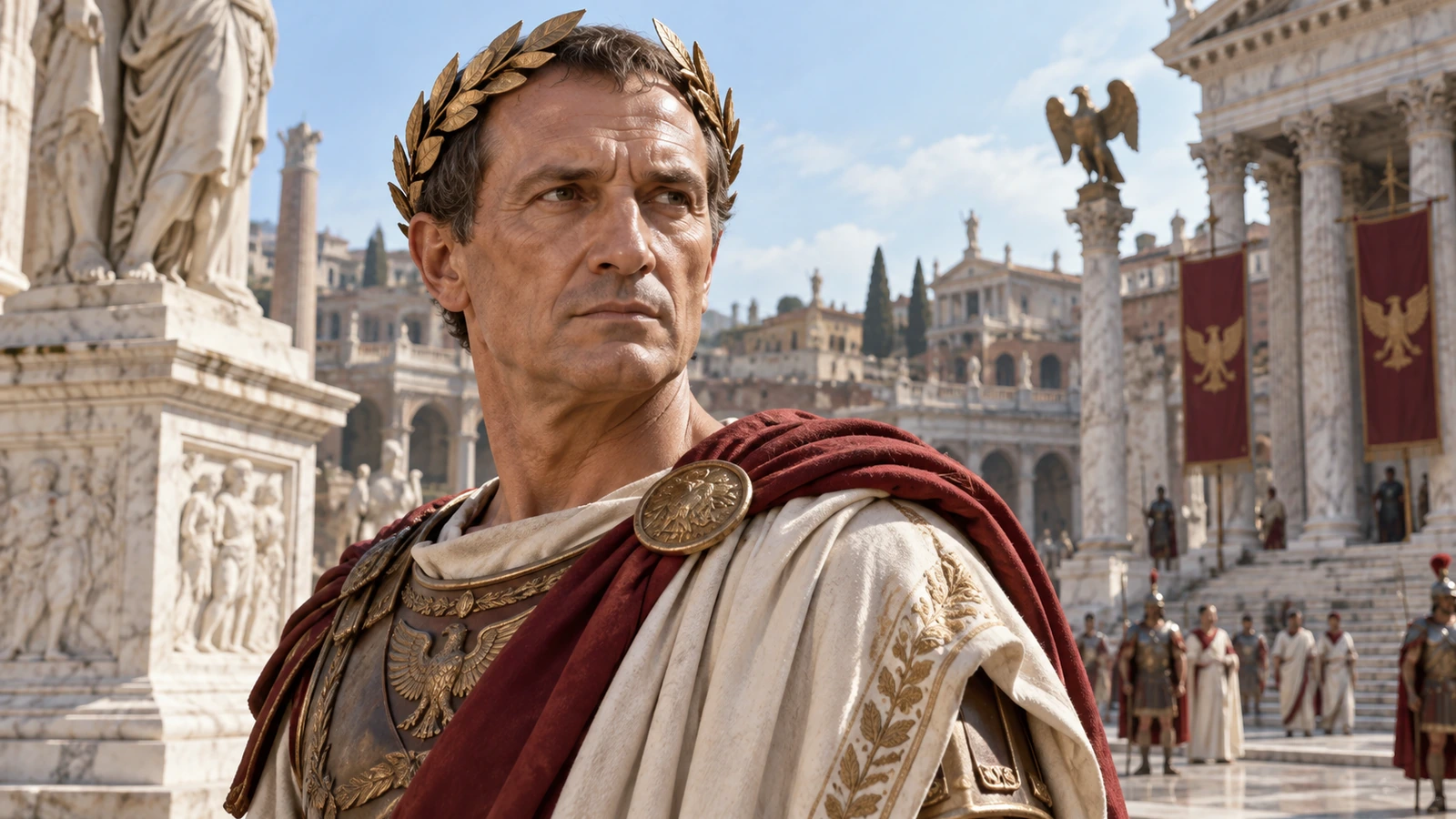
Gaius Julius Caesar remains one of history's most towering figures, whose military genius and political ambition transformed Rome from a republic into an empire. Yet behind the majestic statues and immortalized battle speeches lies a complex man who demanded higher ransoms from pirates, combated receding hair, and overhauled the modern calendar. From secret scandals and banned poetry to mysterious medical conditions and cosmic prophecies, Caesar's life was far stranger than fiction. Here are 15 fascinating facts about Rome's most famous ruler.
1. Demanded a Higher Ransom from His Pirate Kidnappers
In 75 BCE, a young Gaius Julius Caesar was captured by Cilician pirates while sailing across the Aegean Sea. When his captors demanded a ransom of twenty talents of silver, Caesar burst into laughter, informing them that they clearly had no idea who he was and insisted they demand fifty talents instead. During his thirty-eight days in captivity, he treated the pirates like his personal subordinates, writing poetry, giving speeches, and demanding they stay quiet while he slept. He repeatedly warned them that once he was freed, he would return to capture and crucify every last one of them. The pirates assumed he was joking, but as soon as the ransom was paid and he was released, Caesar raised a fleet, tracked down their stronghold, and fulfilled his promise to the letter.
2. Weaponized the Laurel Wreath to Hide His Receding Hairline
Caesar was notoriously self-conscious about his advancing baldness, a condition that his political rivals frequently mocked in public. In ancient Rome, physical blemishes were often viewed as signs of divine displeasure, making hair loss a serious image problem for an ambitious leader. To disguise his receding hairline, Caesar adopted the habit of combing his remaining locks forward in a style that later inspired the classic Roman cut. The Senate eventually granted him the permanent privilege of wearing a laurel wreath on all public occasions, an honor intended to celebrate his military triumphs. Caesar embraced the gesture enthusiastically, largely because it provided a stylish and politically sanctified way to cover his crown.
3. Mocked by His Own Soldiers as the "Queen of Bithynia"
During a diplomatic mission early in his career, Caesar spent considerable time at the court of King Nicomedes IV of Bithynia. The visit sparked persistent rumors of a romantic liaison between the young Roman nobleman and the Bithynian ruler, an accusation that dogged Caesar for the rest of his political life. In Roman society, taking a passive role in a same-sex relationship carried severe social stigma, and his political enemies relentlessly weaponized the scandal. During his grand military triumphs in Rome, his own loyal legionaries marched behind him singing satirical verses that proclaimed, "Caesar conquered Gaul, but Nicomedes conquered Caesar." Despite his anger over the persistent insult, Caesar was powerless to stop his troops from chanting the embarrassing song.
4. Revolutionized Time by Inventing the Leap Year
Before Caesar's intervention, the Roman calendar was an unpredictable, lunar-based mess controlled by politicians who frequently added or subtracted days to extend their terms in office. By 46 BCE, the calendar had drifted so far out of alignment with the solar year that harvest festivals were occurring in the winter. Caesar consulted the renowned Alexandrian astronomer Sosigenes to create a reformed solar calendar consisting of 365 days divided into twelve months. To account for the extra quarter-day in the earth's orbit, he instituted a leap year system that added an intercalary day to February every four years. The Julian calendar proved so effective and durable that it remained the standard across the Western world for more than sixteen centuries.
5. Rode a Deformed Horse with Human-Like Toes
Ancient historians recorded that Caesar possessed a favorite warhorse with an extraordinary anatomical anomaly known as polydactyly. Instead of solid hooves, the horse's front feet were divided into distinct digits that strikingly resembled human toes. Roman soothsayers had prophesied that whoever rode this unique beast would achieve absolute dominion over the known world. Recognizing the powerful symbolism of the creature, Caesar bred and nurtured the stallion with great care and refused to allow anyone else to ride it. He eventually erected a bronze statue dedicated to the remarkable horse in front of the Temple of Venus Genetrix in Rome.
6. Was Definitely Not Born via Caesarean Section
A widespread and enduring historical myth asserts that the surgical procedure known as a Caesarean section was named because Julius Caesar was delivered this way. However, historical evidence strongly refutes this claim, as his mother, Aurelia Cotta, survived his birth by several decades and played a prominent role in his adult life. In the ancient world, abdominal surgery to extract a fetus was performed exclusively on dead or dying mothers as a desperate measure to save the child. The term most likely derives from the Latin verb caedere, meaning "to cut," or from an early ancestor who was born with a thick head of hair. Caesar's actual birth was completely conventional, though the legend surrounding his origin persisted for centuries.
 Rulers, Kings and Emperors
Discover the captivating truths behind history's most iconic rulers, kings, and emperors. From eccentric geniuses and tactical masterminds to deeply flawed sovereigns, explore the hidden lives of those who shaped the modern world.
See All Facts
Rulers, Kings and Emperors
Discover the captivating truths behind history's most iconic rulers, kings, and emperors. From eccentric geniuses and tactical masterminds to deeply flawed sovereigns, explore the hidden lives of those who shaped the modern world.
See All Facts
7. Battled a Mysterious Condition Known as the "Falling Sickness"
Throughout his life, Caesar suffered from episodic health crises that ancient biographers described as the "falling sickness." He experienced sudden seizures, dizziness, and muscle tremors, several of which occurred during critical military campaigns and public assemblies. While traditional historians attributed these episodes to epilepsy, modern medical researchers suspect he may have suffered from a series of transient ischemic attacks or mini-strokes. Despite the physical toll and the vulnerability it exposed, Caesar refused to hide his condition or let it undermine his authority. He projected an aura of invincible vitality, actively campaigning on the front lines and managing the state until his final days.
8. Never Spoke the Famous Words "Et Tu, Brute?"
The immortal phrase "Et tu, Brute?" ("You too, Brutus?") was created by William Shakespeare for his 1599 play, not spoken during the actual assassination. Contemporary Roman historians present a far grimmer and less dramatic account of the bloody event in the Senate. According to Suetonius, Caesar said nothing as he was swarmed by the assassins, merely pulling his toga over his head to die with dignity. Other ancient sources suggest that if he uttered any final words to Marcus Junius Brutus, he spoke them in Greek, saying "Kai su, teknon," which translates to "You too, my child?" This cryptic phrase may have been a bitter condemnation, a warning of vengeance, or an acknowledgment of a tragic betrayal.
9. Authored a Scientific Treatise on Latin Grammar While Crossing the Alps
Caesar was far more than a brilliant military strategist; he was an accomplished scholar who possessed a deep obsession with the mechanics of language. In 54 BCE, while traveling in a carriage across the treacherous Alps to rejoin his army in Gaul, he penned a multi-volume grammatical treatise titled De Analogia. The work argued for a standardized, clear approach to Latin grammar and vocabulary, warning against the use of exotic or obsolete words in public speaking. Caesar believed that proper language was essential for unified governance and clear military command, demonstrating his ability to pursue intellectual rigorousness even amid grueling military operations.
10. Divorced His Wife Because She Was Wrapped in Scandal
In 62 BCE, a notorious politician named Publius Clodius Pulcher disguised himself as a female musician to sneak into the all-female festival of Bona Dea, hosted at Caesar's residence by his wife, Pompeia. Clodius was discovered, sparking a massive religious and political scandal that rocked Roman high society. Although Pompeia was likely unaware of Clodius's scheme and innocent of any wrongdoing, Caesar promptly divorced her to protect his political standing. When questioned about his decision during the subsequent trial, he famously declared that "Caesar's wife must be above suspicion." The incident demonstrated his ruthless pragmatism, prioritizing his political reputation above personal affection.
11. Amassed Immense Debt Before Conquering Gaul
Early in his political career, Caesar was virtually bankrupt after spending colossal sums of money to buy votes, host lavish public games, and fund political campaigns. His financial situation was so dire that his creditors blocked him from leaving Rome to take up his governorship in Further Spain until his debts were secured. He was saved by Marcus Licinius Crassus, the wealthiest man in Rome, who personally guaranteed a massive portion of Caesar's obligations. Caesar used his subsequent military campaign in Spain, followed by the conquest of Gaul, to plunder vast treasures and enslave hundreds of thousands of captives. The immense wealth he extracted from these conquests not only repaid his creditors in full but made him one of the richest men in the ancient world.
12. Doubled the Pay of Roman Legionaries to Secure Personal Loyalty
To guarantee that his army would remain fiercely loyal to him rather than to the Roman Republic, Caesar took the unprecedented step of doubling his soldiers' base pay from 225 to 450 denarii per year. He also granted them generous bonuses in land and gold after major victories, ensuring that their financial well-being was directly linked to his personal political survival. This bold economic move transformed the legionaries from state troops into a private military force devoted entirely to their commander. When the Senate ordered Caesar to lay down his command, his well-compensated soldiers did not hesitate to follow him across the Rubicon River into civil war.
13. Had His Youthful Poetry Suppressed and Banned by Emperor Augustus
Before becoming a warlord and statesman, a young Caesar harbored artistic ambitions and composed several works of poetry, including a tragedy about Oedipus and a poem praising Hercules. However, these literary endeavors were widely considered by contemporaries to be mediocre at best and lacking the gravitas expected of a great Roman statesman. After Caesar's death and divine elevation, his adoptive son and successor, Emperor Augustus, took active measures to preserve Caesar's grand reputation. Augustus issued an imperial decree forbidding public librarians from preserving, publishing, or distributing Caesar's youthful poetic works. As a result of this imperial censorship, none of Caesar's creative writing survived into the modern era.
14. Bequeathed His Private Gardens and Money to Every Roman Citizen
Upon the assassination of Caesar on the Ides of March in 44 BCE, Mark Antony dramatically read the dictator's last will and testament to the assembled crowds in Rome. To the astonishment of the public, Caesar left his vast private estate and manicured gardens across the Tiber River to be opened as a public park for all citizens. Furthermore, he allocated a direct monetary gift of seventy-five sesterces to every single male citizen of Rome, a sum equivalent to several months of living expenses at the time. This extraordinary act of posthumous generosity ignited deep grief and public outrage against his assassins, securing his legacy as a champion of the common people.
15. A Celestial Comet Appeared During His Funeral Games as a Divine Sign
Just four months after Caesar's assassination, during the memorial games held in his honor in July 44 BCE, an exceptionally brilliant comet suddenly appeared in the sky and shone brightly for seven consecutive days. Known as Sidus Iulium (Caesar's Comet), it was visible during daylight hours across Italy and was interpreted by the masses as a powerful omen. The Roman public believed the radiant celestial phenomenon was Caesar's soul ascending to the heavens to take its rightful place among the gods. Taking advantage of this cosmic occurrence, Augustus formally recognized Caesar's divinity, erecting a temple dedicated to Divus Iulius and establishing the imperial cult that shaped Roman religion for generations.
Sources & References
This AI-assisted post was rigorously curated and fact-checked for accuracy by:
 Martin Roháček
How fun was this article? 🤔
Tap a star to rate it
🧠 Quiz: How closely were you paying attention?
10 questions — all answers are in the article above!
Enjoyed these facts? There's more! 💌
Fresh fun facts in your inbox. No spam, ever.