America Goes Dry: 15 Surprising Facts About Prohibition
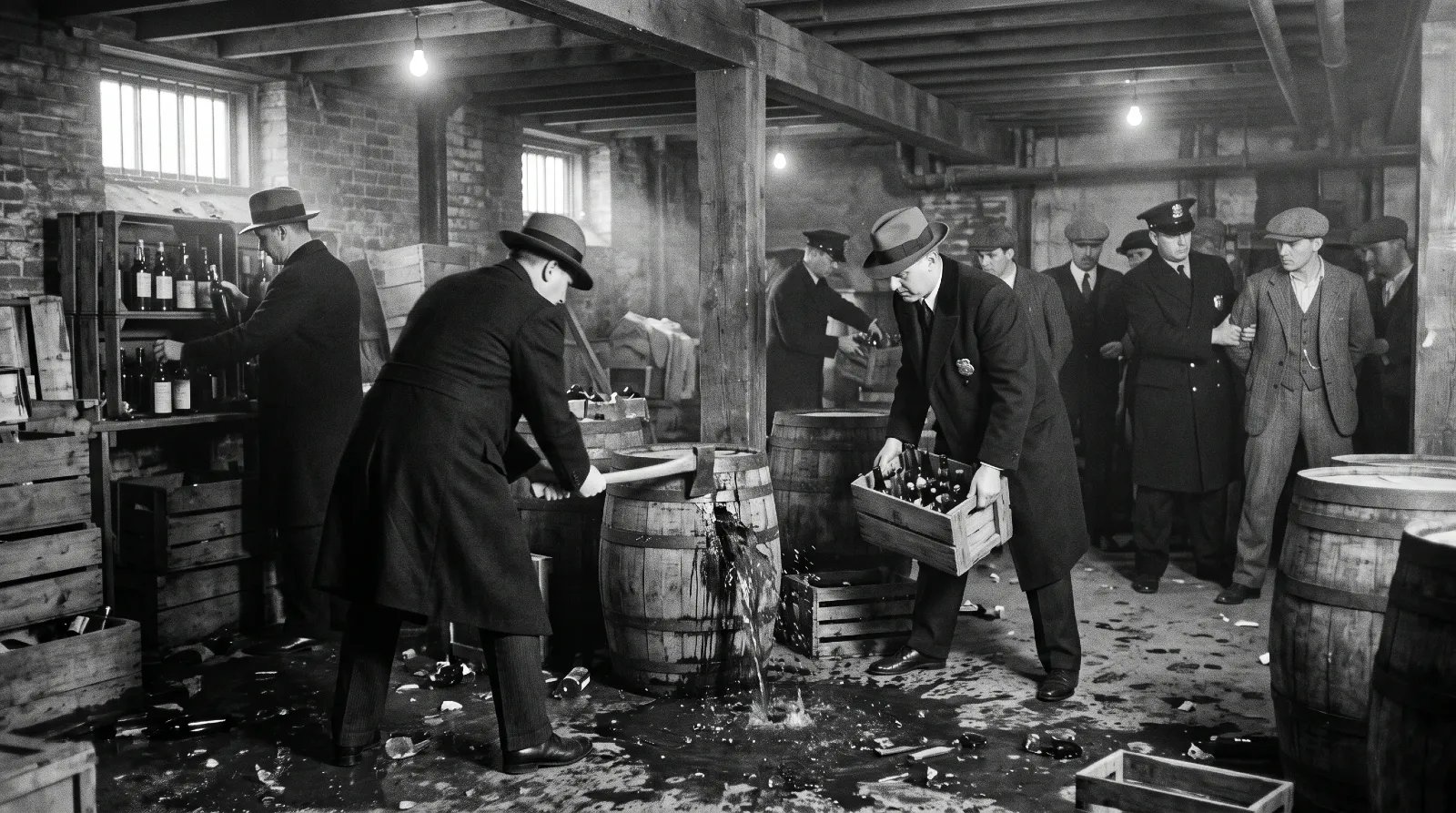
On October 28, 1919, Congress overrode President Woodrow Wilson's veto and passed the Volstead Act, the law that put Prohibition into practice. For the next 13 years, America was officially dry. In reality, it gave the country speakeasies, bootleggers, booming drugstores, poisoned liquor and a bootlegger who supplied Congress itself.
1. Congress passed the Prohibition law over the president's veto.
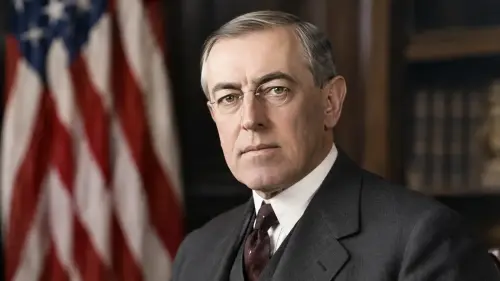
The 18th Amendment banned alcohol in principle, but the National Prohibition Act, better known as the Volstead Act, spelled out how the ban would be enforced. President Woodrow Wilson vetoed the bill on October 27, 1919. The House overrode his veto the same day, and the Senate followed on October 28, 1919.
2. Drinking alcohol was never actually illegal.
The 18th Amendment, which took effect on January 17, 1920, banned the manufacture, sale and transportation of "intoxicating liquors." It did not ban drinking or owning alcohol. Wealthy Americans who had stocked up their cellars before the deadline could legally keep drinking at home for years.
3. Even weak beer counted as "intoxicating."
Many Americans who supported Prohibition expected beer and wine to remain legal. The Volstead Act, however, defined an intoxicating beverage as anything containing more than 0.5% alcohol. That outlawed virtually every beer, wine and spirit on the market.
4. The law was named after one man but largely written by another.
Andrew Volstead, a Republican congressman from Minnesota, chaired the House Judiciary Committee and lent the act his name. Much of the legislation, however, is credited to Wayne Wheeler, the powerful lawyer and political strategist of the Anti-Saloon League, the most influential dry pressure group in America.
5. The income tax made Prohibition possible.
Before 1913, taxes on alcohol supplied a large share of the federal government's revenue, in some years around 30%. That made a nationwide ban almost unthinkable. The 16th Amendment, which introduced a federal income tax in 1913, gave Washington a new source of money and removed one of the strongest arguments against going dry.
6. Doctors could still prescribe whiskey.
Under Prohibition, physicians were allowed to write prescriptions for "medicinal" whiskey, typically up to a pint every ten days, and pharmacies could legally sell it. Prescriptions soared. During the 1920s, the Walgreens drugstore chain grew from about 20 stores to several hundred, a rise the company credits to its popular malted milkshakes, though many suspect whiskey helped too.
 You might also like
The High-Octane History: 15 Fascinating Facts About NASCAR
7. Sacramental wine was legal.
The Volstead Act allowed wine to be used for religious purposes, such as Catholic Mass and Jewish rituals. The demand for sacramental wine rose suspiciously during Prohibition, and authorities found that some self-declared rabbis and priests were simply selling it to anyone who wanted a drink.
8. Grape bricks came with a warning that was really an instruction.
Vineyards in California survived by selling blocks of concentrated grape juice, known as wine bricks or grape bricks. The packages carried a warning not to dissolve the brick in water and store it in a cool, dark place for weeks, because it would ferment into wine. Buyers understood exactly what to do.
9. Speakeasies changed the way Americans drank.
Illegal bars known as speakeasies sprang up everywhere. New York City alone may have had more than 30,000 of them. Unlike the old male-dominated saloons, many speakeasies welcomed women. Bartenders also mixed spirits with juices, sodas and syrups to hide the harsh taste of bootleg liquor, helping make cocktails fashionable.
10. The government poisoned industrial alcohol.
Bootleggers often stole industrial alcohol and turned it into drinkable liquor. To stop them, the federal government required manufacturers to add more toxic chemicals, including methyl alcohol. People kept drinking it anyway. By some estimates, as many as 10,000 Americans died from poisoned alcohol by the end of Prohibition.
11. Congress had its own bootlegger.
For about a decade, a bootlegger named George Cassiday supplied liquor to members of Congress, sometimes working from a storeroom inside a congressional office building. He became known as "the man in the green hat." After his arrest in 1930, he wrote a series of newspaper articles claiming that most lawmakers drank, even as many publicly supported Prohibition.
12. Prohibition made gangsters rich and famous.
Organized crime took over much of the illegal alcohol trade. In Chicago, Al Capone ran a bootlegging empire estimated to bring in tens of millions of dollars a year. Violent turf wars culminated in the 1929 St. Valentine's Day Massacre. Capone was eventually convicted not of bootlegging, but of tax evasion.
🤔 Quick guess
Which sport has roots in moonshine runners who modified their cars to outrun police?
13. NASCAR has roots in bootlegging.
In the rural South, drivers who smuggled illegal liquor, known as moonshine, modified their cars to outrun the police. That tradition continued long after Prohibition ended, since moonshine remained illegal because it was untaxed. Some of these drivers began racing for fun, and those races helped give birth to NASCAR in 1948.
14. Beer returned months before Prohibition ended.
Shortly after taking office, President Franklin D. Roosevelt signed a law allowing the sale of beer and wine with up to 3.2% alcohol. It took effect on April 7, 1933, and crowds gathered outside breweries the night before. Roosevelt reportedly remarked that it would be a good time for a beer. April 7 is now celebrated as National Beer Day.
15. Its repeal made constitutional history.
Prohibition officially ended on December 5, 1933, with the ratification of the 21st Amendment. It remains the only amendment that repealed another amendment, and the only one ratified by special state conventions rather than state legislatures. Some states stayed dry much longer. Mississippi did not end statewide prohibition until 1966.
How did these facts land?
Know someone who'd love these facts? Share them 👇
🧠 Quiz: How closely were you paying attention?
Think you remember the facts? 10 questions, tap an answer.