
The High-Octane History: 15 Fascinating Facts About NASCAR
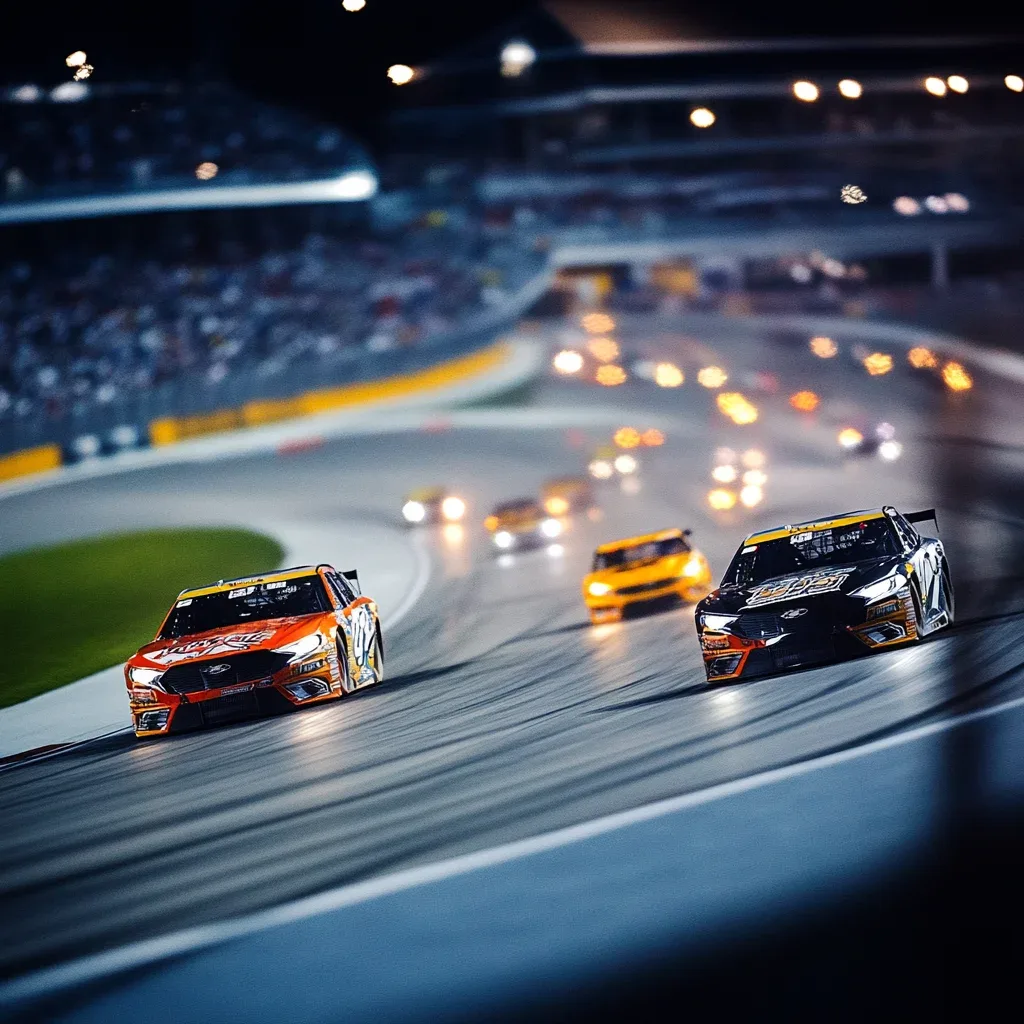
From its outlaw roots in Prohibition-era moonshine running to high-tech engineering on asphalt ovals, NASCAR is one of America's most thrilling motorsports. Modern stock car drivers push their bodies to physical extremes in cockpit temperatures soaring past 130 degrees Fahrenheit while navigating bumper-to-bumper action at 200 miles per hour. Behind the roaring V8 engines lie remarkable engineering feats, strict safety innovations, and fascinating traditions that shape every race weekend. Here are 15 unbelievable facts about the history, mechanics, and legends of NASCAR.
1. The Sport Was Born from Prohibition Bootleggers
NASCAR's high-speed origins are deeply rooted in illegal moonshine smuggling during the American Prohibition era. Drivers in the Appalachian hills heavily modified their family cars with heavy-duty springs and souped-up engines to outrun federal revenue agents on winding mountain roads. Once alcohol became legal again, these skilled mechanics and drivers continued meeting on weekends to settle rivalries and race for prize money. In 1947, mechanic Big Bill France organized these informal contests into a structured sanctioning body, officially founding NASCAR in Daytona Beach. Today, stock car racing retains its foundational spirit of taking production-line vehicle designs and pushing them to extreme mechanical limits.
2. Drivers Can Lose Up to Ten Pounds in a Single Race
Endurance in NASCAR is a severe physical test, as drivers endure extreme ambient temperatures during three to four hours of non-stop racing. Cockpit temperatures frequently exceed 130 degrees Fahrenheit, exacerbated by engine heat, exhaust pipes running under the floorboard, and a lack of traditional air conditioning. The intense heat causes drivers to sweat profusely, leading to a loss of up to ten pounds of water weight over the course of a single race. To combat severe dehydration and heat stroke, modern race suits feature cooling layers, while drivers train heavily in cardiovascular endurance like marathon runners. Falling victim to heat exhaustion can impair reaction times by fractions of a second, which at 200 mph can be catastrophic.
3. Race Cars Have No Functional Doors
Unlike standard commercial vehicles, modern NASCAR Cup cars do not feature functional side doors that open on hinges. Mechanics weld the body panels solid to maximize structural integrity and aerodynamic rigidity across the chassis. As a safety precaution, this seamless design prevents doors from bursting open during high-impact multi-car collisions on the track. Consequently, drivers must climb into the cockpit by squeezing through the driver-side window opening after unclipping a protective mesh window net. This awkward entrance requires remarkable athleticism, especially when emergency exits are required during on-track incidents.
4. Richard Petty's 200-Win Record Will Likely Never Be Broken
In the realm of professional auto racing records, Richard Petty stands on an untouchable pedestal with 200 career NASCAR Cup Series victories. Known universally as "The King," Petty dominated stock car racing across three decades, winning seven championships and legendary races like the Daytona 500 seven times. His nearest competitor on the all-time wins list is David Pearson, who retired with 105 victories, while modern era leaders rarely cross the 60-win threshold. Changes in schedule length, vehicle parity, and hyper-competitive team engineering make it practically impossible for any contemporary driver to approach Petty's milestone. His historic record remains one of the most immortal statistics in all of professional sports.
5. Pit Crews Glue Lug Nuts to New Tires Pre-Race
In NASCAR pit stops, fractions of a second often dictate whether a team wins or loses a race. To execute a four-tire change in under ten seconds, pit crews rely on a clever preparation technique using yellow weatherstrip adhesive. Hours before the green flag drops, tire technicians manually glue single-use lug nuts directly over the holes of fresh wheel rims. This pre-gluing step allows the tire changer to immediately slam the replacement wheel onto the wheel studs and hit the nuts with a high-speed air wrench without handling individual hardware. Eliminating the manual placement of lug nuts cuts critical milliseconds off pit stop times, providing a crucial track position advantage.
6. Treadless "Slick" Tires Provide Maximum Asphalt Grip
NASCAR racing tires feature completely smooth, treadless rubber surfaces known in the racing world as "slicks." Standard passenger car tires use deep tread patterns to channel water away, but slicks maximize the contact patch between pure rubber and dry track asphalt. This smooth surface area generates immense lateral friction, allowing stock cars to corner at speeds exceeding 180 mph without sliding. However, because slick tires possess zero water displacement channels, even a tiny drizzle turns the racetrack into an ice rink, triggering instant hydroplaning. Consequently, NASCAR immediately halts racing on oval tracks the moment moisture hits the asphalt, as wet slick racing is virtually impossible.
7. Spotters on the Roof Act as the Driver's Eyes
High above the grandstands, dedicated spotters stand on stadium roofs to serve as critical aerial navigators for their drivers. Due to bulky protective helmets, head-and-neck restraint devices, and small side mirrors, NASCAR drivers have severely restricted peripheral vision inside the cockpit. Spotters communicate continuously over two-way radios, giving real-time callouts about approaching cars, blind spots, and sudden crashes unfolding ahead. A spotter must process track activity instantly, instructing their driver when it is safe to change lanes or squeeze through multi-car pileups. The trust between a driver and their spotter is so profound that a spotter's clear guidance is often just as vital to victory as the car's engine power.
8. The Season Begins with Its Biggest Event
Unlike major sports leagues like the NFL or NBA that conclude their seasons with a championship game, NASCAR starts its season with its premier event: the Daytona 500. Known as "The Great American Race," this iconic 500-mile contest offers the largest purse, highest prestige, and maximum media coverage of the entire year. Placing the headline event at the front of the schedule generates massive initial fan engagement and sets an intense competitive tone right out of the gate. Winning the Daytona 500 can instantly define a driver's career, even if they fail to win the overall season championship months later. This unique scheduling structure makes opening weekend the most anticipation-filled date on the motorsport calendar.
9. Wendell Scott Broke Barriers Despite Systemic Discrimination
In 1963, Wendell Scott made history at Jacksonville Speedway by becoming the first African American driver to win a NASCAR premier series race. Operating as his own mechanic on a shoestring budget, Scott routinely faced racial discrimination, denied entries, and sabotaged equipment throughout his career. After Scott clearly crossed the finish line first, track officials initially declared a white driver the winner to avoid an interracial trophy presentation in the segregated South. Officials quietly acknowledged the scoring error hours after fans had left the venue, but Scott was never awarded the actual trophy during his lifetime. NASCAR finally presented his family with a custom-crafted victory trophy in 2021, cementing Scott's legacy as a trailblazing motor racing icon.
10. Jet Turbines Are Used to Dry Rain-Drenched Tracks
Because track moisture makes slick tires extremely dangerous, NASCAR employs a specialized fleet of track-drying vehicles powered by actual aviation jet engines. Dubbed "Air Titans" and traditional jet dryers, these heavy-duty trucks blast high-velocity hot air from helicopter or jet turbines directly onto the wet pavement. The intense heat and forced air rapidly evaporate surface water and blow standing puddles off high-banked turns in a fraction of the time natural air drying would require. Utilizing jet power allows track crews to dry a two-mile oval in under an hour following heavy downpours, minimizing race delays for live audiences and broadcast viewers. This technology has saved dozens of televised events from complete cancellations over the decades.
11. Restrictor Plates Were Invented to Tame Extreme Speeds
During the 1980s, stock car speeds on massive superspeedways like Talladega reached dangerous extremes, topped by Bill Elliott's qualifying record of 212.809 mph in 1987. After a terrifying airborne crash at Talladega threatened fan safety in the grandstands, NASCAR introduced metal restrictor plates to throttle engine performance. Placed between the carburetor and intake manifold, the plate featured small holes that restricted airflow into the engine, effectively reducing horsepower and capping top speeds. While restrictor plates successfully reduced top-end velocity, they created tight "pack racing" where dozens of cars raced bumper-to-bumper at 190 mph, often resulting in massive chain-reaction crashes known as "The Big One." Modern NASCAR cars now use tapered spacers, but the core concept of airflow restriction remains vital to superspeedway safety rules.
12. Dale Earnhardt's Death Sparked a Safety Revolution
The death of seven-time champion Dale Earnhardt Sr. on the final lap of the 2001 Daytona 500 sent shockwaves through global motorsports. In the aftermath of the tragedy, NASCAR initiated an aggressive safety overhaul that completely reshaped the sport's engineering landscape. The sanctioning body mandated the use of the HANS (Head and Neck Support) device to prevent fatal basilar skull fractures, a rule that immediately saved lives. Furthermore, tracks worldwide installed energy-absorbing SAFER barriers over rigid concrete walls to cushion high-speed impacts. NASCAR also developed modern chassis designs with reinforced cockpit safety cells, ensuring that no driver has lost their life in a NASCAR national series race since that tragic day.
13. The "Free Pass" Rule Gives Lapped Drivers a Second Chance
Introduced in 2003, the "Free Pass" rule—popularly dubbed the "Lucky Dog" rule—gives struggling drivers an opportunity to work their way back into contention. Under this regulation, when a caution flag freezes the field, the highest-placed car that is one or more laps behind the leader automatically earns one lap back. The lucky driver gets to bypass the pace car, rejoin the rear of the lead-lap field, and resume racing on equal terms with the leaders. This rule was designed to eliminate dangerous racing back to the yellow flag when cautions were thrown, protecting both drivers and safety personnel on track. It has since produced incredible comeback stories where drivers recovered from early mechanical trouble to win the race.
14. Drivers Stay Hydrated via In-Helmet Straw Systems
Because losing up to ten pounds of water weight per race can cause physical collapse, modern stock car drivers rely on sophisticated fluid delivery systems built directly into their protective gear. An insulated fluid bag filled with water or electrolyte solutions is mounted inside the cockpit, connected to a flexible tube that runs inside the driver's helmet. Drivers simply bite down on a specialized bite-valve straw to sip fluids while traveling down straightaways at nearly 200 mph. Some teams even install electric fluid pumps operated by a button on the steering wheel, forcing liquid directly into the driver's mouth without requiring suction. This constant hydration system helps maintain mental sharpness and physical endurance throughout grueling 500-mile events.
15. Post-Victory Burnouts Have a Rich and Destructive Tradition
The post-race celebration in NASCAR has evolved into a spectator sport of its own, dominated by tire-shredding burnouts on the frontstretch. While early winners celebrated simply by driving into Victory Lane or performing Alan Kulwicki's famous "Polish Victory Lap" in reverse, modern champions spin their cars in donuts until the rear tires explode into smoke. Drivers often steer onto the lush grass of the infield frontstretch, leaving deep ruts and destroying the track's manicured turf in front of cheering fans. Beyond fan entertainment, performing burnouts allows drivers to express raw emotion and celebrate grueling victories in high-octane style. Today, tracks budget extra turf maintenance costs into their event hosting expenses just to repair the aftermath of these victory donuts.
Sources & References
This AI-assisted post was rigorously curated and fact-checked for accuracy by:
 Martin Roháček
How fun was this article? 🤔
Tap a star to rate it
🧠 Quiz: How closely were you paying attention?
10 questions — all answers are in the article above!
Enjoyed these facts? There's more! 💌
Fresh fun facts in your inbox. No spam, ever.