The Sacred Heavyweights: 15 Fascinating Facts About Sumo Wrestling
Sumo wrestling is far more than a clash of giant athletes—it is an ancient Shinto ritual, a strict lifestyle, and one of Japan's most revered cultural traditions. From referees who historically carried daggers for ritual suicide to mandatory post-meal naps designed for weight gain, the world of the rikishi is governed by centuries-old rules. Behind the silk loincloths and impressive topknots lies a demanding discipline with incredible secrets. Here are 15 fascinating facts about the high-stakes, sacred world of professional sumo wrestling.
1. The Secret Formula Behind the Chanko Nabe Diet
Professional sumo wrestlers consume a rich, high-protein stew called chanko nabe every day in massive quantities. Packed with chicken, fish, tofu, and vegetables, this hearty dish is eaten alongside huge bowls of rice and beer. A wrestler's daily intake can easily reach 7,000 to 10,000 calories to maintain the immense bulk required for the sport. Interestingly, stable cooks traditionally favored chicken over four-legged animals on tournament days because a chicken stands on two feet, symbolizing a wrestler staying upright in the ring. Today, every sumo stable guards its own proprietary recipe for this legendary dish.
2. Referees Carry a Dagger for Ritual Suicide
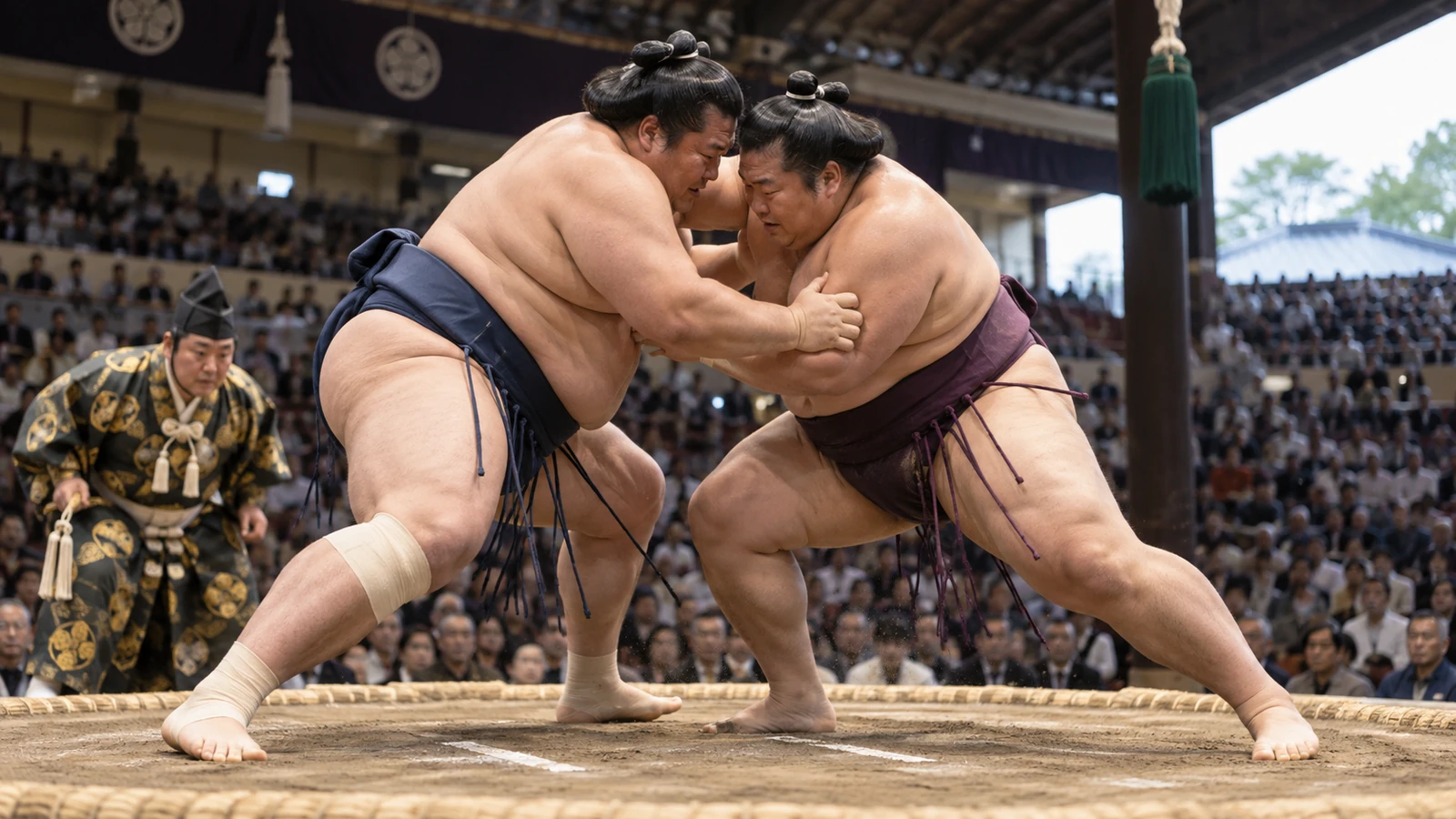
The senior sumo referee, known as a tate-gyoji, wears ornate robes modeled after Heian period court dress and carries a short dagger called a tantō tucked into his sash. Historically, this dagger served a deadly serious purpose: it symbolized the referee's willingness to commit ritual suicide (seppuku) if he made an erroneous call during a bout. While modern referees are not expected to take their own lives over a mistake, the tradition remains as a symbol of absolute integrity. Today, if a top referee misjudges a contest, he typically submits a formal letter of resignation to show accountability.
3. Active Wrestlers Are Strictly Forbidden from Driving
Active professional sumo wrestlers are strictly banned from driving personal automobiles by the Japan Sumo Association. This absolute prohibition was introduced following a series of high-profile traffic accidents involving wrestlers in the late 1960s and 1970s. Given their massive physical size and limited space inside standard passenger vehicles, driving was determined to be a significant safety hazard. As a result, active wrestlers rely entirely on taxis, hired drivers, or public transit to navigate Tokyo. Seeing a towering athlete squeezed into the back seat of a small Japanese taxi is a common sight in the Ryogoku sumo district.
4. Hair Is Styled with Scented Wax and Never Cut Lightly
A sumo wrestler's topknot, known as a chonmage or the elaborate fan-shaped o-o-chonmage, is central to his identity. Special hair artisans called tokoyama craft these intricate hairstyles using fine bamboo combs and a fragrant pomade known as bintsuke-abura. Made from vegetable wax and rapeseed oil, this sweet-smelling wax leaves an unforgettable aroma that lingers in sumo arenas for days after an event. A wrestler's topknot is so sacred that it is only cut during a formal retirement ceremony, marking his final transition back into civilian life.
5. Sacred Shinto Rules Bar Women from the Ring
Sumo wrestling is deeply tied to Shinto, Japan's native spiritual tradition, which considers the ring (dohyo) to be a consecrated sanctuary. Under ancient Shinto concepts of ritual purity, blood and childbirth are associated with spiritual pollution, leading to a strict prohibition against women stepping into the ring. This rule has sparked major international debate, particularly when high-ranking female politicians have been prevented from stepping onto the platform to present trophies. Despite ongoing public debate, the Japan Sumo Association continues to enforce the rule to preserve religious heritage.
6. Tons of Salt Are Thrown to Ward Off Evil Spirits
Before every top-tier sumo match, competitors scoop up large handfuls of coarse salt and hurl them across the dirt floor. This ritual is designed to purify the ring, cleanse bad luck, and protect the athletes from severe physical injury. Elite wrestlers can throw up to a kilogram of salt during their pre-match rituals, creating a striking spectacle for spectators. Beyond its symbolic spiritual purpose, salt historically provided a practical antiseptic benefit for open scrapes and cuts sustained during severe collisions.
7. The Heaviest Wrestler Weighed Nearly 650 Pounds
The heaviest professional sumo wrestler in recorded history was Russian-born Orora Satoshi, whose real name is Anatoly Mikhanov. At his peak, Orora tipped the scales at an astounding 292.6 kilograms (645 pounds or 46 stone). While his colossal weight gave him formidable stability, it severely hindered his mobility and cardiovascular stamina. Consequently, Orora was never able to climb into sumo's elite top divisions. His career stands as a testament to the physical limits of extreme body weight in modern athletic combat.
8. Lower-Ranked Wrestlers Live in Servitude to Champions
Life inside a sumo stable is structured around a ruthless hierarchy where junior athletes serve as assistants to high-ranking stars. Low-ranked recruits must wake up as early as 5:00 AM to sweep dirt, chop vegetables for daily meals, and clean the living quarters. During bath time following intense training sessions, junior recruits are even required to scrub the backs of senior champions who cannot reach around their broad torsos. This demanding apprenticeship enforces humility and instills respect before a wrestler can earn his own privileges.
9. Babies Are Made to Cry in a 400-Year-Old Ritual
One of sumo's most extraordinary events is the Naki Sumo (Crying Baby) festival, a 400-year-old ceremony held at Shinto shrines across Japan. During the ritual, sumo wrestlers hold infants high in the air while a referee wears scary masks or shouts to induce crying. According to Japanese traditional folklore, a baby's loud cry frightens off hidden demons and ensures strong, healthy growth. The first baby to cry loudly is named the victor, though if both cry together, the child with the louder scream wins.
10. Competition Silk Belts Are Never Washed
The primary garment worn during a sumo match is a heavy silk loincloth called a mawashi, which can stretch up to 30 feet in length and weigh over 10 pounds. Under official rules, a silk mawashi must never be washed with water because doing so would ruin the fabric and supposedly wash away good fortune. Following strenuous bouts and workouts, the heavy silk belt is hung outdoors to dry in the direct sunlight, relying on ultraviolet light to kill bacteria. Only cotton practice belts are occasionally scrubbed, leaving tournament belts unwashed for an athlete's entire career.
11. Foreign Rivals Have Dominated the Highest Ranks
Despite sumo's deep roots in traditional Japanese culture, international competitors have dominated the sport's highest tiers over recent decades. Athletes from Hawaii, Mongolia, Georgia, and Bulgaria have broken long-standing records, with Hawaiian giant Akebono becoming the first foreign-born Yokozuna in 1993. Following Akebono's rise, Mongolian wrestlers went on to dominate the top division, with legend Hakuho Sho winning more top-division championships than anyone in sumo history. Foreign wrestlers must fully assimilate into Japanese culture, master the language, and observe strict traditional customs to compete.
12. Mandatory Post-Meal Naps Force Rapid Weight Gain
Gaining massive weight for sumo wrestling is achieved through a calculated daily routine centered around post-meal sleep. Wrestlers intentionally skip breakfast every morning, training on an empty stomach for hours to suppress their metabolic rate and maximize hunger. Immediately following a colossal lunch of chanko nabe and carbohydrates, wrestlers go directly to sleep for a long afternoon nap. This sequence encourages the body to store the surge of calories as dense mass rather than burning them off through physical movement.
13. Extreme Bulk Shortens Life Expectancy by a Decade
The immense physical strain of carrying hundreds of pounds of body weight takes a devastating toll on a sumo wrestler's long-term health. Research indicates that professional sumo wrestlers have an average life expectancy roughly 10 years shorter than the typical Japanese male. High rates of type 2 diabetes, heart disease, high blood pressure, and joint failure are common among former competitors. Modern health officials and stablemasters are increasingly monitoring cardiovascular wellness to help former wrestlers slim down after retirement.
14. Fewer Than 80 Men Have Reached the Supreme Rank
The highest rank in professional sumo wrestling is Yokozuna, or Grand Champion, an honor reserved for extraordinarily dominant competitors. Unlike lower ranks where bad records lead to demotion, a Yokozuna can never be downgraded; if his performance permanently declines, he is expected to retire. In addition to winning consecutive tournaments, a candidate must demonstrate exceptional dignity and moral character, known as hinkaku. Because of these stringent demands, fewer than 80 men have officially attained the rank in sumo's recorded history.
15. Instant Envelopes of Cash Are Handed to Winners
Winning a high-profile sumo match rewards the champion with instant cash distributed directly inside the ring. Before popular bouts, sponsors pay for promotional banners called kensho-bana that are paraded around the dirt ring. Each banner corresponds to an envelope stuffed with cash placed on the referee's wooden fan. Immediately after securing victory, the winning wrestler collects the envelopes directly from the referee, performing a crisp three-motion hand gesture to show gratitude.
Sources & References
This AI-assisted post was rigorously curated and fact-checked for accuracy by:
 Martin Roháček
How fun was this article? 🤔
Tap a star to rate it
🧠 Quiz: How closely were you paying attention?
10 questions — all answers are in the article above!
Enjoyed these facts? There's more! 💌
Fresh fun facts in your inbox. No spam, ever.