15 Fascinating Facts About Woodrow Wilson
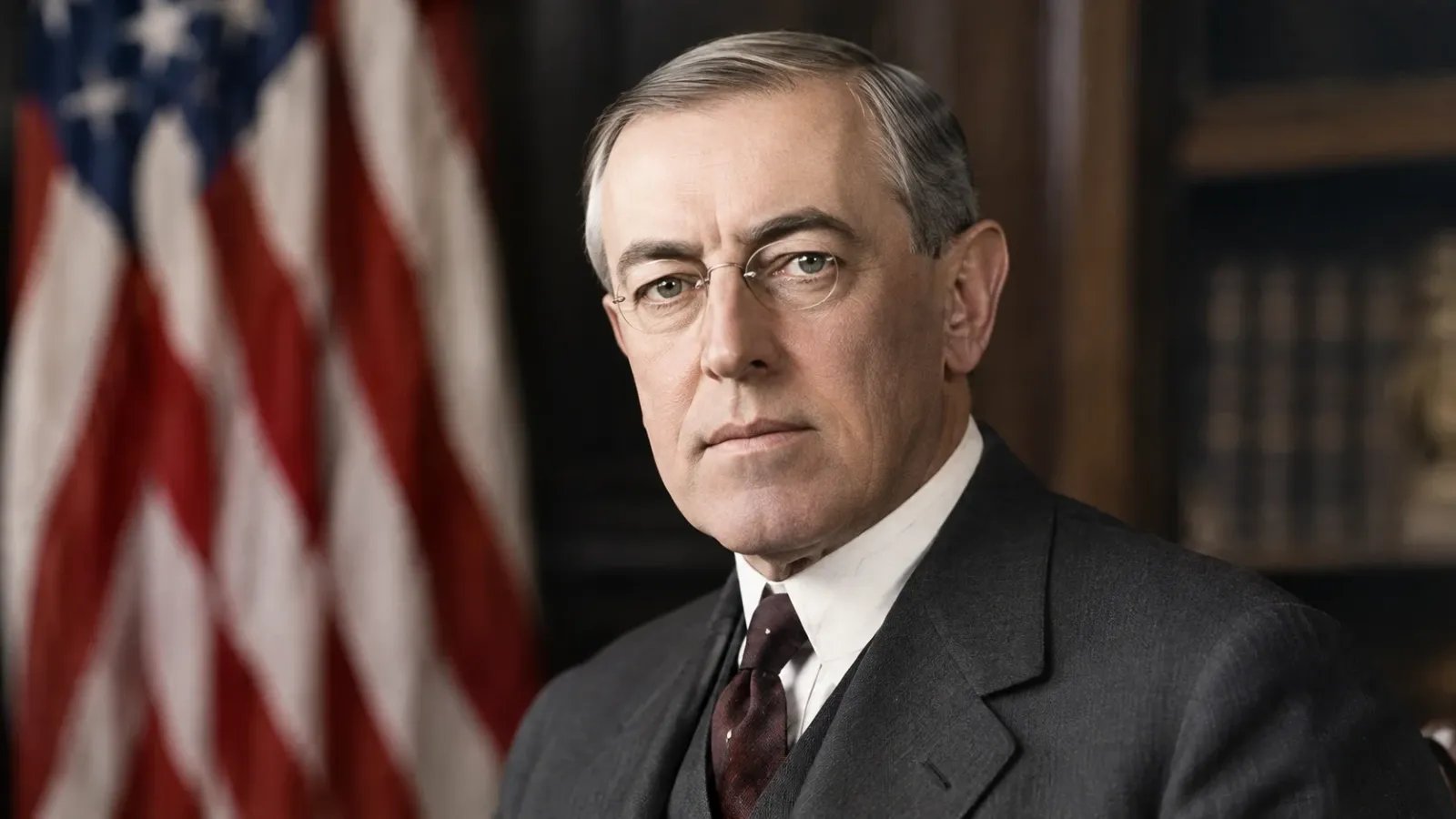
Often remembered merely as a peace-loving idealist who championed the League of Nations, Woodrow Wilson was actually a deeply contradictory figure. While he pioneered progressive global diplomacy, his domestic policies were marked by racial segregation and crackdowns on dissent. Discover the startling truths behind America's paradoxical academic leader.
1. Woodrow Wilson remains the only United States president to have earned a doctorate degree.
Before entering the chaotic world of national politics, Wilson was an accomplished academic who earned his Ph.D. in history and political science from Johns Hopkins University in 1886. His rigorous dissertation, titled Congressional Government, analyzed the shifting power dynamics between the legislative and executive branches. This scholarly background heavily influenced his leadership style, often causing him to approach political disputes with the stubborn certainty of a lecturing professor. He eventually became the president of Princeton University, where his attempts to reform the social hierarchy of the school foreshadowed his later political crusades. His academic pedigree gave him an aura of intellectual authority, but it also fueled accusations that he was elitist and detached from everyday citizens.
2. Despite his future as a renowned scholar, Wilson did not learn to read until he was ten years old.
Historians and medical professionals widely believe that young Wilson suffered from developmental dyslexia, a learning disability that was completely misunderstood during his childhood in the mid-nineteenth century. To compensate for his delayed reading abilities, he developed an extraordinary capacity for auditory learning and memorization. His father, a demanding Presbyterian minister, spent countless hours drilling him in debate, elocution, and vocabulary, which ultimately shaped Wilson into a masterful public speaker. Rather than being held back by his early struggles, Wilson taught himself shorthand to rapidly take notes and process information. This relentless self-discipline transformed a boy who could barely read into one of the most prolific writers and intellectuals of his generation.
3. He maintained a flock of sheep on the White House lawn during World War I to reduce groundskeeping expenses.
When the United States entered the First World War in 1917, the federal government needed to project an image of absolute resource conservation to the American public. Wilson ordered the deployment of a flock of Hampshire sheep to graze on the White House lawns, effectively replacing the human landscapers who had been drafted into military service. The flock eventually grew to forty-eight sheep, including a particularly aggressive ram named Old Ike who became notorious for chewing on discarded cigars. Beyond merely saving taxpayer money on lawn maintenance, the sheep served a highly lucrative patriotic purpose. When the flock was sheared, the administration auctioned off the wool, raising nearly one hundred thousand dollars for the American Red Cross war effort.
4. Wilson hosted the first feature film screening in White House history, showcasing a deeply racist cinematic epic.
In 1915, Wilson arranged a special screening of D.W. Griffith's The Birth of a Nation, making it the first motion picture to be shown inside the executive mansion. The film was an early cinematic masterpiece in terms of technical innovation, but its plot glorified the Ku Klux Klan and relied on viciously racist caricatures of Black Americans. A famous, though heavily disputed, quote claims Wilson described the movie as writing history with lightning, further legitimizing the film's hateful narrative. Regardless of his exact words, his willingness to screen the film provided it with a massive public relations boost from the highest office in the land. The event sparked widespread protests by the NAACP and remains a dark testament to Wilson's deeply entrenched racial prejudices.
5. His portrait is featured on the one hundred thousand dollar bill, the highest denomination of currency ever issued by the United States.
The federal government printed this astronomically high-value gold certificate in 1934, during the depths of the Great Depression, long after Wilson had passed away. These bills were never intended for circulation among the general public and were exclusively used for official transactions between Federal Reserve Banks. The selection of Wilson for the note was a deliberate nod to his role as the architect of the Federal Reserve System, which he signed into law in 1913. Only about forty-two thousand of these certificates were ever printed, and the vast majority were systematically destroyed once wire transfers rendered them obsolete. Today, it is strictly illegal for private collectors to own one of these massive bills, though a few surviving examples are preserved in federal museums.
6. A catastrophic stroke in 1919 left Wilson paralyzed, resulting in his wife secretly acting as the nation's chief executive.
While engaging in a grueling cross-country train tour to drum up support for the League of Nations, Wilson suffered a massive ischemic stroke that left the left side of his body paralyzed. To prevent a crisis of public confidence, his inner circle, led by First Lady Edith Wilson and his personal physician, orchestrated an unprecedented cover-up regarding the severity of his condition. For the remainder of his presidency, Edith acted as the sole gatekeeper to the Oval Office, deciding which state papers, cabinet members, and legislative decisions were important enough to reach her incapacitated husband. Historians frequently refer to this period as a secret presidency or the first time a woman effectively acted as the President of the United States. The prolonged deception exposed a massive flaw in the Constitution, ultimately inspiring the creation of the Twenty-Fifth Amendment decades later.
 US Presidents
Discover the eccentricities, secret talents, and surprising hidden lives of America's most influential presidents, from frontier wrestlers to covert strategists.
See All Facts
US Presidents
Discover the eccentricities, secret talents, and surprising hidden lives of America's most influential presidents, from frontier wrestlers to covert strategists.
See All Facts
7. Wilson aggressively dismantled racial integration within the federal government, establishing strict segregation across multiple departments.
Prior to Wilson's election, federal agencies in Washington D.C. had offered some of the few reliable avenues for Black Americans to secure stable, integrated civil service jobs. Almost immediately upon taking office in 1913, Wilson allowed his cabinet secretaries to implement harsh segregationist policies in workplaces, restrooms, and cafeterias within the Treasury and the Post Office. He justified these actions through a deeply flawed, paternalistic viewpoint, claiming that segregation was meant to prevent racial friction and was supposedly beneficial to Black workers. When prominent civil rights leaders like William Monroe Trotter confronted him in the Oval Office, Wilson coldly dismissed their grievances and threw them out. This reversal of post-Civil War progress devastated the Black middle class in the capital and left a permanent stain on his progressive legacy.
8. He was the first president since John Adams to deliver the State of the Union address in person before Congress.
For over a century, American presidents adhered to a precedent set by Thomas Jefferson, who believed that appearing before Congress to deliver a speech too closely resembled the practices of a British monarch. Instead, nineteenth-century executives simply sent written reports to the Capitol, which were monotonously read aloud by congressional clerks. In 1913, Wilson shattered this tradition by walking into the House chamber to address lawmakers directly, leveraging his formidable skills as an orator to dominate the legislative agenda. This dramatic move allowed him to publicly command attention and frame his sweeping economic reforms directly to the American people. Every president since has recognized the theatrical power of this approach, cementing the in-person State of the Union as a cornerstone of modern political theater.
9. Wilson actively opposed the prohibition of alcohol and formally vetoed the Volstead Act.
Despite being a strict Presbyterian with a deeply moralistic worldview, Wilson did not support the federal crusade to ban the sale and consumption of alcohol. In 1919, Congress passed the Volstead Act to provide the enforcement mechanisms needed to enact the Eighteenth Amendment. Wilson vetoed the legislation, arguing that it was unnecessarily rigid and intertwined wartime alcohol restrictions with permanent peacetime prohibitions. However, the anti-alcohol temperance movement possessed overwhelming political momentum, and Congress swiftly overrode his veto the very next day. While Wilson was not a heavy drinker himself, his pragmatic stance on alcohol regulation put him at odds with the sweeping moral crusades that defined the era.
10. He orchestrated the creation of modern press conferences to bypass political bosses and speak directly to the public.
Recognizing that he needed to control the narrative surrounding his ambitious domestic agenda, Wilson fundamentally revolutionized the relationship between the presidency and the media. Eleven days after his inauguration, he invited a massive group of reporters into his office, initiating the first formal, regular presidential press conferences in American history. Prior to this, presidents only spoke to favored journalists behind closed doors or communicated through partisan newspaper publishers. By answering questions from a broad pool of correspondents, Wilson established an expectation of presidential accountability while masterfully manipulating the press to amplify his policies. Although he eventually grew frustrated with adversarial reporters and curtailed the practice, he forever changed how the executive branch manages public relations.
11. He officially established Mother's Day as a permanent national holiday in the United States.
The campaign to create a recognized holiday celebrating motherhood was spearheaded by an activist named Anna Jarvis, who spent years lobbying politicians following the death of her own mother. In 1914, Congress passed a joint resolution designating the second Sunday in May as Mother's Day, which Wilson eagerly signed into law. His official proclamation urged American citizens to display the national flag as a public expression of reverence for the mothers of the country. Ironically, Jarvis soon became deeply disgusted by the rapid commercialization of the holiday, spending the rest of her life protesting the greeting card and floral industries that profited from it. Nevertheless, Wilson's signature permanently enshrined the observance into the cultural fabric of the nation.
12. During his time in office, he became the first sitting president to cross the Atlantic Ocean.
Following the armistice that ended the fighting in World War I, Wilson made the unprecedented decision to personally negotiate the peace treaties in Europe. In December 1918, he boarded the USS George Washington and sailed for France to attend the Paris Peace Conference, breaking a longstanding unwritten rule that presidents should not leave the Western Hemisphere. His arrival in Europe was met with euphoric, adoring crowds who viewed him as a messianic figure bringing permanent peace to a shattered continent. He spent six months abroad hammering out the intricate details of the Treaty of Versailles and designing the covenant of his beloved League of Nations. His lengthy absence from Washington heavily damaged his domestic political capital, ultimately contributing to the Senate's refusal to ratify the treaty.
13. He signed draconian espionage laws that resulted in the imprisonment of political rivals and thousands of ordinary citizens.
While Wilson aggressively championed global democracy abroad, he ruthlessly suppressed domestic civil liberties during the First World War. He successfully pushed Congress to pass the Espionage Act of 1917 and the Sedition Act of 1918, which effectively criminalized any public expression of opposition to the war effort or the military draft. Under his administration's intense federal crackdowns, thousands of pacifists, anarchists, and labor activists were arrested simply for handing out pamphlets or giving anti-war speeches. His most famous target was Eugene V. Debs, a prominent socialist leader who had run against Wilson for the presidency, whom Wilson's Justice Department threw in federal prison for ten years. This dark chapter remains one of the most severe government assaults on the First Amendment in American history.
14. He authored a popular history textbook that heavily popularized the sympathetic Lost Cause mythology of the Confederacy.
Long before reaching the White House, Wilson was a highly influential academic historian who published a multi-volume work titled A History of the American People. Born in Virginia and raised in Georgia during the Civil War and Reconstruction, his historical writings reflected the deep-seated prejudices of his Southern upbringing. His books actively condemned federal Reconstruction efforts, romanticized the antebellum South, and portrayed the Ku Klux Klan as a necessary force for restoring political order. Because Wilson was considered an elite scholar, his historical interpretations lent powerful academic credibility to the racist narratives that justified Jim Crow laws. His writings were widely taught in American schools for decades, profoundly shaping the nation's distorted memory of the Civil War.
15. He was an avid fanatic of baseball and routinely threw out the first pitch on opening day.
Wilson's intense, academic demeanor masked a deep, lifelong passion for the sport of baseball, which he played decently as a center fielder during his college years at Davidson. Throughout his presidency, he attended games as often as his schedule permitted, viewing the sport as a vital escape from the crushing stress of the Oval Office. In 1915, he became the first sitting president to attend a World Series game, joining the roaring crowds to watch the Boston Red Sox face off against the Philadelphia Phillies. Even after his debilitating stroke left him partially paralyzed and unable to attend public events, he insisted on listening to game updates via the newly invented medium of broadcast radio. His enthusiastic support for the game during a period of global upheaval helped solidify baseball's status as the quintessential American pastime.
Sources & References
This AI-assisted post was rigorously curated and fact-checked for accuracy by:
 Martin Roháček
How fun was this article? 🤔
Tap a star to rate it
🧠 Quiz: How closely were you paying attention?
10 questions — all answers are in the article above!
Enjoyed these facts? There's more! 💌
Fresh fun facts in your inbox. No spam, ever.