
The Radical Iconoclast: 15 Fascinating Facts About Coco Chanel
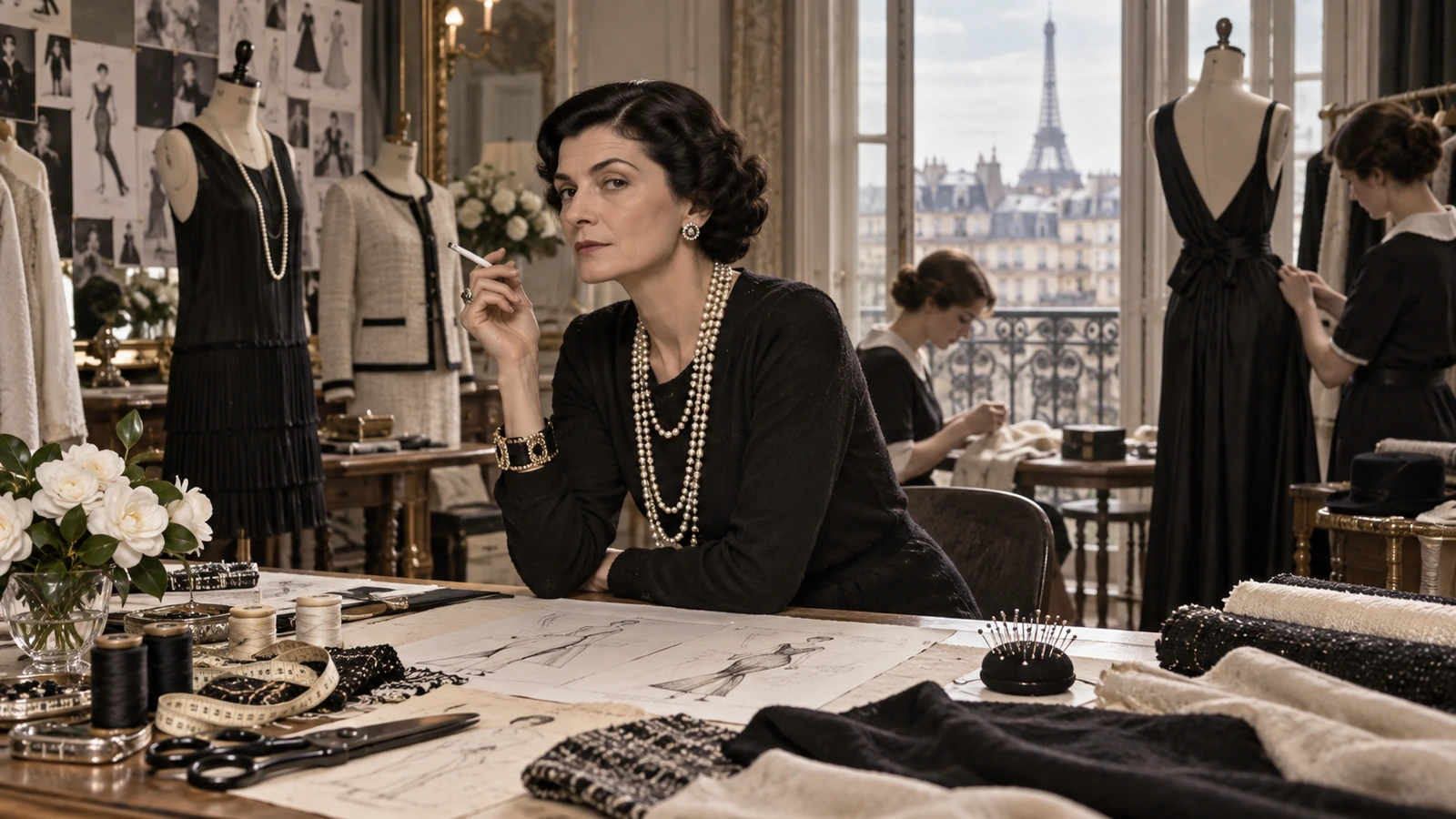
From her humble beginnings in a French convent orphanage to becoming one of the most powerful figures in global luxury, Coco Chanel completely redefined modern fashion. Behind the chic tweed suits and timeless pearl necklaces lay a life filled with secrets, rivalries, and shocking historical revelations. She pioneered practical womenswear while navigating wartime espionage, high-society feuds, and deeply superstitious personal rituals. Discover 15 fascinating facts about the legendary designer who transformed the way the world dresses.
1. She Started Her Career as a Cabaret Singer
Before becoming a global fashion titan, Gabrielle Chanel performed as a cabaret singer in cafés around Moulins and Vichy. Her signature songs included "Qui qu'a vu Coco?" and "Ko Ko Ri Ko," which entertained off-duty cavalry officers stationed nearby. The enthusiastic military audience began calling her "Coco," a nickname that stayed with her for the rest of her life. While she later claimed the moniker was a childhood pet name given by her father, contemporary records confirm her stage career was its true source. This early brush with performance art helped her cultivate the magnetic charisma that would eventually captivate high society.
2. Declassified Files Confirm She Was a Nazi Secret Agent
Declassified documents released decades after World War II confirmed that Chanel served as an operative for the Abwehr, Germany's military intelligence service. Designated as Agent F-7124 and assigned the codename "Westminster," she took advantage of her high-society connections to navigate occupied Europe. Her collaboration was motivated partly by attempts to secure the release of her nephew from a German prisoner-of-war camp. She also sought to leverage Nazi antisemitic laws to reclaim full control of her perfume company from her Jewish business partners, the Wertheimer family. This dark chapter of her life remains one of fashion history's most controversial revelations.
3. She Once Set Her Biggest Fashion Rival on Fire
Chanel maintained a legendary and bitter rivalry with avant-garde Italian designer Elsa Schiaparelli, whose surrealist creations challenged Chanel's minimalist aesthetic. At a costume ball in Paris, Chanel invited Schiaparelli to dance, only to deliberately steer her rival into a chandelier lit with real candles. Schiaparelli's costume—a tree ensemble complete with surrealist foliage—instantly caught fire before startled partygoers poured soda water over her to extinguish the flames. While Schiaparelli escaped without serious injury, the incident highlighted the cutthroat intensity of their feud. Chanel reportedly viewed Schiaparelli not merely as competition, but as a dangerous artistic threat.
4. Her Life Was Guided by a Mystical Obsession with Number Five
Chanel was deeply superstitious and harbored a lifelong obsession with the number five, which she believed brought her supreme good fortune. When creating her iconic perfume, she selected the fifth sample presented to her by master perfumer Ernest Beaux. She chose to launch Chanel No. 5 on the fifth day of the fifth month in 1921, establishing a ritual she repeated for subsequent collection reveals. She even ensured that the numerical motif was subtly integrated into the design of her personal crystal chandeliers. This spiritual devotion to five became a foundational element of her brand identity.
5. She Accidentally Invented the Modern Suntan
In the early 1920s, pale skin was considered the hallmark of wealth, while tanned skin was associated with manual outdoor labor. After accidentally getting severely sunburned during a Mediterranean yacht trip on the French Riviera, Chanel returned to Paris with a bronzed complexion. Her aristocratic friends and fashionable followers immediately emulated her golden glow, assuming it represented a new mark of modern luxury and leisure. Almost overnight, Chanel effectively inverted centuries of social tradition, transforming the suntan into an enduring status symbol. This accidental trend redefined global standards of beauty for generations to come.
6. She Made the Ritz Hotel Her Permanent Home for Over Thirty Years
Starting in 1937, Chanel made the luxurious Hotel Ritz Paris her permanent residence, living in a private suite for over thirty years until her death in 1971. Even during the Nazi occupation of Paris, she maintained her opulent suite while German officers occupied other floors of the hotel. However, she strictly separated her personal life from her professional endeavors by walking across the Place Vendôme to her workshop every day. She personally decorated her Ritz suite with Coromandel screens, velvet sofas, and elaborate rock crystal fixtures. The hotel eventually named the suite after her in honor of its most famous resident.
7. She Never Drew a Single Fashion Sketch
Unlike most famed couturiers who began their design process with pencil sketches on paper, Chanel never drew a single illustration for her garments. Instead, she worked entirely three-dimensionally by draping and cutting fabric directly onto live fashion models or dress forms. Using sharp shears that she wore on a ribbon around her neck, she sculptured clothes to move harmoniously with the female body. This hands-on approach allowed her to prioritize physical comfort and freedom of movement over static visual concepts. Her refusal to sketch set her apart from traditional tailors of her era.
8. She Pioneered Practical Pockets in Women's Garments
Frustrated by the impractical nature of early 20th-century womenswear, Chanel insisted that women's garments should offer functionality alongside elegance. She was outraged that female attire lacked basic utility, forcing women to carry heavy handbags or rely on companions to hold small items. To solve this issue, she integrated deep, usable pockets into her signature tweed jackets and skirts. This practical addition gave women unprecedented physical freedom, allowing them to walk comfortably with their hands tucked into their pockets. Her design philosophy helped dismantle restrictive Victorian clothing standards.
9. The Name of the Iconic 2.55 Bag Is a Secret Date Code
When Chanel designed her iconic quilted handbag in February 1955, she chose a pragmatic naming convention that simply reflected the date of its creation. The "2.55" handbag introduced a groundbreaking shoulder strap made of leather-intertwined gold chains, liberating women's hands for the first time in high-fashion leather goods. The bag's interior featured a hidden zippered pocket, which rumor suggests Chanel used to conceal secret love letters. The burgundy lining was deliberately chosen to recall the color of the uniforms she wore during her upbringing in a convent orphanage. Today, the 2.55 remains one of the most famous and copied luxury accessories in history.
10. Convent Nuns Taught Her Sewing in an Orphanage
Following the death of her mother, twelve-year-old Chanel was abandoned by her father at the strict Catholic orphanage of Aubazine Abbey. Raised by Cistercian nuns, she learned the precise art of sewing and seamstress work that laid the foundation for her future empire. The stark, austere environment of the convent heavily influenced her revolutionary design aesthetic. The contrasting black-and-white habits of the nuns inspired her signature minimalist color palette, including the famous little black dress. What began as a painful period of childhood abandonment ultimately fueled her artistic identity.
11. She Popularized Men's Underwear Fabric for High Fashion
During World War I, traditional luxury fabrics like silk and satin were scarce due to wartime shortages and rationing. Chanel made the audacious decision to purchase surplus jersey fabric, a flexible knit material previously used exclusively for men's underwear. She transformed this humble, fluid fabric into stylish dresses that draped softly without requiring rigid corsets. Women embraced jersey because it offered uninhibited movement, breathability, and affordable elegance during difficult times. This unconventional fabric choice permanently altered the trajectory of modern leisure wear.
12. Five Stone Lions Guard Her Final Resting Place
Chanel died in Paris in 1971 at the age of 87, but she chose to be buried in Lausanne, Switzerland, where she had lived in exile after World War II. Having personally designed her tombstone, she instructed that it be carved with five sculpted lion heads. Born on August 19, 1883, under the astrological sign of Leo, she considered the lion her personal totem and protective emblem. Throughout her life, lion statues and motifs adorned her apartments, jewelry designs, and suit buttons. The five carved lions on her grave symbolize both her astrological guardian and her beloved lucky number.
13. She Embarked on a Covert Peace Mission Code-Named Operation Modellhut
In 1943, Nazi intelligence attempted to exploit Chanel's personal acquaintance with British Prime Minister Winston Churchill to negotiate a secret peace treaty. Codenamed "Operation Modellhut" (Operation Model Hat), the mission involved Chanel traveling to Madrid to deliver a letter to Churchill through the British embassy. Chanel had befriended Churchill years earlier during her romantic affair with the Duke of Westminster. However, the operation collapsed when an informant revealed her presence and collaboration to British authorities. Churchill never responded to the approach, and the covert peace initiative proved an utter failure.
14. She Fabricated Her Past to Hide Her Impoverished Childhood
To hide her humble origins and the trauma of growing up in an orphanage, Chanel spent her adult life constructing elaborate lies about her youth. She routinely claimed to be ten years younger than her actual age and fabricated stories about living with wealthy aunts after her mother's death. She went to great lengths to erase public records of her family's crushing poverty and her time spent performing in working-class cabaret halls. This calculated reinvention of her past allowed her to fit seamlessly into upper-class European society. Her carefully crafted persona proved just as meticulously engineered as her fashion line.
15. The Interlocking C's Logo Has Roots in Convent Architecture
Chanel personally designed the iconic brand logo featuring two reversed, interlocking letters "C," which became one of the most recognizable luxury symbols in history. According to fashion historians, the emblem was inspired by the geometric stained glass windows of the Aubazine Abbey where she grew up. Another theory suggests she adapted the motif from the insignia of Château de Crémat, an estate in Nice owned by her friend Irène Bretz. Regardless of its exact origin, Chanel registered the trademark in 1924, forever cementing the double-C logo as an emblem of chic elegance.
Sources & References
This AI-assisted post was rigorously curated and fact-checked for accuracy by:
 Martin Roháček
How fun was this article? 🤔
Tap a star to rate it
🧠 Quiz: How closely were you paying attention?
10 questions — all answers are in the article above!
Enjoyed these facts? There's more! 💌
Fresh fun facts in your inbox. No spam, ever.