The Devastating Decade: 15 Fascinating Facts About the Great Depression
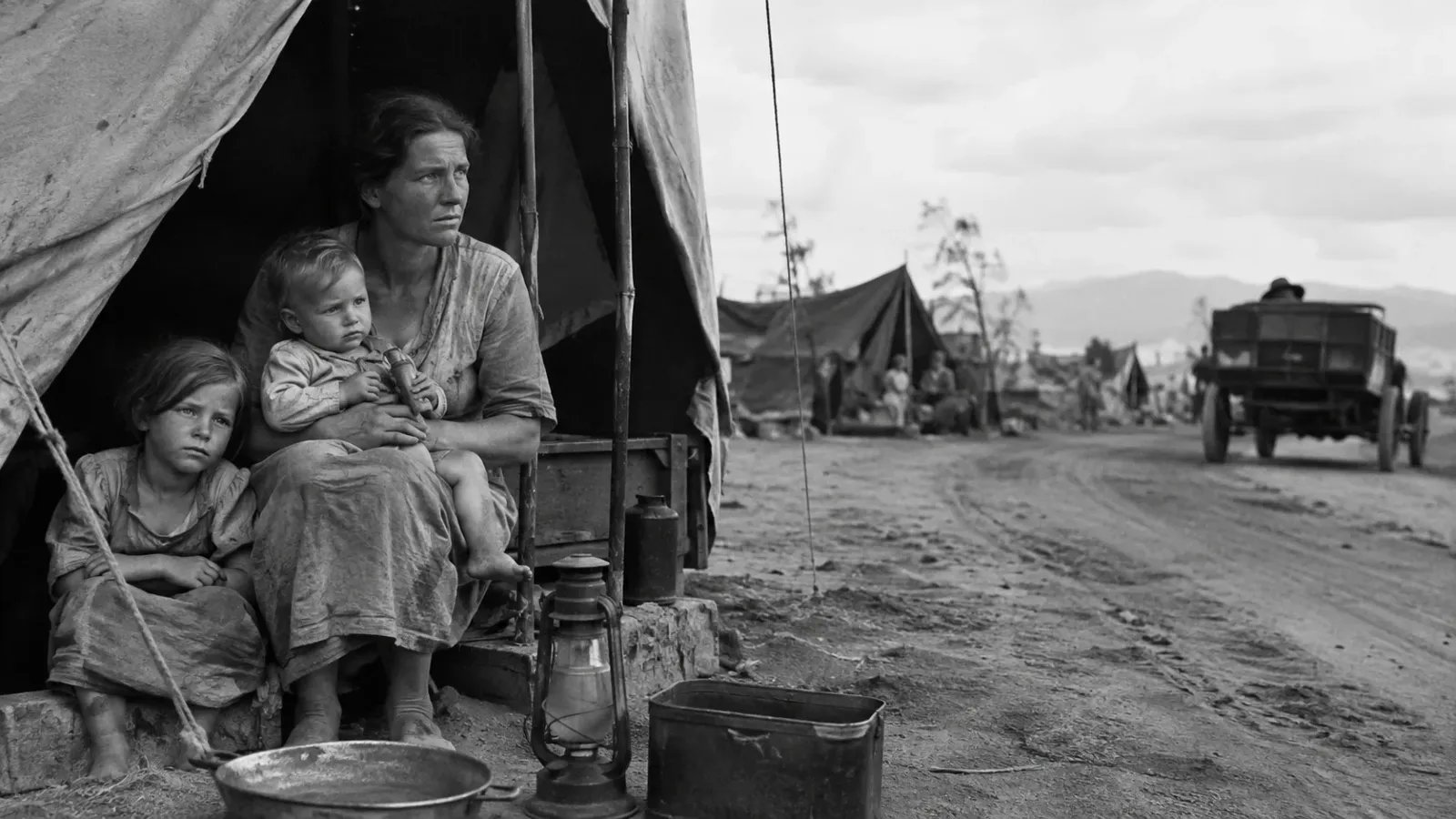
Often reduced to black-and-white images of soup lines and the 1929 stock market crash, the Great Depression was not caused by Wall Street alone. It was a global catastrophe driven by systemic bank failures, ecological disaster, and bad monetary policy. Beyond the famous photographs lie surprising realities of resilience, bizarre government initiatives, and forgotten history.
1. The infamous 1929 stock market crash did not actually cause the Great Depression.
Economists and historians widely agree that while the crash on Black Tuesday destroyed vast amounts of wealth, it was merely the first domino. The true underlying causes were a series of devastating bank panics throughout the early 1930s, the restrictive monetary policies of the Federal Reserve, and a dramatic drop in international trade exacerbated by protectionist tariffs like the Smoot-Hawley Act.
2. A massive spike in suicide rates on Wall Street after the stock market crash is purely an urban legend.
Pop culture frequently depicts desperate stockbrokers leaping from New York skyscrapers in October 1929. In reality, the Chief Medical Examiner of New York City reported that the suicide rate actually dropped between mid-October and mid-November of that year. While suicides did gradually rise as the economic hardship deepened throughout the 1930s, the dramatic wave of immediate post-crash jumpers never happened.
3. Thousands of World War I veterans marched on Washington in 1932 to demand early payment of their service certificates.
Known as the Bonus Army, an estimated forty thousand demonstrators, including veterans and their families, established a massive shantytown in the nation's capital. Driven by starvation and unemployment, they lobbied Congress to cash out their bonuses years ahead of the 1945 scheduled date. The U.S. government brutally evicted them using infantry, cavalry, and tanks commanded by General Douglas MacArthur, creating a public relations nightmare for President Herbert Hoover.
4. Board games like Monopoly exploded in popularity because they allowed impoverished families to experience the fantasy of extreme wealth.
Originally based on a game designed to critique the monopolistic practices of landlords, Monopoly was patented by Charles Darrow and sold to Parker Brothers in 1935. During a time when real-world upward mobility seemed impossible and families needed cheap entertainment at home, playing a game where they could accumulate millions of dollars, buy real estate, and crush their competitors provided an intoxicating psychological escape.
5. The U.S. government intentionally destroyed millions of acres of crops and slaughtered livestock while people were starving.
To combat deflated agricultural prices caused by massive overproduction, the Agricultural Adjustment Act of 1933 paid farmers to reduce their output. This led to the surreal and highly controversial destruction of ten million acres of cotton and the slaughter of six million baby pigs. While the policy successfully raised commodity prices and saved many farms from bankruptcy, it sparked immense public outrage given the widespread hunger in American cities.
6. Zippers suddenly replaced buttons on men's trousers during the 1930s entirely due to the economic downturn.
Before the Depression, zippers were largely seen as a novelty fastener for boots and tobacco pouches. However, as the economic crisis forced clothing manufacturers to cut production costs, the zipper emerged as a cheaper, less labor-intensive alternative to sewing multiple buttonholes. A brilliant marketing campaign subsequently convinced men that zippers would prevent embarrassing wardrobe malfunctions, forever changing men's fashion.
7. The ecological disaster known as the Dust Bowl was caused by a combination of severe drought and aggressive, mechanized farming practices.
During the 1920s, farmers in the Great Plains used newly invented gasoline tractors to aggressively plow up millions of acres of native deep-rooted prairie grasses. When a historic drought struck the region in the 1930s, there was no vegetation left to anchor the soil. High winds picked up the loose topsoil, creating terrifying black blizzards that suffocated livestock, caused widespread respiratory illness, and displaced hundreds of thousands of people.
8. President Franklin D. Roosevelt confiscated privately held gold from American citizens in 1933.
Through Executive Order 6102, the federal government required citizens to turn in their gold coin, gold bullion, and gold certificates to the Federal Reserve in exchange for twenty dollars and sixty-seven cents per ounce. This extreme measure was taken to stop the massive hoarding of gold that was crippling the banking system and to free the government to print more paper currency, deliberately inflating the economy to stimulate spending.
9. The Golden Gate Bridge and the Empire State Building were both constructed during the darkest days of the economic crisis.
Rather than halting large-scale construction, the Depression era birthed some of America's most iconic infrastructure. The plummeting cost of materials and a vast pool of desperate, cheap labor made these monumental projects financially viable. These grand engineering feats also served as profound psychological boosters, demonstrating to a demoralized public that the nation was still capable of producing monumental achievements.
10. The film industry thrived during the era because movie theaters offered air conditioning and escapism.
Despite pervasive poverty, between sixty and eighty million Americans went to the movies every week. For a mere fifteen cents, patrons could watch lavish musicals, sweeping romances, and gangster epics that transported them away from their daily miseries. Additionally, movie palaces were among the only public buildings outfitted with early air conditioning systems, making them a literal refuge from the sweltering summer heat.
11. A new dietary staple called the water pie was invented by resourceful homemakers who could not afford standard baking ingredients.
With milk, butter, and eggs prohibitively expensive or simply unavailable, families had to get creative. Water pie, also known as depression pie, consisted of a crust filled with hot water, a small amount of flour, sugar, and vanilla extract. When baked, the ingredients melded into a surprisingly satisfying, gelatinous, custard-like dessert, demonstrating the incredible culinary ingenuity born out of sheer desperation.
12. The term skid row gained national prominence during the Depression to describe urban areas where transient populations gathered.
Originating in Seattle in the late nineteenth century as Skid Road, a path where loggers slid timber to the mills and frequented cheap saloons, the phrase evolved during the 1930s. As homelessness skyrocketed, every major city developed concentrated districts of transient camps, cheap flophouses, and soup kitchens. The term became a universal descriptor for impoverished urban zones where desperate, displaced individuals concentrated.
13. The New Deal employed hundreds of professional writers to document the oral histories of formerly enslaved people.
Under the Works Progress Administration, the Federal Writers' Project was created to provide jobs for unemployed writers, editors, and researchers. One of their most significant initiatives was the Slave Narrative Collection, which gathered over two thousand interviews from the last living generation of formerly enslaved African Americans. This massive undertaking preserved invaluable first-person accounts of American slavery that would have otherwise been lost to history.
14. Soup kitchens were originally popularized and privately funded by notorious mobster Al Capone.
Before the federal government established robust social safety nets, private charities and opportunistic figures filled the void. In 1930, Capone opened one of the first and most famous soup kitchens in Chicago, serving thousands of meals a day to the unemployed. This philanthropic effort was a calculated public relations stunt designed to win the favor of the working class and distract law enforcement from his violent bootlegging empire.
15. The Great Depression formally ended only because of the massive industrial mobilization required for World War II.
While Franklin D. Roosevelt's New Deal programs significantly reduced unemployment and stabilized the financial system, the economy remained sluggish throughout the late 1930s. It was the outbreak of global conflict and the subsequent implementation of the Lend-Lease Act that truly catalyzed recovery. The unprecedented government spending on munitions, ships, and aircraft practically eliminated unemployment overnight, finally pulling the United States out of the depression.
Sources & References
This AI-assisted post was rigorously curated and fact-checked for accuracy by:
 Martin Roháček
How fun was this article? 🤔
Tap a star to rate it
🧠 Quiz: How closely were you paying attention?
10 questions — all answers are in the article above!
Enjoyed these facts? There's more! 💌
Fresh fun facts in your inbox. No spam, ever.