The Unyielding Visionary: 15 Fascinating Facts About Sitting Bull
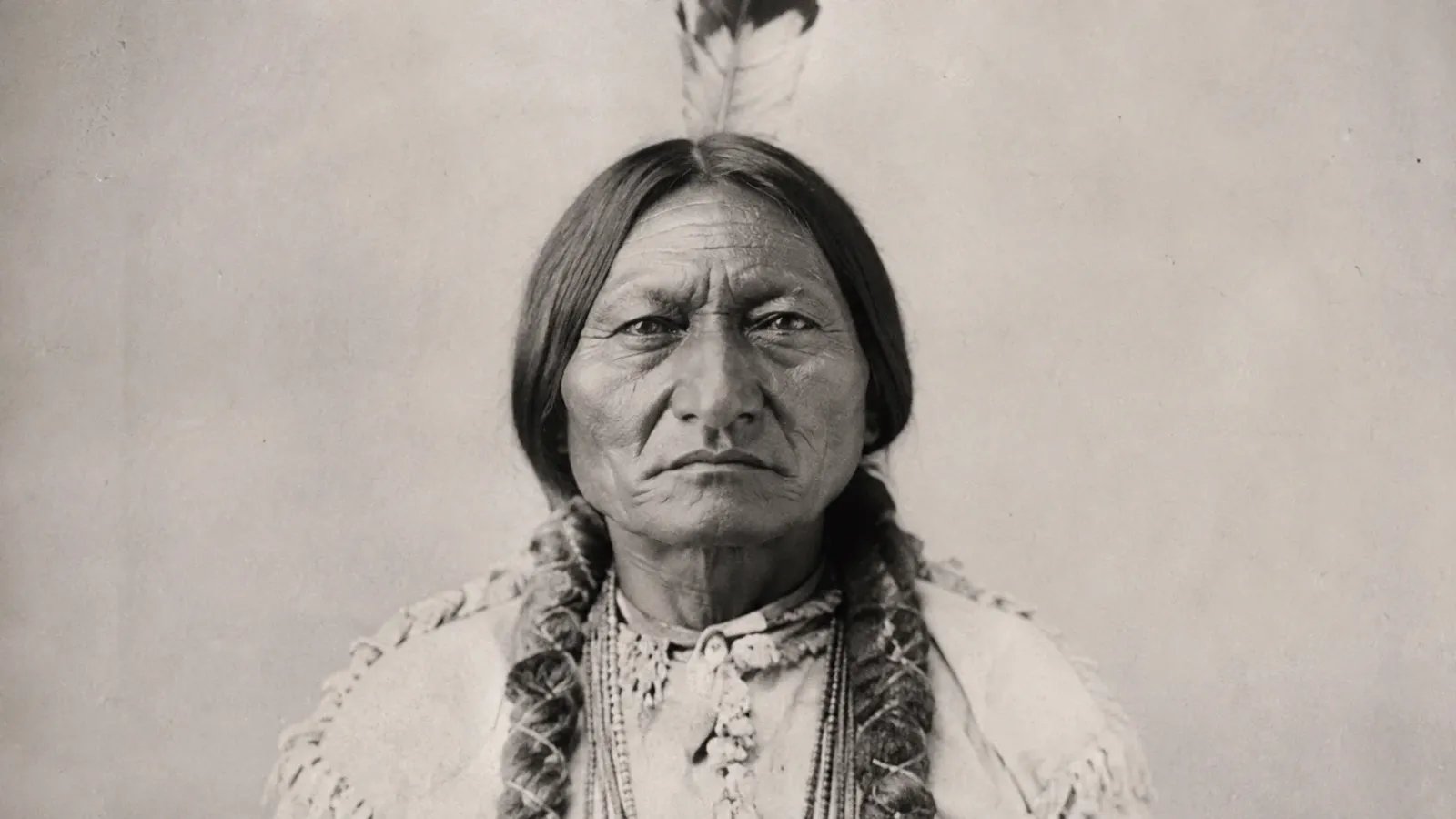
Sitting Bull is frequently reduced by popular culture to a mere warrior-chief whose sole defining moment was the bloody defeat of George Armstrong Custer at the Battle of the Little Bighorn, but this one-dimensional caricature obscures the reality of a profoundly complex spiritual leader, political strategist, and fiercely devoted protector of his people. Contrary to the widespread myth that he tactically commanded the battlefield forces on that fateful day in 1876, Sitting Bull was actually serving as a holy man who had predicted the victory days earlier during a grueling religious ritual, leaving the combat leadership to younger war chiefs like Crazy Horse. Born into the Hunkpapa Lakota, his life was defined not just by armed resistance against relentless American expansion, but by his visionary diplomacy, his profound spiritual beliefs, and his surprisingly global perspective later in life. By examining the obscure and fascinating truths of his journey, we can uncover the real man behind the legend, revealing a brilliant, steadfast leader who fought a rapidly changing world to preserve the sacred sovereignty of the Sioux nation.
1. A Childhood Name Earned Through Deliberation
Before he became known to the world by his famous moniker, the young Lakota boy was originally named Jumping Badger at his birth around 1831. However, his family soon gave him the childhood nickname Hunkesni, which translates to Slow, because of his incredibly deliberate and careful manner of doing things. Rather than being an insult, this moniker reflected a deep thoughtfulness and lack of impulsiveness that would later heavily influence his strategic political leadership. It was not until he proved his bravery at age fourteen by counting coup on a Crow warrior during a raiding party that his father proudly bestowed his own name upon him, Tatanka Iyotake, meaning Buffalo Bull Who Sits Down.
2. The Supreme Spiritual Leader
While history books frequently label him as a military tactician, Sitting Bull was primarily a Wichasha Wakan, a holy man and spiritual leader of the Hunkpapa Lakota. His authority stemmed far more from his profound connection to the divine, his ability to understand animal languages, and his prophetic visions than from his prowess in physical combat. He led profound religious ceremonies, most notably the Sun Dance, acting as a vital intercessor between the spirit world and his people to secure their prosperity and safety. This deep spiritual authority is what ultimately convinced various, often fiercely independent, Sioux and Cheyenne bands to unite under his singular leadership during the pivotal conflicts of the 1870s.
3. A Bloody Prophecy of Custer's Fall
Just weeks before the legendary Battle of the Little Bighorn, Sitting Bull participated in a grueling Sun Dance ceremony to seek guidance from Wakan Tanka, the Great Mystery. During this intense ritual, he had his arms slashed exactly fifty times by his adopted brother, uncomplainingly enduring the massive blood loss while dancing in the scorching sun until he fell into a deep trance. In this visionary state, he witnessed soldiers falling like grasshoppers from the sky directly into the Native American camp, a clear spiritual omen of a massive indigenous victory over the encroaching United States military forces. This prophecy provided immense psychological and spiritual fortitude to his coalition of warriors, cementing their resolve when Custer's Seventh Cavalry actually attacked shortly thereafter.
4. A Non-Combatant at the Little Bighorn
A pervasive historical myth insists that Sitting Bull was the tactical mastermind actively directing warriors on the ground during the defeat of Custer. In reality, Sitting Bull was in his mid-forties at the time of the battle and did not participate in the front-line fighting, largely because he was still recovering from the physical toll of his recent Sun Dance. Instead, he stayed behind in the sprawling village to protect the women, children, and elderly, while younger war chiefs like Crazy Horse and Gall led the swift and devastating counterattack against the cavalry. His true role during the battle was spiritual and administrative, ensuring the safety of the non-combatants and praying for the warriors executing the defense of the camp.
5. A Bitter Exile in Grandmother's Land
Following the victory at Little Bighorn, the United States government relentlessly pursued the Sioux, forcing Sitting Bull to lead his band across the border into Canada in 1877. He referred to this territory as Grandmother's Land, a respectful nod to Queen Victoria, and initially found sanctuary and a surprisingly cordial relationship with Major James Walsh of the North-West Mounted Police. However, the Canadian government refused to provide the refugees with reservations or food rations, and the systematic extermination of the buffalo by commercial hunters eventually left his people starving. After four years of brutal deprivation in the harsh northern climate, a pragmatic and defeated Sitting Bull finally surrendered to American authorities in North Dakota in 1881 to save his people from famine.
6. The True Etymology of His Name
The English translation of his name, Sitting Bull, somewhat misrepresents the active and formidable nature of the original Lakota term Tatanka Iyotake. A more precise linguistic translation describes a massive, unyielding buffalo bull that has firmly planted itself on its haunches to fiercely defend its ground against a predator. This imagery perfectly encapsulates his lifelong geopolitical stance against the relentless expansion of the United States government and military. It reflects an immovable, defensive stubbornness rather than passive resting, symbolizing a leader who absolutely refuses to be pushed off his ancestral homeland by any force.
7. A Reluctant Star in Buffalo Bill's Show
In 1885, Sitting Bull struck an unlikely arrangement when he joined William F. Cody's famous Wild West show, touring major American and Canadian cities. He was paid the substantial sum of fifty dollars a week just to ride once around the arena on horseback and sign autographs for eager audiences. While audiences frequently booed him as the villain who killed Custer, Sitting Bull viewed the tour as a vital opportunity to observe the sheer scale of white American society and understand the industrial might arrayed against his people. He also used his considerable earnings to secretly fund his people back on the reservation, often giving his spare change to impoverished urban children who reminded him of his own hungry youth.
8. An Unlikely Bond with Annie Oakley
During his brief stint in the Wild West show, Sitting Bull developed a profound and unexpected friendship with the legendary sharpshooter Annie Oakley. He was absolutely mesmerized by her incredible marksmanship and diminutive stature, which he felt contrasted sharply with the aggressive masculinity of white American culture. Out of immense respect, he symbolically adopted her as his daughter in 1884, giving her the Lakota name Watanya Cicilla, which translates to Little Sure Shot. Oakley cherished this relationship deeply, utilizing the name throughout her career and publicly defending Sitting Bull's character against the rampant vilification he faced in the American press.
9. The Uncompromising Defender of the Black Hills
The Black Hills of South Dakota, known as Paha Sapa to the Lakota, were considered the sacred center of the world and the literal heart of everything that is. When the discovery of gold prompted the government to offer financial compensation to purchase the land, Sitting Bull famously and vehemently rejected any treaty that compromised this territory. He stated that they would no sooner sell the Black Hills than a white man would sell his own head, recognizing that severing the Lakota from their spiritual epicenter would destroy their cultural identity. This absolute refusal to negotiate away sacred geography was the primary catalyst for the Great Sioux War of 1876, which culminated at the Little Bighorn.
10. The Ghost Dance Misunderstanding
In the late 1880s, a messianic religious movement known as the Ghost Dance swept through Native American reservations, promising the return of the buffalo and the disappearance of white settlers. Despite widespread governmental panic that Sitting Bull was the chief architect of a new uprising, he was actually quite skeptical of the movement's apocalyptic promises. However, out of a deep commitment to religious freedom and a desire to see his destitute people find hope, he permitted the dancers to perform the ritual at his camp on the Standing Rock Agency. This passive tolerance was weaponized by paranoid Indian agents, who used the religious movement as a convenient pretext to order his disastrous arrest in 1890.
11. Killed by His Own People
The tragic demise of Sitting Bull was not at the hands of the United States Cavalry, but rather by fellow Lakota men who had enlisted as reservation police officers. On the freezing morning of December 15, 1890, thirty-nine Indian agency police officers arrived at his cabin to arrest him in a deeply misguided attempt to suppress the Ghost Dance movement. When a commotion erupted and one of Sitting Bull's loyal followers fired a shot, the police retaliated immediately, shooting the chief point-blank in the chest and head. The profound tragedy of his death was amplified by the fact that the authorities had explicitly chosen indigenous officers to arrest him, hoping to prevent a broader uprising but instead sparking a brief, bloody fratricidal skirmish.
12. The Macabre Performance of His Dancing Horse
One of the most surreal and haunting details of Sitting Bull's assassination involves a grey trick horse that had been gifted to him by Buffalo Bill Cody. When the chaotic gunfire erupted outside the chief's cabin during the botched arrest, the sudden sound of shooting triggered the horse's old theatrical training from the Wild West show. As Sitting Bull lay dying in the snow, the horse famously sat on its haunches and began performing a meticulously choreographed routine, lifting its hooves in what looked like a macabre dance of mourning. Observers were deeply unnerved by the sight, with some indigenous witnesses believing that the horse was spiritually channeling the dying chief's soul into the afterlife.
13. A Posthumous Body Snatching
Following his murder, Sitting Bull was hastily buried in a crude, unmarked grave in Fort Yates, North Dakota, denying him the traditional funerary rites of his people. Decades later, in 1953, a group of business leaders from Mobridge, South Dakota, covertly dug up what they believed to be his remains in the dead of night. With the blessing of some of Sitting Bull's descendants, they relocated the bones to a bluff overlooking the Missouri River in South Dakota to establish a new memorial and, controversially, to drive local tourism. To this day, historians and forensic anthropologists debate whether the grave robbers actually exhumed the correct remains, leaving the true final resting place of the legendary chief a matter of enduring historical mystery.
14. A Pragmatic Advocate for Education
Despite his fierce resistance to cultural assimilation, Sitting Bull recognized that the world of the plains was irrevocably changing and that his people needed new tools to survive. Once confined to the reservation, he became a surprising advocate for teaching young Lakota children how to read and write in English. He famously urged his people to understand the minds of the white men, believing that mastering their language and legal systems was the only way to effectively defend Native American rights in the future. He astutely realized that the days of armed resistance were over, and that the next generation of warriors would have to fight their battles in courtrooms and legislative chambers.
15. The Legacy of His Personal Songs
Beyond his roles as a visionary and diplomat, Sitting Bull was a gifted composer who created numerous profound songs that are still preserved in Lakota culture today. His compositions were deeply personal, often recounting his spiritual visions, his prayers for his people, and his own internal struggles with the massive burdens of leadership. One of his most famous songs, composed during his difficult final years on the reservation, poignantly reflects on his transition from a free, powerful leader to a captive, noting his hardship as a former warrior. These musical artifacts provide a rare, intimate window into the emotional and psychological landscape of a man who bore the immense grief of a dying era on his shoulders.
Sources & References
This AI-assisted post was rigorously curated and fact-checked for accuracy by:
 Martin Roháček
How fun was this article? 🤔
Tap a star to rate it
Enjoyed these facts? There's more! 💌
Fresh fun facts in your inbox. No spam, ever.