The Gilded Chateau: 15 Fascinating Facts About Versailles
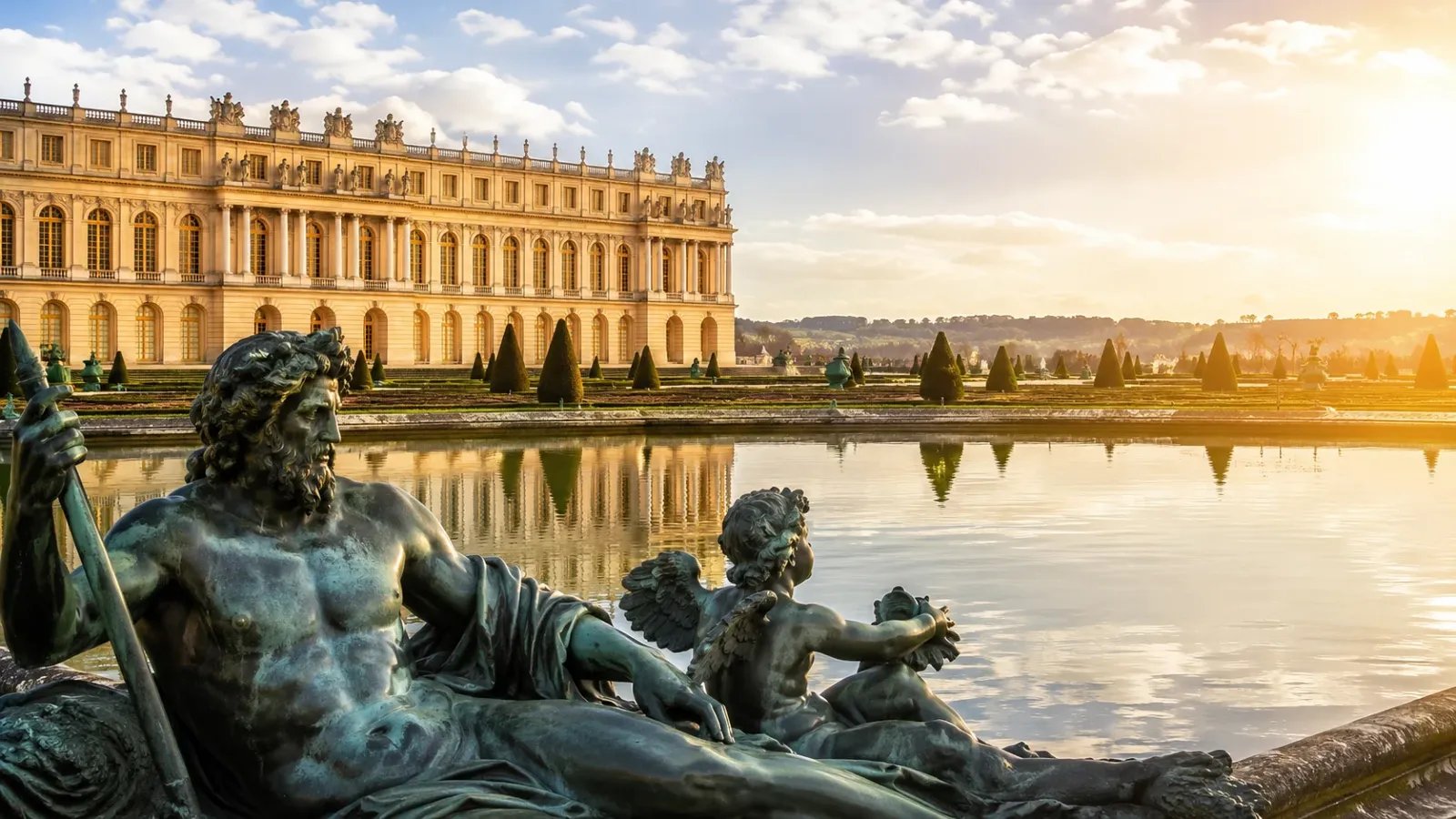
Forget the myth that Versailles was just a playground for out-of-touch royals. This colossal estate was actually a highly engineered political prison disguised as a pleasure palace. By forcing rebellious nobles to live under his watchful eye, Louis XIV revolutionized statecraft. Read on to discover the obscure engineering, grim hygiene, and secret history behind this opulent fortress.
1. The Hall of Mirrors was designed for intimidation, not just aesthetics, by monopolizing Venetian glassmaking secrets.
Mirrors were among the most expensive commodities in the 17th century, and the Venetian Republic held a strict monopoly on their manufacture. To build the Hall of Mirrors, France had to smuggle master glassmakers out of Venice under the threat of assassination. By covering an entire gallery in 357 mirrors, Louis XIV was not merely decorating a room; he was displaying unimaginable economic dominance and proving that French industry had eclipsed Italian craftsmanship.
2. Versailles was notoriously filthy, with courtiers frequently relieving themselves in the hallways and corners of the palace.
Despite its gilded exterior, the palace was a logistical nightmare when it came to sanitation. With thousands of nobles, servants, and soldiers crammed into the estate, the limited number of communal latrines frequently overflowed. It became common practice for aristocrats to relieve themselves behind curtains, on staircases, or in fireplaces, leaving the halls reeking of human waste. The palace was so foul-smelling that heavy perfumes were less a fashion statement than an absolute necessity to mask the stench.
3. The famous fountains consumed more water per day than the entire city of Paris.
The hydraulic engineering required to power the gardens was unprecedented, utilizing an extensive network of reservoirs, aqueducts, and a massive pumping mechanism called the Machine de Marly. Even with this technological marvel, there was never enough water pressure to run all the fountains simultaneously. To maintain the illusion of endless water, a specialized team of fountain operators communicated with whistles to turn the jets on just before the King arrived during his walks, shutting them off the moment he passed.
4. The palace was fully open to the public, requiring only that male visitors rent a sword and a hat at the gates.
Contrary to the belief that the royal court was sealed off from commoners, Louis XIV insisted that his home remain accessible to his subjects. Any decently dressed person could wander the state apartments or watch the King eat his meals. The only strict rule for entry was that men had to wear a sword and a hat, which entrepreneurial merchants conveniently rented out at the palace gates, allowing everyday citizens to mingle closely with the highest-ranking nobles in Europe.
5. Silver furniture was melted down to pay for disastrous military campaigns.
During its early peak, the grand apartments of Versailles were outfitted with solid silver tables, chairs, and chandeliers. However, this extravagant display was short-lived. In 1689, facing crippling debts from the Nine Years' War, Louis XIV ordered all the silver furniture in the palace to be melted down and minted into coins to fund his armies. The legendary silver pieces survive today only in historical inventories and the descriptions of awe-struck visiting ambassadors.
6. Marie Antoinette's peasant village was a fully functioning farm, not just a theatrical set.
The Hameau de la Reine is often dismissed as a ridiculous toy village where the queen played dress-up as a shepherdess to mock the poor. In reality, it was built as an active agricultural enterprise modeled on the principles of the Enlightenment and the physiocrats, who believed national wealth came from agriculture. The hamlet produced actual crops, dairy, and eggs, which were either consumed by the royal household or sold, serving as an educational model for her children on estate management and rural economics.
7. The palace contained a private zoo that revolutionized modern zoological science.
Before the menagerie at Versailles, animal collections were usually chaotic enclosures built solely for entertainment. Louis XIV's architect, Louis Le Vau, designed a radially symmetrical menagerie with a central viewing pavilion that allowed for careful categorization and observation of different species. This methodical layout directly inspired the establishment of modern anatomical and zoological studies in France, giving scientists unprecedented access to dissect and study exotic animals that died in captivity.
8. Food served at royal banquets was almost always cold by the time it reached the King.
The kitchen quarters, known as the Grand Commun, were located across a large courtyard, a considerable distance from the royal dining rooms. By the time a dish was prepared, inspected for poison, and carried by a procession of servants through the sprawling corridors, it had lost its heat. Louis XIV reportedly adapted to this by preferring hearty, cold meats and salads, though the logistical failure of serving hot food remained a constant grievance for the rest of the court.
9. The palace served as a pioneering site for early hot air balloon flight.
In September 1783, long before the Wright brothers, Versailles hosted a major milestone in aviation history. The Montgolfier brothers demonstrated their new invention, a hot air balloon, in the palace courtyard before King Louis XVI and a massive crowd. To test the safety of flight, the basket was loaded with the world's first aeronauts: a sheep, a duck, and a rooster. The balloon flew for about eight minutes and landed safely, proving that living creatures could survive the atmosphere above the ground.
10. The sprawling gardens were actually built on top of a foul-smelling, malaria-infested swamp.
Before Louis XIV decided to transform his father's modest hunting lodge into the seat of absolute power, the land was considered practically uninhabitable. The terrain was incredibly marshy, reeked of stagnant water, and was plagued by mosquitoes. Transforming this hostile environment required tens of thousands of laborers, many of whom died from malaria and other diseases contracted from the swamp, just to drain the earth and haul in enough soil to plant the famous geometric gardens.
11. A secret network of hidden passageways allowed royals to escape the oppressive etiquette of the court.
While the grand public rooms of Versailles were stages for rigid protocol and constant surveillance, a secondary, concealed world existed behind the walls. The Petits Appartements were connected by a labyrinth of hidden staircases and narrow corridors. Kings and queens used these secret routes to visit lovers, escape the prying eyes of ambitious courtiers, and enjoy a semblance of private, informal life away from the exhausting public performances required of them.
12. The French Revolution saved the palace from being completely abandoned and falling into ruin.
It is a common misconception that the revolutionaries wanted to destroy Versailles. While they did strip the palace of its furniture to auction off for state funds, the new republican government officially designated the empty shell as a public museum in 1793. Had the monarchy survived and finances stabilized, subsequent kings likely would have torn down or radically altered the aging, drafty structure to build something more modern, but its preservation as a national monument froze its 18th-century architecture in time.
13. The Apollo Fountain was strategically placed to align with the sun, framing the King as a celestial body.
Louis XIV adopted the sun as his personal emblem, and the architecture of his estate was heavily dictated by solar alignment. The famous Apollo Fountain, which depicts the sun god rising from the sea in a chariot, is positioned on the main east-west axis of the estate. During the summer solstice, the sun sets directly behind the fountain when viewed from the Hall of Mirrors, creating an awe-inspiring visual that mathematically reinforced the King's branding as the center of the French universe.
14. The palace required a staggering twenty thousand candles a night to keep its rooms illuminated.
Lighting such a vast interior before the advent of electricity was a monumental expense. The finest beeswax candles, which burned cleanly and didn't produce foul-smelling smoke, were reserved exclusively for the royal family and major state rooms, while lesser nobles had to make do with sputtering, smelly tallow candles. The daily replacement of thousands of candles was such a lucrative business that servants frequently supplemented their wages by stealing half-burned wax to sell on the black market.
15. The Treaty of Versailles was signed in the Hall of Mirrors specifically to humiliate Germany.
The location for signing the treaty that ended World War I was not chosen for its beauty, but for its historical vengeance. In 1871, following the Franco-Prussian War, the German Empire was officially proclaimed in that exact room, a devastating insult to a defeated France. By forcing Germany to sign the punishing 1919 peace treaty in the very same hall, the French government enacted a calculated, poetic revenge designed to erase the humiliation they had suffered nearly fifty years earlier.
Sources & References
This AI-assisted post was rigorously curated and fact-checked for accuracy by:
 Martin Roháček
How fun was this article? 🤔
Tap a star to rate it
🧠 Quiz: How closely were you paying attention?
10 questions — all answers are in the article above!
Enjoyed these facts? There's more! 💌
Fresh fun facts in your inbox. No spam, ever.