The Frozen Realm: 15 Fascinating Facts About Lapland
Stretching across the northernmost reaches of Fennoscandia, Lapland is an enchanting wilderness of ancient tundra, indigenous heritage, and dramatic celestial displays. Home to the Sámi people for over five millennia, this subarctic territory defies standard geographic norms with eight distinct seasons and a reindeer population that rivals its human inhabitants. From city grid layouts shaped like antlers to months of continuous twilight and midnight sun, the region holds secrets far beyond typical holiday postcards. Here are 15 fascinating facts about one of the planet's most mesmerizing northern frontiers.
1. Rovaniemi Was Rebuilt in the Shape of a Reindeer Head
After Rovaniemi was almost completely destroyed during World War II, famed Finnish architect Alvar Aalto was tasked with redesigning the capital of Finnish Lapland. He drafted a master urban plan inspired directly by the region's most iconic animal. The city's main road network forms the distinct outline of a reindeer's head, complete with horns stretching into public parklands. The central sports stadium serves as the animal's eye, anchoring the clever urban layout. Today, visitors walking or driving through the city center navigate along the antlers of this architectural tribute.
2. The Indigenous Sámi Recognize Eight Distinct Seasons
Instead of the traditional four seasons recognized by most Western cultures, the indigenous Sámi people divide the year into eight distinct periods. These seasons closely follow the natural cycles of reindeer herding, weather patterns, and vegetation changes. Transitions include named periods like "Christmas Frost" (dálvve), "Crusty Snow" (giđđadálvve), and late-autumn harvest times. This fine-tuned seasonal calendar allows the inhabitants to adapt precise hunting, fishing, and survival strategies to the rapidly changing Arctic climate. Such deep ecological knowledge highlights the harmonious relationship between the culture and the subarctic environment.
3. Reindeer Outnumber Human Residents in Many Districts
In the Finnish province of Lapland, the official reindeer population roughly equals or exceeds the total number of human residents, averaging around 200,000 animals. Every single reindeer in the region is semi-domesticated and owned by a registered herder, even though they roam freely across vast wilderness areas. Herders use traditional ear-clipping marks, registered in an official index, to identify ownership during seasonal roundups. Reindeer play an irreplaceable role in local cuisine, clothing manufacture, and transportation history. Their iconic presence continues to dictate land management policies and cultural identity across the northern expanse.
4. Polar Night (Kaamos) Covers the Region in Electric Twilight
During midwinter, regions above the Arctic Circle experience Kaamos, a period where the sun never rises above the horizon for weeks at a time. Far from being pitch black, this period produces several hours of intense indigo, magenta, and violent violet light reflecting off the snow. The phenomenon occurs because the sun remains just below the horizon, scattering light through Earth's upper atmosphere. Locals embrace this quiet, magical stillness, using specialized lighting and cozy indoor traditions to celebrate the polar darkness. It provides a striking contrast to the summer months, when the sun remains visible 24 hours a day.
5. The Sámi Language Has Over 300 Words for Snow and Ice
The complex climate of the far north requires precise communication about winter conditions, leading the Sámi language to evolve hundreds of specialized terms. Words differentiate between light powder snow, hard crust that can hold a reindeer, packed wet snow, and hazardous thin ice. For example, seana describes brittle snow found at the bottom of a snowpack, while skarta refers to a hard sheet of frozen ice on trees. This extraordinarily specific vocabulary is not just a linguistic curiosity, but a vital tool for survival, reindeer tracking, and winter navigation. Modern linguists continue to document these terms as climate change alters Arctic weather patterns.
6. The Northern Lights Shine for Nearly Two Hundred Nights a Year
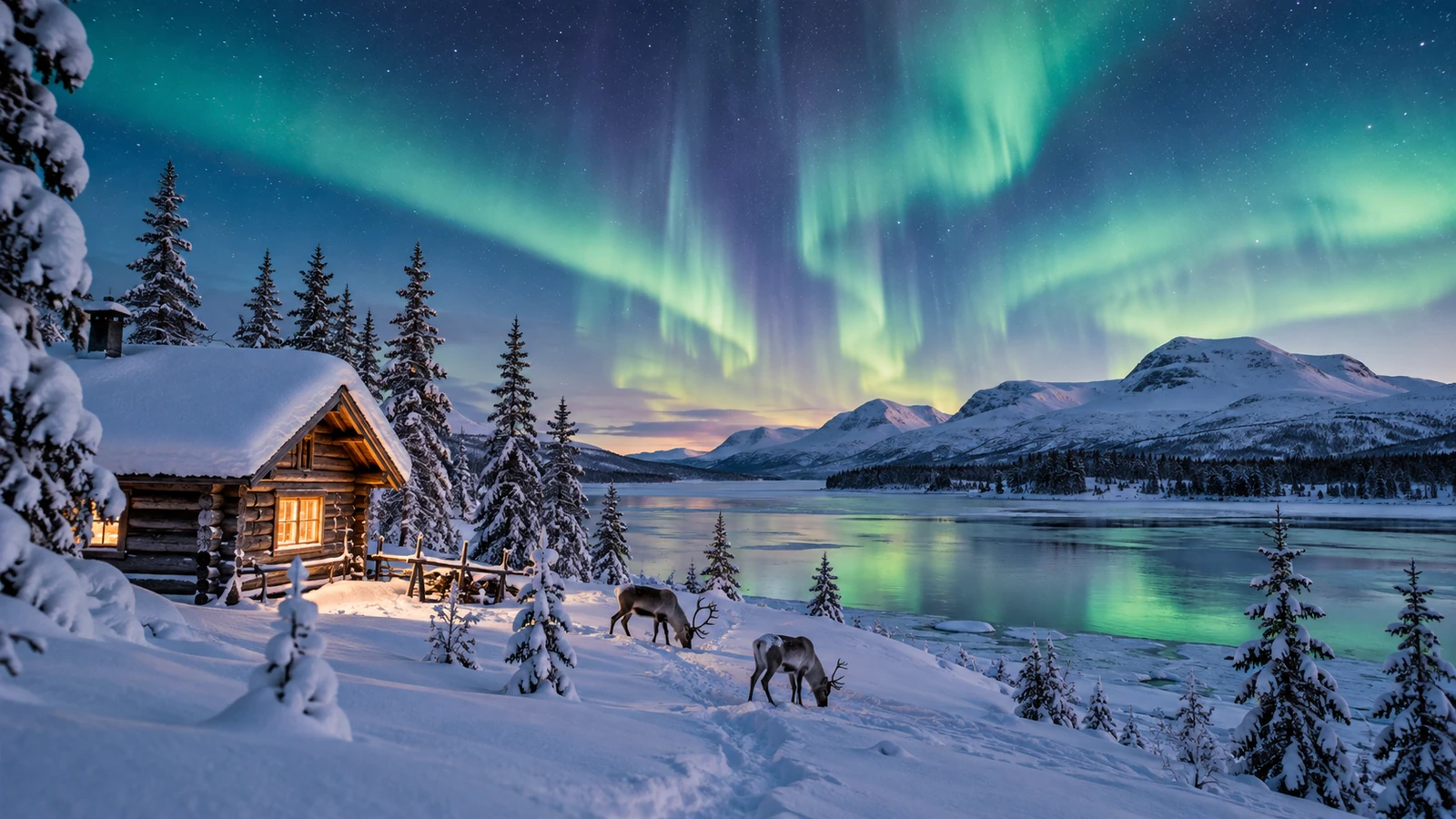
Lapland is one of the premier locations on Earth to witness the aurora borealis, visible roughly 200 nights every year from September through April. The phenomenon occurs when charged solar particles collide with gases in Earth's atmosphere, generating swirling displays of green, red, and purple light. Clear skies away from light pollution offer the best viewing opportunities across the vast tundra. Ancient Sámi mythology attributed the celestial light show to a mythical arctic fox running across the snow, sending sparks into the sky with its tail—a myth preserved in the Finnish word for the lights, revontulet ("fox fires").
7. Santa's True Mythological Home Lies at Ear Fell
While Santa Claus Village in Rovaniemi serves as a popular commercial attraction, Finnish folklore places the real home of Santa Claus at Korvatunturi, or "Ear Fell." Located in a remote eastern area near the Russian border, this hill is shaped like a giant ear, which legend says allows Santa to hear the wishes of children around the world. The exact secret location of his underground workshop remains hidden within the surrounding national park. Finnish tradition maintains that Santa lived on this isolated mountain peak long before international tourists began arriving at Rovaniemi's Arctic Circle line.
8. Finland's Highest Point Is Missing Its True Peak Summit
Lapland’s highest point is Mount Halti, reaching an elevation of 1,324 meters above sea level on the Finnish side of the border. However, the actual summit of the mountain stands at 1,365 meters and is located a few hundred meters across the border in Norway. In 2016, a viral Norwegian public campaign attempted to gift the peak summit to Finland to celebrate its centenary of independence, though legal constraints ultimately prevented the border shift. Consequently, Finland's official highest point remains a steep mountain slope rather than a true summit peak.
9. Ice Hotels Are Built Anew Every Single Winter
Throughout Lapland, magnificent ice hotels and snow castles are constructed every autumn from scratch using river ice and compacted snow. Teams of international sculptors and engineers spend weeks carving elaborate themed suites, ice bars, and ornate chapels out of frozen blocks. The structures maintain a constant indoor temperature around -5°C, requiring guests to sleep inside thermal sleeping bags on ice frames covered in reindeer hides. When spring arrives in May, these temporary architectural marvels melt completely back into nearby rivers without leaving an environmental trace.
10. Lake Inari Houses Over Three Thousand Sacred Islands
Spanning 1,102 square kilometers, Lake Inari is the third-largest lake in Finland and the undisputed heart of Sámi culture. The vast body of water contains over 3,000 islands, many of which held deep spiritual significance for ancient indigenous populations. Among the most famous is Ukonkivi (Ukko's Rock), a steep rocky islet used as a sacred sacrificial site for centuries. Visitors to the lake can explore pristine waters that remain frozen solid from November through early June, creating ice highways used by locals on snowmobiles.
11. Europe's Last Major Gold Rushes Took Place in Lapland
In the late 19th century, gold was discovered along the Ivalo and Lemmenjoki rivers, triggering a series of northern gold rushes that drew fortune seekers from across Europe. Unlike modern industrial mining, traditional gold panning remains active in Lapland's river valleys today under strict environmental regulations. The village of Tankavaara hosts annual world gold panning championships and features an extensive museum dedicated to global mining history. Visitors can purchase licenses to prospect along historical waterways and pan for genuine gold flakes in authentic wilderness conditions.
12. Lapland's Rounded Fells Are Ancient Worn Mountain Stubs
The iconic rounded hills of Lapland, known locally as tunturi, were once soaring mountain peaks that rivaled the height of the modern Alps or Himalayas. Over hundreds of millions of years, relentless glacial action and weather erosion ground down these ancient granite structures into smooth, treeless domes. Because trees cannot grow on their wind-swept summits due to arctic cold and thin soil, these fells offer panoramic views stretching across dozens of miles of pristine wilderness. Today, these ancient geological landforms are prime locations for winter skiing and summer hiking.
13. Pregnant Reindeer Isolate Themselves Before Giving Birth
During late spring, pregnant female reindeer exhibit a rare behavior by intentionally separating themselves from the main herd to give birth in solitude. Seeking secluded elevated ridges or dense forest cover, a mother spends several days alone with her newborn fawn to bond and protect it from predators like brown bears and wolverines. Within hours of birth, the calf is able to stand and run fast enough to keep pace with adults. Once the mother determines the calf is strong enough, the duo returns to rejoin the main herd for collective security during the summer months.
14. The Midnight Sun Creates Months of Continuous Daylight
In polar contrast to the winter darkness, northern Lapland experiences weeks of non-stop sunlight during the peak of summer. Above the Arctic Circle, the sun stays continuously above the horizon from late May through mid-July, illuminating the wilderness for 24 hours a day. This period of eternal light triggers rapid growth in plant life and causes native wildlife to feed and remain active around the clock. Locals and visitors alike celebrate the season with night hiking, late-night boating, and summer solstice festivals beneath a sun that never sets.
15. The Wilderness Is a Last Refuge for Rare Arctic Wildlife
Lapland contains vast, continuous stretches of protected national parks that serve as one of Western Europe's final sanctuaries for endangered Arctic fauna. The critically endangered Arctic fox, elusive wolverines, Eurasian lynx, and European brown bear all maintain wild populations within the region's expansive taiga and tundra ecosystems. Conservation initiatives and strict habitat preservation laws have helped stabilize these vulnerable species against the threat of habitat loss. Observing these elusive predators in their natural habitat requires patience, respect, and long treks through some of the continent's most untouched natural landscapes.
Sources & References
This AI-assisted post was rigorously curated and fact-checked for accuracy by:
 Martin Roháček
How fun was this article? 🤔
Tap a star to rate it
🧠 Quiz: How closely were you paying attention?
10 questions — all answers are in the article above!
Enjoyed these facts? There's more! 💌
Fresh fun facts in your inbox. No spam, ever.