15 Curious Facts About Francisco Pizarro
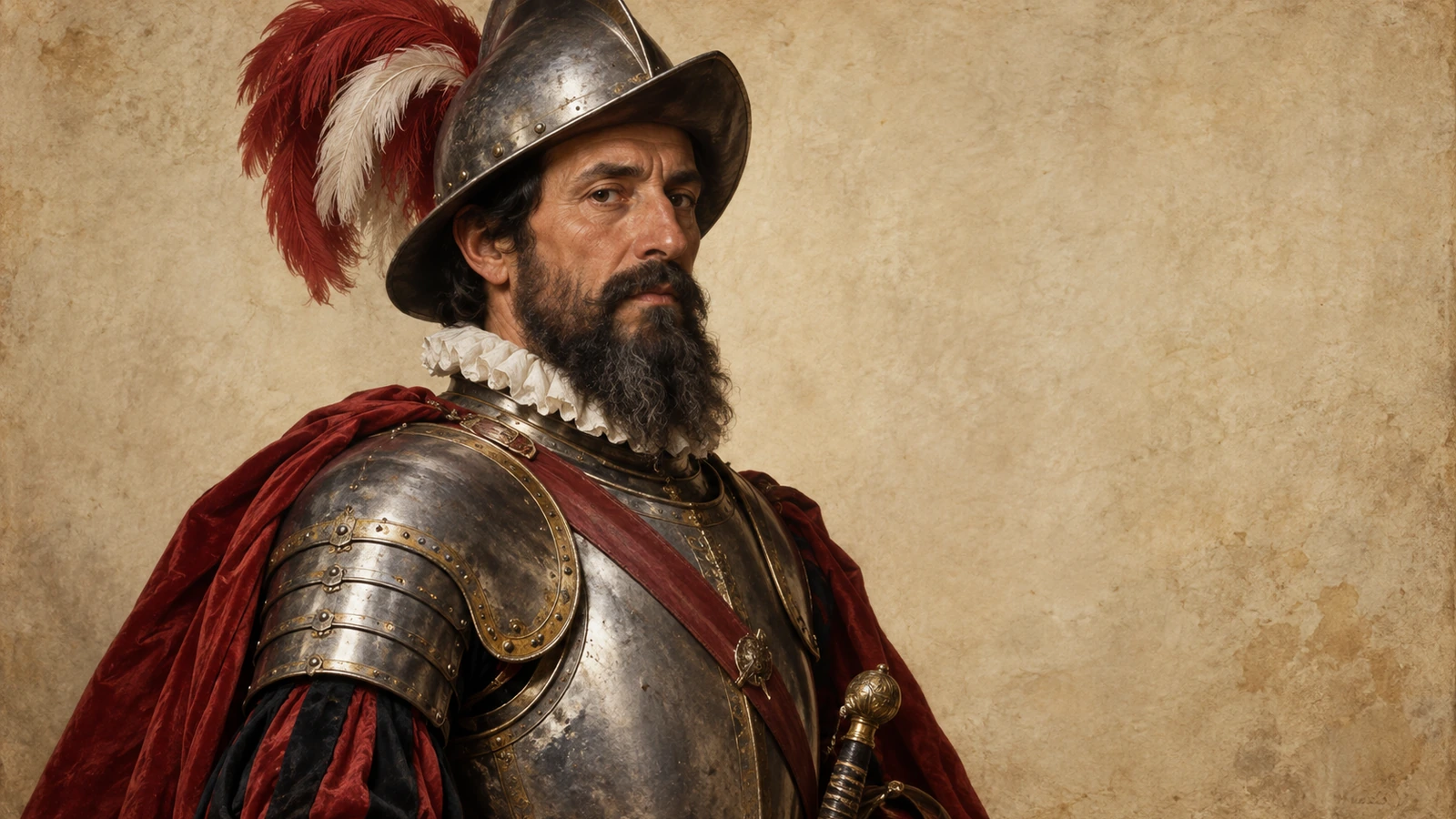
Francisco Pizarro was a Spanish conquistador whose name is permanently tied to the brutal conquest of the Inca Empire. Unlike many of his contemporaries who sought glory in their youth, Pizarro achieved his world-altering, devastating victory late in life. Leading a small force of men, he capitalized on advanced European weaponry, the devastating spread of foreign diseases, and a fractured indigenous political landscape to topple the largest empire in the pre-Columbian Americas. His legacy is one of immense wealth generation for the Spanish Crown and catastrophic destruction for the indigenous peoples of the Andes.
1. He Had Extremely Humble Beginnings
Pizarro was born in Trujillo, Spain. He was the illegitimate son of Gonzalo Pizarro, a Spanish infantry colonel, and a local farmer’s daughter. Because of his illegitimate status and impoverished upbringing, he was entirely excluded from formal education and the privileges of the Spanish nobility.
2. He Was Completely Illiterate
Unlike his distant cousin Hernán Cortés, who studied law at a prestigious university, Pizarro never learned to read or write. Throughout his life, even when he became the incredibly wealthy and powerful governor of Peru, he had to rely on scribes to read documents to him and physically guide his hand to sign his name.
3. He Was One of the First Europeans to See the Pacific
Decades before he conquered the Inca, Pizarro was an experienced explorer in the New World. In 1513, he joined the famous expedition led by Vasco Núñez de Balboa. Marching through the grueling jungles of the Isthmus of Panama, Pizarro was among the very first Europeans to set eyes on the Pacific Ocean from the Americas.
4. He Was a “Late Bloomer” Conquistador
By the standards of the 16th century, Pizarro was an old man when he made his mark on history. He had lived in Panama as a moderately successful colonist and local official for over a decade. He was well into his 50s when he finally launched the successful third expedition south that would ultimately bring down the Inca Empire.
5. He Drew a Famous “Line in the Sand”
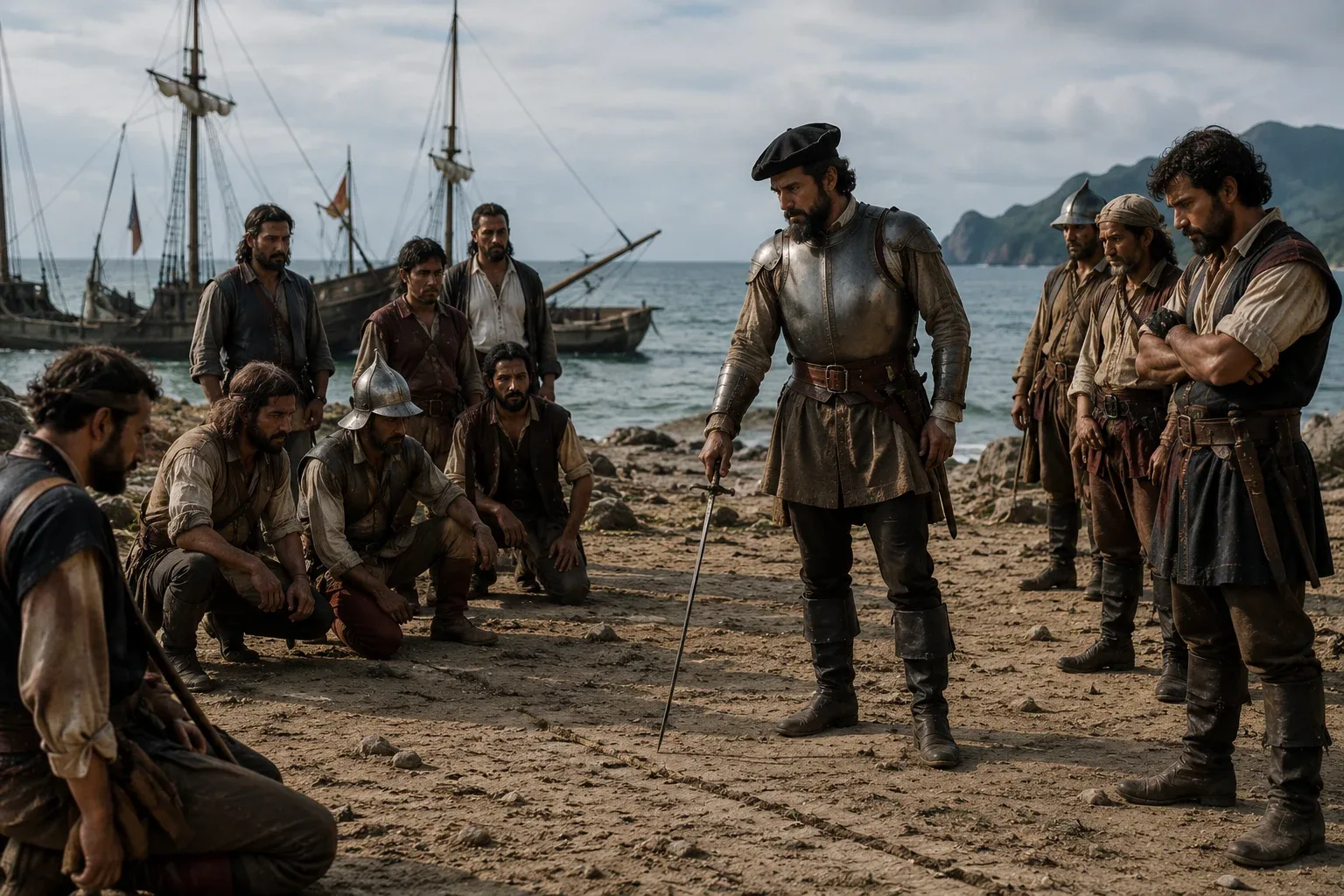
During a failed and disastrous second expedition to South America in 1527, Pizarro’s men were starving on the Isla del Gallo off the coast of Colombia, and most wanted to return to Panama. According to legend, Pizarro drew a line in the sand with his sword. He pointed south toward Peru and said, “There lies Peru with its riches; here, Panama and its poverty.” Only 13 men—remembered as the “Famous Thirteen”—stepped over the line to stay with him.
6. He Secured a Royal Contract for Conquest
Realizing the governor of Panama would no longer fund his seemingly doomed expeditions, Pizarro sailed back to Spain in 1528. He successfully petitioned King Charles V directly, presenting gold, llamas, and indigenous interpreters to prove the wealth of the southern continent. The King granted him the Capitulación de Toledo, giving Pizarro the legal right to conquer the territory and naming him its future governor.
 Explorers and Seafarers
From the freezing waters of the North Atlantic to the bustling spice ports of the Indian Ocean, explorers and seafarers have relentlessly pushed the boundaries of the known world. Discover the complex, dramatic, and often ruthless realities behind history's most famous maritime and overland expeditions.
See All Facts
Explorers and Seafarers
From the freezing waters of the North Atlantic to the bustling spice ports of the Indian Ocean, explorers and seafarers have relentlessly pushed the boundaries of the known world. Discover the complex, dramatic, and often ruthless realities behind history's most famous maritime and overland expeditions.
See All Facts
7. He Capitalized on a Devastating Incan Civil War
When Pizarro finally arrived in the Inca heartland in 1532, he found an empire weakened and divided. A devastating outbreak of smallpox (which had preceded the Spanish) had killed the previous Inca Emperor, sparking a brutal and exhausting civil war between two royal half-brothers: Atahualpa and Huáscar. Pizarro expertly exploited these bitter internal divisions.
8. He Won a Seemingly Impossible Battle
At the Battle of Cajamarca in 1532, Pizarro’s forces numbered only 168 men with a few dozen horses and primitive firearms. They were facing the newly victorious Emperor Atahualpa, who was protected by an army of thousands. Pizarro launched a surprise ambush in an enclosed city square, utilizing the shock value of cavalry and cannons to massacre Atahualpa’s retainers and capture the Emperor alive without losing a single Spanish soldier.
9. He Extorted the Largest Ransom in History
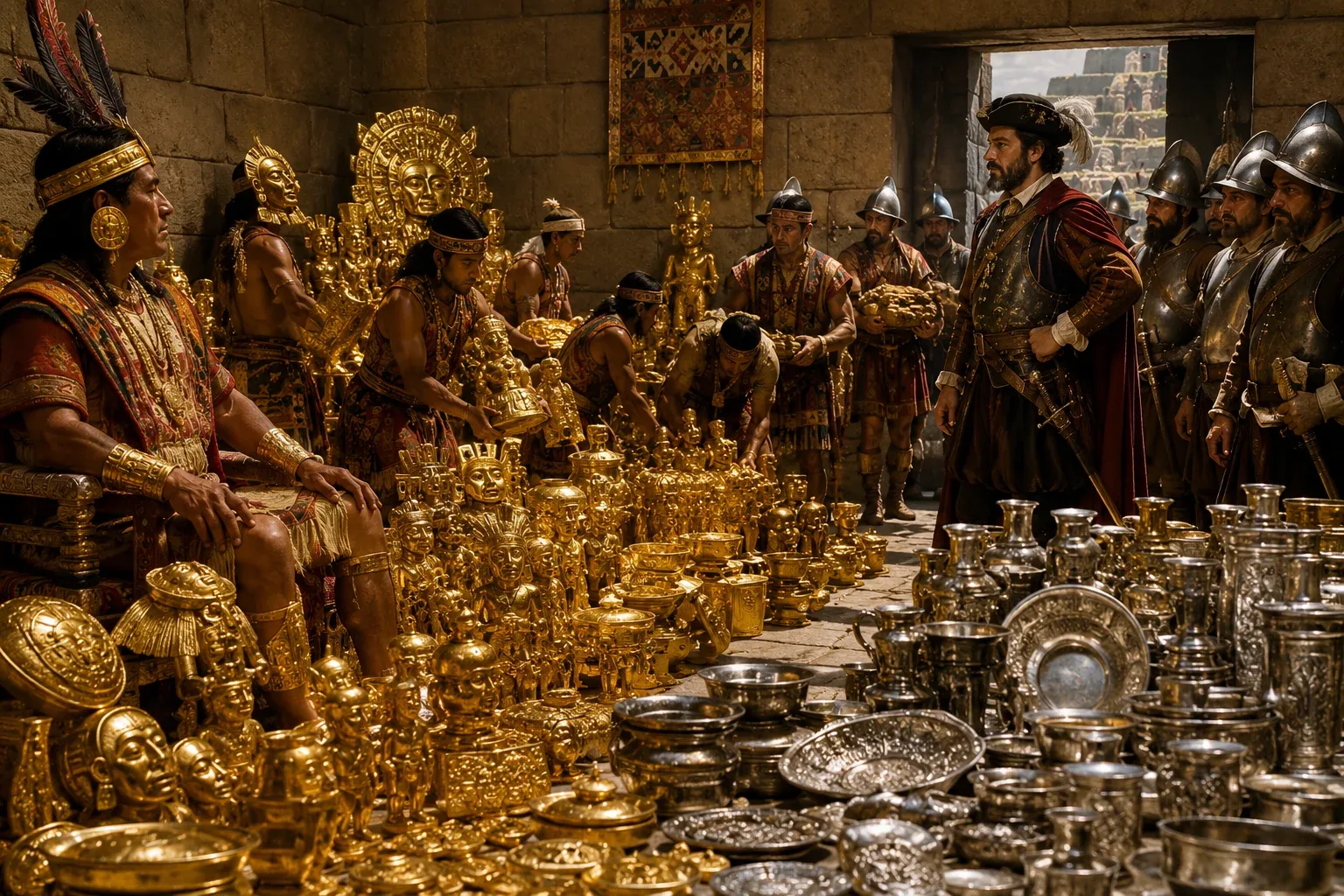
Held hostage, Atahualpa noticed the Spaniards’ obsessive lust for precious metals. The Emperor offered to fill a large room (measuring approximately 22 by 17 feet or about 6.7 by 5.2 meters) once with gold and twice with silver in exchange for his life. Pizarro eagerly accepted. The Inca systematically stripped their temples and cities to fulfill the promise, delivering tons of priceless historical artifacts that the Spanish promptly melted down into ingots.
10. He Executed the Emperor Anyway
Despite receiving the staggering ransom, Pizarro never intended to let Atahualpa go, fearing the Emperor would immediately rally his massive army. Pizarro staged a mock trial, accusing Atahualpa of treason and worshipping false idols. He had the Inca Emperor executed by strangulation in the summer of 1533, effectively decapitating the Incan political structure.
11. He Founded the City of Lima
The traditional Inca capital was high in the Andes mountains at Cusco. Finding it too remote and isolated from Spanish shipping routes, Pizarro founded a new capital on the coast in January 1535. He originally named it Ciudad de los Reyes (City of Kings), but it eventually took on its indigenous name, Lima. Today, it remains the capital of Peru.
12. The Conquest Was a “Family Business”
When Pizarro returned from Spain with his royal charter, he brought along his fiercely loyal and equally ruthless brothers: Hernando, Gonzalo, and Juan. The Pizarro brothers operated as a tight-knit mafia within the newly conquered territory, hoarding the best spoils for themselves and deeply alienating other Spanish conquistadors.
13. He Fought a Vicious War Against His Own Partner
Pizarro had organized his expeditions with a partner, Diego de Almagro. Following the fall of the Inca, a bitter dispute arose over who rightfully controlled the wealthy city of Cusco. This escalated into a full-blown civil war between Spanish factions. Pizarro’s forces eventually defeated Almagro’s army at the Battle of Las Salinas in 1538, and Pizarro had his former partner executed.
14. He Was Assassinated in His Own Palace
Pizarro’s ruthless ambition eventually caught up with him. In June 1541, a heavily armed group of men loyal to the executed Diego de Almagro (led by Almagro’s son) stormed Pizarro’s palace in Lima. The 63-year-old Pizarro fought fiercely with a sword but was ultimately overpowered and stabbed to death, allegedly painting a cross on the floor with his own blood before dying.
15. The Mystery of His True Remains
For nearly four centuries, a mummified body displayed in a glass casket in the Lima Cathedral was venerated as the remains of Francisco Pizarro. However, in 1977, workmen discovering a crypt beneath the cathedral found a lead box bearing an inscription that it held Pizarro’s head. Forensic analysis of the skull inside revealed multiple deep sword cuts—perfectly matching historical accounts of his brutal assassination—proving the mummy displayed for centuries was an imposter.
Sources & References
This AI-assisted post was rigorously curated and fact-checked for accuracy by:
 Martin Roháček
How fun was this article? 🤔
Tap a star to rate it
🧠 Quiz: How closely were you paying attention?
10 questions — all answers are in the article above!
Enjoyed these facts? There's more! 💌
Fresh fun facts in your inbox. No spam, ever.