15 Surprising Facts About Alabama
Alabama has a forest beneath the sea, blue-glowing insect larvae and a meteorite that struck a woman inside her home. Its stories also lead from a mountain-top river and an ancient mound city to an emergency telephone call, a recreated Hollywood courtroom and a recording studio above a drugstore.
1. A meteorite bounced off a radio and struck a woman on her couch
On November 30, 1954, Ann Hodges was resting at home near Sylacauga when a meteorite broke through the roof, hit a Philco radio and struck her hip. She survived with a large bruise, but the extraordinary accident brought unwanted attention. The meteorite is preserved at the University of Alabama's natural history museum, turning a domestic catastrophe into one of the state's most unusual scientific artifacts.
2. Its dismalites glow blue—and they are setting a trap
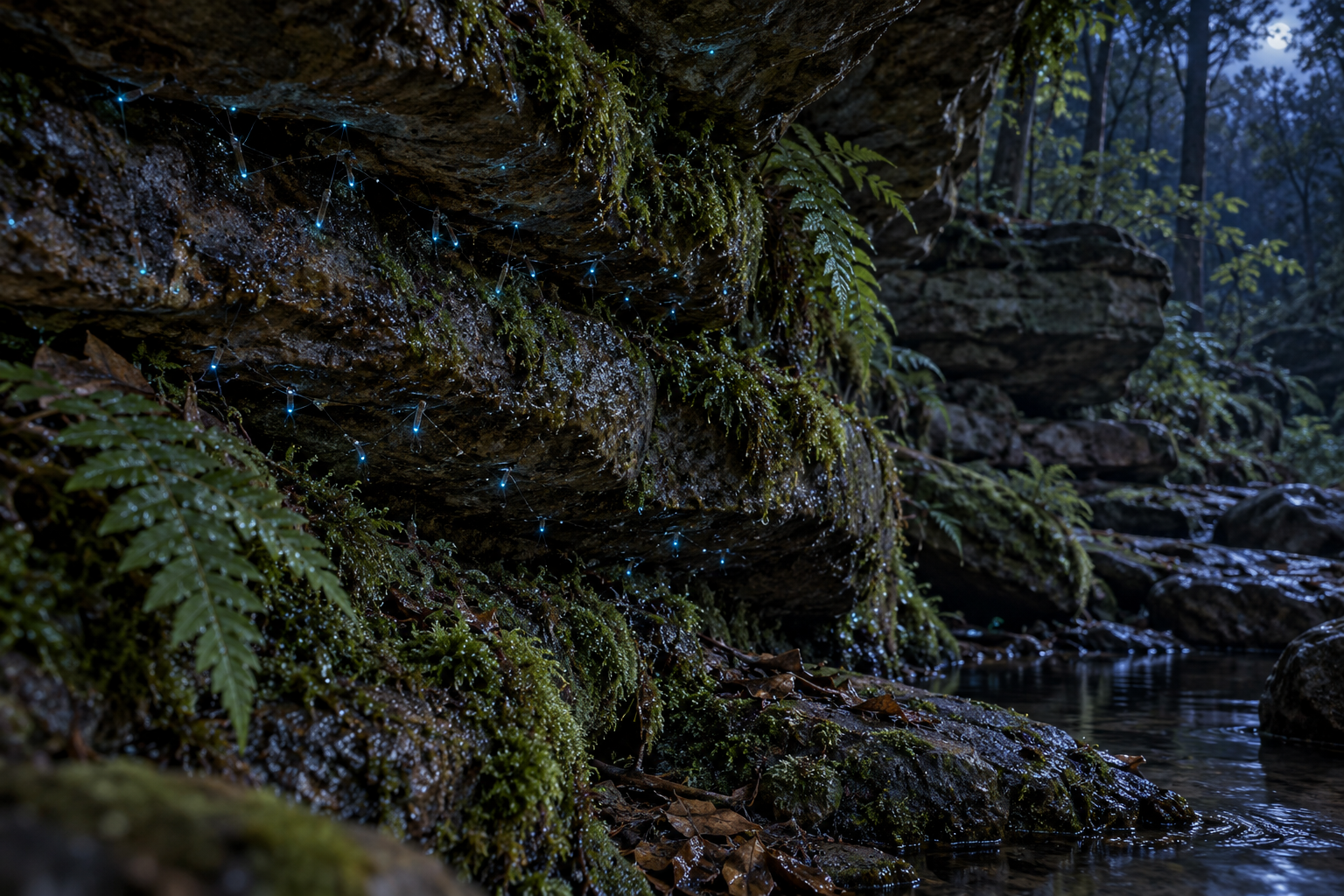
The tiny lights on damp rock at Dismals Canyon come from fungus-gnat larvae called dismalites, or Orfelia fultoni. These carnivorous larvae use light to attract prey into fine webs. Researchers studying the species found blue light peaking around 460 nanometers and a light-producing chemistry that evolved independently from that of the better-known Arachnocampa glowworms. This Alabama night show is insect hunting, not a scattering of fireflies.
3. A prehistoric forest survives beneath the sea
Off Alabama's coast, storms exposed remnants of a bald-cypress forest approximately 60,000 years old. Sediment had protected the wood as rising seas drowned the landscape. Scientists have studied both the ancient environment and the organisms now living in the timber, including wood-boring clams called shipworms. The forest is therefore a record of a vanished coastline and a habitat for present-day marine life.
4. Little River runs along the top of a mountain
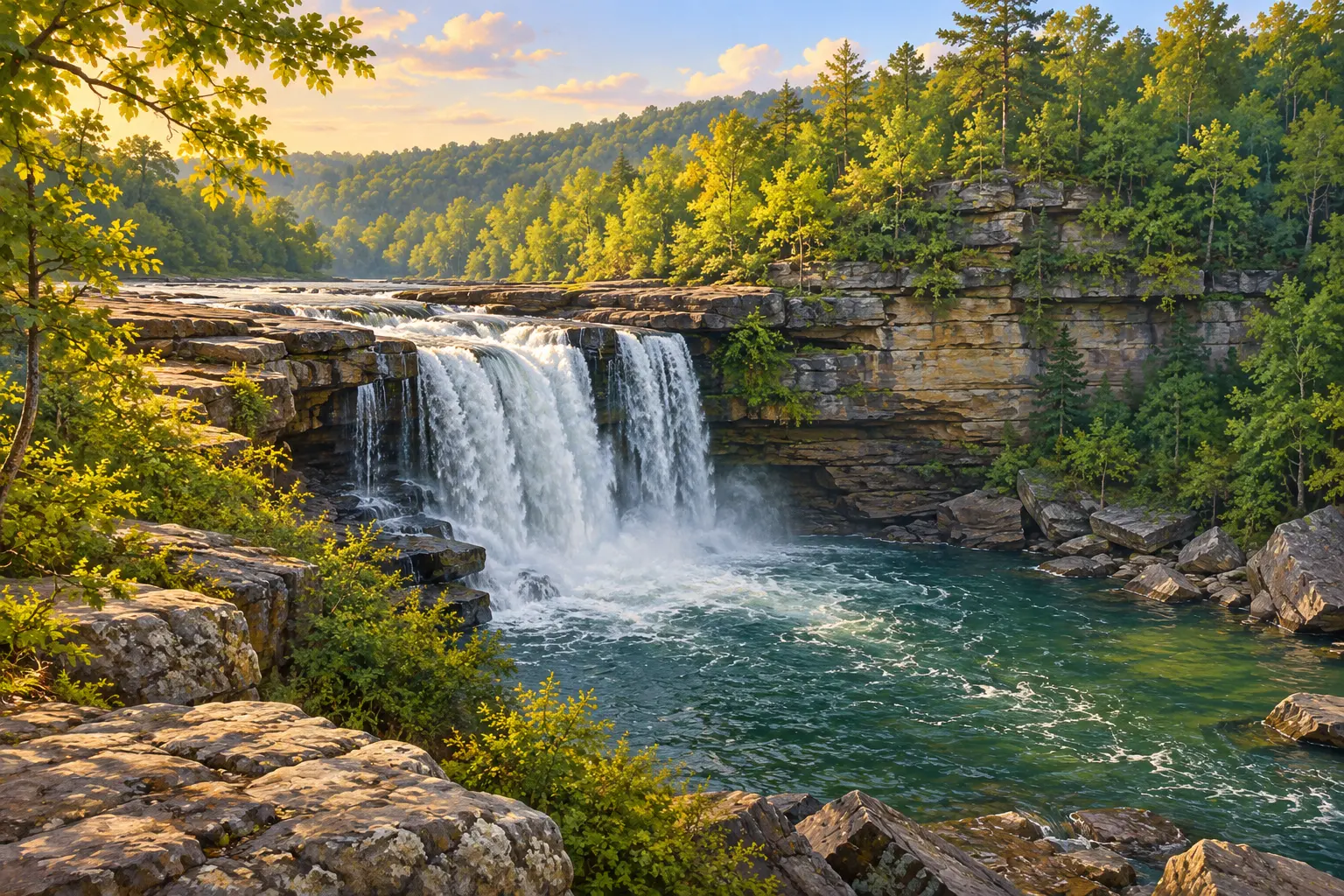
Rather than simply beginning on a mountain and rushing away, Little River flows for much of its length across the top of Lookout Mountain. It has cut a deep canyon into the plateau's sandstone, with some sections exceeding 600 feet in depth. Little River Falls drops about 45 feet near the canyon's head. Northeast Alabama's scenery owes much to water patiently carving a flat-topped upland.
5. An ancient city was built one basket of earth at a time
Moundville was a major Indigenous settlement on the Black Warrior River between roughly AD 1000 and 1450. Its mounds surrounded a large public plaza, with platforms supporting important homes and sacred buildings. The park estimates that Mound B alone contains around 111,000 cubic yards of earth, carried and piled without modern machinery. Colored clay once capped mounds that today's grass-covered landscape can make seem deceptively simple.
6. The Black Belt's name began with the ground beneath it
Alabama's Black Belt takes its name from dark soils, including clays developed over the Selma Chalk and other ancient marine deposits. Those soils helped draw plantation cotton agriculture and the forced labor of enslaved people. The region's name later acquired a strong demographic and cultural meaning as well. Its geography links a buried marine landscape with the much more recent history of slavery and the civil rights movement.
 You might also like
The Enigmatic Crescent City: 15 Fascinating Facts About New Orleans
7. Enterprise's monument to a pest originally had no insect on top
Enterprise dedicated its Boll Weevil Monument in 1919, celebrating the crop diversification associated with the cotton pest's devastation. Yet the original female figure held a small fountain above her head. A model of the beetle replaced it in 1949, and that early model had only four legs. After it was stolen, a larger, six-legged replacement corrected the insect's anatomy. The famous bug arrived decades after its own monument.
8. America's first 911 call was a demonstration, not an emergency
On February 16, 1968, Alabama House Speaker Rankin Fite called U.S. Representative Tom Bevill in Haleyville using the new number 911. Fite was at city hall; Bevill answered at the police station. The demonstration introduced the first 911 service in the United States, rather than responding to an actual accident or crime. Haleyville's place in emergency communications began with officials testing whether three digits could connect them.
9. Rosa Parks was not a plaintiff in the lawsuit that ended Montgomery's bus segregation
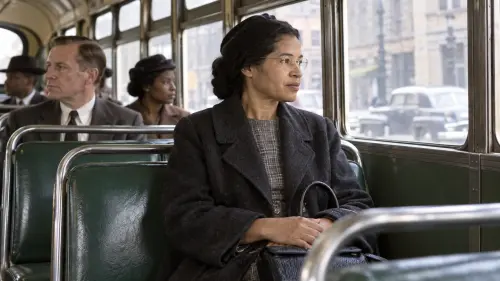
Parks's arrest helped ignite the Montgomery Bus Boycott, but the federal case Browder v. Gayle involved other women, including teenager Claudette Colvin, arrested months before Parks. Attorney Fred Gray kept Parks's separate appeal out of that lawsuit. The federal court ruled against bus segregation in 1956, and the Supreme Court affirmed. The legal victory depended on a wider group of women than the familiar one-person version suggests.
10. Eleanor Roosevelt took a flight that challenged a racist assumption
In March 1941, Eleanor Roosevelt flew over the Tuskegee countryside with C. Alfred 'Chief' Anderson, a Black flight instructor. Her willingness to go aloft with him brought powerful publicity to a training program fighting entrenched discrimination. Tuskegee students had helped improve the small Kennedy Field themselves. Their work and Anderson's expertise were already there; the first lady's flight made them harder for the wider public to ignore.
11. Huntsville's giant Moon rocket was built to be shaken, not launched
The Saturn V test vehicle associated with Huntsville helped engineers study how the enormous rocket would flex and vibrate. Its first-stage museum record explicitly identifies it as ground-test hardware, fitted with mock-up F-1 engines rather than intended for flight. At Marshall Space Flight Center, engineers tested the assembled structure under simulated launch stresses. A rocket that never left Earth helped make the journeys to the Moon possible.
12. Gee's Bend quilts traveled from worn clothing to museums and postage stamps
Quilters in Gee's Bend transformed available fabrics, including denim and work clothes, into bold geometric designs. Loretta Pettway's 1958 'Bricklayer' quilt even has a pieced back, showing resourcefulness on both sides. Such works eventually entered major museum collections, while a 2006 postage-stamp series carried the tradition much farther. Their artistic importance grew from the makers' own choices and community practices, not from outside collectors inventing a style for them.
13. The famous Mockingbird courtroom was copied for Hollywood
The old courthouse in Monroeville helped shape Harper Lee's fictional courtroom in To Kill a Mockingbird. For the 1962 film, however, the production did not simply shoot the trial there. Art director Henry Bumstead measured, photographed and sketched the Alabama room before recreating it on a Hollywood soundstage. The surviving courtroom is the inspiration for a famous movie setting, rather than the original film set itself.
14. Scottsboro's lost-luggage business began with bus passengers' bags
Unclaimed Baggage traces its start to 1970, when Doyle Owens borrowed a pickup and $300 to buy unclaimed luggage from the Trailways bus company in Washington, D.C. He sold the contents from card tables in a rented house. The airline connection came later, with the company's first airline contract in 1978. A business now strongly associated with airports began with a road trip to buy bus luggage.
15. FAME's recording story began above a drugstore
Florence Alabama Music Enterprises began in 1959 above a drugstore in Florence, founded by Rick Hall, Billy Sherrill and Tom Stafford. Hall later took sole ownership, shortened the name to FAME and moved the operation to Muscle Shoals. Among the studio's memorable recordings is Wilson Pickett's version of 'Hey Jude,' featuring Duane Allman on guitar. Alabama's famous recording sound grew through several addresses, not one unchanged legendary room.
How did these facts land?
Know someone who'd love these facts? Share them 👇