The Unconventional First Lady: 15 Fascinating Facts About Eleanor Roosevelt
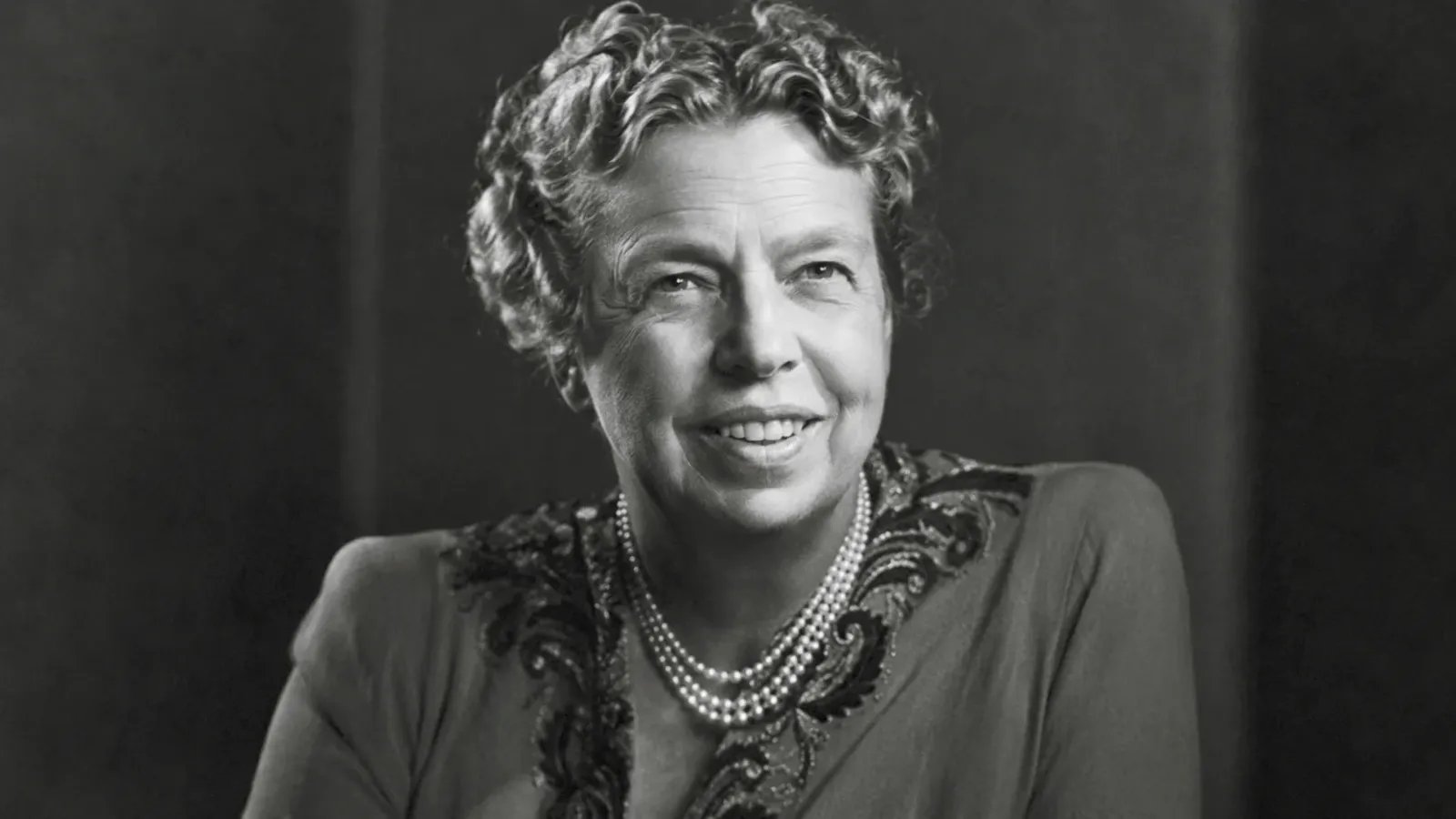
Often reduced to FDR's dutiful wife, Eleanor Roosevelt was actually a fierce political powerhouse and rebel. Far from a quiet hostess, she defied the Secret Service, carried a gun, and shaped global human rights. Discover the surprising reality behind a woman who broke every rule to redefine the role of First Lady.
1. Eleanor Roosevelt refused Secret Service protection and insisted on carrying her own firearm.
Despite her high-profile status, she notoriously rejected a permanent security detail, believing it hindered her ability to intimately connect with everyday Americans. To appease the nervous Secret Service, she agreed to carry a .38 caliber Smith & Wesson revolver and learned how to shoot it, often keeping the weapon in her glove compartment during her extensive solo drives across the country.
2. She held regular press conferences that strictly banned male journalists from attending.
Breaking historical precedent in 1933, she held the first of over three hundred press conferences during her tenure in the White House. By exclusively inviting female reporters to these briefings, she essentially forced major newspapers to hire or retain women on their staff during the Great Depression, ensuring that female journalists kept their jobs in an aggressively male-dominated industry.
3. Her famous daily newspaper column ran for nearly three decades without missing a single workday.
From 1936 until her death in 1962, she wrote a syndicated newspaper column called "My Day," publishing over eight thousand entries. This unprecedented platform allowed her to communicate directly with the American public about race, women's rights, and international affairs, bypassing the traditional gatekeepers of the West Wing and establishing her own fiercely independent political voice.
4. She was heavily monitored by the FBI, accumulating a file of over three thousand pages.
J. Edgar Hoover considered her a dangerous radical due to her outspoken advocacy for civil rights, anti-lynching laws, and racial integration. The Federal Bureau of Investigation meticulously tracked her activities, private correspondence, and associations for decades, compiling a massive dossier that ultimately serves today as a testament to her extensive influence as a progressive organizer.
5. Eleanor was fundamentally responsible for the creation of the Universal Declaration of Human Rights.
Following the death of her husband, President Harry Truman appointed her as a delegate to the newly formed United Nations. As the first chairperson of the Commission on Human Rights, she used her immense diplomatic skill to bridge deep ideological divides between Eastern and Western bloc nations, successfully drafting and passing the foundational 1948 document that defined modern human rights.
6. She openly defied local segregation laws alongside a prominent Black educator in the Jim Crow South.
At the 1938 Southern Conference for Human Welfare in Birmingham, Alabama, local police demanded attendees segregate by race in the auditorium. Eleanor refused to sit in the designated white section, instead pulling her folding chair squarely into the center aisle between the white and Black sides to sit alongside Mary McLeod Bethune, making a highly publicized stand against institutional racism.
7. She secretly wrote magazine articles under different pen names to fund her philanthropic endeavors.
While serving as First Lady, she was highly prolific as a writer and editor, but she directed nearly all her earnings to charity. Because her status drew intense political criticism when she accepted paid work, she sometimes published under pseudonyms or entirely anonymously, channeling the lucrative proceeds into organizations like the American Friends Service Committee and the NAACP.
8. Before moving into the White House, she was part owner of a rural furniture factory.
In 1925, she co-founded Val-Kill Industries with her friends Nancy Cook and Marion Dickerman. The enterprise aimed to supplement the income of local farming families by teaching them traditional craft skills, producing high-quality colonial reproduction furniture and pewter, which demonstrated her hands-on approach to economic relief years before the New Deal was ever conceptualized.
9. She earned a reputation as her husband's physical eyes and ears by traveling relentlessly.
Because polio severely limited Franklin D. Roosevelt's physical mobility, Eleanor became his primary surrogate, traveling over forty thousand miles a year. She descended into deep coal mines, visited impoverished rural slums, and inspected military bases in the Pacific theater, bringing back unvarnished, highly detailed reports that fundamentally shaped the administration's domestic and foreign policies.
10. She publicly resigned from the Daughters of the American Revolution to protest their racial discrimination.
When the DAR refused to allow Marian Anderson, a world-renowned Black opera singer, to perform at Constitution Hall in 1939, Eleanor did not just resign; she publicized her dramatic departure in her daily syndicated column. She then worked behind the scenes with the Secretary of the Interior to arrange an iconic, integrated open-air concert for Anderson at the Lincoln Memorial.
11. She served as the co-chair of the Office of Civilian Defense during the early years of World War II.
This marked the very first time a First Lady held an official federal government position. In this role, she focused heavily on the home front, championing the creation of federally funded daycares so that women could enter the wartime workforce, though she eventually resigned after congressional critics complained that her social programs were a distraction from military efforts.
12. She was entirely opposed to the Equal Rights Amendment during her time as First Lady.
Contrary to modern assumptions about her feminist legacy, she actively lobbied against the ERA for decades. She believed that a blanket equality amendment would dismantle the hard-won protective labor legislation that shielded working-class women from exploitative hours and unsafe factory conditions, though she ultimately softened her stance on the amendment in her final years.
13. She flew in an airplane with a celebrated Black pilot to combat racist military policies.
In 1941, the United States military still officially operated under the prejudiced assumption that Black soldiers lacked the aptitude to fly complex aircraft. To shatter this myth, she visited the Tuskegee Army Air Field and insisted on taking a half-hour flight with Chief Instructor Charles Anderson, using the resulting press photographs to successfully lobby for the deployment of the Tuskegee Airmen.
14. Eleanor Roosevelt and Franklin D. Roosevelt were actually fifth cousins once removed.
Born into the prominent New York Roosevelt family, she was the niece of President Theodore Roosevelt, who famously gave her away at her wedding to FDR. Because she was already a Roosevelt, she never actually had to change her maiden name when they married in 1905, maintaining her lifelong connection to a political dynasty that uniquely spanned both the Republican and Democratic parties.
15. She formed an incredibly close, lifelong intimate relationship with female journalist Lorena Hickok.
Starting during FDR's first presidential campaign, the two women exchanged thousands of passionate, deeply affectionate letters over several decades. While historians continue to debate the exact physical nature of their relationship, Hickok lived in a bedroom adjoining Eleanor's in the White House, serving as her most trusted political confidante and primary emotional support system.
Sources & References
This AI-assisted post was rigorously curated and fact-checked for accuracy by:
 Martin Roháček
How fun was this article? 🤔
Tap a star to rate it
Enjoyed these facts? There's more! 💌
Fresh fun facts in your inbox. No spam, ever.