The Resolute Reformer: 15 Fascinating Facts About Mahatma Gandhi
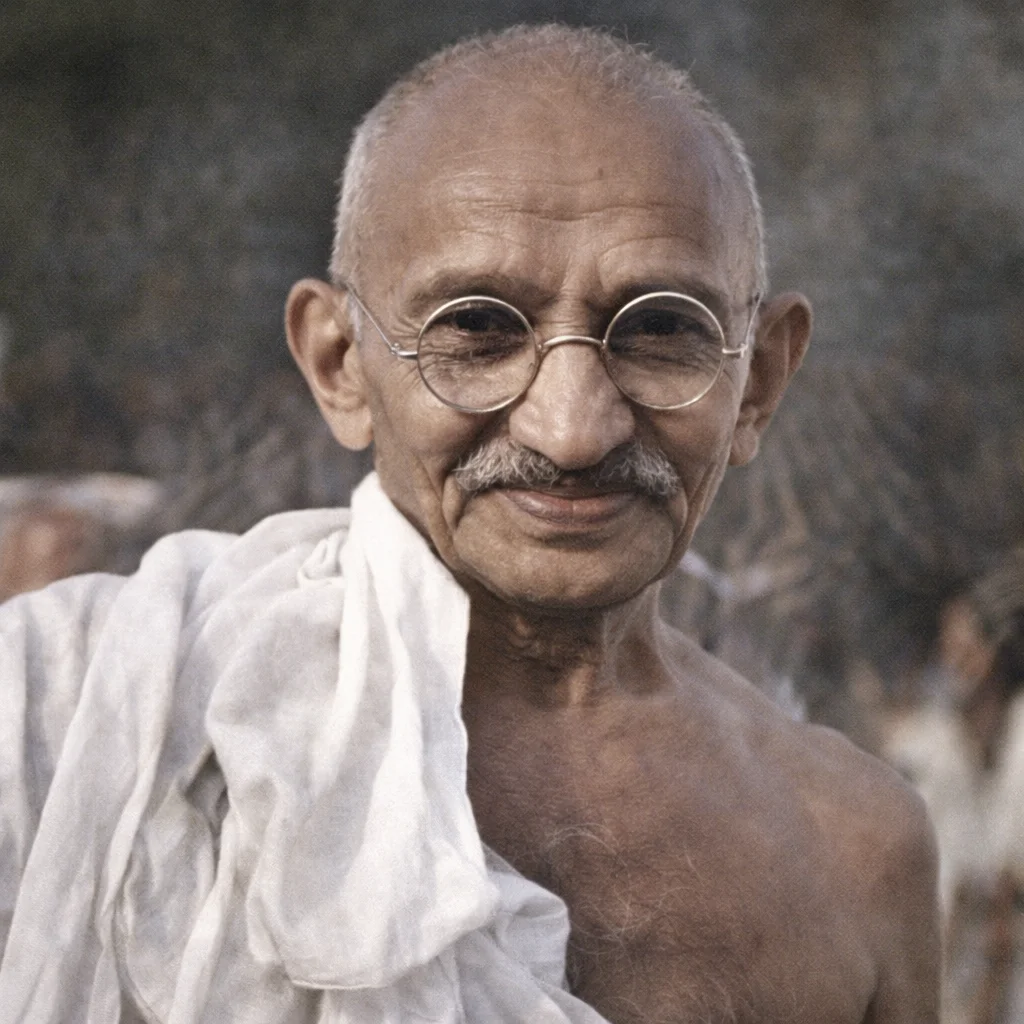
Mohandas Karamchand Gandhi remains one of the most influential political and spiritual leaders in modern world history, pioneering the practice of mass nonviolent civil disobedience. Known to millions as the 'Mahatma' or 'Great Soul,' his tireless campaigns led India to independence from British colonial rule and inspired civil rights movements across the globe. Yet behind his iconic image as a serene ascetic lies a complex life filled with surprising eccentricities, intense personal discipline, and intriguing historical encounters. From writing letters to Adolf Hitler to walking enough miles to circle the globe twice, here are 15 fascinating facts about Mahatma Gandhi.
1. He Was Nominated Five Times for the Nobel Peace Prize but Never Won
Despite being widely regarded as one of history's ultimate symbols of nonviolent resistance, Mahatma Gandhi never won the Nobel Peace Prize. The Nobel Committee nominated him five times between 1937 and 1948, yet passed him over on each occasion, largely due to colonial geopolitical tensions and internal debate among committee members. When he was assassinated in January 1948, just days before the nomination deadline, the Nobel rules barred posthumous awards unless under extreme exceptional circumstances. To honor his legacy, the Nobel Committee chose not to award a Peace Prize in 1948, explicitly declaring that there was "no suitable living candidate." Years later, members of the Nobel Committee publicly expressed deep regret for never bestowing the honor upon him.
2. Gandhi Wrote Personal Letters to Adolf Hitler Urging Peace
In a bid to avert the impending horror of World War II, Gandhi wrote two personal letters to German dictator Adolf Hitler in July 1939 and December 1940. Commencing his first letter with the respectful greeting "Dear Friend," Gandhi appealed to Hitler's humanity and implored him to prevent a conflict that could reduce Europe to ash. He made it clear that while he did not view Hitler as a monster, he felt compelled to speak out against fascist aggression using nonviolent principles. British authorities intercepted the first letter before it could reach Berlin, but Gandhi penned a second, longer letter urging Hitler to end the war. Although Hitler never publicly acknowledged or replied to the letters, the correspondence remains one of history's most striking examples of moral diplomacy.
3. He Observed a Strict Vow of Silence Every Monday
To maintain emotional composure and deep mental clarity amidst his relentless political campaigns, Gandhi observed a strict vow of silence every Monday. Known as Mauna, this practice allowed him to pause the endless debates of political life and dedicate one full day each week to quiet contemplation, reading, and writing. If emergencies arose or urgent communication was required on a Monday, he relied strictly on short written notes penned on tiny scraps of reused paper. Visitors and international dignitaries who met him on Mondays had to speak while Gandhi listened attentively, offering only hand gestures or written scribbles in response. He considered this weekly silence essential for preserving his inner peace and renewing his spiritual energy.
4. A Train Incident in South Africa Ignited His Life's Mission
Gandhi's transformation into a world-changing activist began on a cold night in June 1893 at the Pietermaritzburg train station in South Africa. As a young 23-year-old lawyer traveling to Pretoria, he was forced out of his first-class train compartment simply because of his Indian ethnicity, despite possessing a valid first-class ticket. Refusing to move to the third-class carriage, Gandhi was thrown off the train by a conductor and left shivering on the platform overnight in the freezing cold. Sitting in the dark station, he wrestled with whether to return to India or stay and fight the systemic racial injustice faced by non-white residents. He chose to stay, formulating his philosophy of nonviolent resistance (Satyagraha) during his subsequent 21 years in South Africa.
5. Nobel Laureate Rabindranath Tagore Gave Him the Title "Mahatma"
While born Mohandas Karamchand Gandhi, the leader became globally famous under the honorific title "Mahatma," which translates to "Great Soul" in Sanskrit. Legendary Nobel laureate poet Rabindranath Tagore is widely credited with bestowing this exalted title upon Gandhi in 1915 upon his return to India from South Africa. The two iconic figures shared a deep mutual respect, though they occasionally engaged in fierce intellectual debates over Indian nationalism and economic self-reliance. Gandhi himself was remarkably modest about the title, frequently stating that the epithet often pained him and that he preferred to be viewed as an ordinary human being striving for truth. Nevertheless, the name endured, cementing his status as both a spiritual teacher and political leader.
6. He Walked Enough Distance in His Lifetime to Circle the Earth Twice
Throughout his decades of political organizing and spiritual marches, Gandhi traveled vast distances almost entirely on foot. Historical estimates suggest that he walked nearly 18 kilometers (11 miles) every day for forty years during his activist campaigns across India and South Africa. This relentless physical regime added up to more than 79,000 kilometers of walking in his lifetime, a distance equivalent to circling the entire Earth twice at the equator. His most famous foot journey was the 1930 Salt March, in which he walked 388 kilometers (241 miles) from Sabarmati to Dandi to protest the oppressive British salt tax. This astounding physical endurance highlighted his extraordinary commitment to connecting directly with millions of everyday Indian citizens.
7. He Carried His False Teeth Folded Inside His Loincloth
As Gandhi aged and lost his natural teeth, he relied on a set of custom false dentures to chew his food properly. However, because he wore a traditional, minimal cotton loincloth (dhoti) that possessed no pockets, he developed a unique way of carrying his dental prosthetics. He wrapped his false teeth inside a clean fold of his loincloth or kept them tucked into a cloth pouch tied around his waist, retrieving them only during meal times. Once he finished eating, he thoroughly cleaned the dentures and stowed them away out of sight, preferring to remain toothless for the rest of the day. This practical habit exemplified his commitment to extreme minimalism and shedding unnecessary possessions.
8. He Married His Wife Kasturba at Thirteen Years Old
In keeping with prevailing local traditions in late 19th-century Gujarat, Mohandas Gandhi entered an arranged marriage at the age of thirteen in May 1883. His bride was fourteen-year-old Kasturba Kapadia, whom he had been engaged to since childhood through a pact arranged by their respective families. In his autobiography, Gandhi spoke candidly about the trials of his early marriage, admitting to intense jealousy and possessiveness during their youth. Over time, their dynamic evolved into a powerful partnership, with Kasturba becoming an active civil rights campaigner and political leader in her own right. The couple remained married for more than six decades until Kasturba's death in political detention in 1944.
9. Gandhi Spoke English with a Distinct Irish Accent
Despite being born in India and speaking Gujarati as his mother tongue, Gandhi spoke English with a distinct and charming Irish lilt. This peculiar linguistic quirk stemmed from his early schooling, where his first formal English teacher was an Irishman who taught him pronunciation, cadence, and grammar. The subtle Irish accent stayed with him throughout his higher education at Inner Temple in London and his long career as a barrister. Foreign correspondents and British officials often noted with fascination how the Indian freedom fighter articulated his arguments with the faint melodic rhythm of Ireland. This unique accent underscored the global blend of cultural influences that shaped his intellectual development.
10. The British Empire Despised His Humble Wooden Spinning Wheel
One of Gandhi's most potent political weapons against British rule was the humble wooden spinning wheel, known in India as the charkha. He urged millions of Indians to spin their own native cotton cloth, called khadi, and boycott imported British textiles that dominated the colonial market. By making self-reliance a personal daily ritual, Gandhi struck a devastating economic blow against Manchester textile mills that relied heavily on Indian consumers. The spinning wheel became such a powerful emblem of national dignity and economic liberation that Gandhi incorporated it into the original design of the Indian national flag. Today, the charkha remains an iconic symbol of peaceful economic resistance.
11. Time Magazine Named Him Man of the Year in 1930
In 1930, Time magazine designated Mahatma Gandhi as its Man of the Year, acknowledging his profound impact on global politics following the dramatic Salt March. The publication highlighted how a frail, simply dressed man had successfully challenged the immense power of the British Empire through nonviolent defiance. Gandhi was the first Asian figure—and remains the only Indian citizen—to ever receive this specific honor from the American magazine. The accompanying cover article introduced his philosophical vision to millions of Western readers, cementing his reputation as a world-class historical figure. Decades later, Time named him as the runner-up for Person of the Century, second only to Albert Einstein.
12. He Practiced Extreme Dietary Experiments and Prolonged Fasting
Gandhi was a deeply committed dietary reformer who treated his daily food intake as a series of rigorous scientific and spiritual experiments. For extended periods of his adult life, he adhered to a strict fruitarian diet consisting exclusively of fresh fruits, nuts, and olive oil, seeking absolute mental purity. He routinely engaged in prolonged fasts, using hunger strikes not only as a political tool for peace but also as a personal cleansing ritual. Although he took a vow early in life never to consume cow's or buffalo's milk, deteriorating physical health eventually forced him to consume fresh goat's milk under medical advice. His dietary writings remain influential texts in the history of vegetarianism and natural health.
13. His Funeral Procession Stretched Over Eight Kilometers Long
Following Gandhi's tragic assassination on January 30, 1948, the nation of India descended into immense collective grief as millions gathered to pay their respects. His funeral procession on January 31 stretched across eight kilometers through the streets of New Delhi toward the banks of the Yamuna River. Over one million people lined the roads, climbing trees, rooftops, and telegraph poles just to catch a glimpse of the flower-bedecked weapons carrier bearing his body. The funeral was attended by leading international diplomats, political figures, and citizens of all religious backgrounds, illustrating his universal impact. The site of his cremation, Raj Ghat, remains one of India's most visited national monuments today.
14. His Minimalist Philosophy Deeply Inspired Apple Founder Steve Jobs
The legacy of Mahatma Gandhi extended far into modern technology, profoundly influencing Apple co-founder Steve Jobs. Jobs deeply revered Gandhi's commitment to simplicity, discipline, and nonconformity, viewing him as a master of minimal aesthetics and strategic vision. During his famous period of self-reflection in the late 1970s and 1980s, Jobs adopted Gandhi-style round spectacles as a conscious homage to the Indian leader. When Apple launched its iconic "Think Different" advertising campaign in 1997, Gandhi was featured prominently as one of the visionaries who changed the world. Jobs often cited Gandhi's willingness to challenge powerful institutions as a major inspiration for Apple's corporate philosophy.
15. He Offered Forgiveness to His Assassin in His Dying Moments
On the evening of January 30, 1948, Gandhi was walking to a multi-faith prayer meeting at Birla House in New Delhi when Hindu nationalist Nathuram Godse approached him and fired three bullets into his chest. As he collapsed to the ground, witnesses reported that Gandhi performed a traditional Hindu gesture of forgiveness by placing his hands together in prayer toward his attacker. His final spoken words were recorded as "Hey Ram" (Oh God), invoking the divine in his ultimate moments of earthly life. Godse was later tried and executed, but Gandhi's immediate act of spiritual grace in the face of violence encapsulated his lifelong commitment to absolute nonviolence. This tragic yet poetic end solidified his place as a martyr for peace.
Sources & References
This AI-assisted post was rigorously curated and fact-checked for accuracy by:
 Martin Roháček
How fun was this article? 🤔
Tap a star to rate it
🧠 Quiz: How closely were you paying attention?
10 questions — all answers are in the article above!
Enjoyed these facts? There's more! 💌
Fresh fun facts in your inbox. No spam, ever.