
The Vibrant Giant: 15 Fascinating Facts About Argentina
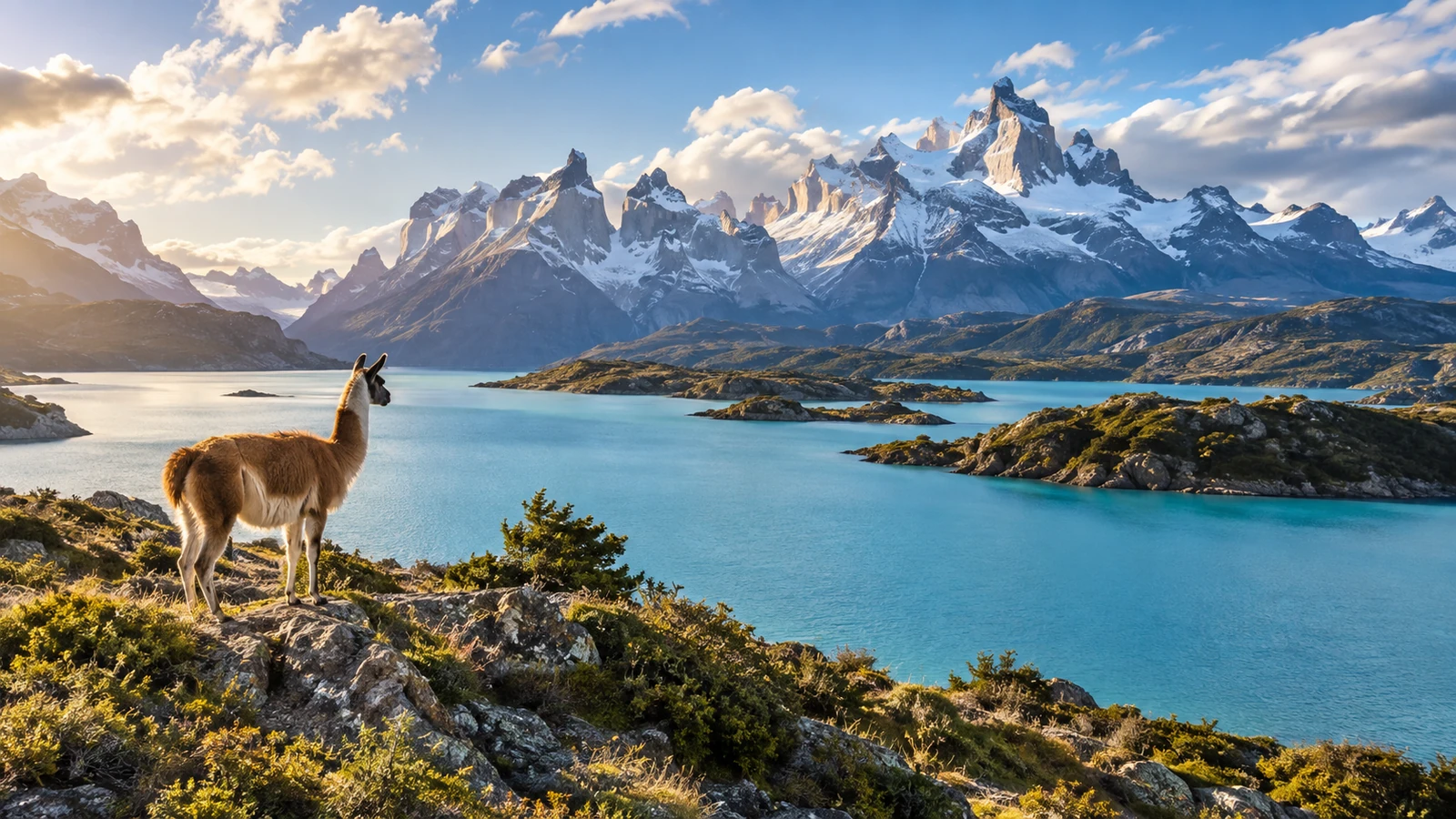
Stretching from the subtropical rainforests of the north to the sub-polar wilderness of Tierra del Fuego, Argentina is a land of dramatic extremes. Beyond its iconic soccer stars and vibrant tango halls lies a country rich in surprising history, paleontology, and world-class culture. Discover the unique traditions and natural wonders that define South America's second-largest nation.
1. Eighth Largest Country in the World
Stretching across nearly 2.8 million square kilometers, Argentina is the second-largest nation in South America and the eighth-largest in the world. Its sheer geographical scale spans extreme landscape variations, ranging from the subtropical rainforests of the northern border to the wind-swept, sub-polar wilderness of Tierra del Fuego. Because of this vast latitudinal extent, the country encompasses almost every climate zone imaginable, including arid deserts, fertile plains, and high-altitude alpine peaks. Visitors can experience tropical heat and polar glaciers within the same national borders, connected by thousands of miles of scenic highway. This immense territory also makes Argentina the largest Spanish-speaking country by total land area on Earth.
2. The Official National Sport Is Pato, Not Football
While football dominates Argentinian passion, the official national sport designated by law in 1953 is actually pato. The game originated in the 17th century among gauchos who originally played with a live duck inside a leather bag. Modern pato is a high-speed combination of polo and basketball, played on horseback with a leather ball featuring six handles. Two teams of four riders battle to throw the ball through a vertical ring mounted on a pole at either end of the field. Though less widely played today than football, pato remains a deeply revered symbol of rural tradition and equestrian skill.
3. Birthplace of the Tango
The sultry and dramatic dance known as the tango was born during the late 19th century in the working-class immigrant neighborhoods of Buenos Aires and Montevideo. Originating near the ports of La Boca, the dance blended African rhythms, European polkas, and local milonga melodies into a distinct cultural expression. Initially shunned by high society as scandalous and vulgar, tango gained immense popularity after taking Paris and Europe by storm in the early 20th century. Today, Buenos Aires remains the world capital of tango, where open-air milongas (dance halls) fill the streets with live music every night. UNESCO recognized tango as part of the Intangible Cultural Heritage of Humanity in 2009.
4. Home to the World's First Animated Feature Film
Long before Walt Disney released Snow White and the Seven Dwarfs in 1937, an Argentinian illustrator named Quirino Cristiani created the world’s very first feature-length animated movie. Released in 1917, the film was titled El Apóstol and consisted of 58,000 hand-drawn frames shot on 35mm film. The 70-minute satirical movie targeted the political corruption of then-President Hipólito Yrigoyen using cutout animation techniques. Tragically, all known copies of El Apóstol were destroyed in a studio fire in 1926, leaving only archival photos and records of this monumental cinematic milestone. Nevertheless, Cristiani's pioneering work earned Argentina a historic place in world cinema history.
5. Aconcagua Is the Highest Peak Outside of Asia
Rising dramatically in the Andes mountain range near the Chilean border, Mount Aconcagua stands at an astounding 6,961 meters (22,838 feet) above sea level. It holds the title of the tallest mountain in both the Western and Southern Hemispheres, making it one of the prestigious Seven Summits. Despite its extreme elevation, climbing Aconcagua does not require technical mountaineering equipment along its normal route, though non-technical does not mean easy. High winds, extreme cold, and severe altitude sickness make it a formidable challenge that claims lives almost every season. The peak was first successfully scaled in 1897 by a British expedition led by Edward FitzGerald.
6. The Social Ritual of Asado and Beef Culture
Argentina is internationally renowned for its beef, consistently ranking among the top countries worldwide for per capita meat consumption. Central to this culinary identity is the asado, a traditional social barbecue that is far more than just a meal. Master grillers, known as parrilleros, spend hours preparing various cuts of meat over slow-burning wood or charcoal embers without sauce, relying only on coarse salt for flavor. Family and friends gather for hours during an asado, turning Sunday afternoons into lengthy celebrations of food and community. This deep-rooted tradition dates back to the nomadic gauchos who cooked cattle over open fires across the vast Pampas.
7. Yerba Mate Is a Shared National Tradition
Walking down any street in Argentina, you will inevitably spot people carrying thermos flasks under their arms and hollowed gourds in their hands. They are drinking yerba mate, an herbal infusion made from the caffeinated leaves of a native South American holly plant. Consumed through a metal straw called a bombilla, the drink is shared in a circle according to a strict social etiquette directed by the server, or cebador. Passing the mate around signifies friendship, hospitality, and communal bond, with participants taking turns drinking the entire gourd before handing it back. It is so culturally significant that the Argentinian government designated November 30 as National Mate Day.
8. Teatro Colón Features World-Famous Acoustics
Located in the heart of Buenos Aires, the Teatro Colón is widely regarded as one of the finest opera houses in the world. Opened in 1908 after nearly two decades of construction, the magnificent building combines Italian Renaissance and French Renaissance architectural styles. Renowned conductors and legendary singers, including Luciano Pavarotti and Maria Callas, have praised its acoustic environment as virtually perfect. Acoustic experts rank the hall among the top five venues for musical performance globally alongside Vienna's Musikverein and Boston's Symphony Hall. The theater occupies an entire city block and features a soaring horseshoe-shaped auditorium that seats over 2,400 spectators.
9. A Historic Welsh-Speaking Community Lives in Patagonia
Deep in the southern province of Chubut lies Y Wladfa, a distinct settlement established by Welsh immigrants in 1865. Fleeing industrialization and seeking to preserve their native language and heritage, 153 Welsh pioneers arrived on the ship Mimosa and established towns like Gaiman and Trelew. Remarkably, the Welsh language has survived for generations in this remote South American landscape, complete with traditional tea houses serving Welsh cakes. Today, several thousand residents still speak a unique Patagonian dialect of Welsh alongside Spanish, and the region hosts annual Eisteddfod cultural festivals. This curious enclave represents one of the most intriguing cultural pockets in South America.
10. Patagonia Was Home to the Largest Dinosaurs
Argentina's dry Patagonian badlands represent one of the richest paleontological treasure troves on Earth, yielding discoveries of prehistoric giants. In 1993, scientists unearthed Argentinosaurus, a sauropod estimated to have reached 35 meters (115 feet) in length and weighed up to 70 metric tons, placing it among the largest dinosaurs ever discovered. Two decades later, paleontologists uncovered Patagotitan mayorum, an even more complete titanoid skeleton that rivaled Argentinosaurus in colossal size. These massive creatures roamed the lush forests of Cretaceous South America around 90 to 100 million years ago. Today, visitor facilities across Chubut and Neuquén showcase life-sized replicas of these ancient behemoths.
11. Ushuaia Is the Southernmost City on Earth
Nestled on the archipelago of Tierra del Fuego at the tip of the continent, Ushuaia claims the title of the southernmost city in the world. Surrounded by the Martial Mountains and facing the Beagle Channel, this dramatic port town serves as the primary launching point for expeditions to Antarctica. Originally established as a penal colony in the early 20th century to secure Argentinian sovereignty, Ushuaia has transformed into a bustling tourist destination. Visitors brave its chilly, wind-swept climate to hike sub-Antarctic forests, view penguin colonies, and receive an "End of the World" stamp in their passports. Despite its remote latitude, the city boasts a vibrant cultural life and a growing population.
12. Italian Heritage Shapes Language and Lifestyle
Between 1870 and 1950, millions of European immigrants arrived in Argentina, with Italians forming the single largest group. Today, an estimated 60 percent of the Argentinian population boasts at least partial Italian ancestry, deeply shaping national culture. This heavy migration transformed the local Spanish dialect, known as Rioplatense, giving it the melodic, musical intonation reminiscent of Italian. Italian culinary traditions are also ubiquitous, from widespread pizza and gelato shops to the custom of eating gnocchi on the 29th day of every month. The resulting fusion created a unique national identity that sets Argentina apart from its Latin American neighbors.
13. Perito Moreno Is One of Few Advancing Glaciers
Situated within Los Glaciares National Park in Santa Cruz Province, the Perito Moreno Glacier is a spectacular natural wonder spanning 250 square kilometers. Unlike the vast majority of glaciers worldwide that are shrinking due to climate change, Perito Moreno remains in a state of dynamic equilibrium. The massive ice field regularly advances into Lake Argentino, creating an ice dam that eventually ruptures in a dramatic spectacle every few years. Standing 74 meters (240 feet) above the water's surface, the towering blue ice wall attracts hundreds of thousands of travelers annually. Visitors can hear the thunderous groans and cracks of ice calving directly into the glacial lake.
14. Iguazú Falls Outscales Niagara
Straddling the border between northern Argentina and Brazil, Iguazú Falls is one of the largest and most breathtaking waterfall systems on the planet. Comprising 275 individual drops stretched across nearly 2.7 kilometers, the cataclysms dump millions of liters of water per second into the canyon below. Former U.S. First Lady Eleanor Roosevelt famously exclaimed "Poor Niagara!" upon first beholding the magnificent sight of Iguazú. The crown jewel of the system is the Devil's Throat (Garganta del Diablo), a U-shaped chasm where spectacular mists and thunderous roars engulf visitors on panoramic walkways. Both the surrounding rainforest and the falls themselves are protected as a UNESCO World Heritage Site.
15. Football Is Elevated to a National Religion
In Argentina, football is far more than a sport; it is a deeply held belief system that unites and divides the nation. The country has produced two of the undisputed greatest icons in sporting history: Diego Maradona, who led Argentina to World Cup glory in 1986, and Lionel Messi, who secured the third World Cup trophy in 2022. Domestic rivalries are equally intense, exemplified by the famous Superclásico match between Buenos Aires clubs Boca Juniors and River Plate. This fierce derby is widely regarded as one of the most intense and colorful sporting spectacles in the world. On match days, entire cities grind to a halt as millions tune in to watch their favorite teams.
Sources & References
This AI-assisted post was rigorously curated and fact-checked for accuracy by:
 Martin Roháček
How fun was this article? 🤔
Tap a star to rate it
🧠 Quiz: How closely were you paying attention?
10 questions — all answers are in the article above!
Enjoyed these facts? There's more! 💌
Fresh fun facts in your inbox. No spam, ever.