The Visionary Animator: 15 Fascinating Facts About Walt Disney
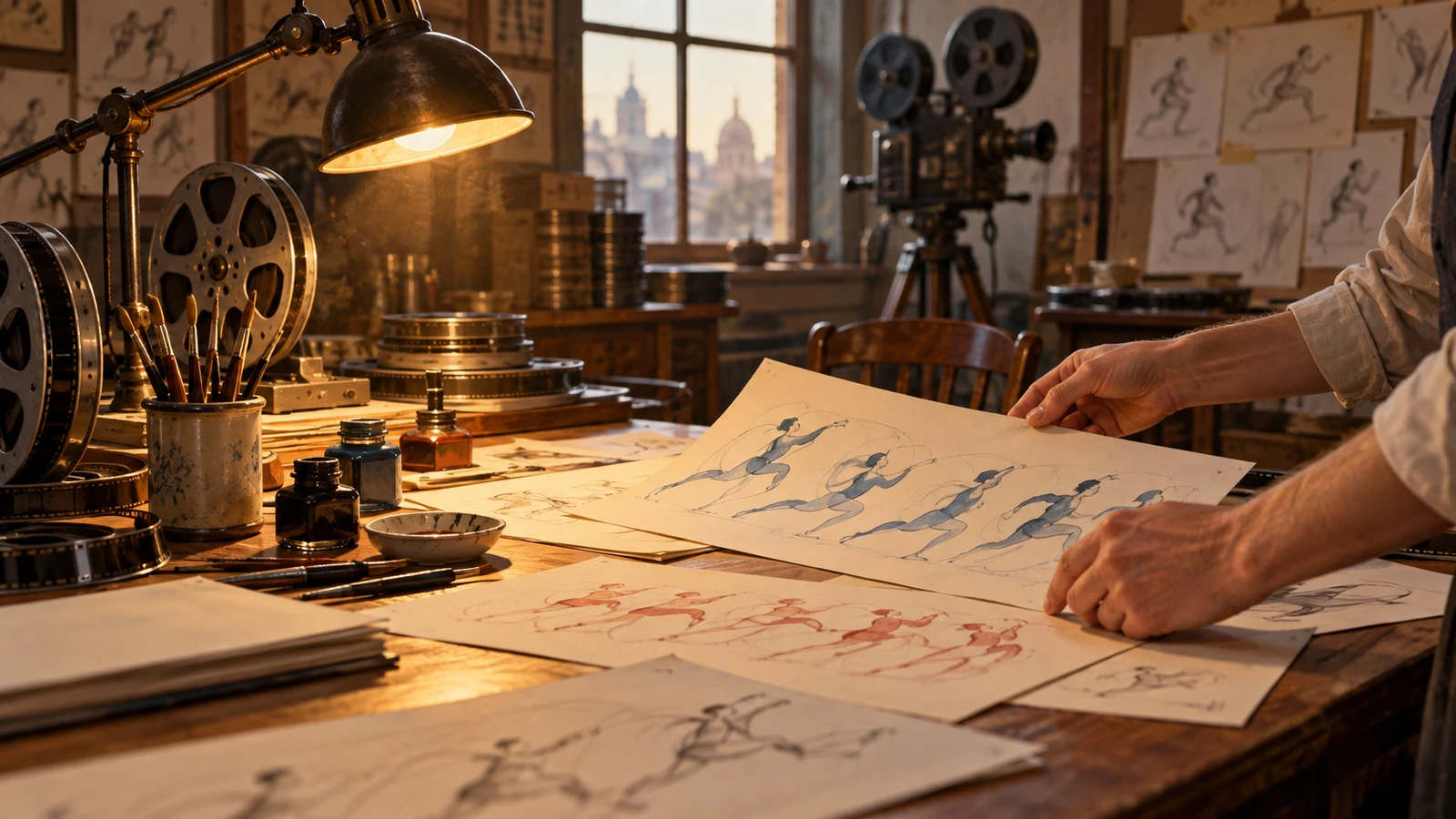
Walt Disney was much more than an entertainment mogul and animation pioneer; he was a restless visionary whose obsessive attention to detail reshaped American culture. From secretly driving decorated ambulances in France to building a miniature steam engine in his backyard, his personal quirks directly shaped his global empire. Discover the obscure origins of Mickey Mouse, secret park features, and the remarkable true story behind the man who transformed modern storytelling.
1. Mickey Mouse Was Almost Named Mortimer
Walt originally dubbed his flagship mouse Mortimer, but his wife, Lillian Disney, strongly disliked the moniker, finding it too solemn and pompous. She suggested the friendlier name "Mickey," leading to the birth of an enduring global icon. Mortimer was not scrapped entirely; the name was later repurposed for Mickey’s tall, arrogant rival in a 1936 short film. Walt went on to personally provide Mickey Mouse's vocal performance from his debut in 1928 until 1947, when studio management duties forced him to hand the role to sound effects artist Jimmy MacDonald.
2. He Holds the Record for the Most Academy Awards
Walt Disney remains the most decorated individual in Oscar history, boasting a staggering 59 Academy Award nominations and 26 total wins. Out of these, 22 were competitive awards and four were honorary recognitions bestowed for groundbreaking achievements in film. His record spans several decades, beginning with a Special Award in 1932 for creating Mickey Mouse. He even won four Oscars in a single evening in 1954, a historic feat that no other single person has ever managed to equal.
3. He Received a Custom Oscar Set for Snow White
When Snow White and the Seven Dwarfs broke new ground as the first full-length animated feature film in 1937, the Academy recognized its immense cultural impact with a unique tribute. In 1939, legendary child actress Shirley Temple presented Walt Disney with a special honorary Academy Award. The custom trophy consisted of one standard full-sized Oscar statue alongside seven miniature statuettes mounted on a stepped wooden base. This bespoke award recognized the film as a significant screen innovation that charmed millions and ushered in a golden era for animation.
4. Disney Drove a Decorated Ambulance in World War I
In 1918, a 16-year-old Walt Disney dropped out of high school to join the war effort, lying about his birth date to qualify for the Red Cross Ambulance Corps. By the time he arrived in France, the armistice had been signed, but he spent nine months driving officials and wounded soldiers. Rather than leaving his assigned vehicle plain, Walt covered the canvas sides of his ambulance with original drawings and hand-painted cartoons. This formative stint in post-war Europe solidified his desire to pursue a professional career as a commercial illustrator.
5. A Backyard Steam Train Inspired Disneyland
Walt’s legendary passion for rail transport led him to construct a fully functional 1/8th-scale steam railroad in his own backyard in Holmby Hills, California. Dubbed the Carolwood Pacific Railroad, the track spanned over 2,600 feet and featured a working steam locomotive named the Lilly Belle. Walt spent countless hours operating the train, entertaining guests, and riding along the tracks wearing custom overalls. This passion project directly served as the physical prototype and spiritual predecessor for the Disneyland Railroad that circles the park today.
6. He Monopolized Full-Color Animation for Two Years
In the early 1930s, Technicolor developed a revolutionary three-strip color process that produced vibrant, true-to-life hues on film. Recognizing its game-changing potential, Walt negotiated an exclusive contract giving his studio sole access to the three-strip Technicolor process for animated shorts until 1935. Competitors were forced to use inferior two-color systems or remain in black-and-white. This tactical business move allowed groundbreaking shorts like Flowers and Trees and Three Little Pigs to dominate audiences and sweep industry awards.
7. He Had a Secret Apartment in Disneyland
Nestled directly above the Fire Station on Main Street, U.S.A. in Disneyland sits a cozy, private apartment designed specifically for Walt and his family. Spanning less than 500 square feet, the apartment allowed Walt to work late and watch guests enjoy the park from his window without being swarmed by crowds. A lamp in the window was turned on whenever Walt was in residence so staff members knew he was on the grounds. Today, that lamp remains perpetually lit in memory of the studio founder, only turned off briefly when his descendants visit.
8. Disneyland’s Opening Day Was an Absolute Disaster
On July 17, 1955, Disneyland opened its gates to a heavily hyped crowd in an event broadcast live on television, but behind the scenes, it was total mayhem. Dubbed "Black Sunday" by park executives, the opening was plagued by counterfeit tickets, extreme heat, plumbing breakdowns, and gas leaks. The fresh asphalt on Main Street was so soft from the summer heat that women’s high-heeled shoes got stuck right in the pavement. Despite the catastrophic launch, Walt worked tirelessly over the following weeks to fix the issues, turning the park into a massive triumph.
9. Mickey’s Four-Fingered Design Was an Economic Decision
Mickey Mouse and many subsequent animated characters notoriously feature four fingers—three fingers and a thumb—on each hand instead of five. Walt explained that five fingers on a round mouse hand looked bloated like "a bunch of bananas," but the decision was also heavily rooted in financial practicality. Eliminating one finger per hand vastly simplified the drawing process for artists who had to hand-draw thousands of individual frames. Over decades of classical animation, this single artistic tweak saved the studio millions of dollars in production time and labor.
10. He Calculated the Exact Placement for Park Trash Cans
Walt was famously obsessive about park cleanliness, visiting competing amusement grounds and noting how far people would carry trash before dropping it on the ground. Through careful observation, he concluded that park visitors would carry litter for roughly 30 steps before giving up and throwing it on the floor. Consequently, he instituted a strict rule that trash cans at Disneyland must never be placed more than 30 steps apart from one another. This spatial design guideline remains a core operational policy across Disney theme parks around the globe.
11. He Spent 20 Years Pursuing the Rights to Mary Poppins
Walt promised his daughters he would turn their favorite book, Mary Poppins, into a movie, but author P.L. Travers stubbornly resisted his advances for two decades. Travers feared Hollywood would bastardize her dark, mystical nanny with crude slapstick and animated fluff. Walt relentlessly courted her with personal visits, lucrative offers, and creative control guarantees until she finally relented in 1960. Their notoriously tense collaboration, later immortalized in the film Saving Mr. Banks, ultimately produced a cinematic masterpiece that won five Academy Awards.
12. The Origin of the Two-Finger "Disney Point"
Visitors to Disney parks quickly notice that cast members point using two fingers or an open hand rather than a single index finger. One reason is that pointing with a single finger is considered offensive in several cultures around the world. However, the habit also originated directly from Walt Disney’s heavy smoking habit, as he rarely went anywhere without a lit cigarette clamped between his fingers. Studio photographers later airbrushed cigarettes out of photos of Walt, leaving him making a mysterious two-fingered gesture that became corporate policy.
13. His Final Written Words Included "Kurt Russell"
Shortly before his death from lung cancer in December 1966, Walt wrote a mysterious memo on his office desk titled "TV Projects in Production." At the bottom of the page, he scribbled the name of a rising young teen actor: "Kurt Russell." Russell, who had recently signed a long-term contract with the studio, confirmed decades later that he was shown the note after Walt’s passing. While nobody knows the exact context of the note, it proved how strongly Walt believed in Russell’s future stardom.
14. EPCOT Was Originally Planned as a Real Futuristic City
Before it became a futuristic theme park, EPCOT was envisioned by Walt as an actual inhabited, high-tech metropolis called the Experimental Prototype Community of Tomorrow. Walt planned a completely enclosed, climate-controlled city center surrounded by residential zones, connected by automated monorails and PeopleMovers. It was designed to eliminate suburban sprawl, ban personal automobiles, and serve as a living laboratory for American industrial innovation. Following Walt’s death in 1966, board members deemed running a municipal government too risky and pivoted to a permanent world's fair model.
15. He Survived His First Studio Going Bankrupt
Before achieving international fame with Mickey Mouse and Snow White, Walt suffered a crushing commercial defeat in Kansas City, Missouri. In 1921, he founded Laugh-O-Gram Studio, producing short animated fairy tales and local theatrical reels. However, high overhead costs and bad contract deals with distributors quickly drained his finances, forcing the studio into bankruptcy in 1923. Undeterred, Walt packed a single suitcase with his drawing materials, bought a one-way train ticket to Los Angeles, and restarted his career in Hollywood alongside his brother Roy.
Sources & References
This AI-assisted post was rigorously curated and fact-checked for accuracy by:
 Martin Roháček
How fun was this article? 🤔
Tap a star to rate it
🧠 Quiz: How closely were you paying attention?
10 questions — all answers are in the article above!
Enjoyed these facts? There's more! 💌
Fresh fun facts in your inbox. No spam, ever.