The Golden Boy: 15 Fascinating Facts About Diego Maradona
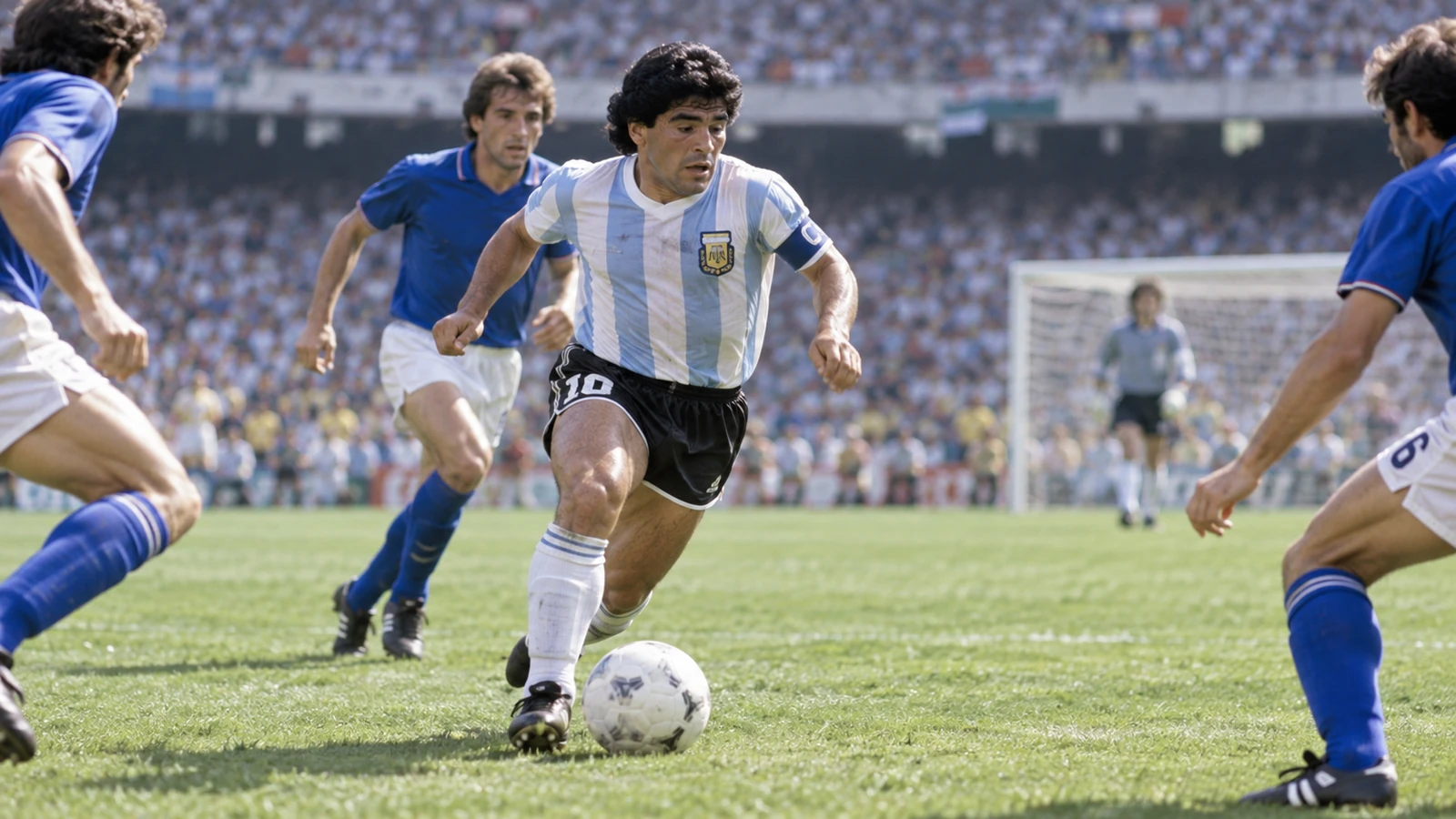
Diego Maradona was far more than a generational football icon—he was a cultural force whose sheer skill and turbulent life captivated millions worldwide. From his legendary dual-goal performance against England in 1986 to triggering national mourning across Argentina, his career was packed with unbelievable moments both on and off the pitch. Discover 15 incredible facts about the legendary playmaker known simply as 'El Pibe de Oro'.
1. He Made His Professional Debut Before Turning 16
On October 20, 1976, Diego Maradona made his professional football debut for Argentinos Juniors just ten days before his 16th birthday. Entering the match as a second-half substitute wearing jersey number 16, he became the youngest player in the history of the Argentine Primera División at the time. Seconds after stepping onto the pitch, he famously slipped the ball through the legs of defender Juan Domingo Cabrera with a slick nutmeg. Maradona later recalled that moment as the instant he felt he was holding the sky in his hands. This remarkable debut launched a professional career that would redefine international football forever.
2. He Was the First Barcelona Player Applauded by Real Madrid Fans
During an El Clásico match at the Santiago Bernabéu in June 1983, Maradona accomplished a feat almost unheard of in Spanish football history. After dribbling past Real Madrid goalkeeper Agustín, Maradona paused right at the goal line, causing defender Juan José to crash helplessly into the post in a desperate attempt to block the shot. Once the ball finally crossed the net, the home Real Madrid crowd stood up and enthusiastically applauded the Argentine genius. He became the very first Barcelona player to ever receive a standing ovation from their fiercest rivals in their own stadium. This iconic moment demonstrated how his mesmerizing talent could transcend even the bitterest rivalries in sports.
3. He Scored Football's Most Infamous and Famous Goals in One Match
The 1986 World Cup quarter-final between Argentina and England featured two of the most famous moments in sports history, occurring just four minutes apart. In the 51st minute, Maradona punched the ball past goalkeeper Peter Shilton, later cheekily claiming it was scored a little with the head of Maradona and a little with the hand of God. Just four minutes later, he took the ball in his own half and dribbled past five English outfield players and the goalkeeper to score again. That second strike was officially voted the Goal of the Century by FIFA in 2002. Together, these two goals captured the chaotic genius and unmatched skill that defined his athletic career.
4. Argentina Had to Buy Local Shirts Hours Before the 1986 Quarter-Final
Before facing England in 1986, Argentina faced a bizarre jersey emergency because coach Carlos Bilardo feared their heavy blue away shirts would overheat the players in the scorching Mexico heat. With no official alternatives available from their kit manufacturer, team officials rushed into the streets of Mexico City to find lightweight blue shirts. They purchased two different sets from a local shop and brought them back to the training camp for inspection. Maradona personally pointed to one design and declared that it was the shirt they would use to beat England. Hours before kickoff, seamstresses hastily ironed improvisational numbers onto the backs and hand-sewed improvised Argentine Football Association badges onto the chests.
5. His Warm-Up Routine to 'Live is Life' Became Iconic
Prior to a 1989 UEFA Cup semi-final match between Napoli and Bayern Munich, Maradona turned a routine pre-match warm-up into pure performance art. As the Austrian pop song "Live is Life" by Opus played over the stadium loudspeakers, Maradona began bouncing, dancing, and juggling the ball in rhythm with the music. While his teammates performed serious, traditional stretching exercises, he dazzled the crowd with his casual mastery of the ball while his shoelaces remained completely untied. Video footage of this spontaneous three-minute routine quickly became legendary across the world. It stands today as one of the most famous moments of pure joy ever captured on a football pitch.
6. He Demanded a Unique Black Ferrari from Enzo Ferrari
In 1986, fresh off winning the World Cup, Maradona requested a brand-new Ferrari Testarossa in black to celebrate his success. At the time, Ferrari manufactured vehicles almost exclusively in their signature red color, making his request highly unconventional. His manager reached out to Enzo Ferrari himself, who made a rare personal exception for the football superstar. However, when the custom black supercar was delivered, Maradona initially complained because it lacked a stereo system and interior door linings. Enzo Ferrari reportedly responded that a racing car does not need a radio, but Maradona accepted the vehicle regardless after his initial protest.
7. He Reached Divine Status in the City of Naples
When Maradona joined Napoli in 1984, the southern Italian club had never won a Serie A championship title in its history. He led the underdog team to two historic league titles in 1987 and 1990, completely changing the footballing balance of power in Italy. His success turned him into far more than a sporting hero in Naples, elevating him to a status akin to a patron saint. Locals frequently created street murals and erected public shrines featuring his image placed alongside Catholic icons like the Virgin Mary. Decades after his departure, his presence remains deeply woven into the spiritual and cultural identity of the entire city.
8. Fanaticism Forced Him to Escape Press in Car Trunks
The overwhelming idolization Maradona experienced during his time in Naples made living a normal public life virtually impossible. Fans and journalists constantly swarmed his home, rendering simple activities like going out for dinner a major logistical nightmare. To escape the relentless paparazzi, he occasionally had to hide inside the trunk of his friend's car to leave his residence undetected. On other occasions, he would wander the city streets only after 3 AM disguised in heavy coats and hats. This intense fishbowl existence highlighted the darker, isolating side of his global fame.
9. He Was Sentenced to Prison for Opening Fire on Reporters
In February 1994, a group of journalists camped outside Maradona’s country estate in Moreno, Argentina, seeking comments on his career troubles. Agitated by what he perceived as an invasion of his privacy, Maradona emerged from his house holding an air rifle. He fired multiple shots directly at the assembled reporters, injuring four journalists and photographers with pellets. The aggressive incident resulted in a legal battle that culminated in a suspended prison sentence of two years and ten months. This volatile outburst became one of the most controversial non-sporting events of his tumultuous life.
10. He Adorned His Body with Political Tattoos
Maradona was outspoken about his leftist political convictions and maintained close relationships with several Latin American political figures. He expressed these beliefs publicly through permanent body art, notably having a tattoo of Che Guevara inked on his right arm. He also had a prominent tattoo of former Cuban leader Fidel Castro across his left calf. Castro became a close personal mentor to Maradona, even opening specialized medical clinics in Cuba to assist him during his battle with substance addiction. Their friendship lasted for decades, and remarkably, both men passed away on November 25, exactly four years apart.
11. His Final World Cup Ended in an Infamous Drug Scandal
During the 1994 World Cup in the United States, Maradona scored a stunning goal against Greece and helped Argentina secure a victory against Nigeria. However, following the match against Nigeria, he was randomly selected for a mandatory anti-doping test. The results revealed the presence of five different variants of ephedrine, a banned stimulant used for weight loss and energy boost. FIFA promptly expelled him from the tournament, bringing his international playing career to a heartbreaking and abrupt end. He maintained his innocence until his death, claiming a trainer had inadvertently given him an over-the-counter energy drink containing the banned substance.
12. A Registered Religion Was Founded in His Honor
In 1998, a group of passionate fans in Rosario, Argentina, founded the Iglesia Maradoniana, or the Church of Maradona. This parody religion treats the football icon as a deity and boasts tens of thousands of registered followers worldwide. Members count their years from Maradona’s birth year in 1960, using the designation D.D. for Después de Diego (After Diego). They celebrate October 30—Maradona's birthday—as their official Christmas, complete with specialized rituals and football-themed commandments. The church has expanded beyond South America, attracting devout members across Europe and North America.
13. FIFA Prevented Argentina from Permanently Retiring His Jersey
Following Maradona’s official retirement, Napoli permanently retired his iconic number 10 jersey in 2000 as a tribute to his legacy. Wanting to honor him similarly, the Argentine Football Association (AFA) decided to retire the number 10 jersey for the national team ahead of the 2002 World Cup. However, FIFA rejected the request because tournament rules dictated that squads must be numbered strictly from 1 to 23. Consequently, playmaker Ariel Ortega was assigned the number 10 jersey for that tournament. Argentina continues to wear the number 10 today, famously inherited by Lionel Messi.
14. He Holds Unbroken World Cup Records for Being Fouled
Defenders found stopping Maradona through legal means almost impossible, which led to record-breaking physical aggression against him. Across his four World Cup appearances in 1982, 1986, 1990, and 1994, he suffered a total of 152 fouls, the highest in World Cup history. In a single 1982 match against Italy, Italian defender Claudio Gentile fouled him 23 times, setting an unbroken record for fouls on a single player in a single match. During the 1986 tournament alone, opponents brought him down 53 times on his path to lifting the trophy. These astonishing numbers demonstrate the immense physical punishment he endured every time he stepped onto the pitch.
15. His Death Triggered Three Days of National Mourning
When Diego Maradona passed away on November 25, 2020, at the age of 60, the news sent shockwaves around the entire world. Argentine President Alberto Fernández immediately declared three days of official national mourning in memory of the national hero. His coffin was laid in state at the Casa Rosada presidential palace in Buenos Aires, where hundreds of thousands of weeping fans lined up for miles to pay their respects. Tributes poured in from world leaders, elite athletes, and millions of ordinary citizens whose lives he had touched. His passing marked the emotional end of an era for global sport.
Sources & References
This AI-assisted post was rigorously curated and fact-checked for accuracy by:
 Martin Roháček
How fun was this article? 🤔
Tap a star to rate it
🧠 Quiz: How closely were you paying attention?
10 questions — all answers are in the article above!
Enjoyed these facts? There's more! 💌
Fresh fun facts in your inbox. No spam, ever.