The Thunderous Wonder: 15 Fascinating Facts About Iguazú Falls
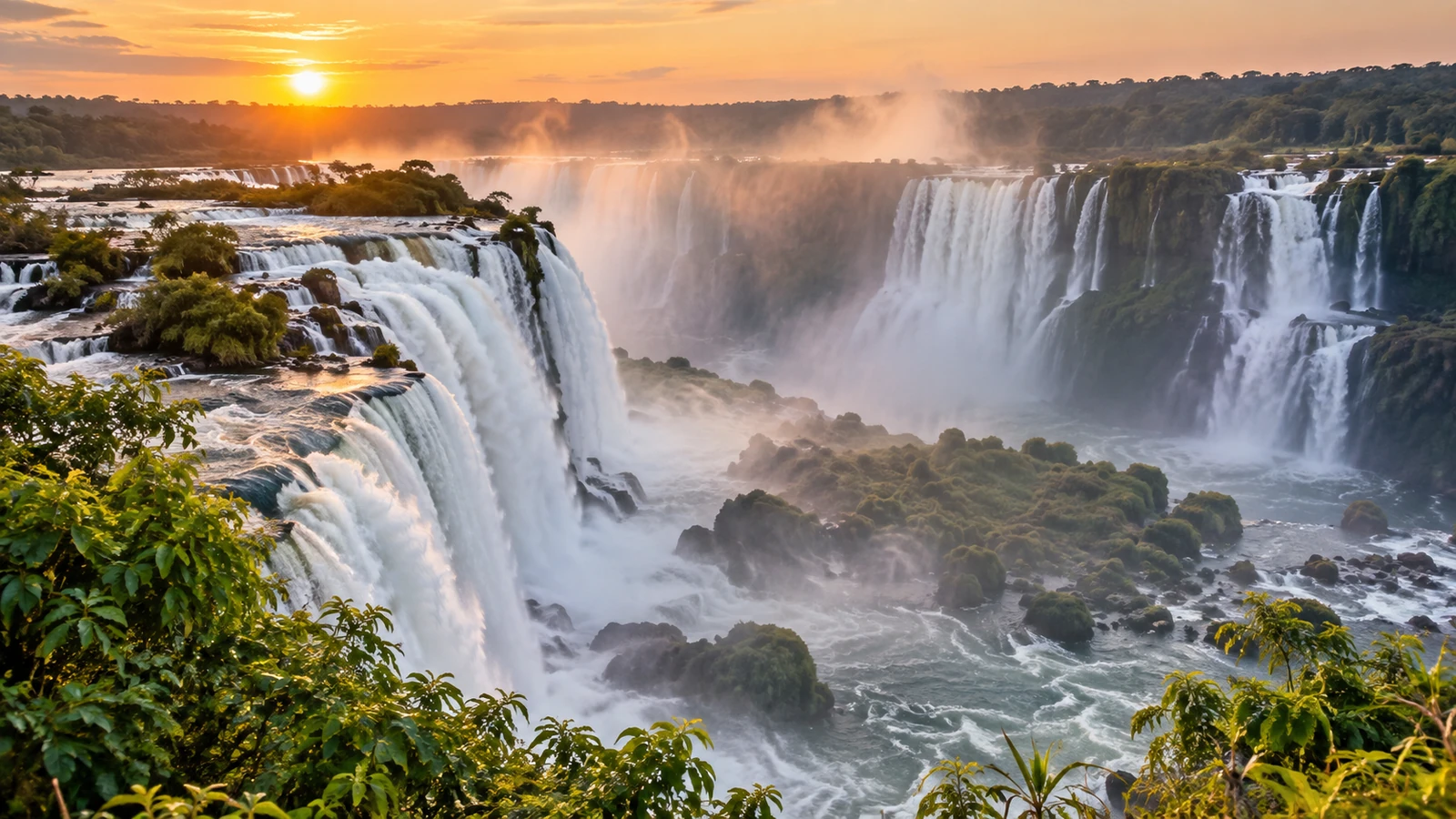
Straddling the border between Argentina and Brazil, Iguazú Falls is one of the most awe-inspiring natural wonders on Earth. Comprising a massive semicircular chain of nearly 300 individual cascades, this sprawling subtropical spectacle pours millions of gallons of water per second into a lush jungle chasm. From ancient indigenous legends to unique wildlife that nests directly behind crashing water walls, Iguazú's scale and ecological richness defy imagination. Discover the wild history, dramatic geology, and staggering numbers behind South America's greatest waterfalls.
1. The Name Means "Big Water"
The name Iguazú comes directly from the indigenous Guaraní language, formed by combining the words y, meaning "water," and gûasú, meaning "big." For thousands of years before European contact, the native Guaraní people inhabited the surrounding subtropical rainforests and revered the massive cascade system. Their description could not be more accurate, as the Iguazú River swells dramatically before plunging over a massive geological fault. Today, the name is spelled Iguazú in Spanish-speaking Argentina and Iguaçu in Portuguese-speaking Brazil. Both names honor the original Guaraní term that captures the sheer grandeur of the site.
2. The First European Named It After Saint Mary
The first recorded European to behold the staggering cascades was Spanish explorer and conquistador Álvar Núñez Cabeza de Vaca in 1541. While trekking through the dense South American interior from the Atlantic coast toward Paraguay, Cabeza de Vaca stumbled upon the thunderous roaring waters. Struck by holy awe, he officially claimed the area for Spain and christened the natural wonder Saltos de Santa María ("Saint Mary's Falls"). However, the Spanish name failed to stick over time, as locals and future cartographers ultimately reverted to the ancestral Guaraní name. Cabeza de Vaca recorded his astonishment in his published memoirs, providing Europe with its very first written account of the site.
3. Legend Blames a Vengeful Serpent God
According to traditional Guaraní mythology, Iguazú Falls was created by the rage of an angry deity. Legend tells of a powerful serpent god named Boí, who demanded the annual sacrifice of a beautiful mortal maiden. A maiden named Naipú was chosen, but a brave young warrior named Tarobá loved her deeply and kidnapped her, attempting to escape down the river in a wooden canoe. Enraged by their flight, Boí sliced open the earth ahead of them, causing the riverbed to collapse into a gaping abyss. The lovers plummeted into the chasm to fall forever, with Naipú transformed into a rock at the base of the falls and Tarobá turned into a tree on the bank condemned to gaze upon her.
4. A Volcanic Rift Created the Cliffs
The scientific explanation for Iguazú Falls is every bit as dramatic as its mythical backstory. Roughly 130 to 140 million years ago, immense volcanic eruptions blanketed the region in thick, heavy layers of basaltic lava. Tectonic stress later caused massive fractures in the cooled basalt crust, creating step-like basaltic plateaus and deep fault lines. As the ancient Iguazú River carved its way across the landscape, it eventually spilled over the edge of these hard volcanic escarpments. Over millions of years, the continuous erosion of softer rock layers beneath the basalt produced the dramatic amphitheater of cliffs seen today.
5. The Devil's Throat Consumes Over Half the River's Flow
The undisputed heart of Iguazú Falls is the Garganta del Diablo, or Devil's Throat. This magnificent U-shaped chasm measures approximately 82 meters (269 feet) high, 150 meters wide, and 700 meters long. More than half of the Iguazú River's entire volume funnels directly into this tight geological crescent, creating an absolute inferno of white water, mist, and sound. Visitors standing on the observation walkway hanging directly over the rim can feel the ground vibration beneath their feet. The intense spray rising from the abyss shoots hundreds of feet into the air, making the bottom of the gorge virtually invisible from above.
6. The Number of Falls Constantly Changes
Iguazú is not a single continuous curtain of water, but rather a complex collection of individual cataracts separated by rocky islands and dense vegetation. Depending on seasonal rainfall levels and river flow, the exact count of separate waterfalls fluctuates wildly between 150 and nearly 300. During the dry season, the water breaks apart into dozens of distinct streams cascading over separate rocky ledges. In contrast, heavy monsoon rains cause the river to swell dramatically, coalescing many smaller cataracts into massive, wall-like torrents of continuous water across a 2.7-kilometer frontage.
7. It Is Wider Than Victoria Falls and Taller Than Niagara
When compared to the world's other legendary waterfalls, Iguazú holds a unique geographic position. Spanning roughly 2.7 kilometers (1.7 miles) in width, it is significantly wider than Victoria Falls in southern Africa. At a maximum height of 82 meters (269 feet), Iguazú is also considerably taller than Niagara Falls on the border of North America. However, while Victoria Falls holds the record for the world's largest single continuous sheet of falling water, Iguazú's fragmented geography spreads its powerful volume across a vastly broader network of channels and cascades.
8. Rainy Season Flow Rates Are Mind-Boggling
The volume of water moving over Iguazú Falls varies dramatically throughout the year. On average, the system discharges roughly 1,500 cubic meters (53,000 cubic feet) of water per second. However, during extreme rainy seasons, flooding can push that figure past a staggering 13,000 cubic meters (450,000 cubic feet) per second—translating to roughly 3.4 million gallons of water pouring over the rim every single second. During these historic flood events, the sheer force of the current routinely washes away sections of heavy steel catwalks installed for national park tourists.
9. Two Countries Share UNESCO World Heritage Honors
The border between Argentina and Brazil runs directly through the canyon of Iguazú Falls, splitting the geographic feature between both South American nations. Recognized for their exceptional natural beauty and rich biodiversity, both surrounding national parks received UNESCO World Heritage status in the 1980s. Iguazú National Park in Argentina was designated in 1984, followed by Iguaçu National Park in Brazil in 1986. Around 80 percent of the actual waterfall drop points lie within Argentine territory, while the Brazilian side provides panoramic sweeping vistas of the entire cliff front.
10. A Sanctuary for Elusive Jaguars and Coatis
The lush Atlantic forest surrounding Iguazú Falls is one of the most biodiverse regions on the continent, sheltering hundreds of rare and threatened species. Among its most famous predatory inhabitants is the yaguareté, the South American jaguar, which stalks prey through the jungle paths. Visitors walking the national park trails are far more likely to encounter bold groups of South American coatis—ring-tailed relatives of the raccoon—as well as toucans, tapirs, giant anteaters, and capybara. The continuous moisture from the falls maintains a lush microclimate where vibrant orchids and giant ferns thrive year-round.
11. Birds Nest Directly Behind the Falling Water
One of the most extraordinary ecological phenomena at Iguazú Falls involves a specialized bird species known as the Great Dusky Swift (Cypseloides senex). These remarkably agile birds choose to build their nests on the dark, slick rock faces located directly behind the thunderous curtains of water. To reach their roosting spots, swifts perform astonishing feats of aerial acrobatics, flying at full speed directly through pounding waterfalls to find safety on the hidden cliffs inside. The impenetrable barrier of roaring water provides their eggs and chicks with complete protection from predators.
12. Hollywood Has Used the Falls as a Dramatic Backdrop
The iconic, prehistoric landscape of Iguazú Falls has made it a favorite filming location for major international film productions. It famously starred in the critically acclaimed 1986 historical drama The Mission, starring Robert De Niro and Jeremy Irons, where the opening sequence features a dramatic plunge over the roaring cliffs. The site also served as the lair of villain Hugo Drax in the 1979 James Bond installment Moonraker, and was transformed into the fictional Amazonian waterfalls in 2008's Indiana Jones and the Kingdom of the Crystal Skull.
13. You Can Stay Inside the National Parks
Unlike many natural wonders where visitors must stay miles outside park borders, travelers at Iguazú can lodge directly beside the roaring cascades. Both Argentina and Brazil feature historic luxury hotels located inside their respective national park boundaries. The Belmond Hotel das Cataratas sits right across the road from the Brazilian boardwalks, offering guests private access to the trail views before the park opens to the general public. On the Argentine side, the Gran Meliá Iguazú features rooms and infinity pools directly facing the mist of the Devil's Throat.
14. Perpetual Rainbows Dominate the Canyon
Because Iguazú Falls churns up immense clouds of moisture into the atmosphere every second, optics enthusiasts consider it one of the premier locations on Earth for atmospheric light phenomena. On sunny days, visitors standing along the catwalks can routinely see brilliant, vivid double rainbows arched permanently across the canyon spray. Under the light of a bright full moon, lucky nighttime visitors can even witness rare lunar rainbows—known as moonbows—glowing softly above the dark roaring water of the Devil's Throat.
15. Walkways and Amphibious Boats Put Visitors Inside the Spray
Experiencing Iguazú Falls is an intensely physical activity due to the sophisticated network of trails and bridges constructed on both sides of the river. Argentine catwalks allow visitors to trek directly over upper river rapid channels and stand inches away from the lip of the Garganta del Diablo. Meanwhile, specialized high-powered inflatable boats take thrill-seekers down into the lower canyon, driving directly into the blinding mist beneath the lower cascades for a soaking encounter known locally as the "waterfall baptism."
Sources & References
This AI-assisted post was rigorously curated and fact-checked for accuracy by:
 Martin Roháček
How fun was this article? 🤔
Tap a star to rate it
🧠 Quiz: How closely were you paying attention?
10 questions — all answers are in the article above!
Enjoyed these facts? There's more! 💌
Fresh fun facts in your inbox. No spam, ever.