The Relic Hunter: 15 Fascinating Facts About Indiana Jones
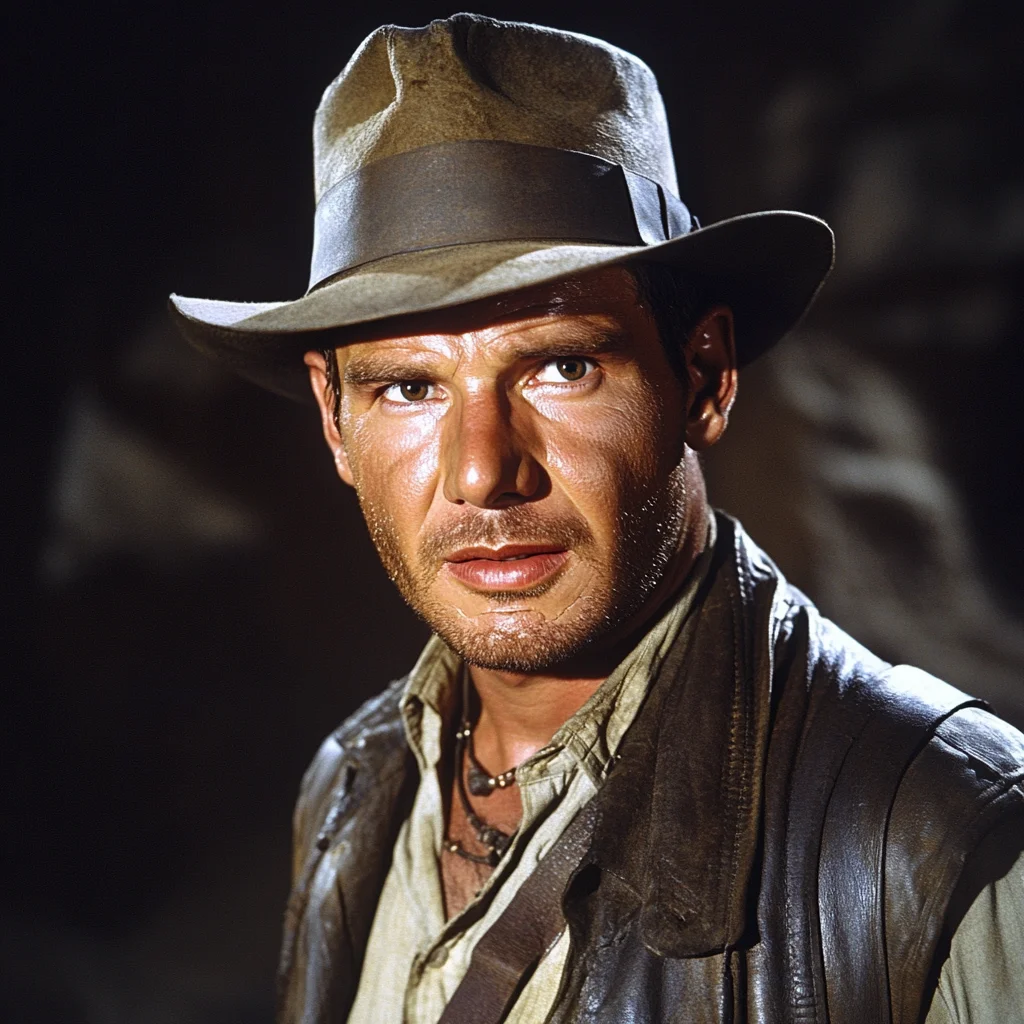
When George Lucas and Steven Spielberg joined forces on a Hawaiian beach in 1977, they set out to create a modern homage to classic 1930s adventure serials. The result was Dr. Henry Walton Jones Jr., a whip-cracking, globe-trotting archaeologist who revolutionized action cinema forever. Beyond the iconic fedora and unmistakable theme music lies a treasure trove of unexpected behind-the-scenes history, improvised film moments, and remarkable real-world impacts. From canine origins to real-world archaeological honors, discover the fascinating truths behind cinema's greatest adventurer.
1. Indiana Was Named After a Real Dog
The legendary archaeologist's iconic moniker was actually borrowed from George Lucas's beloved pet. Lucas owned an Alaskan Malamute named Indiana, a massive dog who also served as the physical inspiration for Chewbacca in Star Wars. During the character's initial development, Lucas referred to him as Indiana Smith, but Steven Spielberg disliked the surname, prompting a change to Jones. The pet-naming gag was famously written into the narrative at the end of The Last Crusade, where Indy's father reveals that the family dog carried the name first. To complete the canine connections, the character of Willie Scott in Temple of Doom was named after Spielberg's own dog.
2. Tom Selleck Was Originally Cast as Indy
It is almost impossible to imagine anyone other than Harrison Ford in the signature fedora, but he was far from the filmmakers' first choice. Tom Selleck was officially cast as Indiana Jones after impressing George Lucas and Steven Spielberg during screen tests. However, Selleck was bound by his contract with CBS to star in the television series Magnum, P.I. Although CBS refused to release Selleck from his contract, a Hollywood writers' strike delayed filming on the TV show, meaning Selleck could have technically made both projects had the network cooperated. With shooting for Raiders of the Lost Ark weeks away, Spielberg suggested Ford, who stepped into the role and made cinematic history.
3. Indy’s Satchel Was a Real World War II Gas Mask Bag
Costumier Deborah Nadoolman tailored Indiana Jones's distinct look by combining rugged utility with historical authenticity. Indy’s famous shoulder satchel was not a custom leather prop, but a genuine British Mark VII gas mask bag issued during World War II. The prop department modified the canvas pouch with a custom leather strap to allow Harrison Ford to wear it across his torso effortlessly during action sequences. The rest of the outfit followed a similarly pragmatic design philosophy, including a modified A-2 style leather flight jacket and a brown felt fedora sourced from London's famous Herbert Johnson hatters.
4. Thousands of Live Snakes (and Hoses) Filled the Well of Souls
Indiana Jones's terrifying fear of snakes—known clinically as ophidiophobia—produced one of the most intense sequences in cinema history. To fill the subterranean Well of Souls set in Raiders of the Lost Ark, production staff gathered thousands of real snakes from pet shops and animal dealers across Europe. When the initial collection of roughly 2,000 serpents proved insufficient to cover the vast floor, director Steven Spielberg requested thousands more, bringing the total count to roughly 7,000 live reptiles. Because dangerous cobras and harmless legless lizards were mixed together, glass panels were placed between Harrison Ford and venomous specimens, while cut pieces of rubber hose were scattered in dark corners to give the illusion of even greater density.
5. The Cairo Sword Fight Was Fully Improvised Due to Illness
One of the most famous comedic beats in action film history was created entirely out of physical exhaustion and illness. According to the original script for Raiders of the Lost Ark, Indy was supposed to engage in a lengthy, elaborate duel against a sword-wielding assassin in a Cairo marketplace, using his whip to disarm the foe. However, Harrison Ford was suffering from a severe case of dysentery on the day of filming and could barely manage brief takes between trips to his trailer. Wanting to avoid a grueling three-day stunt shoot, Ford suggested to Spielberg, "Why don't we just shoot the sucker?" Spielberg agreed, filming Indy casually drawing a revolver and ending the confrontation in seconds.
6. Hidden Star Wars Easter Eggs Permeate the Franchise
George Lucas frequently hid sly nods to his galaxy far, far away throughout the Indiana Jones franchise. In Raiders of the Lost Ark, attentive viewers can spot detailed wall carvings of R2-D2 and C-3PO written in ancient Egyptian hieroglyphics inside the Well of Souls. Opening scene details in Temple of Doom feature a prominent Shanghai nightspot named Club Obi-Wan, honoring the wise Jedi Master. Additionally, the registration numbers on Indy's floatplane in Raiders read "OB-CPO," combining Obi-Wan and C-3PO into a subtle aviation code.
7. Harrison Ford Taught Ke Huy Quan How to Swim on Set
Ke Huy Quan made an incredible film debut as Indy’s loyal sidekick Short Round in 1984's Indiana Jones and the Temple of Doom. Quan originally accompanied his brother to an open casting call in Los Angeles without intending to audition, but his enthusiastic directions to his brother caught the casting director's eye. During production in Sri Lanka, the young actor struck up a warm mentor relationship with Harrison Ford off-camera. Discovering that Quan did not know how to swim, Ford personally gave the youngster swimming lessons in the hotel pool during downtime between filming intense action sequences.
8. Thousands of Safe Rats Were Custom-Bred in Germany
Filming the subterranean catacombs sequence beneath Venice in Indiana Jones and the Last Crusade presented a unique biological challenge for the production crew. Because wild city rats carry dangerous diseases, producer Robert Watts arranged for a specialized German laboratory to breed over 2,000 disease-free grey rats specifically for the film. To ensure the safety and welfare of the rodents, the set was carefully disinfected, and thousands of mechanical duplicate rats were constructed for scenes requiring explosive fire effects. The production team even created a dedicated rodent sound effect library, recording squeaks and scurrying noises under controlled acoustic conditions.
9. Harrison Ford Outran a Real 300-Pound Boulder Ten Times
The opening sequence of Raiders of the Lost Ark features one of the most celebrated physical stunts in movie history. The giant rolling boulder that chases Indy out of the Hovitos temple was a 12-foot-wide sphere constructed from fiberglass, wood, and plaster, weighing over 300 pounds. Because of the spherical mass and gravity acceleration, a mechanical malfunction could have caused severe injury if the prop crushed a performer. Director Steven Spielberg was so thrilled with the kinetic energy of the shot that he made Harrison Ford run in front of the rolling prop ten times from different camera angles, relying entirely on Ford's genuine physical speed to narrowly escape.
10. Harrison Ford Was Named to the Archaeological Institute Board
While actual archaeologists often point out that Indiana Jones behaves more like a tomb robber than a meticulous academic, the character inspired generations of real-world researchers. In recognition of the franchise's overwhelming role in sparking public interest in archaeology, the Archaeological Institute of America (AIA) elected Harrison Ford to its Board of Directors in 2008. The AIA praised Ford for making the pursuit of ancient history thrilling and accessible to global audiences. Ford accepted the honor with gratitude, humorously noting that real archaeological fieldwork required far more patience and precision than dodging booby traps and swinging from whips.
11. Raiders of the Lost Ark Swept Five Academy Awards
Although adventure blockbusters are rarely associated with prestige award season victories, Raiders of the Lost Ark was a major critical and Academy favorite. At the 54th Academy Awards, the movie received eight nominations, including a nod for Best Picture and Best Director for Steven Spielberg. It went on to win four competitive Oscars for Best Art Direction, Best Sound, Best Film Editing, and Best Visual Effects. Additionally, the Academy bestowed a Special Achievement Award for Sound Effects Editing on sound designer Ben Burtt and Richard L. Anderson, cementing the film's technical mastery in cinematic history.
12. Everyday Objects Created the Franchise's Iconic Sounds
Legendary sound designer Ben Burtt constructed Indiana Jones's distinct sonic world using inventive, low-tech foley techniques. The booming, intimidating crack of Indy's bullwhip was recorded in an open desert canyon using a selection of leather whips manipulated by experts. To produce the wet, squishy sounds of slithering snakes in the Well of Souls, Burtt ran his hands through a casserole dish filled with wet sponges and swished towels in soapy water. The memorable sound of the massive rolling boulder in Raiders was recorded by driving a Honda Civic down a gravel driveway in a quiet mountain neighborhood.
13. Canonical Lore Gives Indy a Complex Biography
Beyond the feature films, the franchise established a deep, canonical backstory for Dr. Henry Walton Jones Jr. Born in Princeton, New Jersey, on July 1, 1899, Indy was raised by his distant father, medieval scholar Henry Jones Sr., and traveled the world extensively during childhood. As chronicled in The Young Indiana Jones Chronicles, young Indy met historical figures like Pablo Picasso, Theodore Roosevelt, and Albert Schweitzer, and even served in the Belgian military under a pseudonym during World War I. Later in life, he balanced high-stakes field expeditions with university professorships at Marshall College, Barnett College, and Hunter College.
14. The Temple of Doom Rope Bridge Was Terrifyingly Real
The climactic rope bridge confrontation in Indiana Jones and the Temple of Doom was filmed on location near Kandy, Sri Lanka, across a steep 300-foot-deep gorge. Built by a team of British engineering contractors working on a nearby hydroelectric dam, the suspension bridge was so high and unstable in high winds that Steven Spielberg refused to walk across it. Spielberg was so terrified of the structure that he routinely drove a car several miles around the canyon perimeter to reach the opposite cliff side. Harrison Ford and stunt crew members had no such hesitation, performing high-voltage action shots directly suspended over the chasm.
15. Sean Connery Played Indy's Father Despite a Small Age Gap
When developing Indiana Jones and the Last Crusade, Steven Spielberg envisioned a classic James Bond-esque mentor figure as Indy's father, making original 007 actor Sean Connery his top choice. Connery was initially reluctant to join the cast, fearing he would play a traditional, stern parent, but he agreed after crafting Henry Jones Sr. as a bookish, formidable scholar who easily matched Indy's intellect. Surprisingly, Connery was only 12 years older than Harrison Ford in real life—Connery was born in 1930, while Ford was born in 1942. Despite the minor age gap, their incredible screen chemistry made their estranged father-son dynamic one of the most beloved relationships in cinema.
Sources & References
This AI-assisted post was rigorously curated and fact-checked for accuracy by:
 Martin Roháček
How fun was this article? 🤔
Tap a star to rate it
🧠 Quiz: How closely were you paying attention?
10 questions — all answers are in the article above!
Enjoyed these facts? There's more! 💌
Fresh fun facts in your inbox. No spam, ever.