Peter Dinklage has become one of the most celebrated actors of his generation through his nuanced performances and groundbreaking portrayals. Best known for "Game of Thrones," his career spans film, theater, and voice work, marked by award-winning roles and advocacy.
Peter Dinklage
Peter Dinklage was born on June 11, 1969, in Morristown, New Jersey.
He has a form of dwarfism called achondroplasia and stands 4 ft 5 in (1.35 m) tall.
Dinklage broke into the film industry with the 1995 indie black comedy “Living in Oblivion.”
His breakout role came in 2003 with the critically acclaimed film “The Station Agent,” earning him widespread praise.
He is best known globally for playing Tyrion Lannister on the HBO fantasy series “Game of Thrones” (2011–2019).
For his role as Tyrion, Dinklage won four Primetime Emmy Awards for Outstanding Supporting Actor in a Drama Series.
He also took home a Golden Globe Award and a Screen Actors Guild Award for the same role.
Peter Dinklage is the only “Game of Thrones” cast member to receive an Emmy nomination for every season of the show.
Outside Game of Thrones, he has appeared in films such as “Elf,” “X-Men: Days of Future Past,” and “Three Billboards Outside Ebbing, Missouri.”
He voiced characters in video games, including “Destiny” and “Transformers: Rise of the Beasts.”
Peter Dinklage has a strong theater background, starring in plays like Shakespeare’s “Richard III” and Chekhov’s “Uncle Vanya.”
Known for his wit and intelligence, Dinklage often chooses roles that challenge stereotypes about people with dwarfism.
He is married to Erica Schmidt, a theater director, and they have two children.
Peter Dinklage is an outspoken advocate for diversity and inclusion in Hollywood, especially regarding roles for actors with disabilities.
Despite his fame, he maintains a private personal life and is respected for his humility and grounded personality.
How useful was this post?
Click on a star to rate it!
This AI-assisted post was rigorously curated and fact-checked for accuracy by:
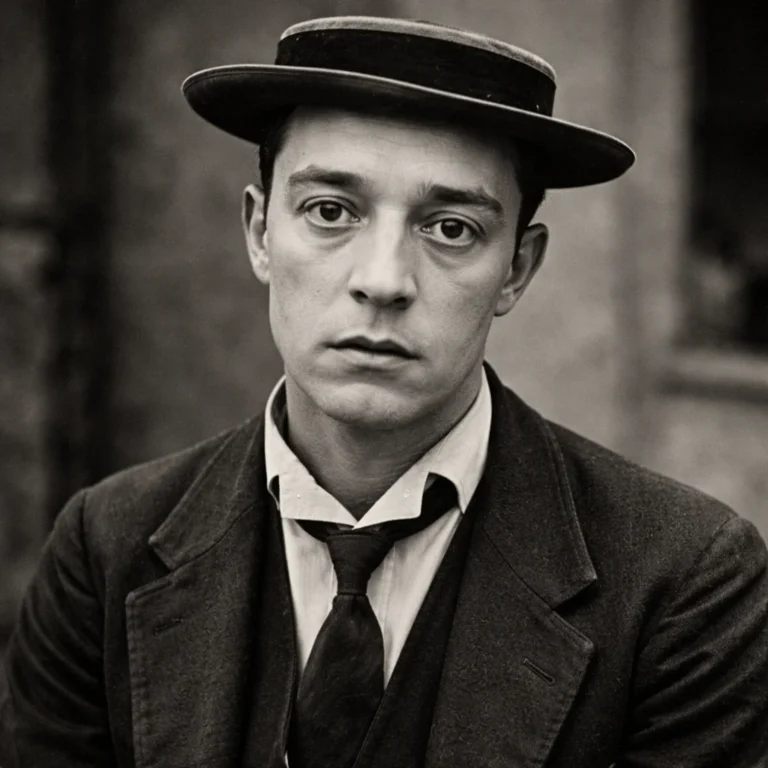
Buster Keaton stands as one of the greatest silent film stars in history. Initially, he conquered the vaudeville stage before he revolutionized cinema with his dangerous stunts and deadpan humor. Furthermore, he directed and starred in some of the most technically complex movies of the 1920s. Consequently, his influence on visual comedy remains unmatched nearly a century later. Explore these fascinating details about The Great Stone Face.
Buster Keaton
Harry Houdini gave him his famous nickname. When Keaton was just six months old, he fell down a flight of stairs but remained completely unhurt. Consequently, the famous magician saw the fall and remarked, “That was a real buster,” which was slang for a spill or fall.
As a child, a cyclone sucked him out of a window. Amazingly, the strong wind lifted him from his room and deposited him unharmed in a street several blocks away. This event happened in Kansas years before The Wizard of Oz made similar storms famous.
His parents used him as a “human projectile” in their act. Specifically, his father sewed a suitcase handle into Buster’s clothing to throw him around the stage more easily. Therefore, the authorities frequently investigated the family to ensure the child was not being abused.
He broke his neck while filming Sherlock Jr. During a scene where water from a railroad tower hits him, the force slammed his neck against a steel rail. Surprisingly, he kept filming and only discovered the fracture thirty-five years later during a routine X-ray.
Dangerously, he performed the famous “falling house” stunt without trickery. In Steamboat Bill, Jr., a two-ton house facade collapsed around him with only two inches of clearance on either side. Reportedly, the cameraman looked away during the take because he was too terrified to watch.
He modified Stetsons to create his signature porkpie hats. Because he wanted a specific look, he cut down fedoras and stiffened the brims with sugar water. Thus, he created a unique silhouette that fans instantly recognized.
He never smiled on camera to get more laughs. Early in his career, he realized that audiences laughed harder when he maintained a stoic expression during chaotic situations. As a result, he earned the nickname “The Great Stone Face.”
Buster Keaton served in France during World War I. He joined the 40th Infantry Division and suffered permanent ear damage due to loud artillery fire. Unfortunately, this hearing loss plagued him for the rest of his life.
He wrote gags for the Marx Brothers later in his career. After his own stardom faded, he worked as an uncredited writer for MGM. For instance, he devised several physical comedy bits for films like A Night at the Opera.
The General features the most expensive shot in silent film history. He purchased a real locomotive and drove it across a burning bridge until it collapsed into the river below. Consequently, the train wreckage remained in the river as a tourist attraction for decades.
Tragically, signing with MGM was the biggest mistake of his life. In 1928, he gave up his independent studio to join the massive corporation. Therefore, he lost his creative control and his career spiraled downward for many years.
He appeared in the classic noir film Sunset Boulevard. He played himself as one of the “Waxworks,” a group of forgotten silent film stars who play cards with the main character. This role highlighted the tragic reality of aging in Hollywood.
Unusually, he possessed a “fingerprint” memory for bridge. He was an avid card player who could recall every hand played in a game. This sharp mental acuity contrasted with his physical, tumble-heavy public persona.
He starred in a Twilight Zone episode called “Once Upon a Time.” Creatively, the episode featured a silent segment that paid homage to his early work. Thus, he introduced his unique style of comedy to a new generation of television viewers.
Finally, he received an Honorary Academy Award in 1959. After years of obscurity, Hollywood finally recognized his unique talents and contribution to the industry. The standing ovation he received marked a triumphant return to glory before his death.
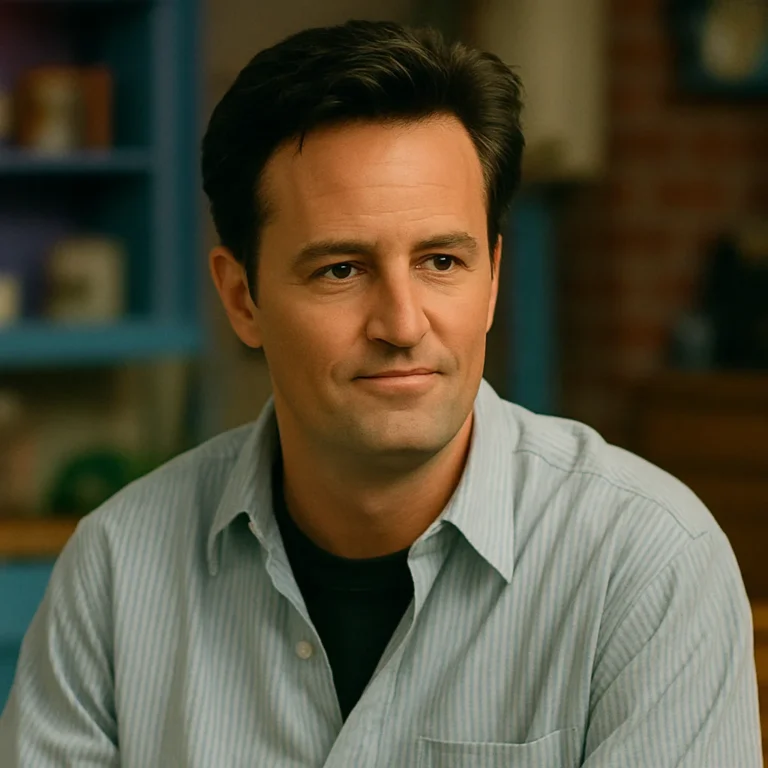
Most people know Matthew Perry as the sarcastic Chandler Bing from Friends. However, his life off-screen was even more fascinating than his sitcom character. For instance, he was a top-ranked tennis player in Canada before he became an actor. Furthermore, he once beat up a future Prime Minister in the schoolyard. Consequently, his journey is full of surprising twists and hidden talents. Therefore, get ready to explore the unknown side of this beloved star. You will see him in a whole new light.
Matthew Perry
Matthew Perry was a talented athlete in his youth. Specifically, he was a top-ranked junior tennis player in Ottawa, Canada. He practiced for hours every day.
Surprisingly, he attended school with Justin Trudeau. In fact, he and a friend once beat up the future Prime Minister in fifth grade. He later apologized for this behavior.
He lost the tip of his middle finger as a child. Because a door slammed on his hand, he lost part of the digit. Fans often spotted this in close-up scenes.
Additionally, his stepfather is a famous journalist. Keith Morrison, the iconic host of Dateline NBC, married Matthew’s mother in 1981. They had a very close relationship.
He almost missed his role on Friends. Initially, he was committed to a pilot about futuristic baggage handlers called LAX 2194. Fortunately, that show flopped immediately.
Uniquely, he is the only Friends cast member who wrote an episode. He contributed significantly to the script because he knew his character so well.
He loved the video game Fallout: New Vegas. Therefore, he voiced the villainous character Benny in the game. He did this just because he was a huge fan.
Furthermore, he made a famous bet with Bruce Willis. He bet that their movie The Whole Nine Yards would be a hit. Because Willis lost, he appeared on Friends for free.
Matthew Perry had a deep obsession with Batman. He even bought a massive penthouse because it looked like Bruce Wayne’s home. He often called himself “Mattman.”
Surprisingly, he once wrote a paper on quantum physics. He did this to convince Julia Roberts to appear on Friends. She agreed only after he finished the assignment.
His favorite movie of his own was Fools Rush In. Although he is known for sitcoms, he loved this romantic comedy the most. He cherished the experience of filming it.
He was a dedicated advocate for addiction recovery. Consequently, he turned his own Malibu home into a sober living facility called Perry House. He helped many people find sobriety.
Interestingly, his mother was a press secretary. She worked directly for Canadian Prime Minister Pierre Trudeau. Thus, politics surrounded him from a young age.
He wrote a play called The End of Longing. It premiered in London and he starred in it himself. The play received mixed but passionate reviews.
Finally, he has very famous ancestors. Genealogists discovered he is related to William Wallace. He is also a descendant of Mayflower passengers.