Viggo Mortensen is more than just Aragorn—he’s a seasoned actor, poet, photographer, and publisher with a rich multicultural background. Discover fascinating insights into his multifaceted career and artistic passions.
Viggo Mortensen
Viggo Mortensen was born on October 20, 1958, in New York City and has Danish, American, and Argentine heritage.
He gained worldwide fame for portraying Aragorn in the epic “The Lord of the Rings” trilogy.
Mortensen pursues multiple art forms beyond acting, including photography, poetry, painting, music, and publishing.
He founded Perceval Press to support artists and authors whom mainstream publishers often overlook.
Viggo is known for his dedication to roles, learning new skills like horse riding and sword fighting for “The Lord of the Rings.”
He earned three Academy Award nominations, including for the films “Eastern Promises,” “Captain Fantastic,” and “Green Book.”
Mortensen began his career in films with a small role in Ridley Scott’s “Witness” (1985).
He is fluent in English, Danish, Spanish, and French, owing to his multinational upbringing.
Apart from Hollywood, Viggo has worked in independent films and international cinema, always choosing challenging characters.
He once infamously responded to a journalist’s rude question by flipping the bird—a testament to his passionate and sometimes fiery personality.
Mortensen’s interest in poetry and photography often intersects with his film projects, capturing behind-the-scenes moments and inspirations.
He is also a humanitarian, involved in social and environmental causes, often using his art and platform to highlight important issues.
Viggo has performed live readings of poetry and frequently collaborates with other artists across creative disciplines.
He speaks openly about his family life, including his three children and relationship with his wife, which gives him a down-to-earth aura.
Despite his fame, Mortensen maintains a somewhat private life and earns admiration for his humility and depth both on and off screen.
How useful was this post?
Click on a star to rate it!
This AI-assisted post was rigorously curated and fact-checked for accuracy by:
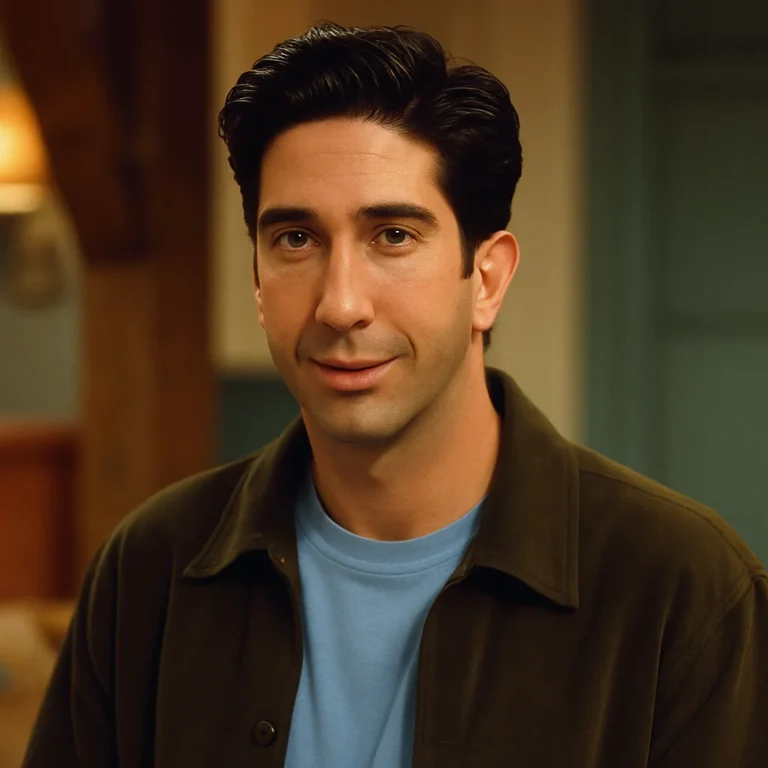
David Schwimmer remains one of the most recognizable faces in television history thanks to Friends. Although fans know him as the lovable paleontologist Ross Geller, his career extends far beyond that sitcom. Surprisingly, he is a dedicated stage actor who co-founded his own theater company in Chicago. Furthermore, he works tirelessly as an activist to end sexual violence. His skills as a director have also earned him respect in Hollywood. Prepare to pivot to the real life of this talented star.
David Schwimmer
David Schwimmer was the very first actor cast in Friends. In fact, the producers wrote the character of Ross specifically for him. Therefore, he did not even have to audition for the iconic role.
Surprisingly, he turned down the lead role in Men in Black. The studio offered him the part of Agent J, which eventually went to Will Smith. However, he rejected it to direct his first film, Since You’ve Been Gone.
He co-founded the Lookingglass Theatre Company in Chicago. Immediately after college, he helped start this ensemble to produce original plays. Consequently, he remains an active member of the company to this day.
David Schwimmer directed ten episodes of Friends himself. While acting as Ross, he also worked behind the camera to guide his castmates. For example, he directed “The One with the Red Sweater.”
His mother is a famous high-profile divorce lawyer. Arlene Coleman-Schwimmer represented celebrities like Roseanne Barr and Elizabeth Taylor during their legal battles. Thus, he grew up hearing about complex legal cases.
He hated working with the monkey Marcel. Apparently, the animal constantly messed up takes and ate live grubs on his shoulder. Therefore, David Schwimmer felt relieved when the writers wrote the monkey out of the show.
He voiced Melman the Giraffe in the Madagascar movies. Producers cast him because of his distinct voice and comedic timing. Interestingly, he recorded his lines alone in a booth, not with the other actors.
David Schwimmer serves on the board of the Rape Foundation. He has spent decades advocating for victims of sexual assault and harassment. This passion comes from hearing his mother’s stories about representing female clients.
He played a strict military instructor in Band of Brothers. Fans were shocked to see him as the hated Captain Herbert Sobel. Consequently, this serious role proved his range went far beyond comedy.
Uniquely, he encouraged the Friends cast to negotiate salaries together. He convinced the group to form a “mini-union” to demand equal pay. Ultimately, this strategy earned each of them one million dollars per episode.
He played the lawyer Robert Kardashian in American Crime Story. To prepare, he spent hours talking to Kris Jenner about her late husband. Thus, he captured the essence of the man who defended O.J. Simpson.
He appeared in The Wonder Years with long hair. Early in his career, he played Karen’s hippie boyfriend in the classic show. Consequently, footage of him in a tie-dye shirt still circulates online.
David Schwimmer struggled intensely with his sudden fame. The overwhelming celebrity status made him want to hide from the world. Therefore, he often wore a baseball cap pulled down low to avoid recognition.
He directed the British comedy Run Fatboy Run. He traveled to the UK to work with Simon Pegg on the film. Fortunately, the movie became a box office success in England.
Finally, he considers himself a theater geek at heart. Despite his massive television success, he often returns to the stage. He believes that live performance offers a thrill that cameras cannot match.
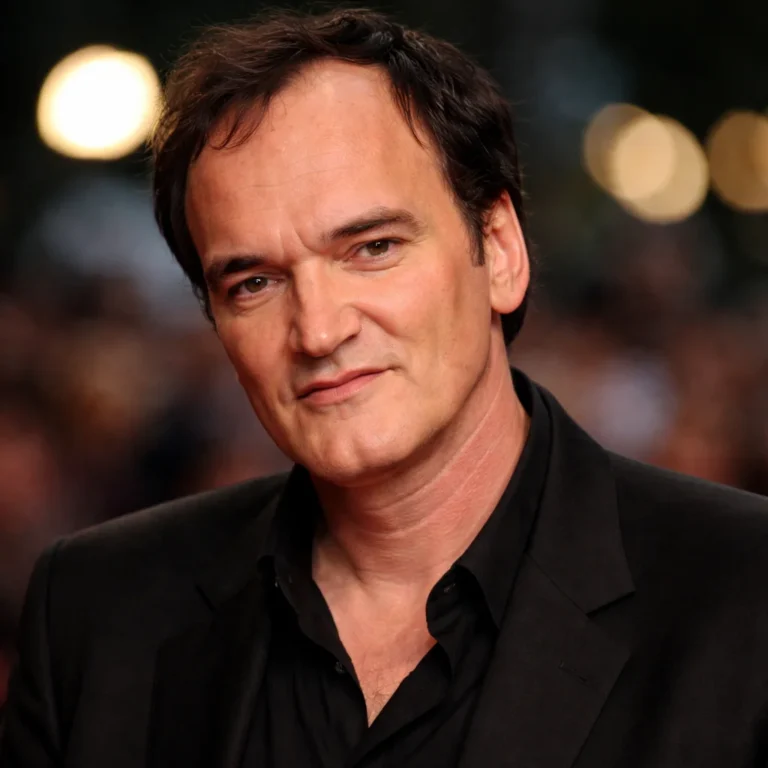
Quentin Tarantino changed cinema with his sharp dialogue and nonlinear storytelling. While fans obsess over his bloody action scenes, his personal life contains just as many surprises as his scripts. For instance, he funded his debut movie by playing an Elvis impersonator on a famous TV show. Furthermore, he refuses to use a computer when he writes his screenplays. Prepare to visit the New Beverly Cinema.
Quentin Tarantino
Quentin Tarantino worked as an Elvis impersonator on The Golden Girls. In 1988, he appeared in a single episode of the popular sitcom. He played one of many Elvis impersonators at a wedding. Consequently, the residual checks from this small role helped him fund the production of Reservoir Dogs.
He famously never went to film school. When people ask him about his education, he simply says, “I went to films.” He learned his craft while he worked as a clerk at Video Archives in Manhattan Beach. There, he watched thousands of movies and discussed them with customers all day long.
He plans to retire after his tenth film. Tarantino has repeatedly stated that he wants a perfect filmography. He believes directors lose their touch as they age. Therefore, he intends to drop the microphone after his next movie to preserve his legacy as an artist.
He writes all his scripts by hand. He refuses to use a computer or a typewriter during the creative process. Instead, he sits in his home with a red felt-tip pen and a yellow legal pad. He feels this ritual connects him more deeply to his characters.
A thief stole his car during the filming of Pulp Fiction. The cherry red 1964 Chevelle Malibu that John Travolta drives actually belonged to Tarantino. Someone stole it from the set in 1994. Remarkably, police recovered the vehicle in Oakland seventeen years later in 2013.
He owns the movie theater he visited as a child. In 2007, he bought the New Beverly Cinema in Los Angeles. He acts as the head programmer for the venue. Furthermore, he enforces a strict rule that the theater must project only 35mm film, never digital.
Adam Sandler almost played the Bear Jew. Tarantino wrote the role of Donny Donowitz in Inglourious Basterds specifically for the comedian. However, Sandler had already committed to film Funny People. Thus, the role went to horror director Eli Roth instead.
He invented a fake brand of cigarettes. Characters in his movies frequently smoke “Red Apple” cigarettes. He created this fictional brand to avoid product placement. Consequently, you can spot the yellow package in Pulp Fiction, Kill Bill, and Once Upon a Time in Hollywood.
He strangled an actress himself to get the shot right. In Inglourious Basterds, the character Bridget von Hammersmark dies by strangulation. Tarantino did not trust the actor to do it safely or realistically. Therefore, he stepped into the frame and applied the pressure to Diane Kruger’s neck himself.
His editor was his secret weapon. Sally Menke edited every single one of his films until she died in 2010. He often described her as his “only, truly, genuine co-writer.” She possessed the unique ability to tame his chaotic footage into a coherent story.
Jamie Foxx rode his own horse in Django Unchained. The actor brought his horse, Cheetah, to the set. He convinced the director to let him use the animal in the film. Thus, the horse you see on screen actually belongs to Foxx in real life.
A customer’s mistake inspired the title Reservoir Dogs. While he worked at the video store, a customer mispronounced the French film Au Revoir les Enfants. The customer called it “the reservoir movie.” Tarantino loved the sound of it and combined it with Straw Dogs to create the title.
The wallet in Pulp Fiction belonged to Quentin Tarantino . The famous wallet that says “Bad Mother Fucker” was not a prop. It actually belonged to Tarantino’s personal collection. He gave it to Samuel L. Jackson to use in the diner scene because the original prop looked too cheap.
Quentin Tarantino holds a specific record for the F-word. His films consistently rank high for profanity. Specifically, Pulp Fiction uses the word 265 times. However, Reservoir Dogs beats it with 269 uses. Finally, Django Unchained takes the crown with over 110 uses of a racial slur alone.
Finally, he directed a scene in Sin City for one dollar. His friend Robert Rodriguez scored Kill Bill: Vol. 2 for a single dollar. To return the favor, Tarantino guest-directed the car sequence in Sin City. He accepted the same symbolic payment for his work.