The Green Mile stands as one of the most emotional adaptations of a Stephen King novel ever made. While many fans know it for the heartbreaking performance of Michael Clarke Duncan, the production was filled with hidden tricks and happy accidents. For instance, the towering size of John Coffey was largely a camera illusion, and the mouse Mr. Jingles was played by an entire squad of rodents. Furthermore, the movie broke historical accuracy rules just to make the guards look cooler. Prepare to walk the mile with the inmates of Cold Mountain.
Green Mile
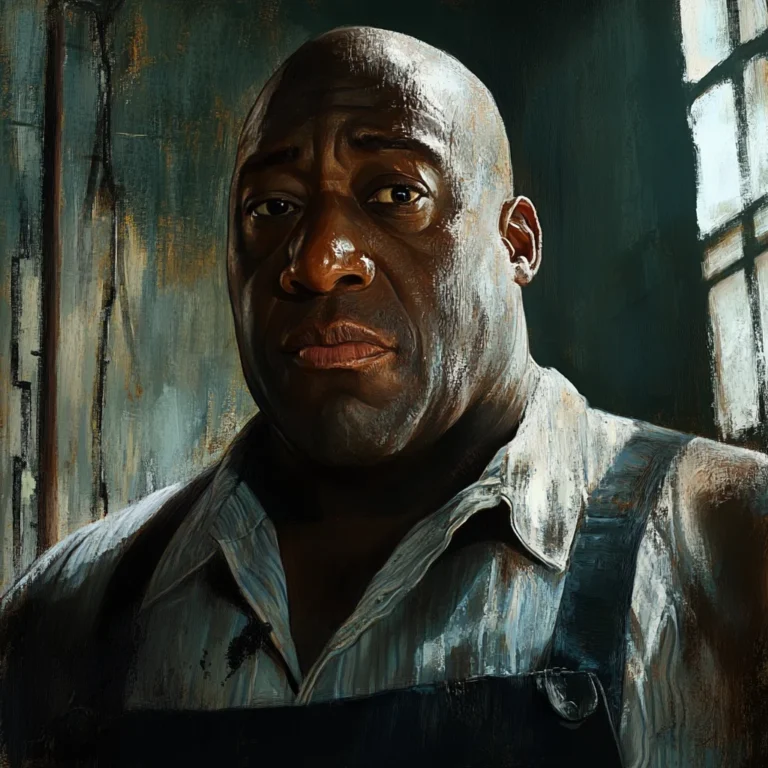
Bruce Willis is responsible for Michael Clarke Duncan getting the role. He worked with Duncan on the movie Armageddon and called the director of The Green Mile personally. Willis told him that he had found the perfect John Coffey.
Tom Hanks was originally supposed to play the old version of himself. The makeup team spent hours turning him into a 108-year-old man. However, the tests looked too fake, so they hired the actor Dabbs Greer instead.
Over fifteen different mice played the character of Mr. Jingles. Each mouse was trained to do a specific trick, such as rolling the spool or sitting still. Therefore, the scene where he pushes the spool required a very specific “actor” for the job.
The actor playing Percy Wetmore asked for his shoes to squeak. Doug Hutchison wanted the character to be as annoying as possible. Thus, he requested special squeaky shoes so the audience would hate him before he even spoke.
Michael Clarke Duncan was not actually that much taller than his co-stars. He stood six feet and five inches tall, which was only one inch taller than David Morse. Consequently, the crew used forced perspective and smaller furniture to make him look like a giant.
Historically, the guards would not have worn uniforms in 1935. At that time, prison staff in the South usually wore street clothes. However, director Frank Darabont felt the uniforms gave them more visual authority on screen.
Stephen King sat in the electric chair during his visit to the set. He asked the crew to strap him in so he could feel what it was like. Reportedly, he found the experience incredibly uncomfortable and spooky.
Sam Rockwell requested that the makeup artists give him acne. He wanted his character, Wild Bill Wharton, to look greasy and repulsive. Therefore, he spent time in the makeup chair adding fake pimples to his face.
The electric chair period is technically incorrect for Louisiana. The movie takes place in 1935, but the state did not adopt the electric chair until 1940. Before that, the method of execution was hanging.
Production designers built the prison set to be smaller than real life. They made the beds shorter and the cells narrower to emphasize John Coffey’s size. Thus, the environment itself helped sell the illusion of his massive stature.
Tom Hanks stayed in character when Stephen King visited. The author arrived while Hanks was filming a scene as Paul Edgecomb. Instead of breaking character, Hanks invited King into the “Green Mile” just as a guard would.
The crew had to silence their footsteps to avoid scaring the mice. During scenes with Mr. Jingles, everyone on set had to remain perfectly still. If anyone made a sudden noise, the mouse would run away and ruin the take.
The urine infection scenes were surprisingly difficult for Tom Hanks. He had to portray the relief of being cured by John Coffey without saying a word. He later joked that acting like he had a bladder problem was one of his greatest challenges.
Harry Dean Stanton improvised the song during the rehearsal scene. When the guards are rehearsing the execution, his character Toot-Toot starts singing. This bizarre moment was not in the script but the director loved it.
Finally, Stephen King considers this his single favorite adaptation. Although he has criticized movies like The Shining, he praised The Green Mile endlessly. He called it the most faithful film version of his work ever produced.
How useful was this post?
Click on a star to rate it!
This AI-assisted post was rigorously curated and fact-checked for accuracy by:
The movie Constantine blends supernatural action with biblical lore in a unique way. While fans know about Keanu Reeves as the demon hunter, many lesser-known details about the film’s production and story remain hidden. These intriguing facts shed light on how this cult classic came to life, uncovering secrets that make Constantine even more fascinating for viewers.
Constantine
Keanu Reeves learned to ride a motorcycle specifically for his role as John Constantine, adding authenticity to action scenes.
The character Constantine originally appeared in the Hellblazer comic series, which inspired the film’s dark tone.
Director Francis Lawrence made his feature film debut with Constantine, using his TV experience to create a visually distinct style.
The film’s portrayal of demons and angels draws heavily from Christian mythology but with creative liberties.
Guillermo del Toro helped design some of the demonic creatures, lending an eerie, otherworldly look.
Tilda Swinton played the angel Gabriel in the movie, choosing to portray the character without traditional gender cues.
The movie was filmed in multiple locations around Los Angeles, standing in for a gritty, supernatural cityscape.
Keanu Reeves performed many of his own stunts, including intense fight scenes and action sequences..
The iconic trench coat worn by Constantine became a defining costume piece for the character’s look.
The movie initially received mixed reviews but gained a strong cult following over time.
Constant references to sin, redemption, and fate reflect the film’s deep theological and philosophical layers.
The script included several scenes that were cut for pacing but remain popular among fans in deleted footage.
The soundtrack mixes rock and orchestral music to enhance the film’s dark yet dramatic tone.
The character’s love interest, Angela, was portrayed with a strong feminist angle, contrasting typical action tropes.
Constantine’s design emphasizes practical effects combined with CGI, creating a believable supernatural world.
Matthew McConaughey stands out not only for his Oscar-winning roles but also for his unique personality and life stories. From surprising childhood experiences to his passion for nature and music, many details about him are lesser-known yet fascinating. Explore the intriguing aspects of McConaughey’s life and career that make him a truly captivating figure.
Matthew McConaughey
Matthew McConaughey was voted “Most Handsome Student” in high school despite struggling with severe acne.
He spent a year in Australia as a Rotary exchange student, even adopting an Australian accent for a while.
Before acting, Matthew considered a career in law and originally majored in pre-law at university.
His first paid acting job was in a beer commercial, marking his entry into show business.
McConaughey once played bongo drums for eight hours straight to help his wife during childbirth.
He owns a 1,600-acre ranch in West Texas, where he enjoys a peaceful life away from Hollywood.
He rarely wears deodorant or cologne, embracing a natural lifestyle.
McConaughey helped rescue countless animals, especially after Hurricane Katrina devastated New Orleans.
His favorite actor and inspiration is Paul Newman, and he named a beloved dog after Newman’s movie “Hud.”
Matthew lost 47 pounds to portray Ron Woodroof in Dallas Buyers Club, a role that won him an Oscar.
Despite being a native Texan, he supports the Washington Redskins NFL team, unlike many locals.
Early in his career, he struggled with legal trouble, including resisting arrest during a party incident.
He founded the Just Keep Livin Foundation to encourage healthy lifestyles among young people.
He was considered for the role of Jack Dawson in Titanic but lost the part to Leonardo DiCaprio.
Matthew keeps a daily diary that helped him write his acclaimed memoir Greenlights.