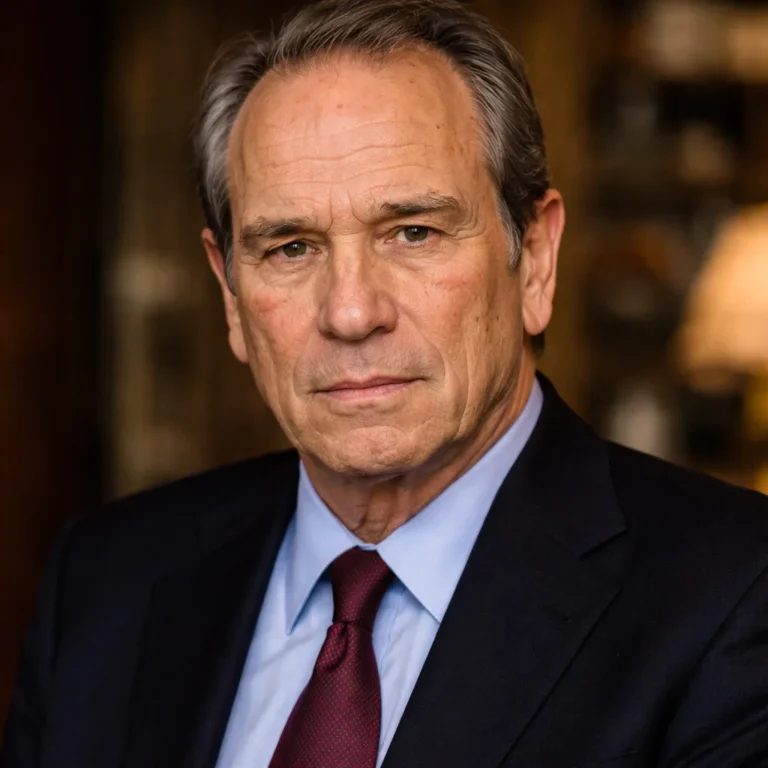
Tommy Lee Jones commands the screen with his gruff exterior and intense acting style. Although he usually plays serious lawmen or stoic cowboys, his real life contains surprising layers of intellect and humor. Furthermore, he achieved success in everything from Ivy League sports to cattle ranching. Consequently, his journey from a Texas oil town to Hollywood offers many fascinating twists. Explore these intriguing details about the man who chased The Fugitive.
Tommy Lee Jones
Initially, he roomed with Al Gore at Harvard University. They lived together in Dunster House for four years and formed a lifelong friendship. Later, Tommy Lee Jones even gave the nominating speech for Gore at the 2000 Democratic National Convention.
Moreover, he played as an offensive guard for the Harvard football team. He started on the famous 1968 undefeated team that tied Yale 29-29 in the final seconds. Thus, he proved his athletic ability long before he became an action star.
Surprisingly, he became a massive celebrity in Japan for selling coffee. He starred in a long-running series of commercials for Boss Coffee where he played a confused alien visiting Earth. Japanese fans affectionately know him as “Alien Jones” because of these bizarre advertisements.
Infamously, he told Jim Carrey that he could not sanction his buffoonery. During the filming of Batman Forever, he openly disliked his co-star’s high-energy comedy style. Reportedly, he told Carrey, “I hate you. I really don’t like you,” during a dinner encounter.
Creatively, he improvised his most famous line in The Fugitive. When Harrison Ford screamed, “I didn’t kill my wife,” the script called for a different response. Instead, Tommy Lee Jones simply said, “I don’t care,” which perfectly captured his character’s ruthless focus.
Before he found fame, he worked on underwater oil rigs. Because his father worked in the oil fields, he spent his summers performing dangerous labor to pay for his education. This grueling work ethic undoubtedly influenced his tough on-screen persona.
Interestingly, the author of Love Story based the main character on him. Erich Segal used both Jones and Al Gore as the inspiration for the wealthy Oliver Barrett IV. Then, Jones actually landed his first movie role playing a poker player in the film adaptation.
Unexpectedly, he starred in a soap opera for five years. He played Dr. Mark Toland on One Life to Live throughout the early 1970s. Eventually, the writers killed off his character, which allowed him to pursue a film career.
Passionately, he plays championship-level polo. He owns a ranch in Florida specifically for training horses and competing in high-stakes matches. He often claims that he acts in movies just to pay for his expensive polo hobby.
Impressively, he speaks fluent Spanish. He showcased this skill in the movie The Three Burials of Melquiades Estrada, which he also directed. Consequently, he uses this ability to communicate effectively on his cattle ranches in Texas.
Scholastically, he attended the elite St. Mark’s School of Texas on a scholarship. Although he came from a rough background, his intelligence earned him a spot at the prestigious prep school. There, he discovered his love for theater and literature.
Academically, he wrote his senior thesis on Flannery O’Connor. He graduated cum laude from Harvard with a degree in English Literature. Therefore, he possesses a deep understanding of storytelling that aids his acting and directing.
He raises his own cattle on a massive ranch in San Saba. Tommy Lee Jones prefers the quiet life of a rancher over the glitz of Hollywood. He actively manages the operations and takes great pride in his Black Angus cattle.
Artistically, he won Best Actor and Best Screenplay at the Cannes Film Festival. His directorial debut, The Three Burials of Melquiades Estrada, impressed international critics immensely. This achievement proved he possessed talent behind the camera as well.
Finally, he owns the movie rights to a Cormac McCarthy novel. He directed and starred in an adaptation of The Sunset Limited for HBO. He holds a deep respect for the author’s gritty, Western style, which mirrors his own personality.
How useful was this post?
Click on a star to rate it!
This AI-assisted post was rigorously curated and fact-checked for accuracy by:
Al Pacino, a legendary icon of stage and screen, continues to captivate audiences worldwide. With his intense performances, unique voice, and remarkable dedication, Al Pacino has made his mark in Hollywood and beyond. Discover the vibrant stories, special talents, and little-known moments that shape Al Pacino’s extraordinary career.
Al Pacino
Al Pacino was born in New York City in 1940, which shaped his strong connection to urban life and the arts.
Growing up in the Bronx, he discovered acting early, attending the famed High School of Performing Arts.
Even though many struggle for roles, Pacino landed his first major film part in “The Panic in Needle Park” through relentless auditioning.
Naturally, he became famous after playing Michael Corleone in “The Godfather,” impressing audiences everywhere.
While he is now a screen legend, Pacino has always loved theater. Throughout his career, he continuously returned to live performances.
Pacino holds a rare Triple Crown of Acting: Oscar, Emmy, and Tony Award, a feat that underscores his versatility.
Interestingly, he once worked as a theater usher before achieving stardom, which kept him close to his dream environment.
Over the years, directors admired his commitment. For example, he memorized the entire “Scarface” script for his role as Tony Montana.
Al Pacino’s raspy voice, instantly recognizable, resulted from a childhood illness, which gave it a distinct character.
Because he loves method acting, Pacino often immerses himself in characters, spending weeks preparing for major roles.
Movie fans might be surprised to learn he turned down roles in classics such as “Star Wars” and “Pretty Woman.”
Beyond film, Pacino directed the intriguing documentary “Looking for Richard,” exploring Shakespeare’s “Richard III.”
True to his roots, Pacino stays humble and frequently participates in community theater and acting workshops.
He has one daughter, Julie, and twins, Olivia and Anton, demonstrating he values family alongside fame.
Even now, Al Pacino continues to inspire new generations. His work remains a gold standard in acting.
Forrest Gump remains one of the most beloved films in cinema history, but behind the scenes lies a treasure of surprising details. With its mix of humor, heart, and history, the movie captured the world’s imagination. Yet Forrest Gump hides quirky secrets, unexpected cameos, and unusual production choices that many fans have never heard about.
Forrest Gump
The film is based on Winston Groom’s 1986 novel, though many storylines were changed dramatically.
Tom Hanks agreed to take a share of the profits instead of a full salary, which proved highly lucrative.
Forrest’s iconic running scenes were partly performed by Tom Hanks’ younger brother, Jim.
Robin Wright filmed emotional moments during real illness, adding genuine depth to Jenny’s character.
Many extras in the Vietnam battle scenes were actual amputees wearing prosthetics for authenticity.
The bench from the film was placed in Savannah and became a tourist attraction.
Kurt Russell reportedly voiced Elvis during Forrest’s dance scene, though he received no official credit.
Haley Joel Osment, who played Forrest’s son, made his screen debut with this role.
Forrest Gump’s cross‑country run covered over 3,500 miles spread across multiple filming locations.
To save budget, Tom Hanks personally funded some filming of the running scenes.
The ping‑pong trick shots were computer‑generated because real play could not match the speed required.
Gary Sinise wore blue fabric on his legs during filming, which was digitally erased afterward.
Forrest Gump won six Academy Awards including Best Picture, cementing its cultural legacy.
The shrimp company Bubba Gump became a global restaurant chain inspired directly by the movie.
The line “My name is Forrest Gump. People call me Forrest Gump” was improvised by Hanks.