Director Michael Bay brought the beloved Saturday morning cartoons to life with explosive energy and groundbreaking visual effects. For over a decade, the franchise dominated the summer box office by pitting the heroic Autobots against the evil Decepticons. The production required unprecedented cooperation with the US military and pushed computer-generated imagery to its absolute breaking point. Furthermore, the series influenced car sales and pop culture worldwide. Prepare to roll out with these mechanical giants.
Transformers
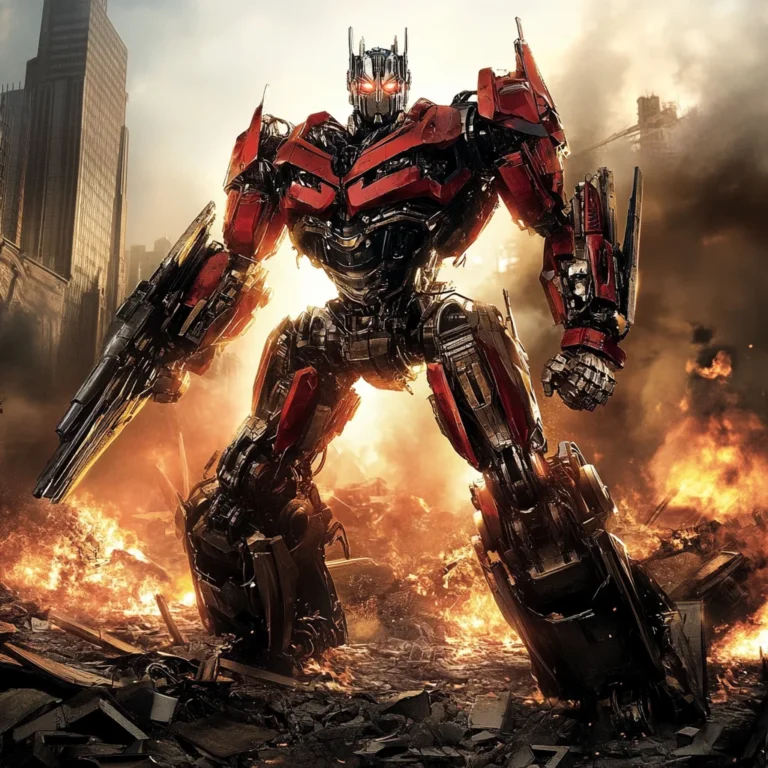
Peter Cullen based the iconic voice of Optimus Prime on his own brother. His brother served as a Marine and told Peter to be “strong enough to be gentle” before the audition. Consequently, this specific tone defined the character for forty years across cartoons and live-action films.
Michael Bay changed Bumblebee from a Volkswagen Beetle to a Chevrolet Camaro. He felt the Beetle reminded audiences too much of Herbie the Love Bug and wanted something tougher. Thus, this decision modernized the character and significantly boosted sales for Chevy.
General Motors provided hundreds of vehicles for the production of Transformers. They even gave the filmmakers access to concept cars that the public had not seen yet. Therefore, the movie functioned as a massive, high-speed car commercial for the American automaker.
The writers changed Megatron’s alternate mode from a handgun to an alien jet. In the original cartoons, the villain shrank down into a pistol, which the directors deemed unrealistic for a live-action film. Consequently, they made him a terrifying alien tank and jet instead.
A single frame of the Driller robot in Dark of the Moon took 122 hours to render. The visual effects team at ILM had to push their computers to the limit to create the complex beast. As a result, the studio had to upgrade its entire render farm to finish the movie.
The Transformers production team destroyed over 500 cars during the filming of the third movie. They obtained flood-damaged vehicles from insurance companies specifically to wreck them in the final battle. Thus, they staged massive highway carnage without destroying usable cars.
Shia LaBeouf severely injured his hand in a real-life car accident during filming. The writers had to quickly rewrite the script for Revenge of the Fallen to explain his heavy bandage. Therefore, the character Sam Witwicky burns his hand in the movie to cover the actor’s actual injury.
The 2007 Writers Guild strike severely impacted the second Transformers film. Michael Bay claimed he wrote the action sequences himself on a notepad because he had no script to work with. Consequently, critics often cite this lack of a screenplay as the reason for the movie’s chaotic plot.
Linkin Park played a huge role in the sonic identity of the franchise. The band contributed songs to the first three films, including the hit “New Divide.” Furthermore, they worked closely with composer Hans Zimmer to blend their rock sound with the orchestral score.
The Department of Defense gave the production unprecedented access to military hardware. They allowed the crew to film F-22 Raptors and used actual soldiers as extras in the desert scenes. As a result, the films feature some of the most authentic military depictions in Hollywood history.
The sheer processing load melted a computer while rendering the robot Devastator. The constructicon was so complex that the hardware physically failed under the stress. Thus, the artists created one of the most complicated CGI models in cinema history.
Hugo Weaving voiced Megatron in the first three films but never met Michael Bay. He recorded his lines in Australia and later admitted he did not care much for the role. Consequently, Frank Welker, the original cartoon voice, took over for the later films.
Age of Extinction targeted the Chinese market specifically. The studio filmed large portions of the finale in Hong Kong and included Chinese product placement throughout the story. Therefore, it became the highest-grossing film in China at the time of its release.
Transformers filmmakers used sound clips to create Bumblebee’s radio voice. Since the character lost his voice box, he communicates by scanning radio frequencies for song lyrics. Interestingly, this limitation made him the most expressive and lovable character in the series.
Finally, the actors often screamed at tennis balls on sticks. Since the robots are entirely CGI, the cast had to pretend to see giant aliens during filming. Thus, their ability to sell the fear and awe sold the illusion to the audience.
How useful was this post?
Click on a star to rate it!
This AI-assisted post was rigorously curated and fact-checked for accuracy by:
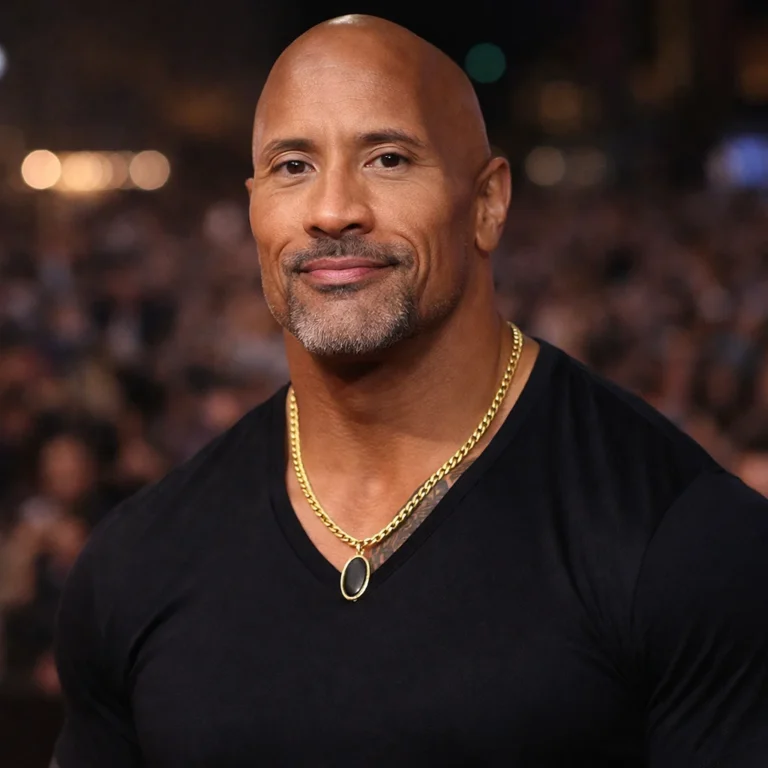
Dwayne Johnson stands as the biggest movie star on the planet. You likely know him for his massive muscles and his wrestling catchphrases. However, his life began with failed football dreams and poverty. He originally wanted to join the CIA. Furthermore, he eats hundreds of pounds of cod every year to stay in shape. Let’s explore the life of The Rock.
Dwayne Johnson
Dwayne Johnson originally wanted to work for the CIA rather than become an actor or wrestler. He studied criminology at the University of Miami with hopes of joining the agency. However, his professor told him he needed a law degree first, so he abandoned the idea to pursue football.
He holds a Guinness World Record for the highest salary ever paid to an actor for a debut starring role. Studios paid him 5.5 million dollars to play the lead in The Scorpion King. This massive paycheck instantly established him as a bankable Hollywood star.
His production company is named Seven Bucks Productions for a very specific reason. After the Calgary Stampeders cut him from their roster in 1995, he looked in his wallet and found exactly seven dollars. That moment of poverty motivates every business decision he makes today.
He consumes an enormous amount of codfish to maintain his physique. His diet requires him to eat over 800 pounds of the fish every single year. Consequently, he spends thousands of dollars annually just on seafood.
Dwayne Johnson played his own father in an episode of That ’70s Show. The writers cast him as Rocky Johnson in a wrestling-themed episode early in his acting career. He even listed his own real-life accomplishments during the dialogue.
He accidentally knocked out a stuntman during the filming of The Scorpion King. He swung his elbow too hard during a fight scene and connected with the other actor’s jaw. To apologize, he bought the man a custom Rolex watch.
The Rock owns the rights to the name “The Rock.” Most wrestlers lose their stage names when they leave the WWE because the company owns the intellectual property. However, he negotiated a deal that allows him to take the famous moniker wherever he goes.
He appeared as an alien wrestler in an episode of Star Trek: Voyager. Producers cast him as the champion fighter in the Delta Quadrant before he became a movie star. He performed his signature eyebrow raise even under heavy prosthetic makeup.
His family boasts a massive wrestling lineage. For instance, his grandfather, Peter Maivia, and his father, Rocky Johnson, both belong to the WWE Hall of Fame. Currently, his daughter, Simone, continues the legacy as the first fourth-generation wrestler in history.
Tim Burton actually considered him for the role of Willy Wonka in Charlie and the Chocolate Factory. Specifically, the director listed him as the second choice if Johnny Depp turned down the part. Ultimately, it remains hard to imagine the muscular action star playing the eccentric candy maker.
He eats massive “cheat meals” that have become legendary on the internet. For example, on Sundays, he often devours dozens of pancakes, pizzas, and sushi platters in one sitting. He documents these caloric feasts on Instagram to show the fun side of his strict diet.
Dwayne Johnson bought the XFL football league to save it from bankruptcy. He purchased the entire organization for 15 million dollars in 2020. In doing so, he gave other athletes the second chance at professional football that he never got himself.
He suffers from a genuine fear of spiders despite his tough image. He admitted that he totally freezes up whenever he sees a large arachnid. Consequently, his time filming Jumanji in the jungle required him to face this phobia constantly.
His famous tribal tattoo took sixty hours to complete. A traditional Samoan artist tapped the ink into his skin over three intense sessions. Furthermore, the intricate design tells the story of his ancestors, his family, and his spirit warrior.
He officially ordained a fan’s wedding as a surprise prank. He invited the comedian Nick Mundy to a press junket, but instead walked him down the aisle for an impromptu ceremony. Actually, he got legally licensed just to perform the wedding for his friend.
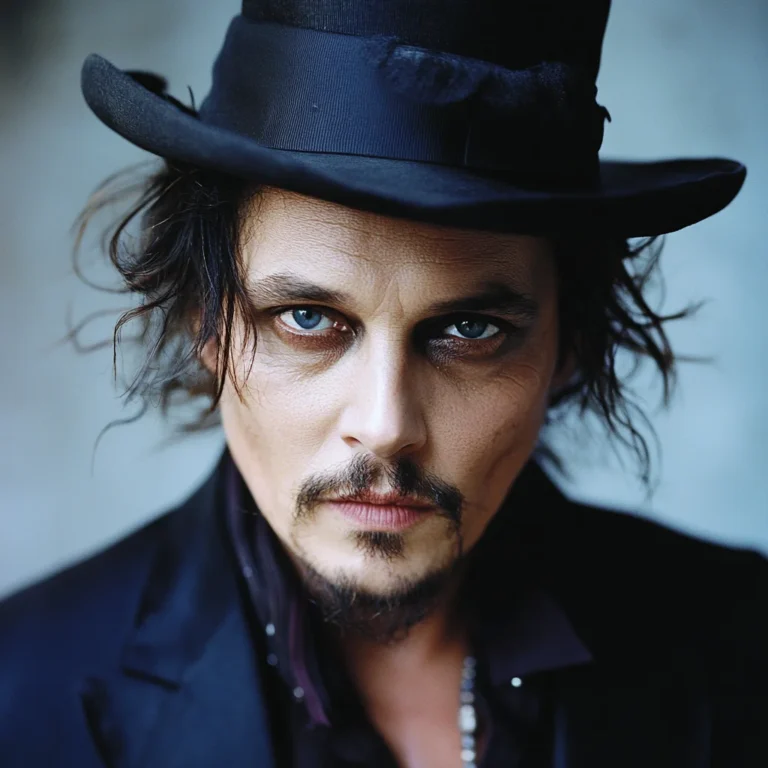
Johnny Depp built his career on playing the strangest characters in cinema history. He started as a teen idol but quickly pivoted to darker, eccentric roles like Edward Scissorhands and Captain Jack Sparrow. Moreover, his real life is just as bizarre as his movies, filled with private islands and rock music. However, he faced intense public scrutiny during recent legal battles. Prepare to sail with the Hollywood pirate.
Johnny Depp
Nicolas Cage actually advised him to try acting. Specifically, they played Monopoly together, and Cage sent him to his agent. Consequently, Johnny Depp landed his first role in A Nightmare on Elm Street.
Surprisingly, he dropped out of high school to become a rock musician. However, when he tried to return two weeks later, the principal refused. He told Johnny Depp to follow his musical dream instead.
Ironically, he suffered from a chocolate allergy as a child. This made filming the movie Chocolat very difficult for him. Therefore, he struggled through the sweet scenes.
Tenderly, he adopted the one-eyed horse from the movie Sleepy Hollow. He heard the owners planned to put the animal down after production. Thus, Johnny Depp stepped in to save Goldeneye.
Generously, he travels with his Captain Jack Sparrow costume everywhere. He visits children’s hospitals unexpectedly to surprise sick kids. Therefore, he stays in character for hours to make them smile.
Scientifically, a paleontologist named an ancient creature after him. The fossil Kooteninchela deppi possesses scissor-like claws. Naturally, the scientist thought of Edward Scissorhands immediately.
Terrifyingly, the engines on his private jet failed mid-flight. He was flying with director Bruce Robinson when the plane went silent. Fortunately, the engines restarted just before they crashed.
He spent millions to blast Hunter S. Thompson’s ashes into the sky. The writer wanted a funeral involving a cannon and fireworks.
Strangely, he almost never watches his own movies. He believes that once he finishes the job, the character is gone. Consequently, he avoids premieres or screenings whenever possible.
He owns a massive private island in the Bahamas. He bought the tropical paradise to escape from the paparazzi. Reportedly, Johnny Depp named the beaches after his family members.
Musically, he formed a supergroup called Hollywood Vampires. He plays guitar alongside Alice Cooper and Joe Perry. Thus, he finally achieved his teenage dream of being a rock star.
Physically, he is nearly blind in his left eye. He claims he has been “blind as a bat” since birth. Therefore, Johnny Depp relies heavily on prescription tinted glasses.
He based his Willy Wonka performance on a stoned George W. Bush. He imagined how the President would act while high. Thus, he created a weirdly disconnected version of the character.
Amazingly, he played slide guitar on an Oasis song. He played on the track “Fade In-Out” in 1997. Noel Gallagher was too drunk to play, so Johnny Depp stepped in.
Finally, he has “winona forever” tattooed on his arm. After they broke up, he changed the ink to read “wino forever.” Thus, he turned a heartbreak into a funny joke.