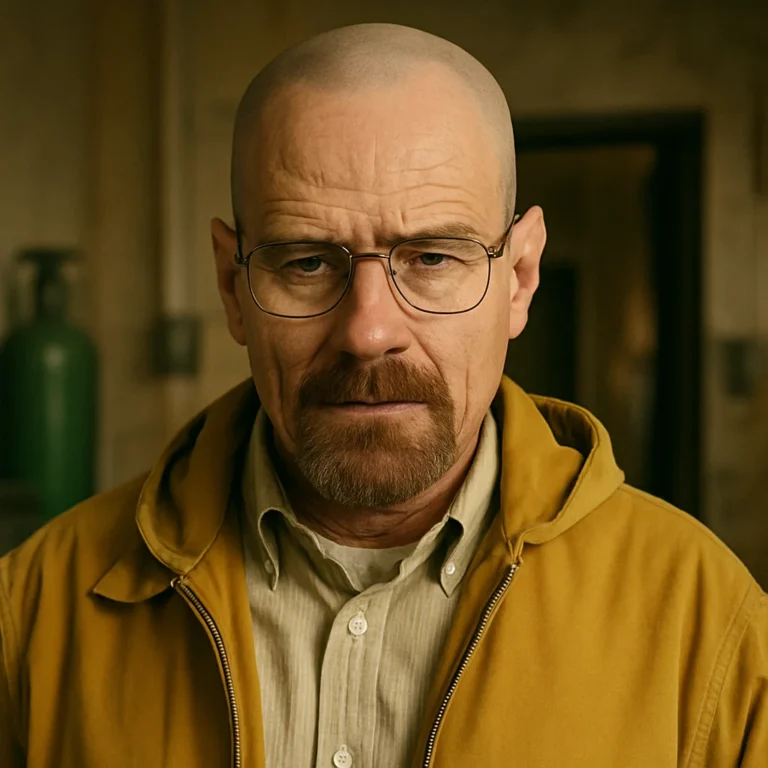
Bryan Cranston achieved critical and popular acclaim portraying Walter White in Breaking Bad, earning multiple Emmy wins. With a versatile career spanning comedy, drama, film, and stage, Cranston is a celebrated actor and director.
Bryan Cranston
Bryan Lee Cranston was born on March 7, 1956, in Hollywood, California.
He rose to stardom for his iconic portrayal of Walter White, a high school chemistry teacher turned drug kingpin, in the AMC series Breaking Bad (2008–2013).
Cranston won the Primetime Emmy Award for Outstanding Lead Actor in a Drama Series four times for Breaking Bad (2008, 2009, 2010, 2014).
Before Breaking Bad, he gained fame as the humorous and quirky Hal on Fox’s Malcolm in the Middle (2000–2006), earning multiple Emmy nominations.
Cranston began acting in commercials and guest-starring TV roles as a child, developing his craft over decades.
His film roles include Saving Private Ryan (1998), Little Miss Sunshine (2006), Drive (2011), Contagion (2011), and Trumbo (2015), where he portrayed screenwriter Dalton Trumbo.
Bryan Cranston received Academy Award, BAFTA, Golden Globe, and SAG nominations for his role in Trumbo.
On stage, he won the Tony Award for Best Actor in a Play for his portrayal of Lyndon B. Johnson in All the Way (2013) and later for Network (2019).
He has directed episodes of TV shows including Breaking Bad, Malcolm in the Middle, and Sneaky Pete.
Bryan Cranston narrated the documentary Apollo 11 and voiced characters in animated films like Isle of Dogs (2018).
He starred in the crime drama series Sneaky Pete (2015–2019) and Your Honor (2020–2023).
Cranston is known for his deep voice, intense character work, and ability to transition between comedy and drama seamlessly.
Despite fame, he remains known for his humility and dedication to craft.
Bryan Cranston was nominated for and won several awards for both his acting and directing work over his career.
Beyond acting, he is active in charity work and mentorship within the industry.
How useful was this post?
Click on a star to rate it!
This AI-assisted post was rigorously curated and fact-checked for accuracy by:
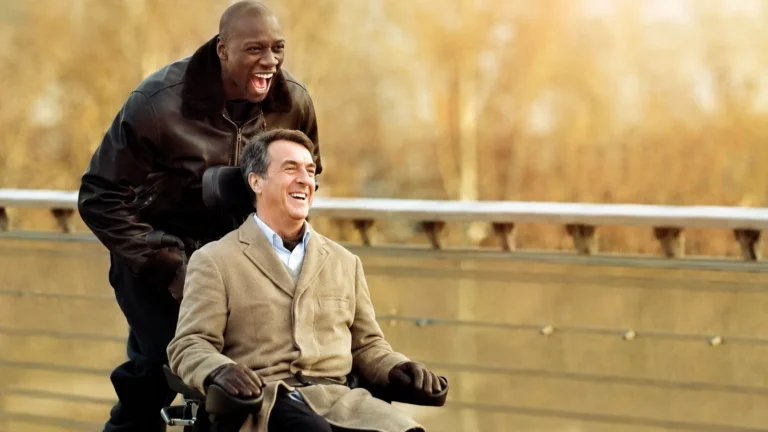
Released in 2011, the French film The Intouchables (Intouchables) took the global box office by storm, warming the hearts of millions with its irreverent humor and profoundly touching narrative. Based on a true story, the film explores the unlikely friendship between a wealthy quadriplegic aristocrat and his young, unconventional caregiver from the Parisian housing projects. While the chemistry between François Cluzet and Omar Sy feels utterly effortless on screen, the behind-the-scenes reality of the film's production is just as captivating as the movie itself. Here are 15 lesser-known facts about this modern cinematic masterpiece.
The Intouchables
1. The Real-Life Inspiration’s One Demand
Before giving the directors his blessing to adapt his life story, the real Philippe Pozzo di Borgo had one strict, non-negotiable demand: the movie had to be a comedy. Having lived through unimaginable tragedy following a paragliding accident and the death of his wife, he was adamant that he did not want a movie that would make audiences pity him, insisting that his relationship with his caregiver was built on relentless humor and pranks.
2. Driss’s Origins Were Changed for the Film
In the movie, the energetic caregiver Driss is of Senegalese descent, brought to life brilliantly by Omar Sy. However, the real-life caregiver, Abdel Sellou, is actually of Algerian descent. The directors specifically changed the character’s background because they had worked with Sy on a previous project, knew his immense comedic talent, and explicitly wrote the part of Driss with him in mind.
3. Omar Sy Beat Out an Oscar Winner
The film launched Omar Sy into international superstardom, and his performance earned him the César Award for Best Actor (the French equivalent of the Academy Award). What makes this win so spectacular is that he actually beat out Jean Dujardin for the award in the exact same year that Dujardin won the American Oscar for Best Actor for his role in The Artist.
4. A Record-Breaking Global Box Office
The Intouchables was not just a hit in France; it was an absolute global phenomenon. For a significant period of time, it held the record as the highest-grossing non-English language film in cinematic history. It generated over $400 million worldwide, easily surpassing the previous record holder, Hayao Miyazaki’s animated masterpiece Spirited Away.
5. Acting From the Neck Up
To prepare for the physically restrictive role of Philippe, veteran French actor François Cluzet spent extensive time observing the real Philippe Pozzo di Borgo. Cluzet had to learn how to completely suppress his natural body language, training himself to act entirely through his breathing, eye movements, and vocal inflections since he could not use his hands or torso to convey any emotion.
6. The Real Men Appear at the End
The movie ends with a beautiful, poignant tribute to the real men who inspired the story. Just before the final credits roll, the real Philippe Pozzo di Borgo and Abdel Sellou make a brief, silent cameo appearance, sitting together on a hillside. This beautiful inclusion grounded the hilarious movie back in its profound, real-world roots.
7. The Meaning Behind the Title
The title Intouchables translates to “Untouchables,” but it is rarely explained in the film itself. It is a dual reference to the Indian caste system, symbolizing how both men are outcasts from mainstream French society. Philippe is “untouchable” due to his severe physical disability and extreme wealth isolating him, while Driss is “untouchable” due to his extreme poverty, racial minority status, and criminal record.
8. The Shaving Scene Was Completely Improvised
One of the most hilarious and memorable scenes in the film involves Driss shaving Philippe’s beard into various historical and bizarre styles, ending with a Charlie Chaplin/Adolf Hitler mustache. This sequence was not in the original script. François Cluzet and Omar Sy completely improvised the entire interaction on set, and their genuine, uncontrollable laughter made the final cut.
9. Driss’s Dancing Was Also Unscripted
Omar Sy’s legendary dance sequence to Earth, Wind & Fire’s “Boogie Wonderland” during Philippe’s stuffy birthday party is a cinematic highlight. The directors simply played the music on set and told Sy to let loose. The joyous, infectious dance moves were entirely his own creation in the moment, perfectly capturing his character’s unbridled love for life.
10. A Staggering Number of International Remakes
The universal themes of the film resonated so deeply across different cultures that it spawned numerous international remakes. The most famous is the American version, The Upside (2017), starring Bryan Cranston and Kevin Hart. However, it was also officially remade in India (as the Telugu/Tamil film Oopiri), and in Argentina (as Inseparables).
11. The Real Abdel Actually Sold Art
In the film, Driss paints a chaotic, abstract canvas that Philippe manages to sell to a pretentious art collector for a massive sum of money as a prank. Surprisingly, this is based on a true anecdote. The real Abdel Sellou did indeed paint a canvas that Philippe managed to sell, though the real-life Abdel later admitted he felt a bit guilty about scamming the buyer.
12. A Slower Maserati for the Cameras
The exhilarating opening sequence features Driss driving Philippe at breakneck speeds through the streets of Paris in a Maserati Quattroporte. While the scene looks incredibly fast, the production team actually had to digitally speed up the footage in post-production because the real car could not be driven at those highly dangerous speeds through the narrow city streets during filming.
13. Over Five Percent of France Saw It In Theaters
The cultural impact of the film in its native country is hard to overstate. Just weeks after its release, it was estimated that an astonishing 5% of the entire population of France had gone to the cinema to see it. It eventually sold over 19 million tickets domestically, making it the second most successful French film of all time in France, just behind Welcome to the Sticks.
14. The Missing Fabergé Egg Was Real
A crucial plot point involves Driss stealing a highly valuable Fabergé egg during his initial job interview, which Philippe later demands he return. This detail was pulled directly from real life. The real Abdel Sellou admitted to stealing a precious Fabergé egg from Philippe’s estate because he assumed he would never see the wealthy man again after his interview.
15. Real-Life Neighbors Who Remained Close
Unlike the movie, which heavily dramatizes their parting of ways, the real Philippe and Abdel remained incredibly close friends for decades after Abdel stopped working as his full-time caregiver. When Philippe relocated to Morocco, Abdel also eventually bought a house nearby, ensuring that the two men and their respective families could continue to spend time together.
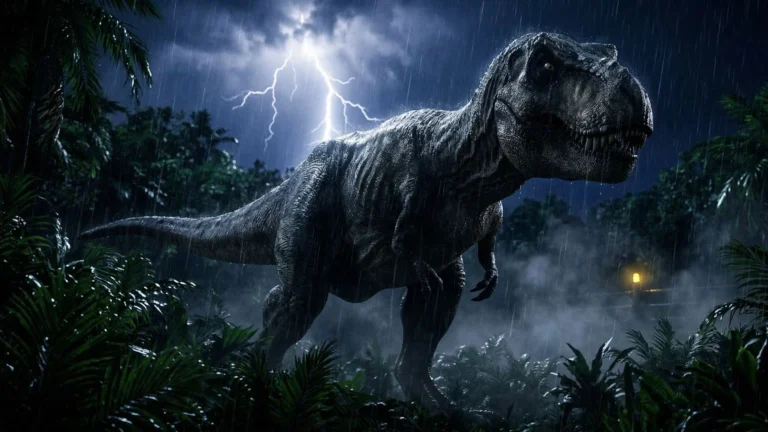
When Steven Spielberg unleashed his dinosaur masterpiece in 1993, he completely changed the landscape of visual effects forever. By seamlessly blending massive, real-life animatronics with groundbreaking computer generation, he essentially brought dinosaurs back from extinction right before our eyes. The movie is a pure cinematic miracle, but the actual behind-the-scenes stories are just as wild as a theme park breakout. Grab a flare and hold onto your hats, because we are diving into fifteen fascinating facts about the creation of this legendary film.
Jurrasic Park
Spielberg discovered the story by total accident. He was working on a script that would eventually become the hit television show ER with author Michael Crichton, who casually mentioned his new dinosaur book, prompting Spielberg to immediately buy the film rights.
The director was essentially forced to make the movie. Spielberg desperately wanted to direct his passion project, Schindler’s List, but the studio president would only give him the green light if he agreed to film his dinosaur blockbuster first.
A theme park ride inspired the original plan. The initial idea was to build every single dinosaur as a massive, full-size robot, heavily inspired by the King Kong ride at Universal Studios, but the team quickly realized it would be way too expensive.
The iconic logo was borrowed from the book. Unlike most movie adaptations that invent their own poster, the famous T. rex skeleton logo was taken directly from designer Chip Kidd’s artwork for the original novel’s cover.
A real hurricane shut down production. The cast and crew were trapped in their hotel when the massive Hurricane Iniki struck Hawaii during filming, and Spielberg actually used some footage of the real storm in the final movie.
The T. rex roar is an absolute animal mashup. To create that terrifying, bone-chilling screech, the sound design team recorded and blended the noises of a baby elephant, a snarling tiger, and a gurgling alligator.
The animatronic T. rex had a mind of its own. Because the giant robot skin soaked up water during the rain scenes, it would randomly shudder and twitch to life all by itself, completely terrifying the crew working on the dark set.
The famous rippling water cup was a nightmare to film. To get that iconic vibration as the dinosaur approached, a special effects expert had to lie on the floor of the car and pluck a guitar string attached to the dashboard.
An accident made it into the final cut. When the giant T. rex breaks through the plexiglass roof of the kids’ car, it was completely accidental. The robot hit the glass way too hard, losing a tooth and getting genuine screams of terror from the young actors.
The self-driving cars were a total illusion. The futuristic tour vehicles were not actually on a track. Instead, they were driven by a crew member who was hidden completely out of sight in the trunk of the car.
Dinosaurs barely have any screen time. Even though the movie feels packed with prehistoric action, there are only about fifteen minutes of actual dinosaur footage in the entire two-hour runtime.
The velociraptor noises are surprisingly awkward. If you think the raptors sound terrifying when they communicate with each other, you might laugh to know the sound designers achieved those noises by recording tortoises mating.
Harrison Ford almost took a trip to the park. Spielberg originally offered the lead role of Dr. Alan Grant to the Indiana Jones star, but Ford turned it down because he felt the part was not the right fit for him.
Jim Carrey auditioned for the chaotic mathematician. Before Jeff Goldblum stepped into his iconic leather jacket, comedy legend Jim Carrey actually read for the role of Dr. Ian Malcolm.
The ending was a massive last-minute change. The original script had the humans killing the raptors to escape, but Spielberg realized the audience loved the T. rex too much, so he rewrote the finale to let her swoop in and save the day.