The Method Master: 15 Fascinating Facts About Robert De Niro
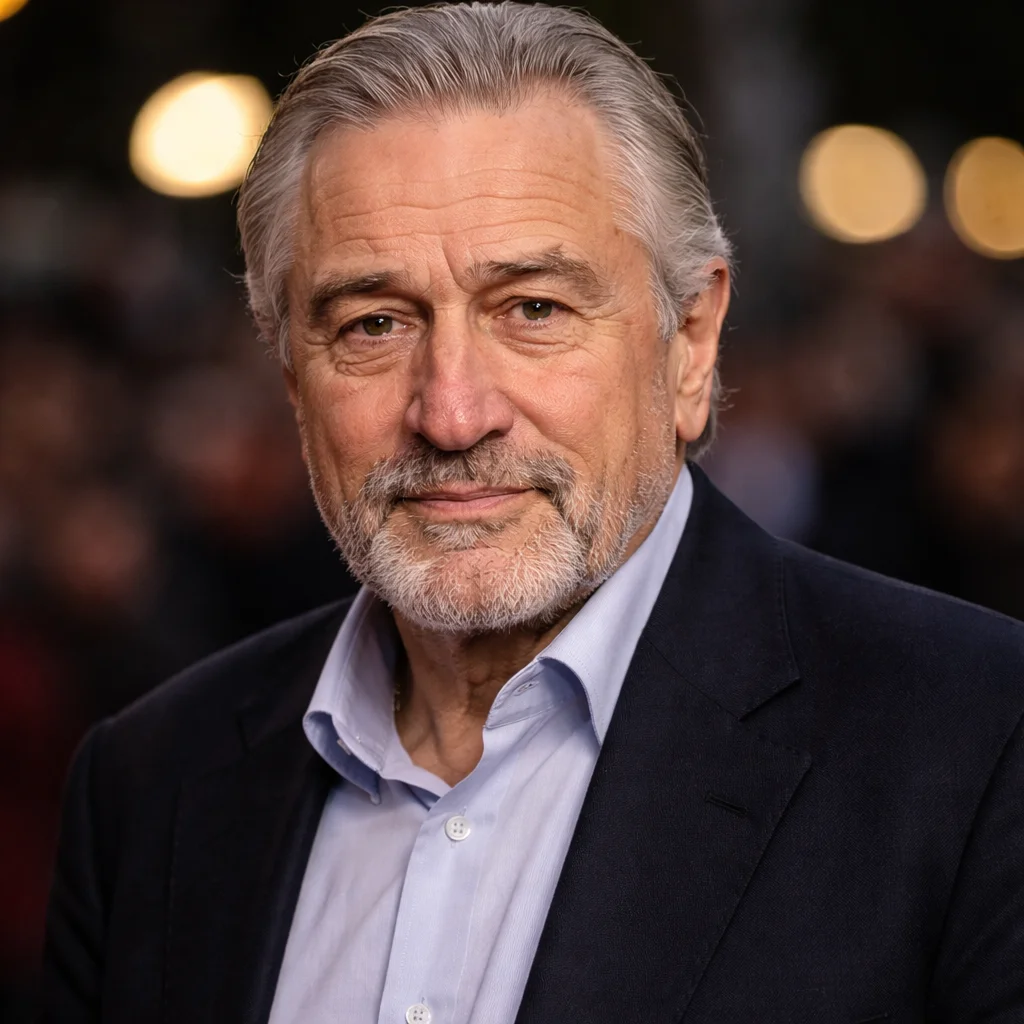
Robert De Niro is widely regarded as one of the greatest and most influential actors in cinema history. Known for his legendary physical transformations, intense dedication to character research, and iconic collaborations with directors like Martin Scorsese, his career spans over six decades. Beyond his screen roles, De Niro is a restaurant mogul, film festival founder, and recipient of two Academy Awards. Discover the lesser-known truths and surprising real-life stories behind Hollywood's ultimate method actor.
1. The Childhood Origins of "Bobby Milk"
Robert De Niro grew up in the Little Italy and Greenwich Village neighborhoods of Manhattan, where local kids nicknamed him "Bobby Milk" due to his unusually pale complexion. His passion for performance emerged early when he made his stage debut at age ten, playing the Cowardly Lion in a school production of The Wizard of Oz. That early taste of acting inspired him to leave high school at sixteen to study under legendary drama coaches Stella Adler and Lee Strasberg. Adler taught him the importance of deep character research, a philosophy that would define his method approach for the rest of his career. Today, that intense devotion to craft remains one of his signature hallmarks.
2. Driving Real 12-Hour Cab Shifts for Taxi Driver
To prepare for his iconic role as Travis Bickle in Taxi Driver, De Niro obtained an official New York City hack driver's license and drove 12-hour shifts on the streets. During his breaks on location, he traveled to a U.S. military base in Northern Italy to record the dialects and cadences of Midwestern soldiers. He wanted Bickle's vocal pattern to sound distinctively detached, reflecting a recent veteran struggling to reintegrate into civilian society. Surprisingly, a few passengers recognized the actor during his night shifts in Manhattan. When one rider asked if he was really an actor, De Niro simply stayed in character and kept driving.
3. The Unprecedented Oscar Shared with Marlon Brando
When De Niro won the Academy Award for Best Supporting Actor for playing young Vito Corleone in The Godfather Part II, he made cinematic history alongside Marlon Brando. Brando had previously won Best Actor for playing the elder version of the same character in the original film. This marked the very first time in Oscar history that two different actors won Academy Awards for portraying the exact same fictional role. To achieve his authentic performance, De Niro lived in Sicily for months and spoke almost entirely in local Sicilian dialects throughout the film. The historical precedent stood alone for decades until Joaquin Phoenix and Heath Ledger both won Oscars for playing the Joker.
4. The Extreme Dental Transformation for Cape Fear
De Niro's commitment to physical transformation reached extreme lengths when preparing to play the vengeful ex-convict Max Cady in Cape Fear. He paid a dentist $5,000 to grind down and artificially stain his teeth so he would look like a hardened criminal. In addition to the dental work, he spent months in the gym reducing his body fat to four percent and covered his skin in temporary vegetable-dye tattoos. Once filming wrapped, he paid another $20,000 to have his teeth fully restored and reshaped. Director Martin Scorsese later admitted that De Niro's terrifying physical dedication intimidated the entire crew.
5. Setting a Physical Transformation Record in Raging Bull
For his Oscar-winning role as boxer Jake LaMotta in Raging Bull, De Niro set a Hollywood record by gaining 60 pounds to play the older version of the fighter. After shooting the intense boxing sequences in peak athletic condition, production went on a four-month hiatus so De Niro could eat his way through Europe. He embarked on an aggressive culinary tour of Italy and France, consuming immense quantities of pasta, butter, and gelati. The dramatic weight gain altered his posture and caused such heavy breathing that director Martin Scorsese grew concerned for his physical safety. While other actors have since taken on bigger weight fluctuations, De Niro's commitment remains the gold standard of physical transformation.
6. The Accidental Birth of the Nobu Empire
De Niro's passion for fine dining unexpectedly transformed him into one of the world's most successful celebrity restaurateurs. In the late 1980s, he became a frequent customer at Chef Nobu Matsuhisa's original Beverly Hills restaurant, falling in love with his signature black cod with miso. De Niro spent several years convincing the reluctant chef to partner with him and open a new location in Manhattan. In 1994, they launched the flagship Nobu in New York's Tribeca neighborhood alongside investor Meir Teper. Today, the global brand encompasses dozens of high-end restaurants and luxury boutique hotels across five continents.
7. Revitalizing Lower Manhattan with the Tribeca Film Festival
In the aftermath of the September 11 terrorist attacks in 2001, De Niro co-founded the Tribeca Film Festival alongside producer Jane Rosenthal. Lower Manhattan had suffered immense economic and emotional devastation, and De Niro wanted to bring life and commerce back to his home neighborhood. The inaugural festival was organized in just 120 days and attracted over 150,000 visitors to the area. It provided a vital boost to local businesses and restored a sense of community resilience during a dark historical moment. Today, it stands as one of the premier film festivals in North America, celebrating independent cinema and global storytellers.
8. Declining the Role of Jesus in The Last Temptation of Christ
Longtime collaborator Martin Scorsese originally envisioned De Niro in the lead role of Jesus Christ for his controversial 1988 drama The Last Temptation of Christ. The director believed De Niro's intense gravitas would bring a raw, human groundedness to the spiritual figure. However, De Niro politely declined the offer, feeling that he was not the right fit for the character and suggesting another actor take the mantle. The role ultimately went to Willem Dafoe, who delivered a critically acclaimed performance. Despite turning down the part, De Niro remained fiercely supportive of Scorsese throughout the public backlash surrounding the film.
9. His Italian Heritage and Controversial Citizenship
Although De Niro was born in Manhattan, the Italian government granted him honorary Italian citizenship during the 2004 Venice Film Festival. The award was designed to honor his cultural contributions and his lineage, as his paternal grandparents emigrated from Ferrazzano, Italy. However, the gesture sparked political debate when the Order Sons of Italy in America formally protested the honor. The advocacy group argued that De Niro's famous depictions of Italian-American mobsters had promoted harmful ethnic stereotypes over his career. De Niro accepted the dual citizenship with pride, noting that his heritage was a deeply meaningful part of his identity.
10. His On-Screen Chemistry and Trilogy with Meryl Streep
While moviegoers often associate De Niro with male co-stars like Joe Pesci and Al Pacino, one of his most significant artistic partnerships is with Meryl Streep. The legendary performers first shared the screen in the Oscar-winning Vietnam drama The Deer Hunter in 1978. They re-teamed six years later for the intimate romantic drama Falling in Love, followed by the 1996 family drama Marvin's Room. Streep has publicly credited De Niro as the actor who inspired her to pursue professional acting after watching his electrifying performance in Mean Streets. Their quiet, respectful chemistry remains a recurring highlight across four decades of American cinema.
11. Surviving Prostate Cancer Through Early Detection
In 2003, De Niro was diagnosed with prostate cancer during a routine medical examination at age 60. Because he maintained a strict schedule of preventative health checkups, doctors detected the illness at an extremely early stage. He underwent successful treatment and made a complete recovery, returning to his demanding filming schedule shortly afterward. His father, artist Robert De Niro Sr., had tragically passed away from cancer years prior, making the diagnosis particularly personal. Since his recovery, De Niro has consistently advocated for early health screenings and increased awareness of men's health issues.
12. His Infamous Press-Shyness and "Silent" Persona
In stark contrast to his explosive on-screen characters, De Niro is notoriously introverted and press-shy in real life. Journalists frequently refer to interviewing him as a unique challenge because he provides famously concise, economical answers. During broadcast interviews, he often speaks in brief sentences and avoids reflecting on his own legacy or personal life. He firmly maintains that his primary job is to act, preferring his finished performances to speak for themselves. Co-stars describe him off-set as a quiet, observant listener who carefully absorbs details from the world around him.
13. Auditioning for Godfather Part I Before Landing Part II
Before landing his career-defining role in The Godfather Part II, De Niro actually auditioned for the original 1972 classic, The Godfather. He read for the violent, hot-tempered role of Sonny Corleone, impressing director Francis Ford Coppola with his fiery energy. Coppola ultimately chose James Caan for Sonny, believing Caan better fit the specific dynamic needed for the main cast. However, Coppola was so taken with De Niro's talent that he remembered him when casting the prequel storylines for the sequel. That decision allowed De Niro to step into the shoes of young Vito Corleone, earning his very first Academy Award.
14. He Was Considered for Iconic Pop Culture Roles
Throughout his long career, De Niro was considered for several unexpected roles in major Hollywood blockbusters. Director Tim Burton actively considered De Niro to play Jack Napier, the character who becomes the Joker, in the 1989 film Batman. Additionally, director Penny Marshall originally cast De Niro as Josh Baskin in the fantasy comedy Big before scheduling conflicts forced him to drop out. The role of Josh Baskin ultimately went to Tom Hanks, earning Hanks his first Academy Award nomination. These casting near-misses highlight De Niro's surprising range and how close he came to radically different film franchises.
15. He Directed Two Major Feature Films Himself
In addition to his storied acting career, De Niro has stepped behind the camera to direct two acclaimed feature films. He made his directorial debut with the 1993 coming-of-age drama A Bronx Tale, which he dedicated to his late father. Over a decade later, he directed and co-starred in The Good Shepherd, a meticulous historical drama depicting the early years of the CIA. Both films demonstrated his restrained directorial style, favoring deep character study, atmospheric detail, and tense storytelling over flashy visuals. Critics praised his work behind the camera, reinforcing his reputation as a complete cinematic craftsman.
Sources & References
This AI-assisted post was rigorously curated and fact-checked for accuracy by:
 Martin Roháček
How fun was this article? 🤔
Tap a star to rate it
🧠 Quiz: How closely were you paying attention?
10 questions — all answers are in the article above!
Enjoyed these facts? There's more! 💌
Fresh fun facts in your inbox. No spam, ever.