15 Surprising Facts About Iowa
A cave that makes ice in spring, an early computer too wide for a doorway, and a fair that staged locomotive crashes: Iowa has plenty beyond cornfields.
1. An early electronic computer was too wide for a standard door
At Iowa State College, John Vincent Atanasoff and graduate student Clifford Berry developed the Atanasoff–Berry Computer between 1939 and 1942. It was a special-purpose equation solver rather than a programmable, general-purpose machine. The Computer History Museum notes that its width made it difficult to move through a standard doorway—one obstacle to preserving it. The original was dismantled, with only a few parts saved. Engineers completed a working reconstruction in 1997, making it slightly smaller than the original.
2. The Meskwaki bought land to rebuild their Iowa homeland
After forced removal to Kansas and continuing efforts to remain in or return to Iowa, Meskwaki leaders purchased 80 acres in Tama County on July 13, 1857. Further purchases enlarged the Settlement over time. The Meskwaki Nation emphasizes that its homeland was privately purchased rather than created by reserving public land for the Tribe. In 1992, the Tribal Council formally designated July 13 as the Meskwaki National Holiday, honoring the ancestors whose decision helped secure a continuing community in Iowa.
3. An Iowa school case challenged segregation in 1868
When 12-year-old Susan Clark was refused entry to a public school in Muscatine in 1867 because she was Black, her father Alexander took the school board to court. In 1868, the Iowa Supreme Court upheld the order admitting her. That decision came 86 years before the U.S. Supreme Court's Brown v. Board of Education ruling. Alexander had pointed out the unequal resources of the segregated schools: his demand concerned access to the educational opportunities already available to other children.
4. Western Iowa's dramatic hills were built from windblown silt
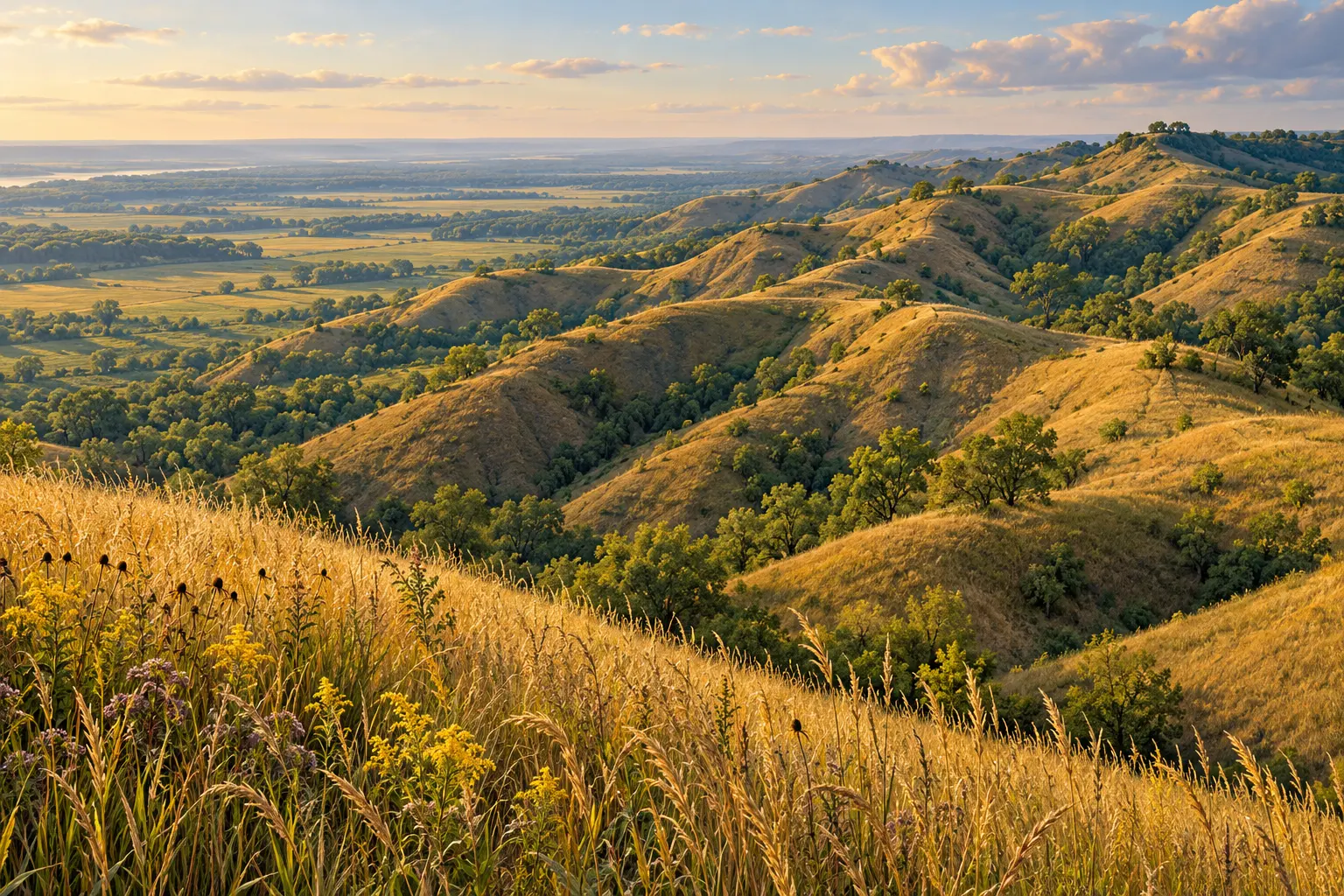
The Loess Hills rise sharply above the Missouri River plain, but their most distinctive material arrived as dust. During ice-age conditions, winds lifted fine sediment from exposed river-valley deposits and carried it onto the uplands. Some loess layers reach around 200 feet thick. Erosion then carved narrow ridges, branching spurs, and steep slopes into the deposits. The landscape combines unusually deep windblown material with later sculpting by water, rather than the exposed rock formations that many visitors associate with rugged hills.
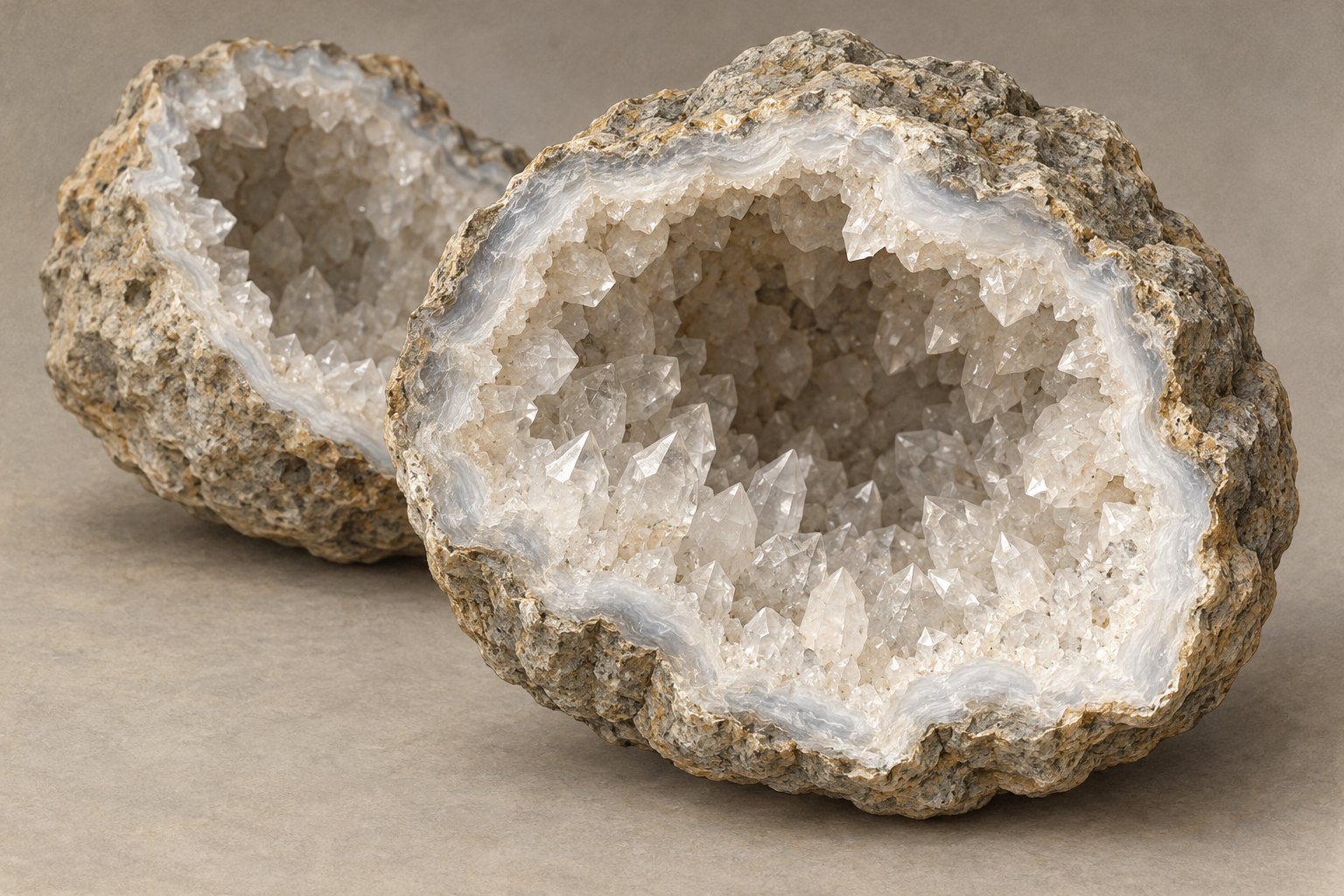
5. Some of Iowa's crystal-filled geodes are solid inside
Keokuk geodes can look like ordinary lumpy stones until their interiors are revealed. Quartz commonly lines the cavities, and calcite and other minerals may occur alongside it. But a hollow center is not guaranteed: mineral growth can fill most or all of a specimen. Many examples come from the lower Warsaw Formation in southeastern Iowa and nearby areas. Iowa named the geode its official state rock in 1967, recognizing a geological object whose most striking features are usually hidden by its plain exterior.
6. A newspaper invitation launched RAGBRAI
In 1973, Des Moines Register colleagues John Karras and Donald Kaul turned a proposed bicycle ride across Iowa into an invitation to readers. About 300 people appeared for the first event, and the organizers estimate that 114 completed the route. One was 83-year-old Clarence Pickard, riding a used Schwinn. The next year's ride was briefly called SAGBRAI, for Second Annual Great Bicycle Ride Across Iowa. The name later settled into RAGBRAI as the informal newspaper outing became a continuing tradition.
 You might also like
The Colossal Deal: 15 Fascinating Facts About the Louisiana Purchase
7. Effigy Mounds preserves bears and birds made from earth
At Effigy Mounds National Monument in northeastern Iowa, 31 of more than 200 preserved mounds take the forms of bears or birds. Ten bear-shaped earthworks form the Marching Bear Group. Built by Indigenous communities, these places carry ceremonial and sacred significance for culturally associated Tribes today. Their functions cannot all be reduced to one proven explanation; archaeological and Indigenous accounts describe a complex landscape of burial, ceremony, and relationships with place. The animal forms remain readable in the ground centuries after their construction.
8. Kate Shelley's rescue story is more complicated than its legend
During a violent storm on July 6, 1881, teenage Kate Shelley heard a locomotive plunge through a washed-out bridge over Honey Creek. She crossed the nearby Des Moines River railway bridge in darkness to reach the depot at Moingona. The Ames Public Library's historical account adds a detail often missing from retellings: the passenger train she feared for had already been stopped farther west. Shelley nevertheless helped lead rescuers to two surviving railwaymen. She later became stationmaster at the Moingona depot.
9. Britt's hobo museum began with a box and an anonymous donation
Britt hosted its first National Hobo Convention in 1900 and developed a long relationship with the history of itinerant workers. Decades later, former Hobo Kings and local supporters worked to create a museum. According to the museum's account, the effort gained a permanent home in the early 1980s when a box of artifacts and an unknown hobo's monetary gift helped launch it in a former movie theater. Collections of objects, documents, photographs, and recorded voices preserve lives behind the convention's colorful names and ceremonies.
10. The people in American Gothic never posed together at the house
Grant Wood found the house that inspired American Gothic in Eldon, Iowa, then used his sister Nan and dentist Dr. B. H. McKeeby as models for the figures. They never stood together in front of the house for the painting. Wood assembled the scene, added a barn, and adjusted the figures' appearance. The famous 1930 image is therefore a carefully constructed composition rather than a record of a real couple outside their home. Its pointed upstairs window supplied the architectural reference in the title.
11. Amana changed its economy while keeping its church
For decades, the Amana Colonies organized work, housing, and meals communally. In 1932, members made the Great Change: they retained their religious community while reorganizing major business interests into a joint-stock company. The familiar appliance name emerged from this new period. George C. Foerstner's first beverage cooler, designed in 1934, was built by craftsmen at the Middle Amana woolen mill. A community associated with textiles, farming, and shared kitchens became linked with an industrial business selling mechanical refrigeration.
12. Elkader was named for an Algerian resistance leader
When Timothy Davis helped establish an Iowa town in 1846, he proposed the name Elkader in admiration of Emir Abd el-Kader, known internationally for resisting French conquest in Algeria. The naming choice later developed into a direct international relationship. In January 1984, Elkader and Mascara, Algeria, signed sister-city documents during an Iowa delegation's visit. A nineteenth-century expression of admiration thus gave a small Midwestern community a lasting connection across the Atlantic and Mediterranean.
13. Iowa let creative work count toward graduate degrees
In 1922, the University of Iowa accepted creative projects as theses for advanced degrees, giving the making of art a place alongside conventional academic research. Its Writers' Workshop formally brought poets and fiction writers together in 1936. Another development widened the city's literary reach: Paul Engle and Hualing Nieh Engle founded the International Writing Program in 1967. Its first year brought 27 writers from 18 countries to Iowa City, turning a Midwestern university town into a meeting place for international literary exchange.
14. Iowa's state fair staged real locomotive crashes
The Iowa State Fair presented deliberate train collisions in 1896, 1922, and 1932. Promoter Joe Connelly's first fair spectacle used old locomotives headed for scrap, sending them toward one another for a crowd. Political themes heightened the drama: the 1896 engines represented the gold-versus-silver currency debate. In 1932, machines associated with presidential rivals Herbert Hoover and Franklin Roosevelt collided. These were destructive theatrical events using real railway equipment, part of an era when disaster spectacles drew major fair audiences.
15. Decorah's Ice Cave can build ice after winter ends
Decorah Ice Cave stores winter's cold in its air and surrounding rock. When spring meltwater seeps inside, it can freeze against those chilled surfaces, building ice that persists into summer. The ice is replenished through this seasonal process, rather than being an exposed remnant of an ancient glacier. The cave itself also has an unusual origin: its passage enlarged as massive limestone blocks gradually slipped and rotated outward over softer shale. Its geology and its delayed seasonal freezing make the same small cave interesting for two different reasons.
How did these facts land?
Know someone who'd love these facts? Share them 👇