
The Bohemian Heart: 15 Fascinating Facts About Czechia
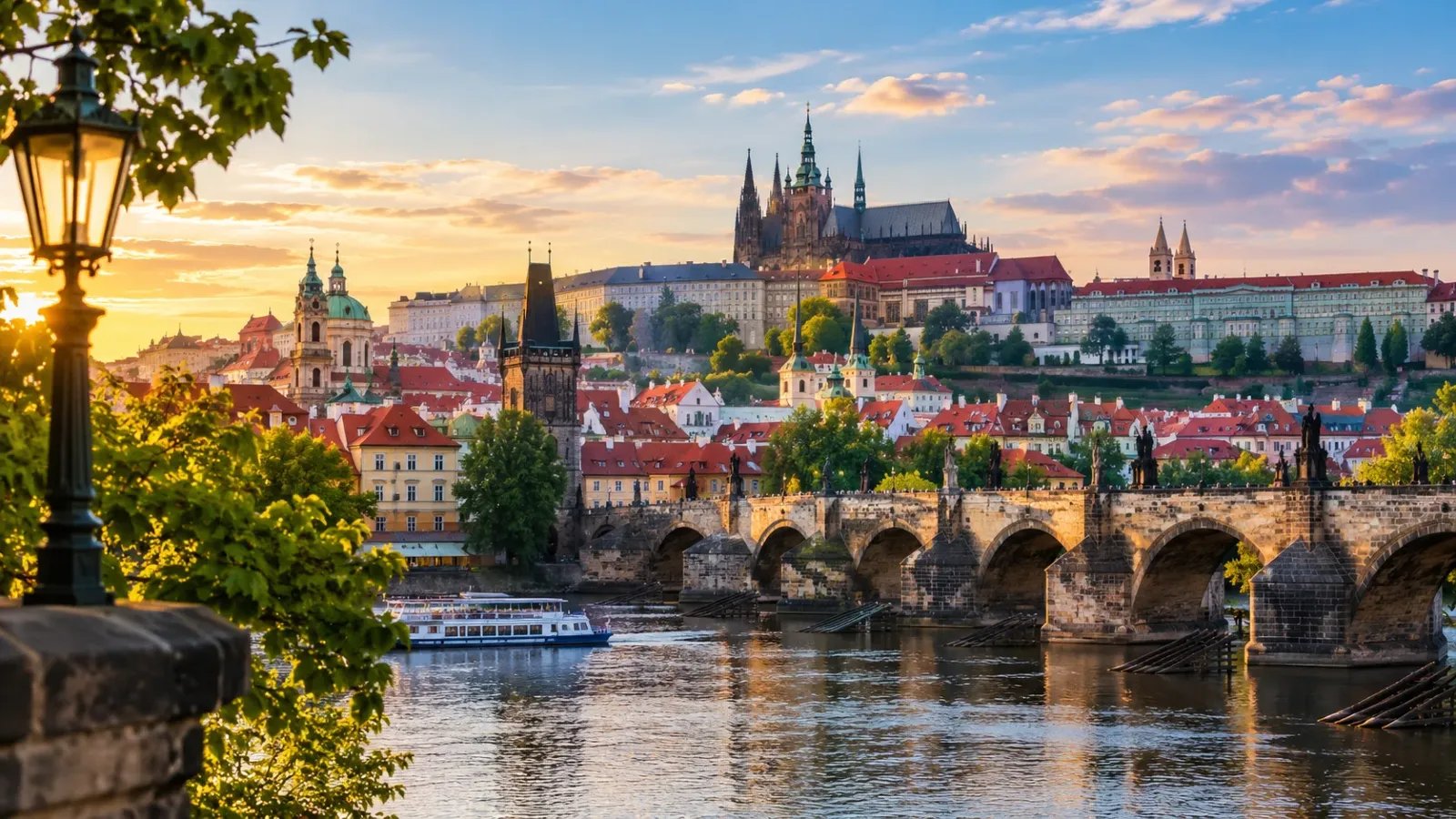
Often reduced to just cheap beer and Prague's castles, Czechia is actually a central hub of science. It is not Eastern Europe, nor is it just bohemian myth. This independent nation gave us genetics, contact lenses, and robots. Discover fifteen obscure realities proving Czechia is a historic and scientific powerhouse.
1. The word "robot" was not coined by a science fiction novelist, but by a Czech playwright in 1920 to describe artificial biological workers.
Karel Capek introduced the term in his play R.U.R. (Rossum's Universal Robots). Interestingly, Karel did not actually invent the word; he credited his brother, Josef, a painter, who derived it from "robota," the Old Church Slavonic word for forced labor or serfdom. Unlike modern mechanical droids, Capek's original robots were grown from chemical batter, resembling human clones more than metallic machines, reflecting deep post-World War I anxieties about industrialization.
2. The foundational laws of modern genetics were discovered not in a high-tech laboratory, but in a Moravian monastery garden in the 1860s.
Gregor Mendel, an Augustinian friar living in Brno, cultivated over 28,000 pea plants to study trait inheritance. Despite having no formal scientific backing, Mendel meticulously tracked dominant and recessive phenotypes, establishing the laws of segregation and independent assortment. His groundbreaking work was largely ignored by the contemporary scientific community, only to be rediscovered decades later as the bedrock of modern biological science.
3. The modern soft contact lens was invented by a Czech chemist who built his first prototype using a children's erector set and a bicycle dynamo.
Otto Wichterle, a brilliant polymer chemist, conceptualized a water-absorbent plastic suitable for the human eye. When the state-run institute canceled his funding in 1961, Wichterle continued his research at home. Using a Merkur construction set, a popular Czech toy, powered by a dynamo and a phonograph motor, he successfully cast the first hydrogel lenses. His invention revolutionized optometry globally, though the communist government sold the patent rights abroad for a fraction of their worth.
4. The act of throwing politicians out of windows is a formalized historical practice in Prague that triggered two massive European conflicts.
Defenestration, from the Latin for "out of the window," is deeply tied to Czech political history. The First Defenestration of Prague in 1419 sparked the Hussite Wars when radical Hussites tossed city councilors from the New Town Hall. More famously, the Third Defenestration in 1618, where Protestant nobles threw Catholic regents from the Prague Castle windows, served as the primary catalyst for the devastating Thirty Years' War. Miraculously, the victims of the 1618 fall survived, allegedly saved by landing in a massive dung heap.
5. The ubiquitous sugar cube was invented in a Bohemian refinery after the director's wife cut her finger trying to chop a massive sugar loaf.
Before 1843, sugar was sold in large, rock-hard conical loaves that required special nippers to break apart. After his wife injured herself, Jakub Krystof Rad, the director of a sugar refinery in Dacice, invented a press to mold sugar into small, uniform squares. He presented his wife with a box of 350 white and pink sugar cubes, unknowingly changing global culinary habits and the mechanics of food packaging forever.
6. A small chapel in Kutna Hora is meticulously decorated with the skeletal remains of up to forty thousand people to symbolize the equality of death.
The Sedlec Ossuary is an eerie architectural marvel resulting from overcrowding in the local cemetery following the Black Death and Hussite Wars. In 1870, woodcarver Frantisek Rint was employed to organize the exhumed bones. Rather than simply stacking them, he bleached the skeletons and arranged them into elaborate macabre artworks, including a massive chandelier containing at least one of every bone in the human body and the intricate coat of arms of the aristocratic Schwarzenberg family.
7. Charles University in Prague was founded in 1348, making it the oldest continuously operating university in Central Europe.
Established by Charles IV, Holy Roman Emperor and King of Bohemia, the institution was modeled after the prominent universities in Paris and Bologna. It became an early crucible for reformist thought, notably hosting Jan Hus, whose theological teachings predated Martin Luther by a century. The university has survived the Hussite Wars, the Thirty Years' War, Nazi occupation, and Soviet control, remaining a premier center for academic research today.
8. The city of Ostrava preserves a massive, dystopian-looking ironworks facility right in its center that is entirely recognized as a European Cultural Heritage site.
Dolni Vitkovice is a sprawling industrial complex combining a coal mine, coke oven, and blast furnace all in one interconnected site. Operational from 1828 to 1998, it fueled the rapid industrial revolution in the Austro-Hungarian Empire. Instead of demolishing the colossal steel structures, Czechia transformed the rusted pipelines and towering kilns into an educational and cultural hub, featuring a science center and a world-class concert venue housed inside a former gasometer.
9. Czechia is geologically anchored by the Bohemian Massif, a tectonic formation so old that it predates the creation of the dinosaur-era supercontinent Pangea.
The Bohemian Massif was formed during the Variscan orogeny over 300 million years ago when ancient tectonic plates collided. This makes the mountains enclosing the Czech basin much older and heavily eroded compared to the younger, sharper Alps to the south. This ancient geological foundation is exceptionally rich in minerals, which historically supplied Bohemia with vast quantities of silver, uranium, and the fine quartz used for its legendary glassmaking industry.
10. The modern classification of human blood into four distinct groups was independently established by a Czech neurologist studying psychiatric patients.
In 1907, Jan Jansky published a paper detailing how human blood could be categorized into types I, II, III, and IV, corresponding to what we now know as O, A, B, and AB. He made this discovery while attempting to find a correlation between mental illness and blood diseases. Although Austrian Karl Landsteiner often receives the primary credit for discovering blood groups, Jansky's four-type classification system became the standard used in clinical medicine, fundamentally enabling safe blood transfusions worldwide.
11. Prague's medieval Astronomical Clock is the oldest operating clock of its kind in the world, displaying Babylonian time alongside celestial alignments.
Installed in 1410, the Prague Orloj does much more than tell the hour. Its complex mechanical astrolabe tracks the sun and moon through the zodiac, displays the current phase of the moon, and indicates Old Czech time as well as Babylonian time, where daylight hours vary in length depending on the season. The mechanism was heavily damaged during World War II but was painstakingly repaired, proving the genius of its original 15th-century horological engineering.
12. Czechoslovakia dissolved into two separate countries in 1993 without a single drop of blood being shed, an event virtually unprecedented in modern geopolitics.
Known as the Velvet Divorce, the split of Czechoslovakia into Czechia and Slovakia occurred entirely through parliamentary negotiation. Following the peaceful Velvet Revolution that ended communist rule in 1989, nationalist tensions and differing economic policies strained the federation. Leaders from both sides agreed to formally dissolve the union, splitting military assets, currency, and territory cleanly, proving that national dissolution can be achieved through diplomacy rather than civil war.
13. The grounded lightning rod was independently invented by a Czech theologian attempting to prevent thunderstorms using church bells.
Prokop Divis, a Premonstratensian priest and scientist, developed a weather machine in 1754, two years after Benjamin Franklin's kite experiment. Divis originally believed his contraption, heavily laden with sharp metal points, would suck the static electricity out of clouds and prevent severe storms from forming entirely. While it failed at manipulating the weather, it functioned perfectly as Europe's first grounded lightning rod, a significant advancement in atmospheric physics and public safety.
14. Czechia contains the largest natural sandstone arch in Europe, formed over millions of years by the meticulous erosion of an ancient seabed.
The Pravcice Gate spans nearly 27 meters and sits deep within the Bohemian Switzerland National Park. During the Cretaceous period, the area was submerged under a shallow sea that deposited massive layers of sand. As tectonic plates shifted and the ocean receded, the compacted sandstone was exposed to millions of years of wind and water erosion. Today, the arch is so fragile that tourists are no longer allowed to walk across its top to prevent its eventual collapse.
15. Czechia is currently a global superpower in nanotechnology, inventing a process to spin nanofibers on an industrial scale using an electrostatic field.
In 2003, researchers at the Technical University of Liberec developed Nanospider technology. This revolutionary manufacturing process uses high voltage to draw microscopic polymer threads from a liquid surface without the need for traditional nozzles, which easily clog. This leap in materials science has allowed for the mass production of nanomaterials used in water filtration, regenerative medicine, and advanced battery technology, cementing the country's modern reputation as a high-tech innovator.
Sources & References
This AI-assisted post was rigorously curated and fact-checked for accuracy by:
 Martin Roháček
How fun was this article? 🤔
Tap a star to rate it
🧠 Quiz: How closely were you paying attention?
10 questions — all answers are in the article above!
Enjoyed these facts? There's more! 💌
Fresh fun facts in your inbox. No spam, ever.