The Golden City: 15 Fascinating Facts About Prague
Nestled in the heart of Europe, Prague is a city where medieval legends and modern marvels collide. Known for its skyline of soaring spires and labyrinthine cobblestone streets, the Czech capital has survived centuries of empires, world wars, and revolutions largely unscathed. From the largest ancient castle on Earth to secret rooms said to house clay monsters, Prague’s history reads like a dark and delightful fairy tale. Discover the bizarre architectural quirks, eccentric traditions, and centuries-old mysteries that make this bohemian metropolis truly unforgettable.
1. It is Home to the World's Largest Ancient Castle
Prague Castle isn't just a picturesque hilltop fortress; it officially holds the Guinness World Record as the largest ancient castle complex on Earth. Spanning an astonishing 17 acres, this sprawling compound features a stunning mix of Gothic, Romanesque, and Baroque architecture. It was founded in the 9th century and has served as the seat of power for kings of Bohemia, Holy Roman Emperors, and modern Czech presidents. Within its massive walls, you will find the awe-inspiring St. Vitus Cathedral, medieval palaces, and the charmingly tiny houses of Golden Lane. The sheer scale of the complex means it functions almost like a self-contained town looking down upon the city below.
2. The Astronomical Clock Has a Gruesome Backstory
Every hour, crowds gather in Old Town Square to watch the mechanical procession of the Prague Astronomical Clock, the third-oldest of its kind in the world. Installed in 1410, it remains the oldest astronomical clock still operating today. According to a grim local legend, the Prague councilors were so amazed by the clockmaker Master Hanuš’s creation that they blinded him with a hot poker to ensure he could never build a replica. In retaliation, the blind clockmaker supposedly threw himself into the clock's gears, breaking it for a hundred years. While modern historians have since debunked this bloody tale, the clock remains a mesmerizing medieval marvel that still tracks the sun, moon, and zodiac.
3. Charles Bridge Is Literally Held Together by Eggs
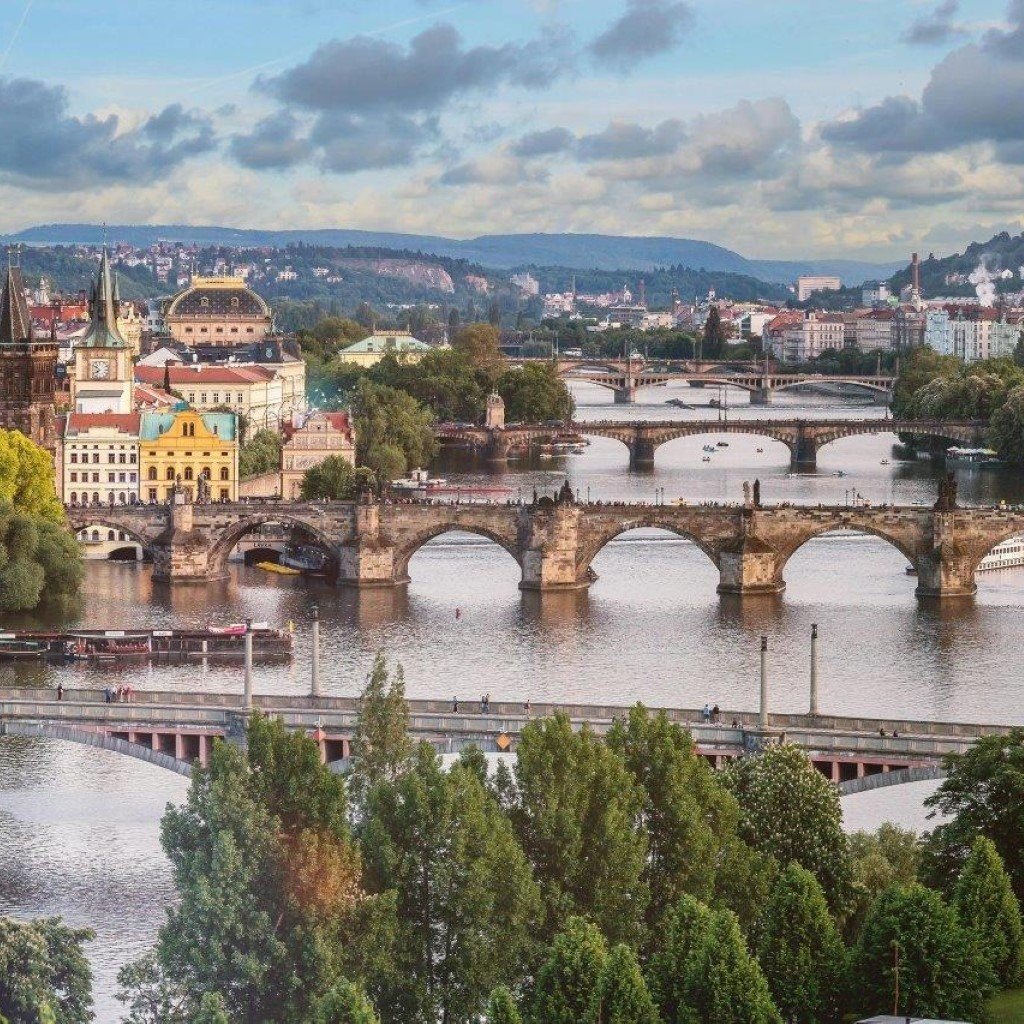
The iconic Charles Bridge has survived massive floods, wars, and centuries of heavy foot traffic since its foundation stone was laid by King Charles IV in 1357. For generations, a popular myth claimed that medieval builders mixed raw eggs into the mortar to make the structure stronger. Most historians dismissed this as a charming fairytale until scientists decided to analyze the original mortar in 2010. To their absolute astonishment, laboratory tests revealed the distinct presence of egg proteins within the bridge's centuries-old binding materials. It turns out the medieval engineers were actually onto something, utilizing organic ingredients to create a miraculously durable masonry bind.
4. The "City of a Hundred Spires" Is a Massive Understatement
Prague is universally beloved under the moniker "The City of a Hundred Spires," a title coined in the 19th century by mathematician Bernard Bolzano. However, if you actually bother to count the towering peaks stretching across the skyline today, that nickname falls hilariously short. Modern estimates suggest there are anywhere from 500 to over 1,000 steeples, turrets, and spires piercing the city's clouds. The Prague Information Service once attempted an official tally and gave up after counting more than 500 in the historic center alone. This dense concentration of gothic architecture gives the city its distinctly enchanting, fairytale-like atmosphere.
5. A Mythical Golem Is Said to Hide in the Jewish Quarter
The city's Jewish Quarter, Josefov, is home to the Old-New Synagogue, Europe's oldest active synagogue, which dates back to the late 13th century. Beyond its striking Gothic architecture, the building is famous for its association with one of Jewish folklore’s most legendary figures: the Golem of Prague. According to the story, the 16th-century Rabbi Judah Loew ben Bezalel created a giant monster out of clay from the banks of the Vltava River to protect the city's Jewish community from persecution. After the creature became uncontrollable, the Rabbi deactivated it and locked its remains in the synagogue's attic. To this day, the attic remains strictly off-limits to the public, keeping the ancient mystery alive.
6. Prague Practically Invented Throwing Politicians Out of Windows
The Czech capital literally introduced the word "defenestration"—the act of throwing someone out of a window—into the political dictionary. Prague has witnessed multiple historic defenestrations, most notably in 1419 and 1618, when angry mobs tossed unpopular politicians and Catholic officials from high castle windows. Miraculously, in the 1618 incident, the victims survived a 70-foot drop because they supposedly landed in a massive pile of manure. This rather undignified method of political protest wasn't just a quirky local dispute; the 1618 defenestration actually triggered the devastating Thirty Years' War across Europe. Today, you can visit the very windows where these dramatic expulsions took place.
7. You Can Soak in a Tub of Boiling Beer
The Czech Republic routinely tops global charts for the highest beer consumption per capita, and Prague is the beating heart of this frothy obsession. Beer culture here runs so deep that locals don't just drink the beloved pilsners—they literally bathe in them. Across the city, you can book sessions at luxury "beer spas" where guests soak in wooden tubs filled with hot water, hops, yeast, and malt extracts. These ingredients are believed to open pores, rejuvenate the skin, and boost circulation, all while you pour yourself unlimited pints from a personal tap attached to the tub. It is the ultimate spa day for those who prefer hops over hot stones.
8. One Street Is So Narrow It Needs a Traffic Light
Navigating the winding, cobblestone streets of Prague's historic center can sometimes feel like walking through an architectural maze. One particular passageway in the Malá Strana neighborhood, known as Vinárna Čertovka, takes this to an extreme. The street is so absurdly narrow—measuring less than 20 inches wide in some spots—that two people cannot comfortably squeeze past each other. To solve this claustrophobic logistical nightmare, the city installed pedestrian traffic lights at both ends of the alley. You have to push a button and wait for the green light before attempting to cross, ensuring you don't get stuck midway.
9. The John Lennon Wall Defied a Communist Regime
Tucked away in a quiet square near the French Embassy, the Lennon Wall bursts with layers of colorful graffiti, lyrics, and peace signs. Interestingly, John Lennon never actually stepped foot in Prague during his lifetime. Following his murder in 1980, the wall became an impromptu canvas for local youth to paint Beatles lyrics and air their grievances against the oppressive communist regime. Despite secret police repeatedly painting over the wall, defiant locals would return the very next night to cover it in new messages of freedom and peace. Today, it remains a dynamic, ever-changing monument to free speech and artistic expression.
10. It Boasts the World's Only Cubist Lamppost
While most European cities boast impressive Baroque or Gothic structures, Prague has the peculiar distinction of heavily embracing Cubist architecture. In the early 20th century, Czech architects took the avant-garde aesthetic of Picasso's paintings and applied it to buildings, furniture, and everyday objects. The most famous example is the House of the Black Madonna, which features sharp geometric angles and crystalline shapes. The city even has the world’s only surviving Cubist lamppost, quietly hiding in plain sight in Jungmann Square. This bizarre architectural movement was short-lived, making Prague one of the few places on Earth where you can see it in three dimensions.
11. Weather Has Been Recorded Daily Since 1752
For those who complain about unpredictable weather forecasts, spare a thought for the meteorologists at Prague's historic Klementinum complex. This sprawling architectural marvel houses a weather station that has been meticulously recording daily climate data since 1752. It stands as one of the longest continuous meteorological records anywhere on the globe, providing invaluable historical data for modern climate scientists. The Klementinum itself is a masterpiece, featuring a stunning Baroque library and an astronomical tower where scientists once observed the stars. The centuries of handwritten weather logs are still carefully preserved within its heavily fortified walls.
12. You Can Still Ride a "Doorless" Elevator
In several municipal and historic buildings across Prague, you can still find functioning "Paternoster" elevators. These bizarre, doorless contraptions consist of a chain of open compartments that move slowly in a continuous loop without ever stopping. Passengers simply step in and out as the wooden box glides past their desired floor, requiring a bit of agility and courage. Nicknamed the "elevator of death" by intimidated tourists, they are completely safe if used correctly and offer a nostalgic glimpse into early 20th-century engineering. The name "Paternoster" translates to "Our Father," supposedly because riding one for the first time might make you want to say a quick prayer.
13. A Giant Metronome Replaced a Massive Stalin Monument
Perched high on Letná Hill overlooking the city is a gigantic, functional metronome that swings slowly back and forth over the skyline. This mesmerizing kinetic sculpture was erected in 1991, but the site it occupies has a much darker history. It was originally the location of the world’s largest monument to Joseph Stalin, a massive granite structure that took over five years to build. Following the dictator's death and a shift in Soviet politics, the monument became a massive embarrassment and was unceremoniously blown up with 800 pounds of explosives in 1962. Today, the ticking metronome symbolizes the relentless passage of time and the city's triumph over its totalitarian past.
14. It Operated the World’s Last Pneumatic Post System
Beneath the picturesque streets of Prague lies a forgotten technological marvel: the world’s last preserved municipal pneumatic post system. Originally established in the late 19th century, a massive underground network of steel tubes once shot mail canisters across the city using compressed air. At its peak, the system covered nearly 35 miles of underground piping and operated flawlessly for over a century. It continued to deliver mail right up until the catastrophic floods of 2002, which severely damaged the central engine room. While currently out of service, the intricate tubes remain hidden under the cobblestones, waiting for a potential restoration.
15. Franz Kafka Left a Bizarre Legacy Across the City
The existential angst of Franz Kafka is deeply woven into the fabric of Prague, the city where the legendary author was born and lived most of his life. Despite writing in German, Kafka's surreal, bureaucratic nightmares were heavily inspired by the labyrinthine streets and imposing castles of the Czech capital. Today, you can find a bizarre tribute to him in the form of a massive, 39-ton rotating mechanical head of Kafka designed by artist David Černý. Composed of 42 independent mirrored layers, the mesmerizing sculpture constantly shifts and aligns, perfectly capturing the disorienting, shape-shifting nature of the author's most famous works. It serves as a fittingly strange tribute to one of literature's most eccentric minds.
Sources & References
This AI-assisted post was rigorously curated and fact-checked for accuracy by:
 Martin Roháček
How fun was this article? 🤔
Tap a star to rate it
🧠 Quiz: How closely were you paying attention?
10 questions — all answers are in the article above!
Enjoyed these facts? There's more! 💌
Fresh fun facts in your inbox. No spam, ever.