The Phoenix City: 15 Fascinating Facts About Warsaw
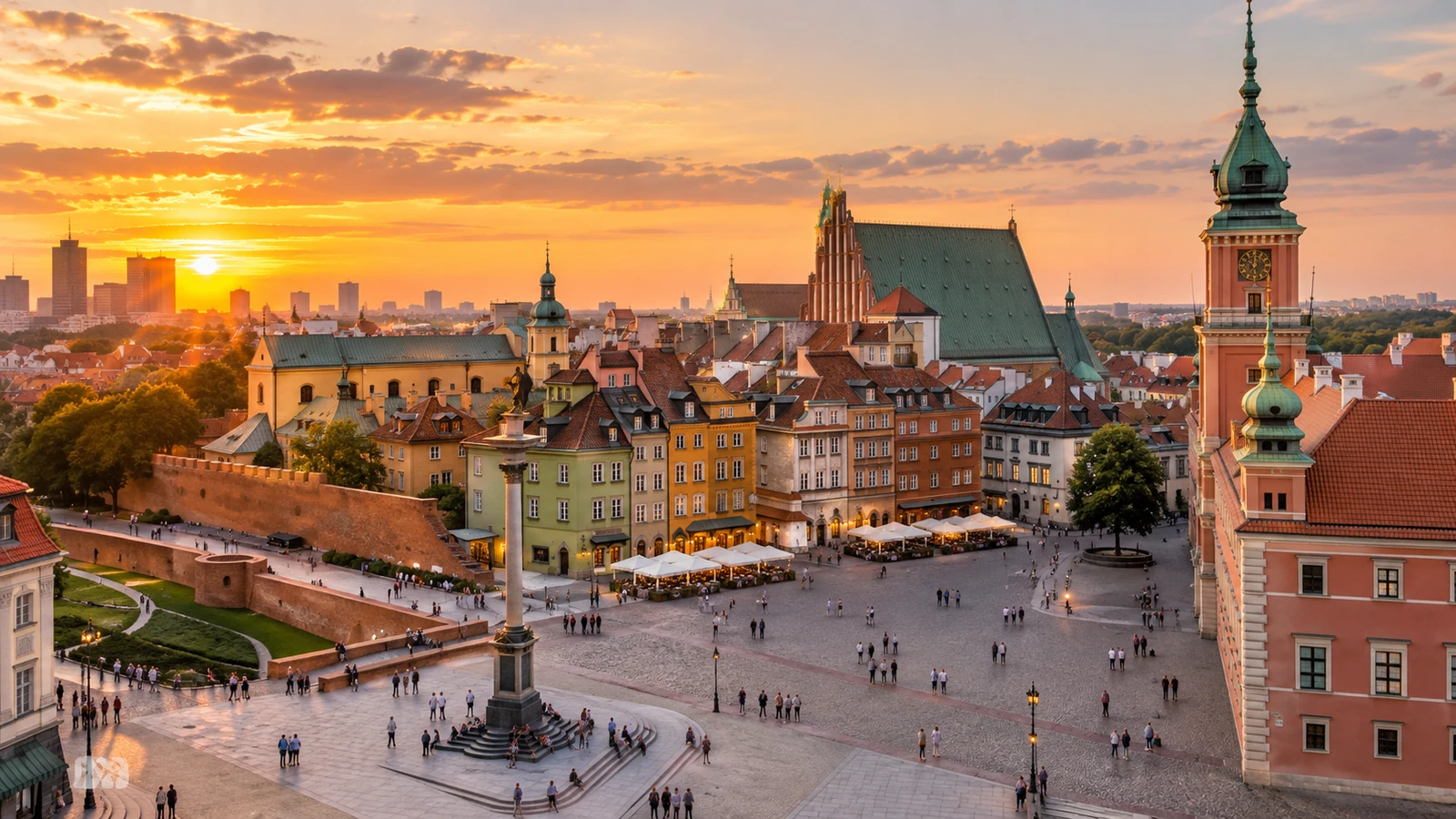
Warsaw is a city that simply refused to die. Completely leveled during World War II, Poland’s vibrant capital pulled off one of the greatest architectural resurrections in human history, rising from the ashes to reclaim its title as a European powerhouse. Today, it stands as a mesmerizing patchwork of wild riverbanks, cutting-edge skyscrapers, and fierce mermaid protectors. Dive into these fifteen fascinating truths about a metropolis where tragedy and triumph are woven into the very streets.
1. The Ultimate Phoenix City
Warsaw earned its nickname, “The Phoenix City,” after enduring near-total annihilation during World War II. By 1945, roughly eighty-five percent of the city’s buildings had been systematically dynamited and reduced to rubble by occupying forces. Instead of relocating the capital, the surviving citizens returned to the ruins and painstakingly rebuilt their home from the ground up. This massive post-war reconstruction effort became a profound symbol of Polish resilience and national identity. Today, a bustling, modern metropolis stands right on top of the millions of tons of debris left behind by the conflict.
2. An Unprecedented UNESCO World Heritage Site
When you stroll through Warsaw’s picturesque Old Town, you might assume you are looking at centuries-old medieval architecture. In reality, almost every brick you see was laid in the 1950s using old photographs, architectural plans, and even 18th-century landscape paintings by Bernardo Bellotto as reference points. The reconstruction was so remarkably accurate that UNESCO broke its own rules to add it to the World Heritage List in 1980. Traditionally, UNESCO only recognizes original, untouched historical sites. Warsaw's Old Town became the extraordinary exception, honored specifically as a masterpiece of architectural restoration.
3. The Warsaw Mermaid Wields a Sword
While Copenhagen is famous for its passive, lounging Little Mermaid, Warsaw’s mythical river-dweller is a heavily armed warrior. Known as Syrenka, this fierce mermaid wields a raised sword and a broad shield, fiercely protecting the city from invaders. Legend has it that she is the sister of the Danish mermaid, but chose to swim down the Vistula River and stay in Poland because she loved the locals. You will spot her iconic image everywhere across the capital, from the official city coat of arms to majestic bronze statues guarding the Old Town square. She serves as a fittingly resilient mascot for a city that has fought so hard to survive.
4. Chopin’s Heart is Hidden in a Church Pillar
Warsaw pulses with the legacy of its most famous musical son, Frédéric Chopin. While the legendary composer’s body is buried in the Père Lachaise Cemetery in Paris, his heart secretly rests in his beloved Polish homeland. Before he died, Chopin requested that his heart be removed and smuggled back to Warsaw, a task successfully carried out by his sister in a jar of cognac. Today, that preserved heart is permanently sealed inside a stone pillar at the Holy Cross Church. You can further explore his musical footprint by resting on interactive multimedia benches scattered across the city, which play his famous nocturnes at the push of a button.
5. The Largest Military Resistance in WWII
The Warsaw Uprising Monument pays tribute to a defining, heartbreaking chapter of the city's history that is often confused with the earlier Warsaw Ghetto Uprising. In the summer of 1944, the Polish underground resistance launched a massive, coordinated rebellion against the occupying German army. Lasting 63 days, it remains the largest single military effort undertaken by any European resistance movement during World War II. Despite their extraordinary bravery, the poorly armed fighters were eventually crushed while Soviet forces waited idly across the river. The haunting bronze monument immortalizes these soldiers, depicting them bravely crawling out of the city's sewer system to ambush their enemies.
6. A Palatial Masterpiece that Survived the War
While the majority of Warsaw was reduced to ash, the breathtaking Wilanów Palace somehow survived the devastation miraculously intact. Often referred to as the "Polish Versailles," this spectacular Baroque residence was built in the late 17th century for King Jan III Sobieski. Its bright yellow facade and meticulously landscaped gardens offer a rare, authentic glimpse into Poland's royal golden age before the partitions and world wars. German forces occupied the palace during WWII, but for whatever reason, they fled without blowing it up. Today, it hosts an incredible collection of European art and comes alive with luminous music festivals throughout the year.
7. The Secret Heroism of the Royal Castle
Warsaw’s magnificent Royal Castle, much like the surrounding Old Town, had to be entirely reconstructed after it was deliberately dynamited in 1944. However, the castle you see today contains thousands of completely original architectural details, sculptures, and paintings. This is because brave museum staff and conservationists risked their lives to secretly smuggle out invaluable artifacts during the terrifying early years of the occupation. They hid floorboards, door frames, and painted canvases in secret locations all over the countryside. When the time finally came to rebuild the castle in the 1970s, these hidden treasures were triumphantly returned and seamlessly integrated into the new walls.
8. The Vistula River Has a Wild Side
Most major European capitals heavily engineer, pave, and tame their central rivers, but Warsaw proudly embraces the natural chaos of the Vistula. While the left bank features manicured boulevards, modern museums, and lively cafes, the right bank—located on the Praga side—is an entirely different world. It is a designated Natura 2000 protected habitat, deliberately left overgrown with dense riparian forests and natural sandy beaches. In the summer, locals flock to these pristine shores for bonfires and sunbathing in the very heart of the city. It is incredibly rare to find such a wild, untamed ecosystem thriving in the center of a bustling European metropolis.
9. The Birthplace of a Universal Language
Though modern Warsaw thrives on multilingualism to welcome tourists, the city actually birthed the most famous constructed language in history: Esperanto. In the late 19th century, Warsaw was a deeply divided, multicultural hub belonging to the Russian Empire, where Poles, Jews, Russians, and Germans lived in constant tension. A local ophthalmologist named L. L. Zamenhof believed that these hostilities stemmed from the language barrier. In 1887, he published the first book on Esperanto right in Warsaw, hoping to create an easy-to-learn, politically neutral language that would foster global peace. Today, you can find a street named in his honor in the city's Muranów district.
10. A Rooftop Botanical Wonderland
The Warsaw University Library is famous for far more than its extensive academic archives. Its sprawling roof features one of the largest and most spectacular roof gardens in all of Europe, spanning over a full hectare of elevated space. Blending brutalist concrete and glass architecture with lush, meticulously manicured greenery, the garden feels like a modern Hanging Gardens of Babylon. Visitors can wander through distinct botanical zones connected by romantic bridges, viewing streams, fish ponds, and winding pathways. It also offers some of the best unobstructed panoramic views of the Warsaw skyline and the Vistula River below.
11. Stalin’s Controversial Gift to the City
For decades, the towering Palace of Culture and Science was the tallest building in Poland, dominating the Warsaw skyline with its imposing Socialist Realist architecture. It was commissioned in the 1950s by Joseph Stalin as a mandatory gift from the Soviet people to Poland. Because it served as a constant, looming reminder of Soviet domination, generations of Warsaw residents deeply resented the structure, jokingly calling it "Stalin's syringe." Some even called for its demolition after the fall of communism in 1989. However, the city eventually learned to embrace its unique aesthetic, and today it houses theaters, cinemas, universities, and a highly popular observation deck.
12. Varso Tower Reclaimed the Skyline
While the Palace of Culture and Science held the height record for nearly seventy years, Warsaw’s skyline recently experienced a massive modern upgrade. Completed in 2022, the spectacular Varso Tower not only became the tallest building in Poland, but also the tallest building in the entire European Union. Soaring to a height of 310 meters, this sleek, contemporary glass skyscraper features public observation decks and lush indoor gardens. It stands as a powerful architectural statement, proving that Warsaw has definitively stepped out of the shadow of its communist past. The city is now widely recognized as one of the most dynamic, rapidly developing business hubs in Europe.
13. Bullet Holes Still Scar the City Markets
If you look closely at some of the older structures in Warsaw, the violent history of the 20th century is still physically etched into the walls. Hala Mirowska, one of the city's most bustling and beloved historic market halls, is a prime example of this enduring legacy. Built at the turn of the 20th century, it survived heavy bombardments and served as a site of mass executions during the Warsaw Uprising. Today, locals flock there at dawn to buy fresh produce, vibrant flowers, and Polish delicacies, but the exterior red brickwork remains heavily pitted with genuine bullet holes. The city deliberately left these scars visible as a silent, powerful memorial.
14. It is One of Europe’s Greenest Capitals
Despite its reputation for gray, concrete communist-era architecture, Warsaw is actually one of the greenest capitals on the European continent. Over a quarter of the entire city's area is dedicated to sprawling parkland, forests, and nature reserves. There are more than 90 distinct public parks scattered across the metropolis, ensuring that almost every neighborhood has immediate access to serene nature. The most famous of these is Łazienki Park, a massive 76-hectare complex featuring wandering peacocks, classical palaces, and a legendary Chopin monument. During the summer, thousands of residents gather on its manicured lawns for free, world-class classical piano concerts.
15. The Architecture Tells a Thousand Stories
World-class museums dot the city, but Warsaw’s very streets are an open-air museum of colliding architectural eras. Gothic churches, meticulously reconstructed Renaissance townhouses, austere Socialist Realist housing blocks, and hyper-modern glass skyscrapers all sit shoulder-to-shoulder. The POLIN Museum of the History of Polish Jews perfectly captures this storytelling spirit through its award-winning design, featuring a sweeping glass facade split by a dramatic fissure symbolizing the parting of the Red Sea. This chaotic, beautiful architectural patchwork proves that Warsaw never stops reinventing itself. It is a city that refuses to be defined by a single era, continually building the future while honoring its past.
Sources & References
This AI-assisted post was rigorously curated and fact-checked for accuracy by:
 Martin Roháček
How fun was this article? 🤔
Tap a star to rate it
🧠 Quiz: How closely were you paying attention?
10 questions — all answers are in the article above!
Enjoyed these facts? There's more! 💌
Fresh fun facts in your inbox. No spam, ever.