The Land of Music and Mountains: 15 Fascinating Facts About Austria
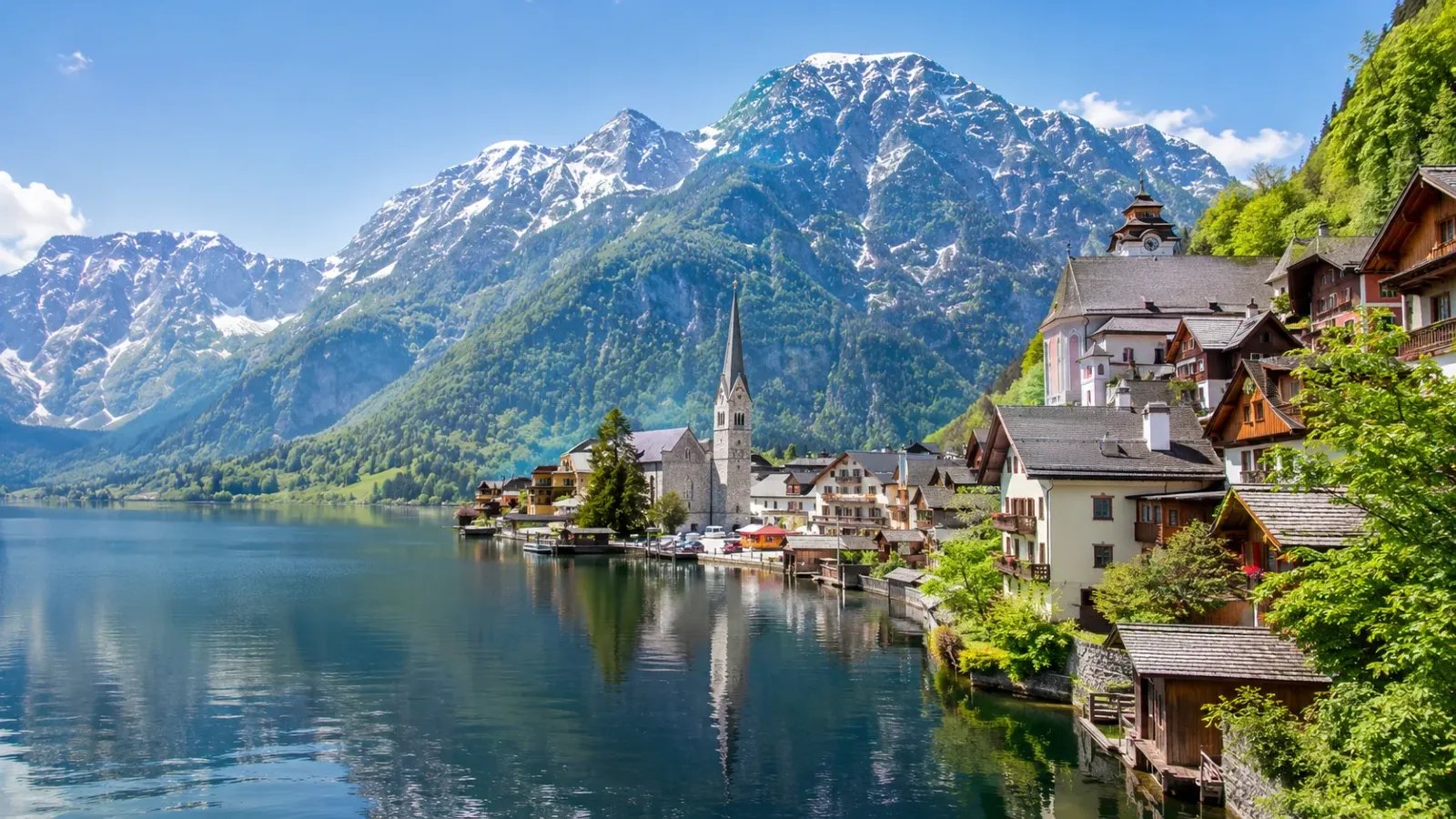
Austria combines imperial palaces, classical music, and coffee houses with some of Europe's most spectacular Alpine scenery. Vienna regularly tops global rankings of liveable cities, while the mountains draw skiers and hikers. Discover 15 fascinating facts about the heart of the Alps.
1. Vienna regularly tops the world's liveability rankings.
Austria's capital was ranked as the world's most liveable city by the Economist Intelligence Unit in 2022 and 2023, and it has stayed at or near the top in the years since. The rankings measure stability, health care, culture, education, and infrastructure. Vienna is also known for its efficient public transport and its many parks.
2. The Alps cover most of the country.
About 62 percent of Austria's territory is in the Alps. The mountains are the basis of the country's tourism, including skiing in winter and hiking in summer. Resorts such as Kitzbühel, St. Anton, and Sölden are famous names in winter sports.
3. The Grossglockner is the highest mountain.
The Grossglockner, in the Hohe Tauern range, rises to 3,798 meters. The Grossglockner High Alpine Road, opened in 1935, is a scenic mountain route that winds up toward the glacier Pasterze, and it is one of the most popular drives in the Alps.
4. Mozart was born in Salzburg.
Wolfgang Amadeus Mozart was born in Salzburg on 27 January 1756. A child prodigy, he composed from the age of five and went on to write more than 600 works. His birthplace on Getreidegasse is a museum, and the city celebrates him with the annual Mozart Week and the Salzburg Festival.
5. The Vienna Philharmonic plays a New Year's Concert.
The Vienna Philharmonic's New Year's Concert is traditionally held in the Golden Hall of the Musikverein and is broadcast to audiences in dozens of countries. The first concert took place on 31 December 1939, and since 1941 it has been held on 1 January. It always features music of the Strauss family.
6. "Silent Night" was first performed in an Austrian village.
The Christmas carol "Silent Night" was first performed on 24 December 1818 in the church of St. Nicholas in Oberndorf near Salzburg. The words were written by the priest Joseph Mohr and the melody by the teacher Franz Xaver Gruber. It has since been translated into hundreds of languages.
7. Schönbrunn Palace has more than 1,400 rooms.
The former summer residence of the Habsburgs in Vienna has 1,441 rooms, of which some 40 are open to visitors. Schönbrunn Palace and its gardens became a UNESCO World Heritage Site in 1996. The grounds also house the Tiergarten Schönbrunn, founded in 1752 and considered the world's oldest zoo still in operation.
8. The Spanish Riding School trains Lipizzaner horses.
The Spanish Riding School in Vienna has performed classical dressage with white Lipizzaner stallions for centuries. A riding hall is mentioned in records from 1572. UNESCO added classical horsemanship and the High School of the Spanish Riding School Vienna to its list of intangible cultural heritage in 2015.
9. Viennese coffee house culture is on the UNESCO list.
UNESCO added Viennese coffee house culture to the list of intangible cultural heritage in 2011. Traditional coffee houses are places where people can sit for hours with a single cup of coffee, a glass of water, and a newspaper. Famous examples include Café Central and Café Sperl.
10. The Sachertorte and Wiener schnitzel have rules.
The Sachertorte, a dense chocolate cake with apricot jam, was created in 1832 by the 16-year-old apprentice Franz Sacher for Prince Metternich. In Austria, a dish sold as Wiener schnitzel must by law be made of veal, while a similar dish made from pork is called Schnitzel Wiener Art, "Viennese-style."
11. Austria has the world's largest ice cave.
Eisriesenwelt, near Werfen in the Salzburg Alps, is a cave system more than 40 kilometers long, with the first kilometer or so covered in ice formations. It is often described as the largest ice cave in the world. It was discovered by Anton Posselt in 1879 and is open to visitors in the summer.
12. Austria declared permanent neutrality in 1955.
After World War II, Austria was occupied by the Allies until the signing of the Austrian State Treaty in May 1955. In October 1955, Parliament adopted a constitutional law declaring the country's permanent neutrality. Vienna later became one of the headquarters of the United Nations.
13. The Ringstrasse transformed Vienna.
In 1857, Emperor Franz Joseph ordered the old city walls of Vienna to be demolished, and a grand boulevard, the Ringstrasse, was built in their place. It is lined with major buildings, including the State Opera, the Parliament, the City Hall, and the Museum of Fine Arts. The Ringstrasse's architecture is part of Vienna's UNESCO-listed historic center.
14. Vienna has vineyards within the city.
Vienna is one of the few European capitals with a significant wine-growing area inside its boundaries. Vineyards on its hills produce white wines, and traditional wine taverns called Heuriger serve the new wine along with simple food. The area around Grinzing is famous for them.
15. Kitzbühel hosts a famous ski race.
The Hahnenkamm race in Kitzbühel, held since 1931, is one of the most prestigious and dangerous downhill ski races in the world. The Streif course includes a steep start and a section known as the Mausefalle, "Mousetrap," and every January it attracts tens of thousands of spectators.
Sources & References
This AI-assisted post was rigorously curated and fact-checked for accuracy by:
 Martin Roháček
How fun was this article? 🤔
Tap a star to rate it
🧠 Quiz: How closely were you paying attention?
10 questions — all answers are in the article above!
Enjoyed these facts? There's more! 💌
Fresh fun facts in your inbox. No spam, ever.