The Historic Capital: 15 Fascinating Facts About Lisbon
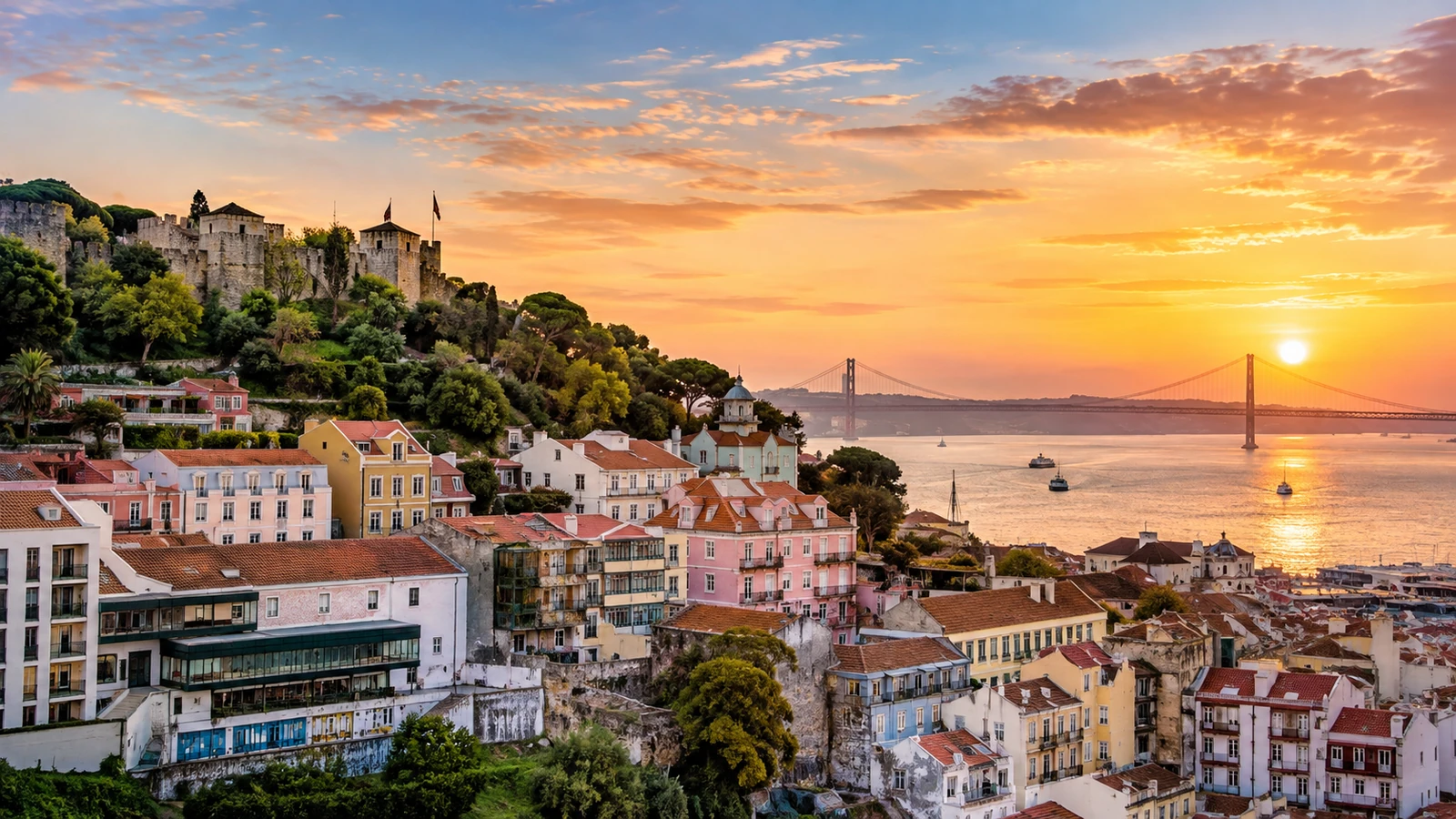
Perched on the rolling hills along the Tagus River, Lisbon is a mesmerizing blend of ancient history, striking coastal vistas, and modern urban design. As Europe's second-oldest capital city, it predates Rome by centuries and has survived monumental cataclysms that fundamentally reshaped its landscape and architecture. From covert World War II espionage networks to legendary custard tarts born in monastic laundries, Portugal's coastal gem is full of surprising tales. Step inside to discover 15 fascinating facts about this unforgettable Iberian capital.
1. Europe's Second-Oldest Capital City
Lisbon predates famous European capitals like London, Paris, and Rome by several centuries. Settled by the Phoenicians around 1200 BCE under the name Allis Ubbo ("Safe Harbor"), its strategic location at the mouth of the Tagus River made it a premier maritime trading hub. In fact, among European capitals, only Athens claims a longer continuous history of human settlement. The city has survived centuries of changing empires, including Phoenician traders, Roman conquerors, and Moorish rulers, each leaving an indelible mark on its culture. Today, walking through Lisbon feels like navigating a layered timeline of Western civilization.
2. Rebuilt with History's First Earthquake-Resistant Grid
On November 1, 1755, a devastating magnitude 8.5 earthquake struck Lisbon, followed immediately by a massive tsunami and raging fires that destroyed roughly 85 percent of the city. In response, the Marquis of Pombal spearheaded a revolutionary urban redesign that birthed the Pombaline Downtown (Baixa Pombalina). Architectural engineers developed the "Pombaline cage" (gaiola pombalina), a flexible wooden framework built into masonry walls designed to absorb seismic shocks without collapsing. To test the pioneering design, military troops marched heavily on wooden mockups to simulate tremors before full-scale construction began. This project created Europe's very first earthquake-resistant architectural grid and changed urban planning forever.
3. Tram 28 Is an Engineering Lifeline, Not Just a Tourist Attraction
While tourists queue up daily to snap photos aboard Lisbon’s famous yellow Tram 28, the line was built out of topographic necessity. Established in the late 19th century and electrified in 1901, these vintage Remodelado streetcars were specifically designed to navigate impossible terrain. Modern, longer light-rail vehicles cannot negotiate the impossibly tight turns and sheer 14% gradients of historic districts like Alfama and Graça. The classic cars rely on four independent braking systems, including electromagnetic track brakes, to safely navigate steep descents. Consequently, these iconic yellow trams remain a vital public transit link for locals living along the city's steepest ridges.
4. Home to the World’s Oldest Operating Bookstore
Tucked away in the Chiado district sits Livraria Bertrand, certified by the Guinness World Records as the world's oldest operating bookstore. Founded in 1732 by French bookseller Pedro Faure, the original shop was destroyed in the 1755 earthquake before relocating to its current address on Rua Garrett in 1762. Over the centuries, it became an intellectual salon for prominent Portuguese writers, politicians, and thinkers like Eça de Queirós. Today, book lovers can browse its historic tiled rooms and purchase a novel stamped with an official certificate verifying their purchase from the world's oldest bookshop.
5. Egg Whites for Laundry Inspired the Pastel de Nata
Portugal's iconic custard tart, the pastel de nata, owes its creation to 18th-century laundry practices inside the Jerónimos Monastery in Belém. Catholic monks and nuns used massive quantities of egg whites to starch their religious habits, leaving them with an immense surplus of egg yolks. To avoid wasting the ingredients, the monks crafted a rich, sweet egg-custard filling encased in crisp, flaky pastry. Following the Liberal Revolution of 1820, when monasteries faced closure, the monks sold the secret recipe to the nearby Fábrica de Pastéis de Belém. Today, the original secret recipe remains known to only a handful of master bakers who prepare them behind closed doors.
6. The Beautiful Pavements Were Designed to Guide Pedestrians
Walking through Lisbon involves stepping on Calçada Portuguesa, the traditional black-and-white stone mosaic pavements that adorn its streets and plazas. Originating in the mid-19th century when the governor of St. George Castle used prisoners to pave the citadel, the artistic style quickly spread across the city. Crafted by hand using small cubes of basalt and limestone, these intricate patterns were designed to enhance urban beauty and naturally direct foot traffic. However, the smooth, polished limestone creates a unique challenge for pedestrians when wet, turning the scenic walkways into notoriously slippery surfaces.
7. The "Singing" Golden Gate Lookalike
Spanning the Tagus River, the striking red 25 de Abril Bridge looks uncannily similar to San Francisco’s Golden Gate Bridge. The connection is no coincidence: it was constructed by the American Bridge Company, which built San Francisco's Bay Bridge and manufactured steel components for the Golden Gate. As vehicles drive across the central suspension span, the bridge creates a loud, distinctive humming or "singing" noise. This acoustic phenomenon occurs because the center lanes consist of open steel grates rather than solid asphalt, allowing air to vibrate rapidly through the metal grid.
8. World War II’s Premier Nest for International Spies
During World War II, Portugal maintained strict official neutrality, making Lisbon a vital, bustling hub for international diplomacy, refugees, and espionage. Agents from Allied and Axis powers openly frequented the same luxury hotels, cafes, and casinos across the capital and neighboring Estoril. British intelligence officer Ian Fleming was stationed nearby and observed the high-stakes gambling of international agents at the Estoril Casino. This tense, cloak-and-dagger atmosphere provided Fleming with the direct inspiration for his first James Bond novel, Casino Royale.
9. The Official Mascot Is a Pair of Ravens on a Ship
Look closely at Lisbon's official coat of arms, municipal flag, and streetlamps, and you will spot a ship guarded by two ravens. According to local legend, after Saint Vincent of Saragossa was martyred in the 4th century, his sacred relics were transported by boat to Lisbon in 1173. During the entire journey along the coast, two ravens miraculously perched at the bow and stern of the vessel to guard his remains from harm. When the ship arrived safely at the port, the ravens settled in the city, cementing the birds as eternal symbols of protection and Lisbon's civic identity.
10. It Has Secretly Grown to Cover Eight Hills
Lisbon is famously known as the "City of Seven Hills" (Cidade das Sete Colinas), a title popularized by 17th-century writer Frei Nicolau de Oliveira. He deliberately drew parallels between Lisbon and the classical history of Rome, which was famously built on seven hills. However, as Lisbon expanded over the centuries, urban geographers noted that the city actually encompasses eight major hills, with the Graça ridge (Monte de São Gens) often omitted from the classic count. Despite the geographical reality, the romantic "seven hills" moniker remains firmly embedded in local folklore and tourism lore.
11. Alfama Survived the 1755 Earthquake Thanks to Bedrock
While much of Lisbon collapsed into rubble during the 1755 cataclysm, the historic Alfama neighborhood remained almost completely intact. Perched along the steep slopes between São Jorge Castle and the Tagus River, Alfama sits on a solid foundation of dense, ancient bedrock that absorbed the seismic shockwaves. Because it survived, Alfama retains its medieval Moorish layout, featuring a labyrinth of narrow cobblestone alleyways, blind courtyards, and whitewashed houses. Today, it offers visitors a rare, authentic glimpse of what Lisbon looked like before the 18th-century reconstruction.
12. The Famous Pink Street Was Once a Red-Light District
Rua Nova do Carvalho, located in the Cais do Sodré district near the docks, was historically notorious as a gritty red-light district catering to sailors, gamblers, and nocturnal rowdies. For decades, the street was lined with brothels and rough taverns, earning a dangerous reputation. In 2011, urban regeneration planners stepped in to revitalize the neighborhood by painting the asphalt bright magenta and turning it into a pedestrian-only zone. Today, "Pink Street" is celebrated as one of Lisbon's trendiest nightlife and arts hubs, lined with stylish cocktail bars, live music venues, and outdoor dining.
13. The Vasco da Gama Bridge Was Engineered for Apocalypse
Stretching across the Tagus River estuary, the Vasco da Gama Bridge spans an astonishing 12.3 kilometers (7.6 miles), making it the second-longest bridge in Europe. Completed in 1998 for the Lisbon World Exposition, the engineering masterpiece was built with extreme natural disasters in mind. Because of Lisbon's catastrophic seismic history, engineers built the bridge to withstand earthquakes up to four times stronger than the devastating 1755 tremor. Additionally, its deep pilings extend up to 95 meters (312 feet) into the riverbed to resist wind speeds reaching 250 km/h (155 mph).
14. Ceramic Swallows Represent the Soul of Portuguese Homes
Strolling through Lisbon's residential streets, you will notice small black ceramic swallows (Andorinhas) mounted on house facades and balconies. This widespread decorative tradition began in 1891 when Portuguese artist Rafael Bordalo Pinheiro designed and mass-produced ceramic swallows. In nature, swallows migrate thousands of miles each year but consistently return to the exact same nest and retain a single mate for life. Because of these loyal habits, the ceramic birds have become powerful cultural symbols of fidelity, family unity, love, and the emotional comfort of returning home.
15. The Oceanarium Features Five Million Liters of Synthetic Sea Life
Located in the Parque das Nações district, the Oceanário de Lisboa is one of the largest and most renowned public aquariums in Europe. At its heart lies a breathtaking central tank holding five million liters of water, housing over 100 species including large sharks, rays, and oceanic sunfish. Surrounding this central giant are four distinct peripheral habitats that simulate the icy North Atlantic, Antarctic coast, Pacific kelp forests, and tropical Indian reefs. The innovative architectural layout creates a seamless visual trick where deep-sea marine life appears to swim alongside animals from separate climatic zones.
Sources & References
This AI-assisted post was rigorously curated and fact-checked for accuracy by:
 Martin Roháček
How fun was this article? 🤔
Tap a star to rate it
🧠 Quiz: How closely were you paying attention?
10 questions — all answers are in the article above!
Enjoyed these facts? There's more! 💌
Fresh fun facts in your inbox. No spam, ever.