The Prehistoric Blockbuster: 15 Fascinating Facts About Jurassic Park
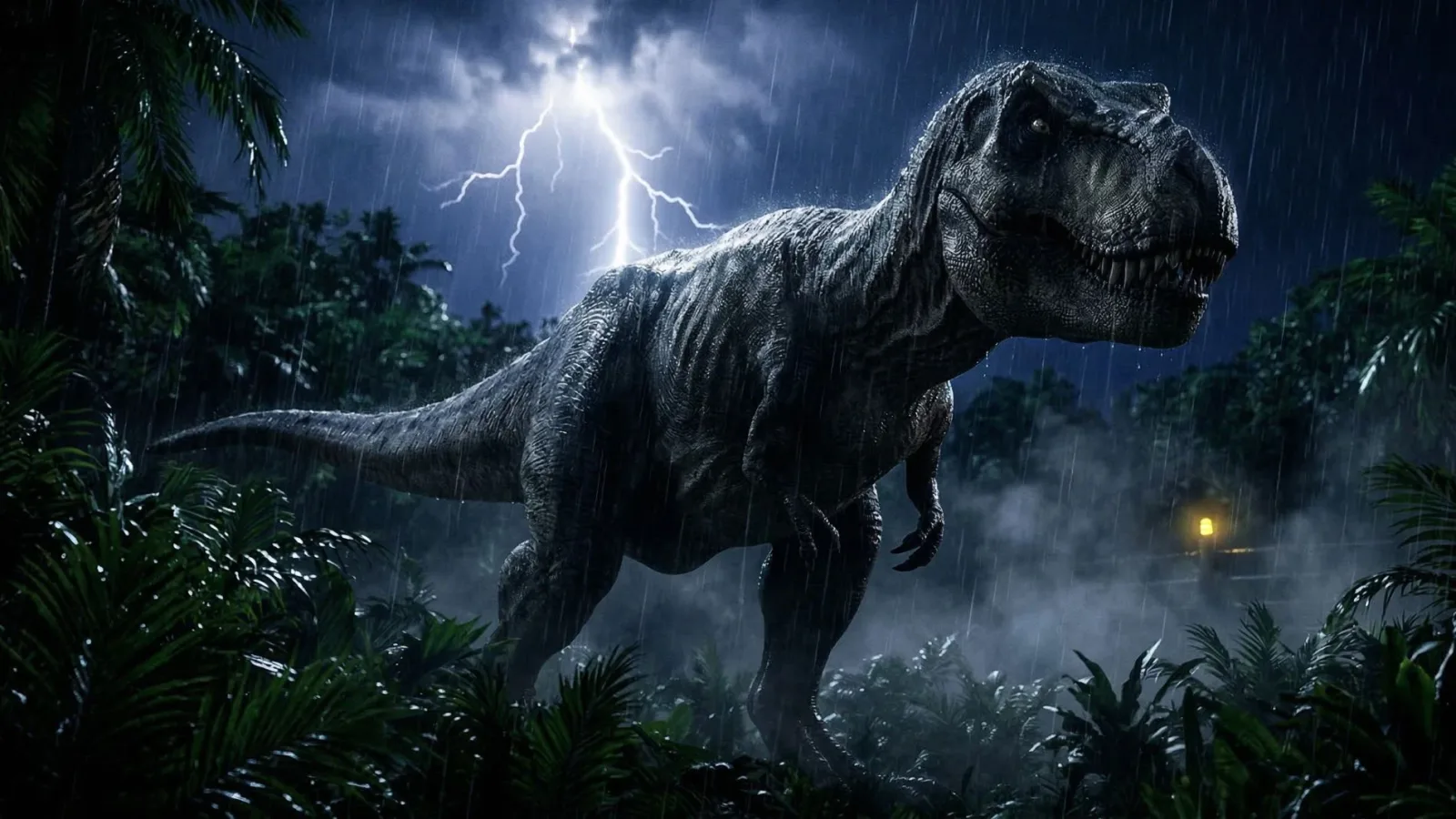
Released in 1993, Steven Spielberg's Jurassic Park revolutionized film visual effects and became a defining cinematic achievement of the late twentieth century. By seamlessly merging state-of-the-art computer animation with colossal practical robotics, the production brought prehistoric life to screens with unprecedented realism. Behind the scenes, the groundbreaking blockbuster was forged through real-world hurricane survival, eccentric acoustic experimentation, and critical last-minute script changes. Here are 15 fascinating facts about how Jurassic Park forever altered the landscape of cinema.
1. Accidental Discovery via ER
While discussing a screenplay about emergency room doctors that would eventually become the hit television show ER, director Steven Spielberg asked author Michael Crichton about his upcoming projects. Crichton revealed he was writing a novel about a billionaire resurrecting dinosaurs through cloned DNA for an island theme park. Intrigued by the premise, Spielberg immediately urged Universal Pictures to purchase the film rights before the novel was even published in 1990. This casual conversation laid the groundwork for one of the highest-grossing blockbusters in cinematic history. Without that offhand discussion about medical drama, the iconic dinosaur franchise might never have been made under Spielberg's direction.
2. The Schindler's List Mandate
Although Steven Spielberg was eager to direct Jurassic Park, his true passion project at the time was the harrowing Holocaust drama Schindler's List. Studio chief Sid Sheinberg agreed to greenlight the historical epic on one strict condition: Spielberg had to direct his dinosaur blockbuster first. Sheinberg knew that once Spielberg completed the emotionally draining production of Schindler's List in Europe, he would not want to jump straight into a fun summer creature feature. Spielberg agreed, filming Jurassic Park in mid-1992 and supervising its post-production remotely from Poland while shooting Schindler's List. Both films went on to achieve legendary critical and commercial success in 1993.
3. Animatronics Almost Kept CGI Out
Initial plans for the film relied almost entirely on practical effects, stop-motion animation, and full-scale animatronics modeled after Universal Studios' King Kong attraction. Visual effects supervisor Stan Winston constructed massive mechanical dinosaurs, while stop-motion animator Phil Tippett was hired to create full-bodied dinosaur movement sequences. However, Dennis Muren and his team at Industrial Light & Magic secretly developed computer-generated test footage of a T. rex skeleton walking through a field. When Spielberg saw the breathtaking CGI test, he immediately shifted to digital visual effects for wide shots, prompting Tippett to remark, "I think I'm extinct." Spielberg loved the line so much that he incorporated a variation of it into the film's dialogue between Dr. Grant and Dr. Malcolm.
4. The Novel's Iconic Logo Was Kept for the Film
Unlike most movie adaptations that invent entirely new branding and poster art, Jurassic Park borrowed its master logo directly from the original book cover. Striking and instantly recognizable, the silhouette of a Tyrannosaurus rex skeleton was created by celebrated graphic designer Chip Kidd for Michael Crichton's 1990 novel. Universal's marketing department realized that Kidd's minimal, bold aesthetic was far superior to traditional movie poster concepts. By adding a thin red circle frame around the original graphic, the book cover seamlessly became the fictional park's corporate logo and the movie's primary badge. Today, it remains one of the most recognizable logos in entertainment history.
5. Hurricane Iniki Struck the Set in Real Time
Production on the Hawaiian island of Kauai was disrupted on September 11, 1992, when Hurricane Iniki—the most powerful hurricane to strike Hawaii in recorded history—made landfall. The cast and crew were forced to shelter in the ballroom of their hotel as 145 mph winds battered the island and destroyed exterior sets. Cast member Sir Richard Attenborough reportedly slept right through the peak of the storm, explaining to Spielberg later that he had survived the London Blitz during World War II so a hurricane felt manageable. Spielberg managed to capture real footage of the storm's fierce waves and thrashing trees, which was later edited into the final cut to enhance the storm scenes surrounding the park's collapse.
6. The T. Rex Roar Was a Masterful Acoustic Composite
Creating a terrifying and convincing roar for an animal that had been extinct for 66 million years presented a massive challenge for sound designer Gary Rydstrom. Rather than relying on a single creature, Rydstrom blended together the distinct calls of several modern animals to construct the T. rex's sound design. The high-pitched screeching element was actually a slowed-down recording of a baby elephant trumpeting, while the low-frequency rumble came from an alligator's growl. The sound of the apex predator breathing was captured from Rydstrom's own Jack Russell terrier playing with a rope toy. This complex audio layering earned the film two Academy Awards for sound editing and mixing.
 Famous Film Series and Franchises
Explore the fascinating behind-the-scenes secrets, groundbreaking visual effects, and unexpected cultural impacts of cinema's biggest blockbusters. From nuclear allegories to million-dollar improvisations, discover the untold stories behind your favorite film franchises.
See All Facts
Famous Film Series and Franchises
Explore the fascinating behind-the-scenes secrets, groundbreaking visual effects, and unexpected cultural impacts of cinema's biggest blockbusters. From nuclear allegories to million-dollar improvisations, discover the untold stories behind your favorite film franchises.
See All Facts
7. The Animatronic T. Rex Had Terrifying Glitches
Stan Winston's team constructed a full-scale animatronic Tyrannosaurus rex that stood 20 feet tall and weighed over 12,000 pounds. While engineeringly impressive, the mechanical giant was skinned with a foam rubber material that acted like a sponge when exposed to water during rainstorm shots. As the foam absorbed water, the machine exceeded its weight limits, causing hydraulic motors to tremble uncontrollably. Production staff had to rush in between takes with towels and blow dryers to dry the beast off before the internal electronics burned out. Occasionally, the creature would short-circuit and twitch to life unexpectedly on the dark set, terrifying crew members working nearby.
8. Plucking a Guitar String Created the Iconic Water Ripples
One of the most iconic suspense shots in cinema history features a cup of water vibrating on a vehicle dashboard to signal the approaching T. rex. Steven Spielberg was inspired to create the visual after listening to heavy bass music in his car, but achieving the clean concentric rings proved extraordinarily difficult during testing. Visual effects supervisor Michael Lantieri experimented with liquid physics for days without success until he discovered a clever mechanical solution. He fed a guitar string up through the floor of the Ford Explorer, attached it directly beneath the dashboard under the cup, and plucked it from below. Plucking that specific guitar string created the exact circular wave pattern Spielberg envisioned.
9. The T. Rex Glass Attack Was an Unscripted Accident
During the intense attack scene inside the Ford Explorer, the mechanical T. rex was supposed to hover close to the glass sunroof without actually breaking it. However, the heavy animatronic head descended with far more force than programmed, popping the clear plastic frame right out of its roof housing. The heavy glass frame fell directly onto child actors Joseph Mazzello and Ariana Richards, causing the dinosaur to accidentally lose a mechanical tooth during the collision. The children's screams of sheer terror captured in that take were entirely real, as they believed the massive robot was crushing them. Spielberg loved the terrifying authenticity of the moment and retained the unscripted accident in the final cut.
10. The "Self-Driving" Tour Cars Were Driven from the Trunk
In the film, John Hammond's futuristic tour vehicles are presented as state-of-the-art electric Ford Explorers guided by an automated track embedded in the road. In reality, the budget did not allow for a functioning electrical guide-rail system across the remote Hawaiian terrain. Instead, the vehicles were heavily modified so that a professional stunt driver could operate the vehicle while hidden in the rear cargo compartment. Using a lowered steering wheel, specialized foot pedals, and a small video monitor connected to a concealed camera in the front bumper, the driver steered the car out of view. This provided the seamless illusion of automated driving without requiring costly robotic systems.
11. Dinosaurs Only Appear for 15 Minutes of Screen Time
Despite its reputation as the ultimate dinosaur blockbuster, Jurassic Park relies surprisingly little on actual creature screentime. Across the film's total runtime of 127 minutes, dinosaurs are visible on screen for roughly 15 minutes combined. Even more remarkable is that only six of those minutes feature groundbreaking computer-generated imagery, while the remaining nine minutes utilize practical animatronics and puppetry. Spielberg deliberately used a restrained, slow-burn narrative structure similar to his work on Jaws, building suspense through sound design and character reactions. This psychological buildup made the brief dinosaur appearances feel vastly more impactful to audiences worldwide.
12. Velociraptor Calls Were Made From Mating Tortoises
To supply the cunning Velociraptors with distinct, unsettling vocalizations, sound designer Gary Rydstrom turned to unexpected natural sources. The barking noises the raptors use to communicate with each other in the kitchen sequence were recorded from two tortoises mating at a marine park. Rydstrom spent hours listening to exotic animal recordings before noticing that the tortoises' rhythmic mating calls sounded uniquely prehistoric and intelligent. Other raptor sounds were constructed using the hiss of a horse, the snort of a cow, and the rasping breath of a dolphin. This eccentric acoustic collage succeeded in making the raptors sound terrifyingly alien yet organic.
13. Harrison Ford Rejected the Role of Dr. Alan Grant
Before Sam Neill was cast as paleontologist Dr. Alan Grant, Steven Spielberg offered the lead role to his long-time collaborator Harrison Ford. Having already worked together on the hugely successful Indiana Jones films, Spielberg thought Ford would bring the ideal rugged intellectual energy to the character. However, Ford turned down the part, feeling that the character was not the right fit for him at that point in his career. Spielberg later teased Ford about the decision during a 30th anniversary screening of Raiders of the Lost Ark, though both filmmakers agreed Sam Neill's stoic performance was ultimately perfect for the film.
14. Jim Carrey Nearly Played Dr. Ian Malcolm
The charismatic, chaos-theory-obsessed mathematician Dr. Ian Malcolm is famously portrayed by Jeff Goldblum, but another major star came remarkably close to landing the role. Before Goldblum was officially locked in, comedy actor Jim Carrey auditioned for the part and impressed casting director Janet Hirshenson immensely. While Carrey's energetic reading was widely praised, Spielberg and the creative team felt that Jeff Goldblum's unique speech cadences and quirky intellectual persona fit Michael Crichton's character far better. Goldblum had been Spielberg's top choice from the start, and his performance turned Ian Malcolm into one of cinema's most beloved figures.
15. The T. Rex Hero Climax Was a Last-Minute Script Change
In the original script and Michael Crichton's novel, the climax of the story was markedly different, with human survivors using shotguns and nerve gas to destroy the raptors. However, during production, Steven Spielberg realized that the Tyrannosaurus rex was the undeniable star of the movie and deserved a grander finale. He ordered a major rewrite just weeks before filming concluded, designing a new climax where the T. rex bursts into the Visitor Center main lobby and slays the raptors, inadvertently saving Grant, Sattler, and the children. This iconic ending allowed the apex predator to secure her place as the hero of the franchise as the banner reading "When Dinosaurs Ruled the Earth" fell to the ground.
Sources & References
This AI-assisted post was rigorously curated and fact-checked for accuracy by:
 Martin Roháček
How fun was this article? 🤔
Tap a star to rate it
🧠 Quiz: How closely were you paying attention?
10 questions — all answers are in the article above!
Enjoyed these facts? There's more! 💌
Fresh fun facts in your inbox. No spam, ever.