The Stars of the Seabed: 15 Fascinating Facts About Starfish
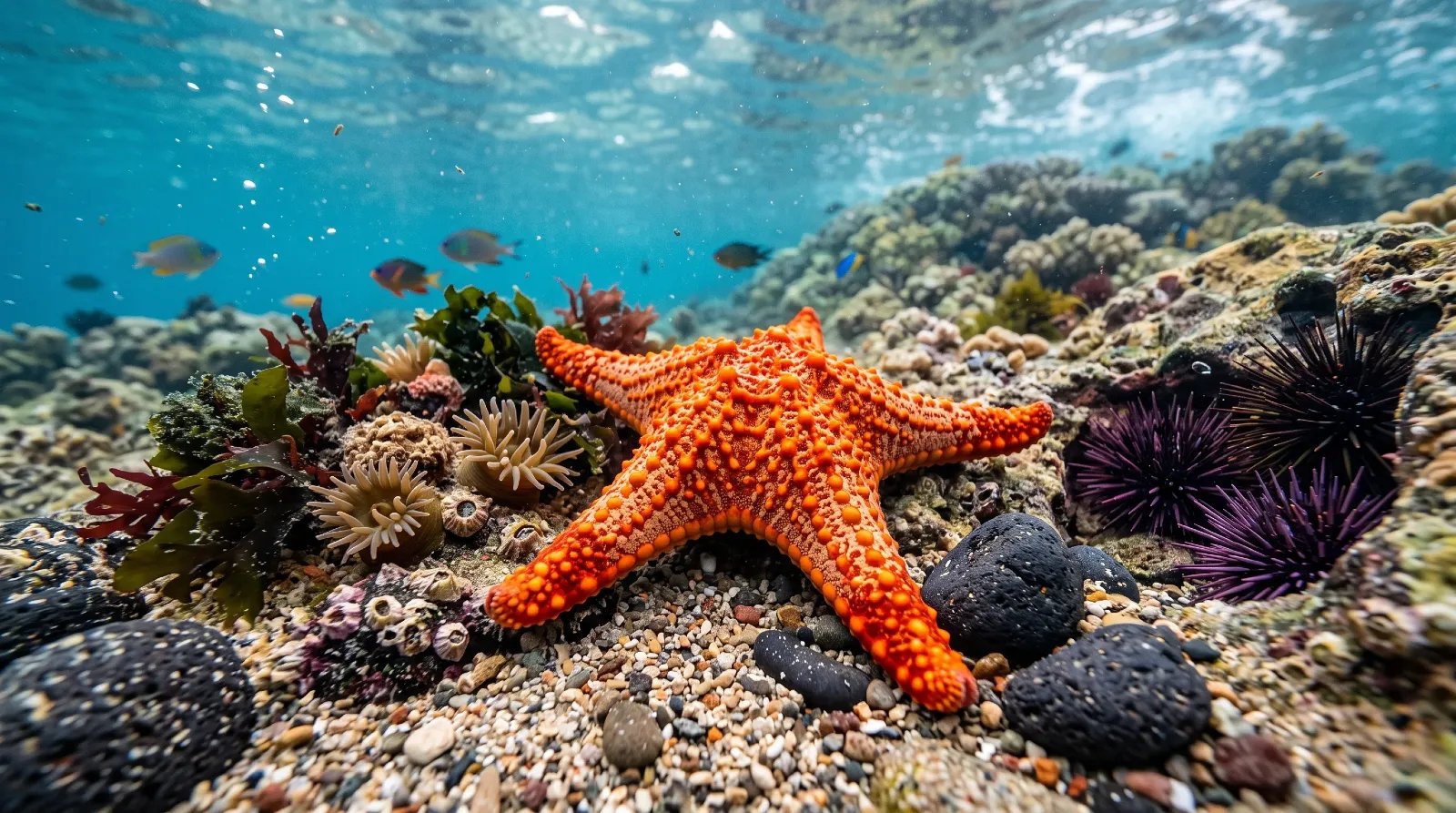
Starfish are not fish at all. They see with the tips of their arms, push their stomachs out of their bodies to eat, and recent research suggests their whole body may effectively be a head. Some can even grow a new starfish from a single severed arm. Here are the surprising facts about these strange stars of the seabed.
1. Starfish are not fish.
Despite their name, starfish are not fish at all. They are echinoderms, a group of spiny-skinned sea animals that also includes sea urchins, sand dollars and sea cucumbers. Because of this, many scientists and aquariums prefer to call them sea stars.
2. Their whole body may be a head.
For a long time, it was a mystery how a five-armed starfish could have evolved from ancestors with a left and right side, a head and a tail. A 2023 study of the genes that control body layout found that the starfish's outer body matches the pattern of a head in other animals. The researchers concluded that a starfish is essentially a head walking on its lips, with its trunk largely missing.
3. They have eyes on the tips of their arms.
At the end of each arm, most starfish have a small eyespot made of 80 to 200 simple light-sensitive units. These eyes cannot see fine detail, but they can detect light and dark and recognise large shapes such as reefs. Some starfish raise the tips of their arms as they move, like someone holding up a torch.
4. They have no central brain.
Starfish do not have a single brain like ours. Instead, they have a ring of nerves around the mouth and a nerve running down each arm. When a starfish decides to move, one arm takes the lead and the others follow, without any central control centre.
5. They eat by pushing out their stomach.
Many starfish feed in an extraordinary way. They wrap their arms around a clam or mussel, pull the shell open just slightly, then push part of their stomach out of their mouth and into the gap. The stomach digests the prey inside its own shell, and the starfish then pulls its stomach back into its body.
6. They can grow back lost arms.
Most starfish can regenerate damaged or lost arms, and some deliberately shed an arm to escape from a predator. Regrowing a complete arm can take months or even a year. In a few species, a single severed arm with part of the central disc attached can grow into a whole new starfish.
 You might also like
The Stadium Visionaries: 15 Fascinating Facts About Coldplay
7. Some species have dozens of arms.
Most starfish have five arms, but not all. Some species have seven, ten or even more, and in a few the number of arms can exceed 50. The sunflower sea star of the North Pacific can have up to 24 arms and grow more than a metre across.
8. They walk on hundreds of tiny tube feet.
The underside of each arm is lined with hundreds of tiny tube feet. These are operated by a hydraulic system that pumps seawater through the starfish's body. By extending and contracting the tube feet in waves, a starfish can slowly crawl across rocks, climb walls and pull open shells.
9. They use seawater instead of blood to move.
Starfish have a special water vascular system, a network of canals filled with seawater that powers their tube feet. Water enters through a small sieve-like plate on the top of the body called the madreporite. They also have a separate system for circulating nutrients around the body.
10. One starfish inspired the idea of the "keystone species".
In the 1960s, ecologist Robert Paine removed ochre sea stars from a stretch of rocky shore in Washington state. Without these predators, mussels quickly took over and many other species disappeared. Paine's experiment led him to coin the term "keystone species" for an animal that has a much greater impact on its ecosystem than its numbers would suggest.
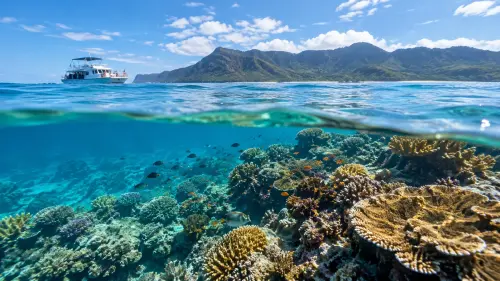
11. A coral-eating starfish threatens the Great Barrier Reef.
The crown-of-thorns starfish is covered in sharp, venomous spines and feeds on living coral. During population explosions, huge numbers of them can strip large areas of reef. Outbreaks are one of the major causes of coral loss on Australia's Great Barrier Reef, and divers regularly work to cull them.
12. A mysterious disease killed billions of them.
Since 2013, an epidemic known as sea star wasting disease has killed billions of starfish along the Pacific coast of North America. Infected animals develop lesions, lose their arms and appear to melt away within days. The sunflower sea star was hit so hard that it is now listed as Critically Endangered, and in 2025 researchers identified a bacterium as a likely cause.
🤔 Quick guess
About how many species of starfish have been described?
13. There are around 1,900 species.
Scientists have described about 1,900 species of starfish. They live in every ocean on Earth, from warm tropical reefs to icy polar seas, and from rock pools on the shore to the deep sea, about 6,000 metres below the surface.
14. They can reproduce by splitting in two.
Starfish usually reproduce by releasing eggs and sperm into the water. Some species, however, can also reproduce asexually by splitting their central disc in two, with each half regrowing the missing parts. Even starfish larvae of some species can clone themselves by budding off parts of their bodies.
15. Their ancestors are around 480 million years old.
Starfish have an ancient history. The first starfish-like animals appear in the fossil record around 480 million years ago, long before the first dinosaurs or even the first trees. Because their skeletons are made of many small plates that fall apart after death, complete fossil starfish are rare.
How did these facts land?
Know someone who'd love these facts? Share them 👇
🧠 Quiz: How closely were you paying attention?
Think you remember the facts? 10 questions, tap an answer.