The Living Wonder: 15 Fascinating Facts About the Great Barrier Reef
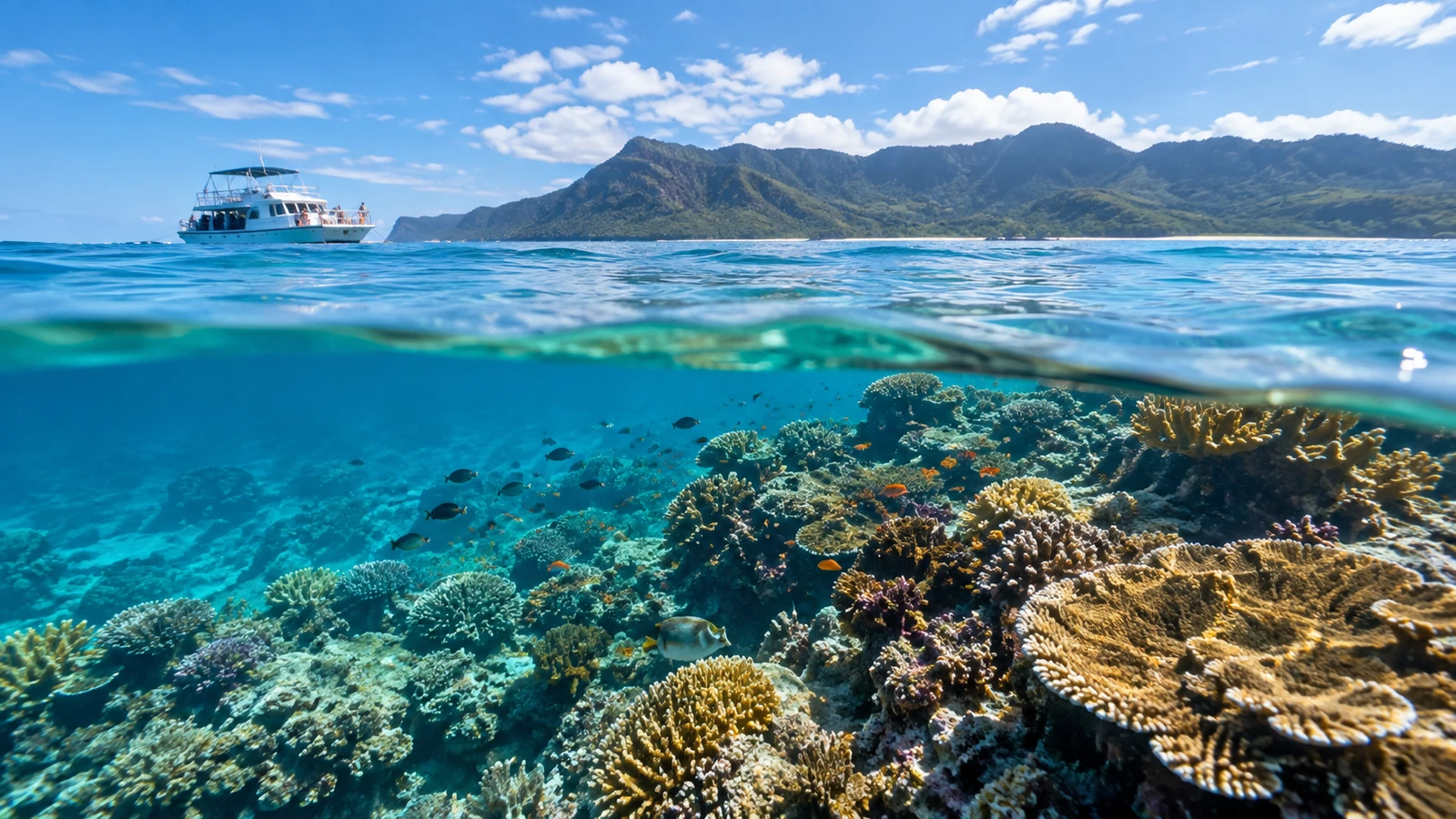
Stretching thousands of kilometers along the coast of Queensland, Australia, the Great Barrier Reef stands as the world's largest living structure and a crown jewel of global marine biodiversity. Built entirely by trillions of microscopic coral polyps over thousands of years, this expansive aquatic wonder harbors thousands of rare species, ancient cultural traditions, and complex ecosystems. From space-visible reefs to mass synchronized coral spawning events, the reef remains one of the planet's most fascinating natural environments. Discover the extraordinary science, history, and wildlife that make this marine sanctuary truly unmatched.
1. It Is the Largest Living Structure on Earth
Stretching over 2,300 kilometers (1,400 miles) off the coast of Queensland, Australia, the Great Barrier Reef is so vast that it can be seen from outer space. Covering an area of roughly 348,700 square kilometers, it is larger than Italy or the combined landmass of the United Kingdom, Holland, and Switzerland. Unlike man-made structures visible from orbit, this natural marvel was built entirely by trillions of microscopic organisms known as coral polyps. These tiny creatures secrete calcium carbonate to build rigid external skeletons, forming the bedrock of the entire reef ecosystem over thousands of years. Today, it stands as the single largest structure created by living organisms on Planet Earth.
2. It Consists of Thousands of Individual Reefs and Islands
While often thought of as one continuous wall of coral, the Great Barrier Reef is actually a complex mosaic of distinct ecosystems. It comprises nearly 2,900 individual coral reefs and roughly 900 islands scattered across the Coral Sea. These islands range from tiny, barren sand cays created by ocean currents to lush continental islands with rainforested peaks. The intricate layout of shallow lagoons, deep channels, and outer barrier walls creates a diverse range of microhabitats. This structural complexity allows an unprecedented variety of marine species to find specialized shelter and hunting grounds.
3. The Reef Is Home to Mind-Boggling Biodiversity
Despite covering less than 0.1 percent of the ocean floor, the Great Barrier Reef hosts a staggering proportion of the world's marine biodiversity. It is home to more than 1,500 species of fish, representing roughly ten percent of all global fish species. Additionally, the reef boasts over 400 distinct species of hard and soft corals, 4,000 types of mollusks, and hundreds of species of sponges. Above the waterline, more than 200 species of birds frequent the coral cays to nest and forage. This density of life makes the ecosystem one of the richest and most complex biological communities anywhere on the planet.
4. Six of the World's Seven Sea Turtle Species Nest Here
The warm waters and protected beaches of the reef serve as a sanctuary for sea turtles, including six of the world's seven known marine turtle species. Green turtles, hawksbills, loggerheads, flatbacks, olive ridleys, and leatherbacks all rely on the reef's ecosystems for survival. Female turtles travel thousands of kilometers across open ocean to return to the exact beaches where they hatched decades earlier to lay their eggs. Raine Island, located in the northern sector of the reef, hosts the largest remaining green turtle nesting colony on Earth. Protecting these habitats is vital, as several of these majestic species are currently classified as vulnerable or endangered.
5. First Nations Peoples Have Cared for the Reef for Millennia
Aboriginal Australians and Torres Strait Islanders possess a deep spiritual, cultural, and historical connection to the Great Barrier Reef that spans more than 60,000 years. Indigenous traditional owners view the reef not merely as a resource, but as a living cultural landscape known as Sea Country. Their traditional ecological knowledge has guided sustainable hunting, fishing, and ecosystem management across hundreds of generations. Creation stories and ancestral lore are intricately linked to specific reefs, islands, and marine creatures within the archipelago. Today, traditional owners work alongside modern conservation authorities to co-manage marine parks and safeguard their ancestral heritage.
6. It Serves as a Nursery for Humpback Whales
Every year between June and November, thousands of humpback whales undertake an epic migration from the freezing, food-rich waters of Antarctica to the calm, warm waters of the Great Barrier Reef. The shallow, sheltered lagoons provide safe nursery grounds where female humpbacks give birth to calves weighing over a ton. Mother whales nurture their newborns in these tropical waters, teaching them essential survival skills before making the long journey back south. Tourists and researchers alike travel from all over the globe to witness spectacular displays of tail-slapping, breaching, and underwater whale song. Dwarf minke whales also frequent the northern section of the reef during the Australian winter.
7. It Generates Billions for Australia's Economy
Beyond its immense ecological value, the Great Barrier Reef is a powerful economic engine for Australia. Tourism, commercial fishing, and recreational activities associated with the reef generate over 6 billion Australian dollars annually. The vibrant marine ecosystem supports more than 60,000 jobs, particularly in regional coastal communities across Queensland. Millions of international and domestic visitors travel to the region each year to dive, snorkel, and sail among the coral cays. Recognizing its economic impact, the Australian government invests heavily in reef management, scientific research, and water quality restoration programs.
8. Ocean Warming Triggers Devastating Coral Bleaching
Rising global ocean temperatures represent the single greatest existential threat to the long-term survival of the Great Barrier Reef. When marine waters remain unusually warm for extended periods, stressed corals undergo a process called coral bleaching. Corals depend on tiny symbiotic algae called zooxanthellae that live within their tissues and provide them with food and vibrant colors. Under thermal stress, corals expel these algae, turning stark white and exposing their calcium carbonate skeletons. If warm temperatures persist, the bleached corals starve and die, transforming bustling underwater cities into barren environments.
9. Crown-of-Thorns Starfish Outbreaks Devour Coral Reefs
Alongside climate change, the reef faces a formidable biological enemy in the form of the crown-of-thorns starfish. This large, multi-armed predator feeds almost exclusively on living coral polyps by extruding its stomach over the coral and digesting its living tissue. While native to the reef, periodic population outbreaks of these venomous starfish can strip vast stretches of healthy coral in a matter of months. Agricultural runoff containing excess nutrients promotes algae blooms, which feed crown-of-thorns larvae and spur population surges. Specialized diving teams now actively cull these starfish using targeted injections to protect vulnerable coral communities.
10. Seagrass Meadows and Mangroves Form Vital Habitats
Although famous for colorful coral heads, the Great Barrier Reef ecosystem relies heavily on vast seagrass meadows and coastal mangrove forests. The marine park contains one of the largest seagrass networks on Earth, serving as the primary feeding ground for vulnerable dugongs and green sea turtles. Coastal mangroves trap land-based sediments and nutrients before they can reach offshore corals, keeping coastal waters crystal clear. Furthermore, these vegetated habitats serve as crucial juvenile nurseries for commercial fish species and act as high-capacity carbon sinks that store atmospheric carbon. Without these adjacent habitats, the health of the coral reefs would rapidly deteriorate.
11. The Current Living Reef Is Surprisingly Young
Geological evidence reveals that coral structures have grown off the northeastern coast of Australia for hundreds of thousands of years across multiple ice ages. However, the living surface structure of the Great Barrier Reef we see today is surprisingly young. During the last glacial maximum, sea levels were more than 100 meters lower, turning the present reef floor into dry coastal hills and plains. As glaciers melted between 8,000 and 10,000 years ago, rising sea levels flooded the continental shelf, allowing new corals to recolonize the old limestone foundations. Thus, the present-day active reef system is roughly the same age as human civilization.
12. Mass Coral Spawning Is a Synchronized Natural Spectacle
Once a year, the Great Barrier Reef hosts one of the most astonishing reproductive events on the planet: a mass synchronized coral spawning. Triggered by a delicate combination of water temperature, day length, and the night of the full moon in late spring, hundreds of coral species spawn simultaneously. Over a period of several nights, billions of corals release pink, red, and orange bundles of eggs and sperm into the water column. This synchronized release saturates potential predators, ensuring that millions of fertilized larvae survive to settle on new surfaces. The event turns the dark ocean water into an underwater snowstorm of floating reproductive cells.
13. Natural Formations Include the World-Famous Heart Reef
Among the countless natural wonders tucked within the reef system, few are as iconic as Heart Reef. Located in Hardy Reef within the Whitsunday segment, this naturally occurring composition of coral polyps has naturally formed the distinct shape of a heart. Discovered in 1975 by a local commercial pilot, Heart Reef has become a famous international landmark for scenic helicopter and seaplane flights. Due to its protected status and delicate structure, landing or snorkeling directly on Heart Reef is strictly prohibited to preserve its natural form. It stands as a striking example of how biological growth and physical ocean processes can create stunning geographic features.
14. Depths Range from Shallow Cays to Deep Submarine Canyons
The topography of the Great Barrier Reef is far more dramatic and varied than most visitors realize. In shallow coastal lagoon zones, water depths often average around 35 meters (115 feet), allowing sunlight to penetrate easily and foster dense coral growth. However, along the outer edge of the continental shelf, the underwater landscape drops off abruptly into precipitous cliffs and deep submarine abysses exceeding 2,000 meters (6,500 feet) in depth. These deep ocean trenches host cold-water corals, deep-sea sponges, and unique benthic organisms that never experience sunlight. Ocean currents rising from these deep canyons deliver vital nutrients to the warm, shallow reef structures above.
15. Innovative Science Is Pioneering Reef Restoration
To combat the compounding impacts of climate change, marine scientists on the reef are pioneering cutting-edge environmental restoration technologies. Researchers are cultivating resilient corals in lab environments that can withstand higher water temperatures without bleaching. Innovative programs harvest floating eggs and sperm during mass spawning events, rear millions of larvae in floating enclosures, and reseed damaged reef patches. Other projects utilize autonomous underwater vehicles to map coral health and spray reflective shade over the ocean surface during heatwaves to reduce sunlight intensity. These ground-breaking interventions aim to buy precious time while global carbon reduction efforts take effect.
Sources & References
This AI-assisted post was rigorously curated and fact-checked for accuracy by:
 Martin Roháček
How fun was this article? 🤔
Tap a star to rate it
🧠 Quiz: How closely were you paying attention?
10 questions — all answers are in the article above!
Enjoyed these facts? There's more! 💌
Fresh fun facts in your inbox. No spam, ever.