15 Fascinating Facts About Oysters
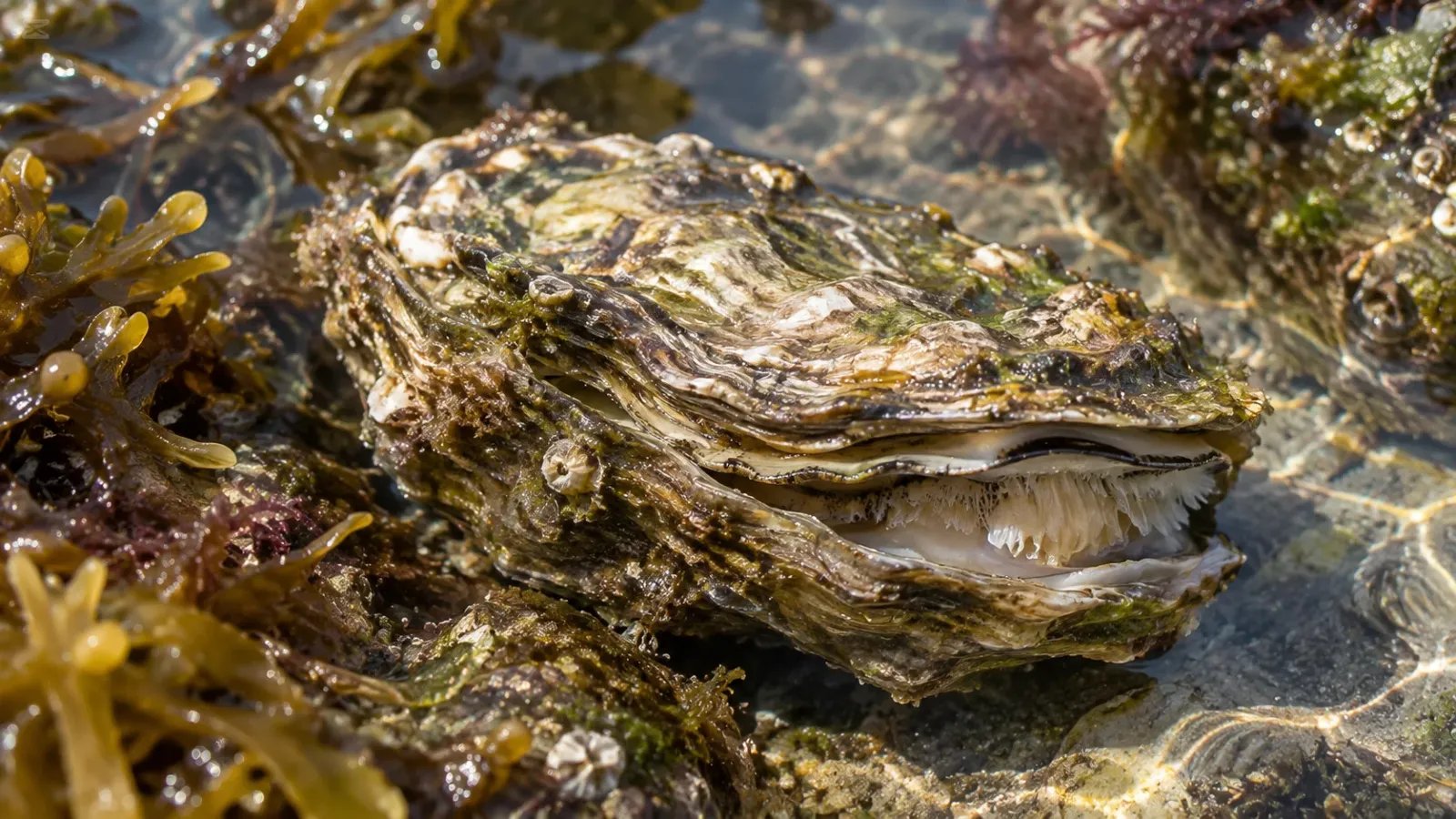
The oyster is actually a complex, gender-fluid ecosystem engineer. Far from simple lumps in a half-shell, these ancient bivalves filter oceans, build massive reef habitats, and possess surprising biological quirks. Prepare to abandon everything you thought you knew as we dive into the hidden world of this marine marvel.
1. Oysters change their sex multiple times throughout their lives depending on environmental needs.
This fascinating biological adaptation is known as protandry. Most oysters begin their lives as males, a stage that requires less energy, allowing them to focus on rapid early growth. Once they reach a larger size and have stored sufficient energy reserves, they transition into females, which requires significantly more biological resources to produce millions of eggs. Depending on the temperature and food availability in their aquatic environment, an individual oyster can switch back and forth between sexes across different breeding seasons.
2. The myth that oysters are a potent aphrodisiac stems from a misunderstanding of their high zinc content.
Popularized by legends of Giacomo Casanova allegedly consuming fifty oysters a day for stamina, the aphrodisiac reputation of the bivalve is largely psychological. While oysters do contain extraordinarily high levels of zinc, a mineral crucial for the production of testosterone, eating them does not trigger an immediate chemical surge of arousal. The myth was likely bolstered by their distinct appearance and the visceral, sensual experience of eating them raw, rather than any acute physiological effect.
3. Edible oysters do not produce the valuable gemstones used in high-end jewelry.
A widespread misconception is that the oysters on a restaurant menu are hiding precious pearls. In reality, edible oysters belong to the family Ostreidae, while true pearl oysters are part of a distinctly different family called Pteriidae, which are more closely related to scallops. If a grain of sand irritates a culinary oyster, it will indeed secrete nacre to coat the intruder, but the resulting pearl will be chalky, brittle, and entirely devoid of the luminescent sheen prized by jewelers.
4. A single adult oyster can filter up to fifty gallons of water in a single day.
These unassuming creatures act as the kidneys of the ocean. By continuously drawing water over their gills, oysters trap microscopic plankton, algae, and suspended sediments for food. In the process, they remove excess nutrients and particulate matter from the water column, expelling clean water back into the environment. This relentless filtration drastically improves water clarity, allowing sunlight to penetrate deeper and support the growth of crucial underwater seagrasses.
5. Oysters possess a three-chambered heart that pumps colorless blood throughout their bodies.
Tucked away inside their soft, seemingly amorphous bodies is a surprisingly complex circulatory system. The oyster's three-chambered heart pumps a fluid called hemolymph, which functions similarly to blood but contains no hemoglobin, rendering it entirely colorless. This fluid bathes the internal organs directly in an open circulatory system, transporting essential nutrients and oxygen absorbed from the surrounding water by the oyster's intricate gill structure.
6. Oyster reefs serve as a natural defense system against devastating storm surges and coastal erosion.
Long before human engineers began pouring concrete seawalls, oysters were building massive, structural barriers along shorelines. As generation after generation of oysters settle on top of one another, they form dense, jagged reefs. These living breakwaters absorb and dissipate the raw kinetic energy of incoming waves, reducing the impact of storm surges on vulnerable coastal ecosystems. Furthermore, by trapping sediment, they actively prevent erosion and help rebuild retreating shorelines.
7. The unique flavor profile of an oyster, known as its merroir, is dictated entirely by the waters in which it grows.
Borrowing a concept from the wine industry's terroir, an oyster's merroir represents the taste of its specific aquatic environment. Because they are filter feeders that consume whatever is in their immediate vicinity, two genetically identical oysters grown in different bays will taste completely different. Factors such as local salinity levels, specific mineral deposits, and the types of algae blooming in the water dictate whether an oyster will taste buttery, metallic, melon-like, or aggressively briny.
8. Oysters hear the ocean by sensing vibrations with microscopic hairs rather than using ears.
While they lack ears, brains, and eyes in the traditional sense, oysters are highly attuned to their acoustic environment. They possess specialized sensory organs called statocysts, which are lined with tiny hairs. These allow the bivalves to detect low-frequency sound waves and minute vibrations moving through the water. This biological sonar system is crucial for survival, as the vibrations of an approaching predator, such as a blue crab or a drum fish, will trigger the oyster to clamp its shell tightly shut.
9. In nineteenth-century America, oysters were considered a cheap street food for the working class rather than a luxury item.
Today, oysters are heavily associated with champagne and fine dining, but in the 1800s, they were the ultimate food of the people. The waters surrounding New York City were so thick with oyster beds that the bivalves grew to the size of dinner plates and were harvested by the millions. They were sold from wooden street carts for pennies, baked into pies, and served as complimentary bar snacks to encourage drinking, long before industrial pollution and overharvesting transformed them into an expensive delicacy.
10. Oyster shells have been used historically as a fundamental building material to construct entire towns.
In regions where traditional stone was scarce, early settlers and indigenous populations turned to the massive, ancient oyster middens left along the coasts. By burning discarded oyster shells to create lime, mixing it with sand, water, and whole shells, builders created a rudimentary but incredibly durable concrete known as tabby. This architectural technique was heavily utilized throughout the American Southeast, and the ruins of tabby forts, churches, and plantation homes still stand today, completely fossilized in oyster shells.
11. Oysters do not have a centralized brain but rely on a decentralized nervous system to survive.
Despite performing complex tasks like environmental monitoring, sex changes, and precise anatomical maneuvers, oysters achieve all of this without a brain. Instead, their nervous system is divided into a series of highly specialized nerve clusters called ganglia. These ganglia operate independently to control various localized functions, such as the rhythmic beating of the heart, the muscular contraction of the shell, and the sensory detection of food, creating a fascinatingly decentralized biological machine.
12. An oyster can survive completely out of the water for several weeks if kept in cold, damp conditions.
The resilience of an oyster is largely due to its incredibly powerful adductor muscle and its ability to slow down its own metabolism. When removed from the water, an oyster uses this muscle to snap its valves together, creating an airtight, watertight seal that locks in a reservoir of seawater. By keeping the environment cold to reduce energy expenditure, the oyster essentially enters a state of suspended animation, allowing it to be shipped across continents while remaining very much alive.
13. Baby oysters, known as spat, must permanently glue themselves to a hard surface within a few weeks of birth or they will die.
The lifecycle of an oyster begins in a free-swimming larval stage, drifting entirely at the mercy of ocean currents. However, this nomadic existence is incredibly brief. Within a couple of weeks, the larva must find a suitable, hard surface, ideally another oyster shell. Once it lands, it secretes a specialized biological cement from a temporary foot, gluing itself permanently to the spot. If it lands in soft mud or sand, it will quickly suffocate and perish.
14. The Roman Empire went to extraordinary lengths to import live oysters from Britain in tanks of seawater.
The ancient Romans were legendary connoisseurs of the oyster, viewing it as a symbol of immense wealth and status. After conquering Britain, they discovered that the icy waters produced exceptionally sweet bivalves. To transport them across the empire without spoiling, Roman engineers designed complex systems of specialized wooden vats filled with coastal seawater. These early aquatic transport vehicles were hauled over land by oxen, ensuring the emperor could feast on fresh, live British oysters in the heart of Rome.
15. Oysters hibernate during the winter months by drastically slowing their heart rate and stopping their feeding process.
When the ocean temperatures drop below a certain threshold, usually around forty degrees Fahrenheit, the oyster recognizes that food sources like algae will be scarce. To survive the winter, it forces its body into a state of dormancy. The bivalve stops filtering water, its heart rate slows to a barely detectable rhythm, and it relies entirely on the glycogen reserves it built up during the warmer months. It remains tightly closed and asleep until the spring waters warm up and trigger it to wake.
Sources & References
This AI-assisted post was rigorously curated and fact-checked for accuracy by:
 Martin Roháček
How fun was this article? 🤔
Tap a star to rate it
🧠 Quiz: How closely were you paying attention?
10 questions — all answers are in the article above!
Enjoyed these facts? There's more! 💌
Fresh fun facts in your inbox. No spam, ever.