The Enchanted Island: 15 Fascinating Facts About Tahiti
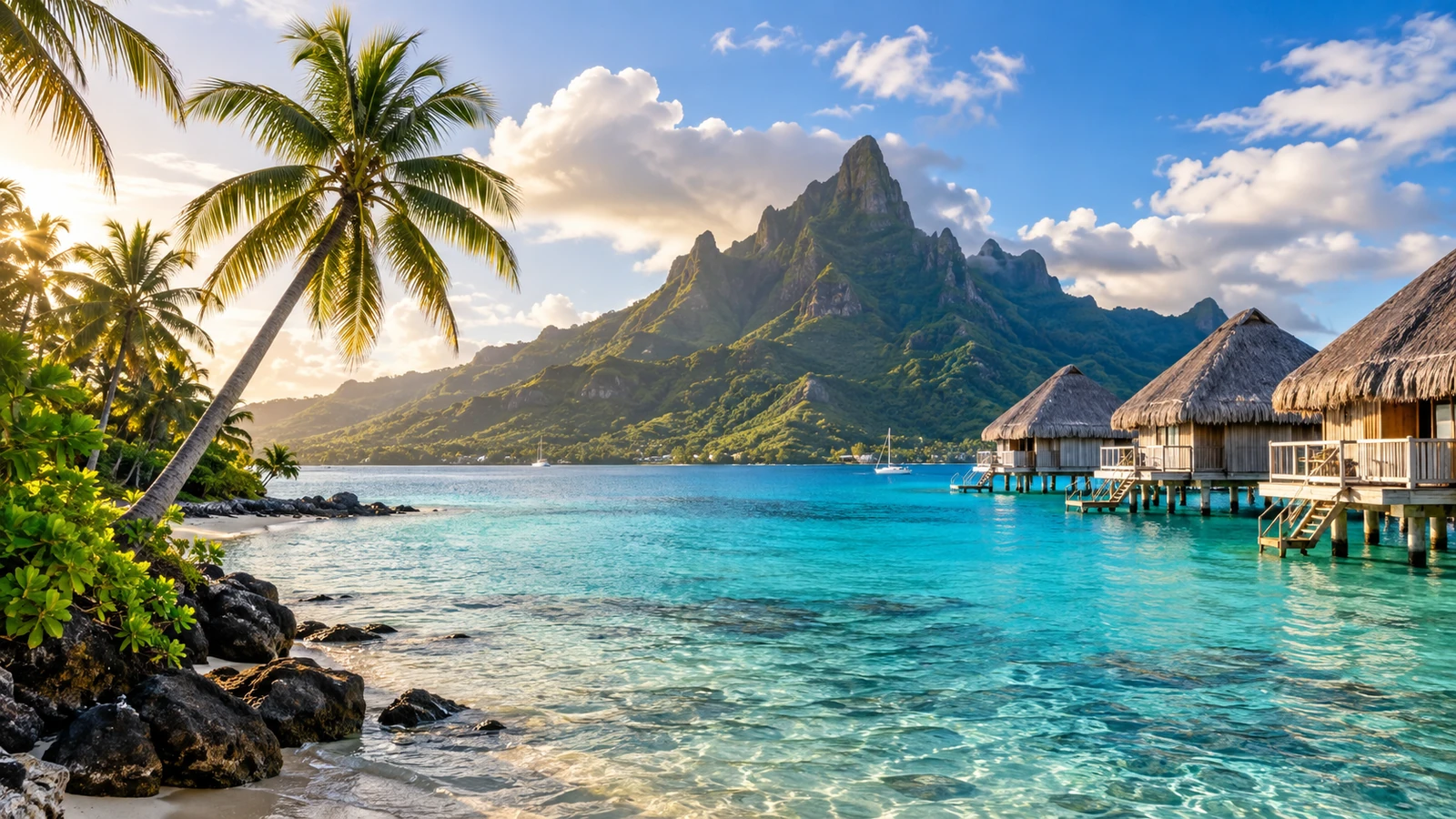
Rising dramatically from the South Pacific Ocean, Tahiti is far more than just a postcard-perfect tropical getaway of turquoise lagoons and jagged volcanic peaks. As the largest island in French Polynesia, it boasts a deeply rooted cultural heritage shaped by ancient voyagers, sacred traditions, and European encounters that altered global history. From the linguistic origin of modern body art to unique botanical rituals and rare oceanic gems, Tahiti holds secrets that stretch well beyond its luxury resorts. Here are 15 fascinating facts about the vibrant island of Tahiti.
1. The Word Tattoo Has Tahitian Roots
The modern English word "tattoo" traces its origin directly to the Tahitian language. The native term tatau translates to "to strike" or "to mark," describing the traditional technique of tapping ink into the skin using bone needles and wooden mallets. When Captain James Cook arrived in Tahiti in 1769, his crew was captivated by the intricate geometric patterns adorning the locals. Cook adopted the word into his journals, and British sailors subsequently spread both the term and the art form across Western society, replacing older European terms like "pricking."
2. The Tiare Flower Serves as a Relationship Status Update
The fragrant Tiare Tahiti (Tahitian gardenia) is the national flower of the island, and its placement on your person carries explicit social meaning. According to longstanding local customs, wearing a fresh bloom behind your left ear signifies that your heart is taken and you are in a committed relationship. Conversely, tucking the flower behind your right ear broadcasts to everyone around that you are single and open to romance. Wearing the flower facing backward indicates that you are available but not actively searching.
3. Tahiti Has Absolutely No Venomous Snakes
Explorers hiking through Tahiti's dense, rainforest-covered interior can trek without fear of lethal slithering creatures. The island features no native or introduced species of venomous snakes anywhere in its territory. While the tropical wilderness looks like the perfect environment for dangerous reptiles, the island's extreme geographical isolation prevented them from ever colonizing the archipelago. The only biting critters visitors need to prepare for are mosquitoes and nono, microscopic sandflies found along certain beaches.
4. The Island Is Geographically Shaped Like a Turtle
From an aerial perspective, Tahiti resembles the silhouette of a massive sea turtle swimming west through the Pacific. Geographers divide the island into two distinct sections connected by a narrow land bridge called the Isthmus of Taravao. The larger, northwestern portion represents the body and is known as Tahiti Nui ("Big Tahiti"), while the smaller, southeastern tail is called Tahiti Iti ("Little Tahiti"). Tahiti Nui houses the capital city of Papeete and the majority of the population, whereas Tahiti Iti remains rugged, wild, and sparsely inhabited.
5. Missionaries Once Banned the Traditional Ori Tahiti Dance
The iconic, rhythmic hip-shaking dance known as Ori Tahiti was almost wiped out during the colonial era. When English Protestant missionaries from the London Missionary Society landed in the late 18th and early 19th centuries, they deemed the expressive movements indecent and sinful. The practice was officially banned by law for decades, forcing locals to perform their traditional dances in secret in secluded valleys. The dance was only fully revived in the mid-20th century and is now celebrated annually during the massive Heiva I Tahiti cultural festival.
6. Three Americans Invented the Overwater Bungalow Here
The iconic overwater bungalow, now synonymous with luxury tropical travel worldwide, was invented in French Polynesia in the 1960s. Three American ex-pats known locally as the "Bali Hai Boys"—Jay Carlisle, Donald McCallum, and Hugh Kelley—opened hotels on the neighboring islands of Raiatea and Moorea. Because their Raiatea property lacked a natural sandy beach for sunbathing, they solved the problem by building hotel rooms on wooden stilts directly over the water. The design allowed guests to step off their private decks straight into the lagoon, revolutionizing resort architecture globally.
7. Tahitian Black Pearls Are Rarely Pure Black
Tahiti is world-famous for its cultured black pearls, but a truly jet-black specimen is actually an extreme rarity. Harvested from the black-lipped oyster Pinctada margaritifera, these dark gems display a brilliant rainbow spectrum of natural iridescent body colors. Buyers routinely discover shades ranging from metallic peacock green and deep cobalt blue to eggplant violet, pistachio, and shimmering silver gray. The unique coloring depends on the natural pigments produced by the individual oyster shell during the culturing process.
8. Breadfruit Was the Catalyst for the Mutiny on the Bounty
The infamous 1789 mutiny aboard HMS Bounty occurred directly because of a Tahitian botanical expedition. Captain William Bligh was commissioned by the British Crown to sail to Tahiti and collect saplings of uru (breadfruit), a starchy, nutrient-rich staple crop. The plan was to transport the plants to the West Indies to provide cheap food for enslaved workers on sugar plantations. However, during their five-month stay in Tahiti, the crew became so deeply attached to the island's culture and lifestyle that Fletcher Christian led a mutiny shortly after departure rather than return home.
9. Traditional Meals Are Slow-Cooked Underground
Traditional Tahitian feasts are prepared using an ancient cooking technique known as the ahima'a. Cooking begins by digging a deep pit in the earth and filling it with firewood and dense volcanic stones, which are lit until glowing red-hot. Ingredients like whole suckling pig, fresh lagoon fish, breadfruit, taro, and sweet plantains are wrapped tightly in aromatic banana leaves and placed directly over the hot rocks. Covered with burlap and soil, the earth oven slow-cooks the feast for hours, resulting in exceptionally tender, smoky dishes usually reserved for Sunday family gatherings.
10. The Written Tahitian Language Uses Only 13 Letters
The native Tahitian language (Reo Tahiti) features one of the most streamlined alphabets in the world, consisting of just 13 letters. The alphabet includes five vowels (A, E, I, O, U) and eight consonants (F, H, M, N, P, R, T, V). Despite this minimal phonetic palette, the language is remarkably expressive, poetically rich, and complex. Words rely heavily on subtle glottal stops and elongated vowel sounds to convey precise meanings, making spoken Tahitian sound fluid and musical to outside ears.
11. Most Island Residents Do Not Have Home Mail Delivery
If you wander through the residential districts outside of urban Papeete, you will notice a distinct lack of suburban mailboxes. Because formal street names and house numbers historically did not exist in rural areas, door-to-door mail delivery remains largely non-existent. Instead, residents rent a P.O. Box (known locally as a boîte postale) at their town's central post office. Islanders regularly travel into town to pick up their mail, utility bills, and packages directly from the postal facility.
12. Newborn Umbilical Cords Are Buried Under Fruit Trees
Tahitian culture maintains a profound spiritual attachment to the physical earth, illustrated by an enduring birthing ritual. Following the birth of a baby, parents traditionally preserve the newborn's umbilical cord (pito) and bury it beneath a newly planted fruit tree, often a breadfruit or coconut tree. As the tree grows alongside the child, it symbolizes a permanent lifelong connection to the land (fenua). The ritual ensures that no matter how far the individual travels across the globe, they will always retain a rooted home to return to.
13. Residents Hold Full French Citizenship
As part of French Polynesia, Tahiti is classified politically as an overseas collectivity (collectivité d'outre-mer) of France. Consequently, native Tahitians are full French citizens who hold European Union passports and vote in French national elections. This unique political relationship creates a captivating cultural fusion across the island. Visitors stepping into a bakery in Papeete can buy warm, authentic French baguettes and flaky croissants baked fresh every morning, alongside local tropical preserves and fresh coconut water.
14. The Entire Island Is Slowly Sinking into the Ocean
Geologically speaking, Tahiti is on an inescapable countdown toward disappearance. Like all high islands created by volcanic hot spots in the Pacific, the tremendous weight of Tahiti's basaltic rock causes the underlying ocean floor to slowly subside over vast geological timescales. As the central volcanic mountains erode and sink downward, coral reefs surrounding the island continue growing upward toward the sunlight. Millions of years from now, Tahiti's peaks will completely submerge, leaving behind only a ring-shaped coral atoll.
15. Locals Believe in the Spiritual Force of Mana
Central to traditional Tahitian philosophy is the belief in Mana, an invisible, sacred force that flows through all living things, places, and natural elements. It represents spiritual authority, life force, and cosmic energy. Individuals can accumulate or strengthen their Mana by demonstrating courage, wisdom, respect for nature, and honorable conduct. Conversely, selfish or disrespectful behavior weakens one's spiritual standing. Today, Mana remains a foundational pillar of Tahitian identity, guiding how locals interact with their environment and welcome visitors.
Sources & References
This AI-assisted post was rigorously curated and fact-checked for accuracy by:
 Martin Roháček
How fun was this article? 🤔
Tap a star to rate it
🧠 Quiz: How closely were you paying attention?
10 questions — all answers are in the article above!
Enjoyed these facts? There's more! 💌
Fresh fun facts in your inbox. No spam, ever.