The Aerial Assassin: 15 Fascinating Facts About Dragonflies
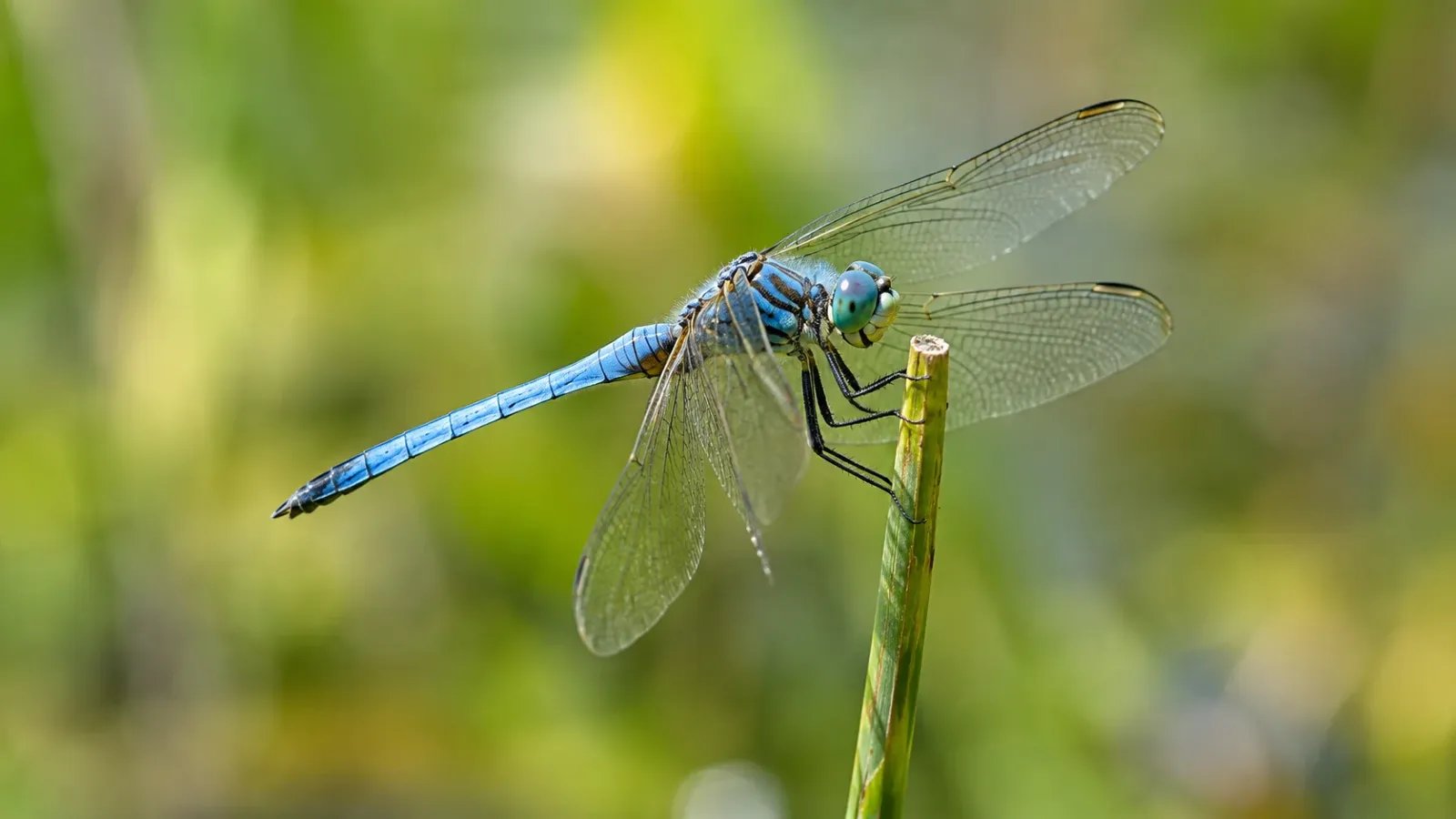
Often dismissed as mere decorative garden bugs or mistakenly feared as stinging pests, dragonflies are actually the insect world’s most lethal predators. They cannot sting you, and they don't live for just one day. These ancient, complex aviators have mastered flight and vision in ways that baffle human engineers, hiding a brutal and fascinating biology behind their delicate, shimmering wings.
1. Dragonflies intercept their prey by calculating their trajectory rather than simply chasing them.
Instead of following behind a mosquito or fly, a dragonfly anticipates where its target will be and plots an intercept course. This requires complex neurological algorithms that humans typically associate with advanced mammalian brains. By keeping the prey's image in the exact same spot on their retina while moving, they can ambush insects in mid-air with unparalleled precision.
2. They boast a staggering hunting success rate of up to 95 percent.
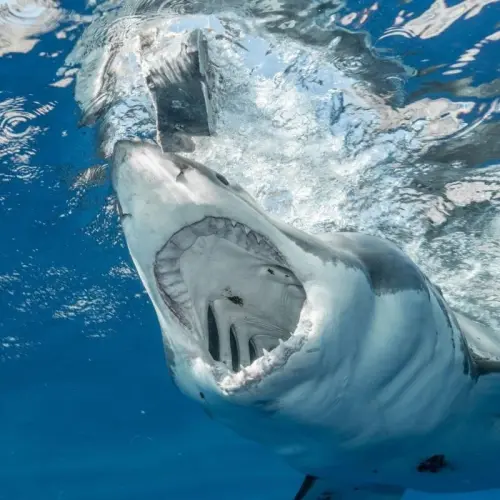
While apex predators like lions and great white sharks are lucky to catch a quarter of the prey they pursue, dragonflies rarely miss. Their combination of processing speed, agile flight, and specialized appendages allows them to snatch mid-air targets with extreme efficiency. Once a dragonfly locks onto a meal, its doom is almost guaranteed, making it the most successful predator on Earth.
3. Dragonflies can fly in any direction, including backward, and hover like helicopters.
The secret to their incredible aerial acrobatics is their four wings, which operate independently of one another. They can flap their front and rear wings in absolute synchrony or alternate them, enabling them to hover in place, pivot on a dime, fly backward, or launch straight up. This independent wing control has inspired engineers designing modern drones and vertical takeoff aircraft.
4. A dragonfly's eyes encompass almost its entire head and give it incredibly expansive vision.
Featuring up to 30,000 individual optical units called ommatidia, the massive compound eyes of a dragonfly provide a near 360-degree field of vision. The only blind spot they have is directly behind them. This massive visual processing center allows them to spot a tiny gnat from dozens of feet away while simultaneously keeping an eye out for larger birds that might want to eat them.
5. They can see a vastly wider spectrum of colors than humans, including ultraviolet light.
Where humans have just three types of light-sensitive proteins called opsins to see color, dragonflies have an astonishing eleven to thirty different visual proteins. This allows them to perceive polarized light and UV spectrums, helping them navigate by the sun and easily spot the reflections of water bodies or the subtle movements of translucent prey against the bright sky.
6. Dragonflies spend most of their lives underwater as terrifying aquatic predators.
Before they take to the sky, dragonflies exist as aquatic nymphs for up to five years, depending on the species. In this submerged stage, they are voracious hunters, snapping up mosquito larvae, tadpoles, and even small fish. They capture this prey using a specialized, hinged lower jaw that shoots out in a fraction of a second to hook victims and drag them back to the mouth.
7. Aquatic dragonfly nymphs propel themselves through water by shooting jets of water out of their anuses.
To escape predators or close the distance on speedy prey, a dragonfly nymph utilizes an extraordinary biological propulsion system. It draws water into its rectal chamber to extract oxygen through specialized gills, and then vigorously expels that water out the back end. This blasts the nymph forward in a rapid, jet-propelled burst that leaves aquatic threats in the dust.
8. Prehistoric dragonflies were the size of modern hawks, with wingspans stretching nearly thirty inches.
During the Carboniferous period, around 300 million years ago, Earth's atmosphere boasted much higher oxygen levels and lacked aerial vertebrate predators. This environment allowed ancestors of the dragonfly, like the Meganeura, to grow to massive proportions. These giants ruled the prehistoric skies, hunting other large insects and early amphibians long before the first birds evolved.
9. The globe skimmer dragonfly holds the record for the longest insect migration in the world.
Weighing merely a few grams, the globe skimmer undertakes an epic, multi-generational journey across the Indian Ocean from India to Africa and back. This migration covers a staggering distance of up to 11,000 miles. They accomplish this by riding high-altitude wind currents, completing a migratory circuit that dwarfs the famous journey of the monarch butterfly.
10. A dragonfly’s wings lack muscles and are driven entirely by muscles in the thorax.
Unlike the limbs of vertebrates, there are no muscles inside the wings themselves. Instead, the dragonfly's thorax is packed with massive, powerful flight muscles that attach directly to the base of the wings. This direct flight mechanism, connected to a complex network of veins that provide structural rigidity, allows for rapid wingbeats and the extraordinary torsion required for their maneuvers.
11. Dragonflies use their legs to form a basket for catching prey, not for walking.
Despite having six legs like all insects, dragonflies are surprisingly clumsy on foot and rarely walk at all. Instead, their legs are covered in stiff bristles and angled forward. When swooping in on a mosquito or moth, they configure these legs into a basket shape to scoop the victim out of the air, subsequently transferring the catch directly to their mandibles while still flying.
12. They possess incredibly strong mandibles capable of crushing insect exoskeletons instantly.
The word Odonata, the biological order to which dragonflies belong, translates to toothed ones in Greek. While they do not have true teeth, their powerful mandibles feature sharp, serrated ridges that easily tear through the armor of their prey. A large dragonfly can reduce a tough beetle to a pulpy meal in seconds, tearing off the wings and consuming the nutrient-dense body mid-flight.
13. Dragonflies regulate their body temperature by changing their posture in relation to the sun.
As cold-blooded creatures, dragonflies must manage their internal heat to keep their flight muscles primed. On intensely hot days, some species employ an obelisk posture, pointing their abdomens straight up at the sky to minimize the surface area exposed to direct sunlight. Conversely, on cool mornings, they flatten themselves on warm rocks to absorb as much solar radiation as possible.
14. Male dragonflies physically scoop out the sperm of rival males during the mating process.
Dragonfly reproduction is a fiercely competitive biological battlefield. The male possesses a specially designed scoop on his reproductive organ used specifically to scrape out the sperm deposited by any previous mates from the female's body. By doing this before inserting his own genetic material, he ensures that only his sperm fertilizes her eggs.
15. The destruction of wetlands threatens a significant portion of global dragonfly species with extinction.
Because dragonflies require unpolluted, oxygen-rich freshwater to survive their extended nymph stage, they are highly sensitive bioindicators of environmental health. Human activities like agriculture, urbanization, and the draining of swamps for development are shrinking their habitats. Consequently, conservationists warn that an alarming number of dragonfly species currently face the looming threat of extinction.
Sources & References
This AI-assisted post was rigorously curated and fact-checked for accuracy by:
 Martin Roháček
How fun was this article? 🤔
Tap a star to rate it
🧠 Quiz: How closely were you paying attention?
10 questions — all answers are in the article above!
Enjoyed these facts? There's more! 💌
Fresh fun facts in your inbox. No spam, ever.