
The Industrious Pollinator: 15 Fascinating Facts About Bumblebees
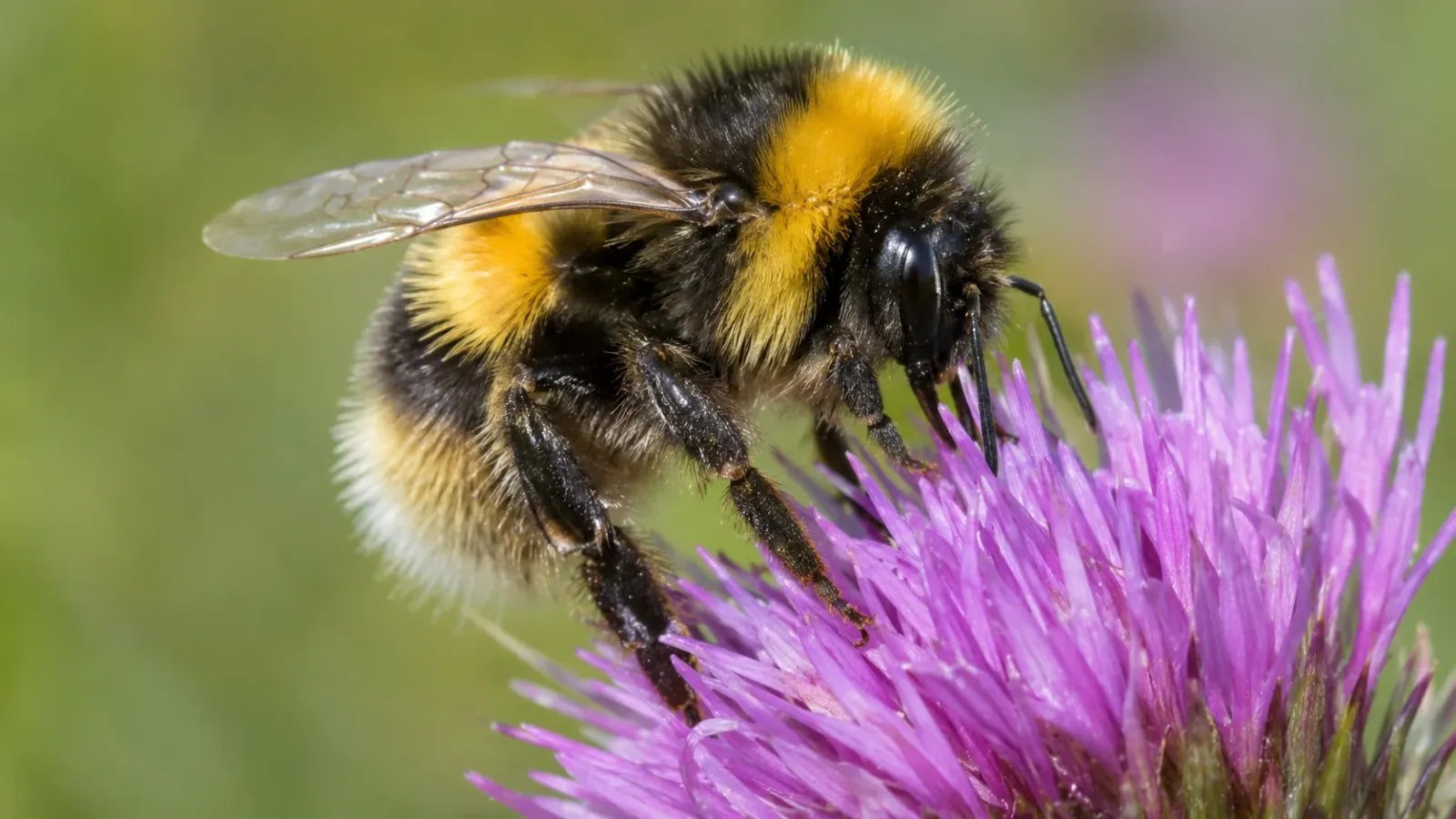
Defying a popular myth, bumblebees do not break the laws of aviation; their wing mechanics are perfectly understood by science. Beyond this misconception, these fuzzy marvels possess complex cognitive abilities, thermal regulation, and unique pollination tricks that sustain our ecosystems. Discover the incredible hidden world behind their iconic black and yellow stripes.
1. The long-standing myth that bumblebees defy the laws of aerodynamics is based on a flawed twentieth-century calculation that ignored the mechanics of flexible wings.
In the 1930s, an aerodynamicist concluded that bumblebees shouldn't be able to fly because he applied the equations of rigid, fixed-wing aircraft to them. In reality, bumblebee wings are highly flexible and sweep in a complex figure-eight pattern. This motion creates tiny hurricanes, or leading-edge vortices, that generate tremendous lift and perfectly explain their flight using standard fluid dynamics.
2. Bumblebees can unlock pollen from certain stubbornly closed flowers by shivering their flight muscles at specific musical frequencies.
This process is known as buzz pollination, or sonication. Plants like tomatoes, blueberries, and eggplants hold their pollen tightly inside tubular anthers. A bumblebee will bite the flower and vibrate its thoracic muscles without moving its wings, producing a loud buzzing sound. The sheer force of this vibration hits the exact resonant frequency needed to dislodge the pollen, raining it down onto the bee's body.
3. A bumblebee leaves behind a smelly footprint after visiting a flower to warn other bees that the nectar has already been depleted.
Bumblebees secrete distinct chemical markers from glands located in their tarsi, or feet. When they land on a blossom, this scent rubs off onto the petals. Other foraging bees approach the flower, detect these chemical footprints, and immediately know to skip it. This sophisticated communication saves the colony immense amounts of time and energy by preventing fruitless visits to empty flowers.
4. Unlike most insects, bumblebees can actively regulate their body temperature to fly in near-freezing conditions.
Bumblebees are essentially warm-blooded when it comes to foraging. Before taking off on a cold morning, they can uncouple their wing muscles from their wings and shiver violently. This internal friction rapidly heats their thorax to temperatures well above the ambient air. Coupled with their dense, insulating fur, this adaptation allows them to thrive in high-altitude and alpine environments where other bees would freeze.
5. Queen bumblebees survive harsh winters by producing chemical antifreeze in their blood while buried underground.
When winter approaches, all the worker bees and males die off, leaving only the newly mated queens. To survive months of freezing temperatures in subterranean burrows, these queens flood their hemolymph, or insect blood, with glycerol and other cryoprotectant chemicals. This natural antifreeze prevents ice crystals from forming and rupturing their internal organs during hibernation, allowing them to emerge safely in the spring.
6. Contrary to the belief that all bees die after stinging, female bumblebees have smooth stingers and can strike multiple times without injuring themselves.
The widely known fact that a bee dies after stinging applies almost exclusively to honeybees, which possess barbed stingers that get lodged in mammalian skin. Bumblebee stingers lack these barbs, allowing females to sting repeatedly to defend their nests. However, they are incredibly docile creatures and generally only resort to stinging when they are aggressively handled or their underground colonies are directly threatened.
 Insects and Invertebrates
Discover the bizarre biology and complex societies of the world's most misunderstood invertebrates. From subterranean fungus farmers to insects with microscopic solar panels, explore the hidden marvels of the creeping, crawling, and flying creatures that sustain global ecosystems.
See All Facts
Insects and Invertebrates
Discover the bizarre biology and complex societies of the world's most misunderstood invertebrates. From subterranean fungus farmers to insects with microscopic solar panels, explore the hidden marvels of the creeping, crawling, and flying creatures that sustain global ecosystems.
See All Facts
7. Bumblebee colonies do not last for years like honeybee hives, but rather completely die out at the end of every summer.
While a honeybee hive is a perennial superorganism that endures year after year, a bumblebee colony is strictly an annual affair. A lone queen builds a small nest in the spring, raises a few dozen to a few hundred workers over the summer, and produces a new generation of reproductive males and queens in the autumn. By the first frost, the entire social structure collapses, and only the newly mated queens live on to repeat the cycle.
8. Instead of building elaborate hexagonal wax combs in trees, bumblebees typically build chaotic, pot-like nests in abandoned mouse burrows.
Bumblebees are opportunistic cavity nesters that prefer to stay close to or beneath the ground. They frequently take over discarded rodent nests, utilizing the leftover fur and dry grass for insulation. Inside, the queen does not construct neat, uniform geometric combs. Instead, she builds irregular, clumped wax pots resembling little jugs, which she fills with nectar and pollen to feed her developing larvae.
9. Recent behavioral experiments have demonstrated that bumblebees engage in object play purely for enjoyment.
For a long time, scientists believed insects were driven solely by survival instincts. However, researchers discovered that bumblebees will repeatedly roll small wooden balls inside an arena even when there is no food reward or evolutionary benefit involved. Young bees played more than older ones, and bees that experienced this play showed signs of positive emotional states, suggesting a level of sentience previously denied to insects.
10. Bumblebees can detect the invisible bioelectric fields surrounding flowers to determine if a blossom is worth visiting.
As a bumblebee flies through the air, friction creates a positive electric charge on its body. Flowers, grounded in the earth, naturally carry a negative electric charge. When a bee approaches, the tiny hairs on its body physically bend in response to the electric field of the flower. Bees can actually sense the shape and strength of this field, which changes temporarily after another insect has visited, letting the bee know if the nectar has been tapped.
11. When pollen is scarce, bumblebees will deliberately damage plant leaves to trick the plants into blooming up to a month earlier.
In a stunning display of environmental manipulation, worker bumblebees have been observed using their mandibles to punch distinct, half-moon shapes into the leaves of flowerless plants. This specific type of mechanical stress triggers an accelerated physiological response within the plant, causing it to produce flowers weeks ahead of its normal schedule. This ensures the colony has a vital food source during unpredictable spring weather.
12. Bumblebees possess specialized color vision that allows them to see ultraviolet nectar guides completely invisible to the human eye.
While human vision relies on red, green, and blue light receptors, bumblebees have receptors for green, blue, and ultraviolet light. This means they cannot see the color red, but they experience a world rich in UV patterns. Many flowers have evolved striking ultraviolet targets, runways, and concentric circles on their petals. These hidden markings act like neon airport landing strips, directing the bees precisely toward the nectar and pollen.
13. Certain species of bumblebee have lost the ability to collect pollen and instead infiltrate other colonies to enslave their workers.
These parasitic insects are known as cuckoo bumblebees. They lack the specialized pollen baskets on their hind legs and do not produce their own worker caste. Instead, a cuckoo queen relies on stealth and brute force to invade a standard bumblebee nest. She will often kill or subdue the resident queen, then use chemical mimicry to trick the host workers into raising her own young, completely taking over the colony's resources.
14. Bumblebees possess the capacity for social learning and can pass new skills down to other bees, forming a primitive insect culture.
Researchers have trained individual bumblebees to solve complex puzzles for a sugar reward, such as pulling a string or pushing a lever in a specific sequence. When untaught bees were placed in the same arena as these trained experts, they watched and successfully copied the behavior. This knowledge quickly spread throughout the colony, proving that bees possess the capacity to transmit cultural knowledge rather than relying purely on hardwired genetics.
15. Despite having a brain the size of a sesame seed, a bumblebee can calculate the most efficient route between hundreds of flowers, solving the complex traveling salesperson problem.
This remarkable navigational strategy is called traplining. When a bumblebee finds a scattered patch of high-yield flowers, it doesn't just wander aimlessly. It uses spatial memory to map the locations and iteratively refines its flight path to find the absolute shortest distance connecting all the blooms. Computer algorithms struggle with this mathematical optimization problem, yet the bumblebee manages to solve it perfectly while flying at up to fifteen miles per hour.
Sources & References
This AI-assisted post was rigorously curated and fact-checked for accuracy by:
 Martin Roháček
How fun was this article? 🤔
Tap a star to rate it
🧠 Quiz: How closely were you paying attention?
10 questions — all answers are in the article above!
Enjoyed these facts? There's more! 💌
Fresh fun facts in your inbox. No spam, ever.