
The Speed Machine: 15 Fascinating Facts About MotoGP
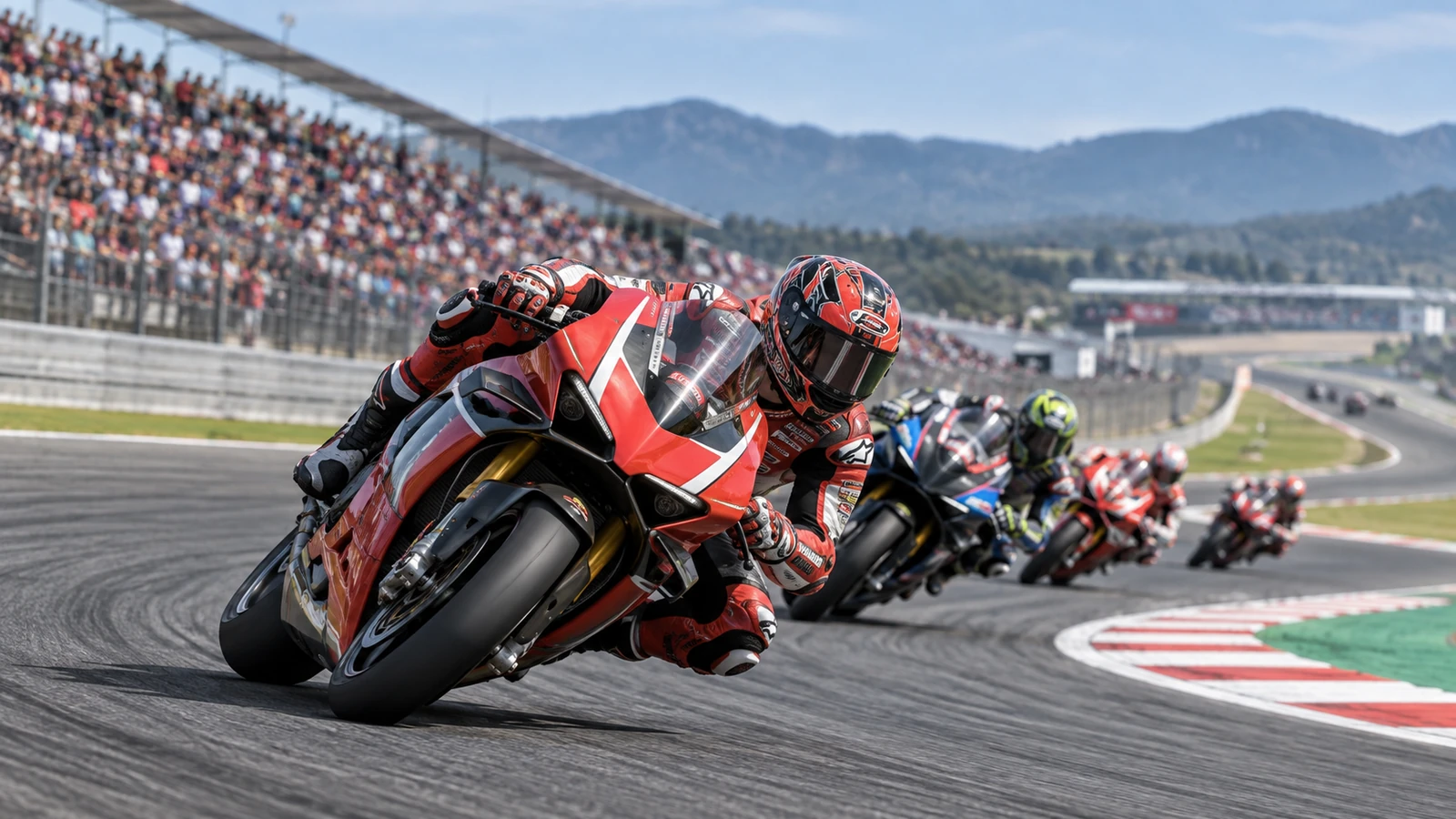
MotoGP represents the absolute pinnacle of two-wheeled motorsport, featuring prototype motorcycles capable of soaring past 225 miles per hour. Unlike production-based racing series, these multi-million-dollar custom machines are built from exotic alloys and high-grade carbon fiber specifically for track performance. From gravity-defying lean angles to high-tech airbag suits, the world of Grand Prix motorcycle racing combines extreme physical athleticism with cutting-edge engineering. Here are 15 fascinating facts about the fastest, most dangerous motorcycle racing series on the planet.
1. Pure Prototypes Worth Millions
Unlike World Superbike racing, which relies on heavily modified versions of commercially available motorcycles, MotoGP bikes are built entirely from scratch as pure, non-street-legal prototypes. Top manufacturers utilize exotic lightweight materials such as magnesium, titanium, and carbon fiber to craft these bespoke racing machines. A single top-tier MotoGP bike can cost upwards of 3.5 million dollars, with the hand-assembled engine alone accounting for nearly 2 million dollars of that budget. This astronomical price tag includes custom electronic control units, cutting-edge telemetry sensors, and tailored aerodynamic fairings. Consequently, even a minor crash during a practice session can result in hundreds of thousands of dollars in mechanical damage.
2. Mind-Bending Top Speeds Over 227 MPH
The absolute top speed record in MotoGP history belongs to South African rider Brad Binder, who reached an astonishing 366.1 kilometers per hour (227.5 miles per hour) in 2023. This blistering mark was set aboard his KTM machine during the sprint race at Italy's legendary Autodromo Internazionale del Mugello. At speeds exceeding 225 mph, a rider covers more than 100 meters every single second, leaving virtually zero margin for error. Managing such velocity requires extreme physical strength, as riders must fight intense aerodynamic forces pushing against their helmets and bodies. The combination of massive engine outputs and refined winglet aerodynamics keeps these machines grounded at near-aviation speeds.
3. Defying Gravity with 65-Degree Lean Angles
Modern MotoGP machines achieve lean angles up to 65 degrees from vertical while carving through high-speed cornering arcs. To put this in perspective, street riders rarely exceed 45 degrees of lean without losing traction and crashing. At these extreme angles, the rider's knees and elbows make continuous contact with the asphalt, using the track surface as a third point of stability. To prevent their racing suits from wearing away in seconds, riders wear thick plastic and titanium sliders on their joint zones. These replaceable pucks spark across the tarmac as riders balance the motorcycle on a tire contact patch no larger than a credit card.
4. The Aerodynamic Science Behind the "Leg Dangle"
Spectators often notice riders sticking their inside leg out into the slipstream while heavy braking before entering a turn. Pioneer Valentino Rossi popularized this technique, which has since been adopted by almost every professional rider on the grid. Extending the leg acts as a subtle air brake, creating aerodynamic drag on one side to help slow the motorcycle down during heavy deceleration. Furthermore, moving the rider's leg downward lowers the overall center of gravity and shifts weight distribution toward the front wheel. This additional stability prevents the rear tire from lifting off the asphalt during violent braking maneuvers.
5. Carbon Brakes That Require Blistering Heat to Stop
Unlike consumer road bikes that utilize steel brake rotors, MotoGP machines feature specialized carbon-carbon composite brake systems. These ultra-lightweight rotors only deliver maximum stopping performance when operated at scorching temperatures between 250 and 800 degrees Celsius (480 to 1,470 degrees Fahrenheit). If the brake discs drop below this operating window, such as during cold or wet conditions, they provide almost no friction or stopping power. During heavy braking zones at the end of long straights, brake temperatures can spike over 1,000 degrees Celsius, causing the carbon discs to glow red-hot. In wet weather races, teams often switch back to traditional steel discs or cover the carbon rotors to keep them warm.
6. Kangaroo Leather Protection
The protective race suits worn by MotoGP competitors are primarily crafted from premium kangaroo hide rather than traditional cowhide. Kangaroo leather possesses superior tensile strength and structural density, allowing manufacturers to split the hide into much thinner cuts while retaining maximum tear resistance. This yields a suit that is significantly lighter, more flexible, and far more resistant to friction burns during high-speed slides across asphalt. Despite being thinner, kangaroo leather offers up to twice the abrasion resistance of standard bovine leather. The lightweight construction also reduces rider fatigue during grueling 45-minute Grand Prix races.
7. Extreme Physical Toll and the Aero Hydration Hump
A MotoGP rider can lose up to 4 kilograms (8.8 pounds) of body weight in fluid during a single hot race due to extreme physical exertion and engine heat. To combat severe dehydration, suits feature an aerodynamic hump on the upper back that houses a custom hydration bladder. A flexible drink tube runs directly from this hump through the rider's helmet, allowing them to sip water via a valve system. The aero hump also acts as a fairing behind the helmet, smoothing airflow over the rider's back down the straightaways. Additionally, the hump houses essential electronic telemetry modules that monitor the rider's biometric data during the race.
8. The Infamous "Meatball Flag" Safety Protocol
In motorcycle racing, strict safety flags communicate vital track conditions, but the black flag with an orange circle—commonly called the "meatball flag"—is the most alarming. This specific signal is displayed alongside a rider's racing number to indicate a critical mechanical defect or fluid leak that poses an immediate danger to the field. When shown the meatball flag, the affected rider must safely pull off the racing line and exit the track immediately without completing another lap. Ignoring this flag results in instant disqualification and hefty monetary fines from race direction. The protocol prevents catastrophic oil spills on track surfaces and minimizes the risk of high-speed engine seizures.
9. Ultra-Secret Bespoke Michelin Tires
MotoGP tires are completely unavailable to the public and are custom-engineered by Michelin specifically for each circuit's unique surface and layout. Michelin's engineers develop distinct rubber compounds for left and right shoulders to handle asymmetrical cornering stress at different tracks. To guard these proprietary chemical formulas, teams are strictly required to hand back every single tire—whether used or unused—at the conclusion of a race weekend. Michelin technicians meticulously analyze the worn tread, shred the rubber, and send the materials back to France under tight security. This complete control prevents rival manufacturers from reverse-engineering the sophisticated rubber compounds.
10. Giacomo Agostini's Unbeatable 15 World Titles
Italian racing legend Giacomo Agostini remains the undisputed most successful rider in Grand Prix history, boasting a staggering 15 World Championships. Competing primarily in the 1960s and 1970s, Agostini dominated both the 350cc and 500cc premier classes simultaneously for years. In that era, regulations permitted riders to enter multiple category races on the exact same afternoon. Agostini regularly won two separate Grand Prix trophies on a single day, accumulating 122 individual Grand Prix victories across his iconic career. Modern specialization and exhausting race schedules make it virtually impossible for any modern rider to duplicate his multi-class championship total.
11. The Origin of Valentino Rossi's "The Doctor" Moniker
Nine-time World Champion Valentino Rossi is world-famous for his colorful nickname, "The Doctor," which he adopted early in his 500cc career. In Italy, the title "Il Dottore" is a mark of extreme respect bestowed upon highly accomplished professionals, professors, and specialists. Rossi chose the persona to signal his evolution from a wild, unpredictable young racer into a precise, calm, and methodical competitor on the track. Italian media also noted that "Rossi" is one of the most common surnames among medical doctors in Italy. The moniker became an enduring global brand, complete with his trademark neon yellow color scheme and number 46.
12. High-Stakes "Flag-to-Flag" Bike Swaps
When weather conditions shift from dry to wet mid-race, MotoGP rules permit a high-drama protocol known as a "flag-to-flag" race. When officials display the white flag, riders are permitted to pull into pit lane and literally leap off their dry-setup bike onto a second bike fitted with wet-weather treaded tires and softer suspension. Mechanics hold the secondary bike steady in the pit lane while the rider performs a rapid, flying transition between machines. Precision timing is critical, as swapping bikes too early or too late can cost a rider massive amounts of time or result in severe crashes on mismatched tires.
13. Strict Real-Time Tire Pressure Regulations
Modern MotoGP bikes are outfitted with mandatory real-time tire pressure sensors that continuously beam data to track marshals and telemetry engineers. Teams are required to maintain a minimum operational tire pressure for a specific percentage of both sprint and main Sunday races. Lowering tire pressure increases the contact patch and boosts grip, but running dangerously under-inflated tires risks structural failure and rim damage at high speeds. Strict penalties, including post-race time additions and disqualifications, are imposed on riders whose tires fall below the technical threshold. This regulation balances competitive parity with rider safety across all weather conditions.
14. The Instant Magic of Seamless Gearboxes
MotoGP transmission technology relies on proprietary "seamless gearboxes" that allow riders to shift gears without interrupting engine torque to the rear wheel. Conventional motorcycle transmissions require disengaging the clutch or momentarily cutting power, causing a brief deceleration pause during shifts. Seamless gearboxes use complex mechanical pawls to engage the next gear ratio milliseconds before disengaging the current one. This seamless transfer of power keeps the chassis completely stable during gear shifts while accelerating through corners or down straights. Developed at costs exceeding several hundred thousand dollars per unit, seamless transmissions offer a crucial fractions-of-a-second advantage per lap.
15. Inflatable Airbag Suits Required for All Riders
Since 2018, every rider across all MotoGP categories is legally mandated to wear a race suit equipped with an internal, autonomous airbag system. Developed by brands like Alpinestars and Dainese, these suits utilize built-in accelerometers, gyroscopes, and GPS tracking to monitor body motion hundreds of times per second. Algorithms detect an impending crash—such as a violent highside launch—and fully inflate cold-gas airbags over the shoulder, collarbone, and rib areas in under 45 milliseconds. This lightning-fast deployment occurs completely before the rider even hits the asphalt or gravel trap, drastically reducing spinal, shoulder, and torso injuries.
Sources & References
This AI-assisted post was rigorously curated and fact-checked for accuracy by:
 Martin Roháček
How fun was this article? 🤔
Tap a star to rate it
🧠 Quiz: How closely were you paying attention?
10 questions — all answers are in the article above!
Enjoyed these facts? There's more! 💌
Fresh fun facts in your inbox. No spam, ever.