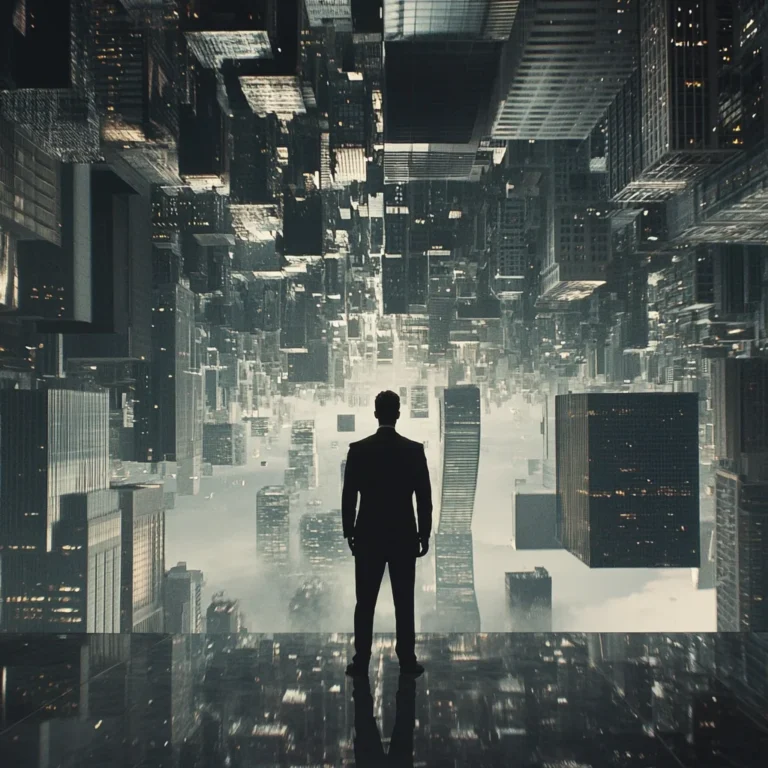
Inception, directed by Christopher Nolan, revolutionized the thriller genre with its complex dream layers and stunning visuals. Beneath the blockbuster’s fame lie captivating secrets and lesser-known details that enrich the story and production. Dive into the hidden gems behind Inception’s mind-bending narrative and groundbreaki
Inception
The film was initially conceived as a horror movie before evolving into a heist thriller, showcasing Nolan’s creative flexibility.
Ariadne’s character has a name after a figure in Greek mythology who helped Theseus escape the labyrinth, symbolizing her role as guide through dreams.
The crew filmed Joseph Gordon-Levitt’s famous zero-gravity hallway fight using a full 360-degree rotating set, without a green screen.
The “impossible” Penrose staircase in the film is based on a real 1960s print by M.C. Escher and achieved through clever camera angles.
Each main character represents a role in a filmmaking crew: Cobb as director, Arthur as producer, Ariadne as production designer, and Eames as actor.
Over 500 crew members worked tirelessly to create the iconic rotating hallway scene, which took three weeks to shoot.
The film’s soundtrack features the song “Non, Je Ne Regrette Rien” by Édith Piaf, slowed down to synchronize with the dream layers’ unique time dilation.
Leonardo DiCaprio found the chase scene in Morocco physically the toughest, having to dodge crowds and obstacles during intense filming.
The team used subtle details like license plates reading “The Alternate State” to cue viewers that certain sequences were dream layers.
Nolan wrote the script on spec to maintain creative control, completing the first draft alone before studio involvement.
Real sets physically tilted and rotated while filming, requiring actors to hold on tightly to avoid sliding off during shooting.
The safe code “528491” appears repeatedly as an Easter egg, tying the complex story elements together visually.
The “kick” sequence includes multiple synchronized actions to wake dreamers simultaneously, showing intricate planning behind the scenes.
The final spinning top scene remains deliberately ambiguous, fueling years of debate about Cobb’s reality versus his dreams.
Hans Zimmer infused the score with unique guitar sounds influenced by Ennio Morricone, adding to the film’s unforgettable atmosphere.
How useful was this post?
Click on a star to rate it!
This AI-assisted post was rigorously curated and fact-checked for accuracy by:
Emma Watson is famous worldwide for her role as the brilliant Hermione Granger. However, her life outside of the wizarding world is equally fascinating and complex. For instance, she is a certified yoga instructor who values mindfulness deeply. Furthermore, she nearly quit the Harry Potter franchise halfway through filming to pursue her education. Consequently, her journey involves much more than just acting. Therefore, discover the hidden talents of this British icon. You will see her in a completely new light.
Emma Watson
Emma Watson was born in Paris, France. Although people view her as a British icon, she lived in France until she was five years old. Thus, she speaks some French.
She is a certified yoga and meditation instructor. Specifically, she earned her certification in 2013 because she wanted to find a sense of home within herself.
Casting directors made her audition eight times for Hermione. Even though J.K. Rowling wanted her for the role immediately, she had to prove herself to the studio executives repeatedly.
She keeps over thirty personal journals. Because she writes daily, she maintains separate diaries for her dreams, acting notes, and yoga practice.
She graduated from Brown University in 2014. Despite her massive fame, she pursued a degree in English Literature at the Ivy League school in Rhode Island.
Emma Watson had a huge crush on Tom Felton. During the early films, she admired the actor who played Draco Malfoy. Fortunately, they are great friends today.
She turned down the role of Cinderella. Before she played Belle, Disney offered her the glass slipper. However, she felt the character did not resonate with her values.
She launched the HeForShe campaign with the UN. As a UN Women Goodwill Ambassador, she delivered a powerful speech about gender equality that went viral instantly.
She refused to wear a corset for Beauty and the Beast. Because she wanted Belle to be an active and independent heroine, she rejected the restrictive undergarment.
She almost quit the Harry Potter series. Around the fifth movie, she seriously considered leaving to focus on her education and personal freedom.
She is a certified open water diver. Consequently, she holds a PADI certificate and enjoys exploring the ocean depths when she is on vacation.
Her favorite book is The BFG by Roald Dahl. She loves this story because her father read it to her when she was a young child.
She championed sustainable fashion on the red carpet. For the Met Gala, she famously wore a Calvin Klein gown made entirely from recycled plastic bottles.
She went on a silent retreat to heal. After a difficult breakup, she spent a week in complete silence at a facility in the Canadian Rockies.
Finally, she became the youngest person to appear on the cover of Teen Vogue. At just fifteen years old, she graced the cover and set a new record for the magazine.
Sylvester Stallone defines the ultimate underdog story in Hollywood history. He went from sleeping at bus terminals to becoming a global action icon. Furthermore, he wrote the screenplays for his biggest hits himself, proving his literary talent. Consequently, his creative control shaped cinema history for decades. His journey proves that grit matters more than talent alone. Explore the gritty truth behind the man who created Rocky and Rambo.
Sylvester Stallone
Doctors used forceps during his birth, which accidentally severed a nerve in his face. Therefore, Sylvester Stallone developed his signature snarl and slurred speech permanently. This injury eventually became his trademark look in action movies.
He was so broke that he starred in an adult film called The Party at Kitty and Stud’s. He earned 200 dollars for two days of work just to pay his rent.
Desperation forced him to sell his beloved dog, Butkus, for 50 dollars outside a liquor store. However, he bought the dog back for 3,000 dollars immediately after selling the Rocky script.
Remarkably, he wrote the entire first draft of Rocky in just three and a half days. He fueled this marathon writing session with caffeine, pure adrenaline, and very little sleep.
Studios offered him 360,000 dollars for the script but refused to let him play the lead. Sylvester Stallone turned down this fortune despite having only 106 dollars in his bank account.
Dolph Lundgren punched him so hard during Rocky IV that he landed in intensive care. The blow swelled his heart, and doctors feared for his life for several days.
Arnold Schwarzenegger tricked him into starring in the terrible movie Stop! Or My Mom Will Shoot. Sly took the role only because he thought Arnold wanted it. Thus, the rivalry led to his worst career mistake.
The two turtles from the original 1976 Rocky movie are actually still alive today. He kept Cuff and Link, and they even appeared in the movie Creed II.
Sylvester Stallone is also a serious painter who has exhibited his art in museums globally. He often paints characters before he writes them to visualize their emotions clearly.
During The Expendables, he fractured his neck while filming a brutal fight scene with Steve Austin. Consequently, surgeons had to insert a metal plate into his spine to fix the damage.
In the original script for First Blood, Rambo died at the end of the movie. Luckily, Stallone insisted on changing the ending to keep the character alive for sequels.
Before finding fame, Sylvester Stallone worked odd jobs including cleaning lion cages at the zoo. This dangerous work paid very little but kept him motivated to succeed in acting.
His mother, Jackie, became famous for a bizarre practice she called rumpology. She claimed she could predict people’s futures simply by reading the shape of their bottoms.
Sylvester Stallone holds the unique record of being nominated for Oscars for the same character 39 years apart. Both Rocky and Creed earned Sylvester Stallone nods for playing the legendary boxer.
Finally, the famous steps at the Philadelphia Museum of Art now feature a bronze statue of him. Tourists flock there daily to recreate his legendary run from the film.