The Happiest Animal on Earth: 15 Fascinating Facts About Quokkas
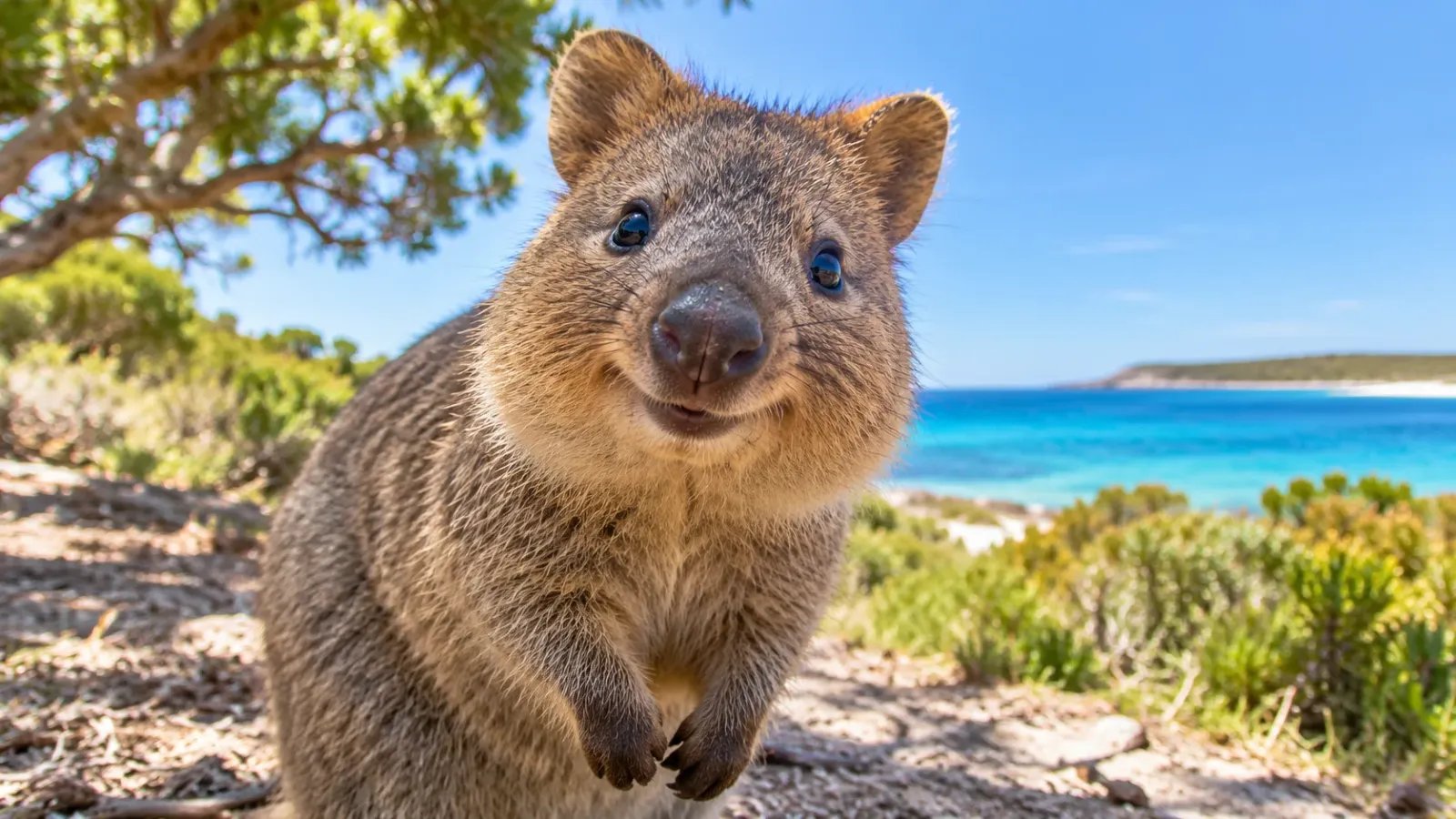
With their round faces and permanent grins, quokkas have become internet stars known as the "happiest animals in the world". But these small marsupials have a much richer story: they gave an island its name, chew their food twice like cows and are protected by hefty fines. Here is what lies behind the famous quokka smile.
1. Quokkas are not actually smiling.
In the mid-2010s, quokkas became internet celebrities known as "the happiest animals in the world" because photos of their faces seem to show a cheerful grin. In reality, the "smile" is simply the natural shape of their mouth and face. Quokkas do not smile in the human sense, but that has not stopped them from becoming symbols of positivity online.
2. A Dutch explorer thought they were giant rats.
In 1696, Dutch explorer Willem de Vlamingh landed on an island off the coast of Western Australia and saw large numbers of quokkas. He described them as "a kind of rat as big as a common cat" and named the island "Rottenest", meaning "rat nest" in Dutch. Today it is known as Rottnest Island, and it is home to the largest population of quokkas in the world.
3. The quokka selfie became a global trend.
Because quokkas on Rottnest Island are used to people and often approach visitors, taking a selfie with a quokka has become a popular tradition. Celebrities including Chris Hemsworth, Margot Robbie and tennis star Roger Federer have posed with them. The trend has brought a surge of tourists to the island.
4. Touching or feeding them can cost you a fine.
Quokkas are protected, and on Rottnest Island visitors can be fined 300 Australian dollars for touching or feeding them. Human food such as bread can make quokkas sick, causing dehydration and malnutrition. Animal cruelty can bring a fine of up to 50,000 dollars and a prison sentence.
5. They are related to kangaroos.
The quokka is a small macropod, the same family that includes kangaroos and wallabies. It is about the size of a domestic cat, weighing between 2.5 and 5 kilograms. Like its larger relatives, it hops on its powerful back legs and carries its young in a pouch.
6. They are the only members of their genus.
The quokka's scientific name is Setonix brachyurus, and it is the only living species in the genus Setonix. This makes it a unique branch of the kangaroo family tree. Its tail is unusually short for a macropod, measuring only 25 to 30 centimetres.
7. Quokkas can climb trees.
Although they look like miniature kangaroos, quokkas are surprisingly good climbers. They can scramble up small trees and shrubs to a height of around 1.5 metres to reach leaves. This is unusual among macropods, most of which stay firmly on the ground.
8. They chew their food twice, like cows.
Quokkas eat grasses, leaves and other plants. After swallowing their food, they bring it back up and chew it again, similar to the way cattle chew their cud. This helps them break down tough plant material and get as much nutrition as possible from it.
9. They get most of their water from plants.
Rottnest Island has very little fresh water, especially in the dry summer months. Quokkas cope by getting much of the water they need from the plants they eat. On the mainland, however, they are found only in areas that receive at least 600 millimetres of rain per year.
10. They are mostly active at night.
Quokkas are nocturnal and spend the hottest part of the day resting in the shade of dense vegetation. Spiky plants make particularly good shelters because they protect the quokkas from predators. They come out to feed in the late afternoon and at night.
11. A mother can raise two babies a year.
After a pregnancy of about a month, a female quokka gives birth to a single tiny baby called a joey. The joey lives in its mother's pouch for about six months and continues to drink her milk for a couple of months afterwards. Females can breed twice a year and produce an average of 17 joeys over their lifetime.
12. Islands are their safe havens.
Quokkas were once common across the south-west of Western Australia, but introduced predators such as red foxes and feral cats have wiped out many mainland populations. Today, the largest populations live on Rottnest Island and Bald Island near Albany, which are free of foxes and cats. Only small, scattered groups survive on the mainland.
13. They are a vulnerable species.
The IUCN classifies the quokka as Vulnerable. On the mainland, they are threatened by predators, habitat clearing for agriculture and housing, and bushfires. Because they need dense undergrowth to hide in, the loss of their habitat leaves them exposed to danger.
14. They share a reserve with one of the world's rarest mammals.
A small colony of quokkas lives in the Two Peoples Bay Nature Reserve on the south coast of Western Australia. There, they share their habitat with Gilbert's potoroo, a small marsupial that is one of the rarest mammals on Earth. Protecting the reserve helps both species survive.
15. They can live for around ten years.
In the wild, quokkas live for an average of about ten years. Despite their friendly reputation, they are wild animals and can bite if they feel threatened. Visitors to Rottnest Island are encouraged to enjoy them from a respectful distance, ideally without a selfie stick poking them in the face.
Sources & References
This AI-assisted post was rigorously curated and fact-checked for accuracy by:
 Martin Roháček
How fun was this article? 🤔
Tap a star to rate it
🧠 Quiz: How closely were you paying attention?
10 questions — all answers are in the article above!
Enjoyed these facts? There's more! 💌
Fresh fun facts in your inbox. No spam, ever.