The Ancient Egg-Layer: 15 Fascinating Facts About Echidnas
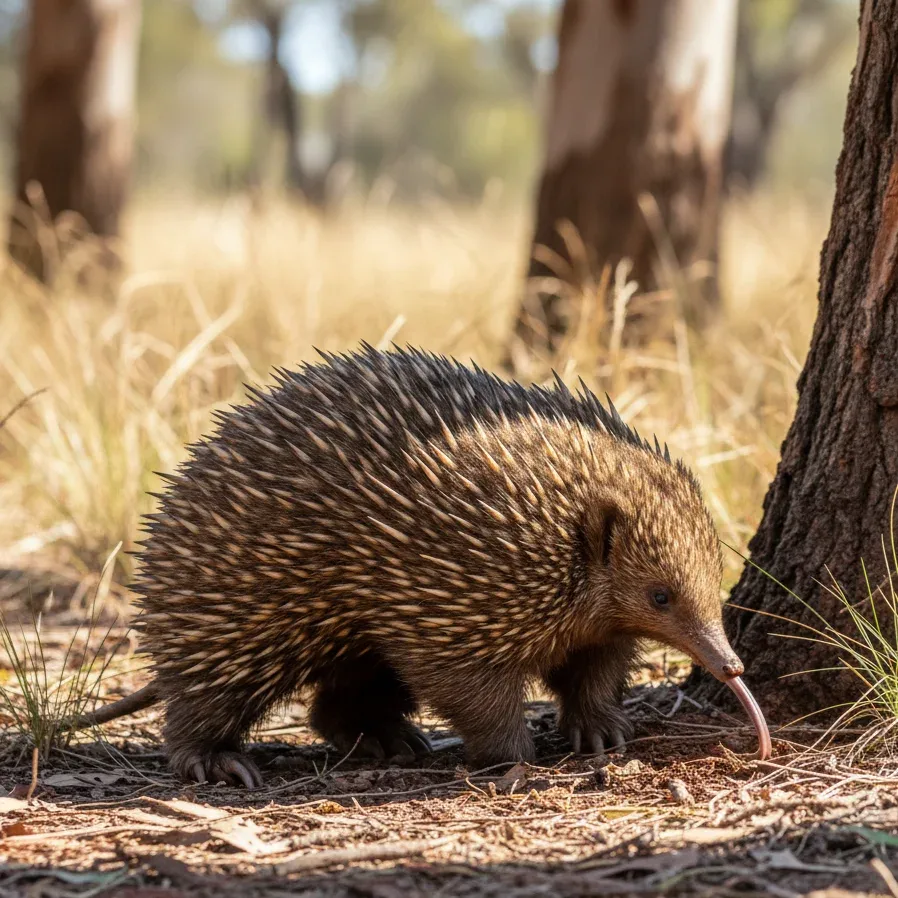
Resembling a cross between a hedgehog, an anteater, and a reptile, the echidna is one of the most evolutionary enigmatic creatures on Earth. As one of only five surviving species of monotremes, these spiky mammals bridge the gap between ancient reptiles and modern mammals by laying eggs and nursing their young with milk patches. From electroreceptors in their snouts to bizarre reproductive rituals involving multi-headed anatomy, the echidna is packed with biological surprises. Here are 15 fascinating facts about these incredible, spiny survivors of the animal kingdom.
1. They Are One of the World's Only Egg-Laying Mammals
Echidnas belong to an extraordinary biological order known as monotremes, which includes only five living species worldwide. Alongside four species of echidna and the platypus, monotremes are the only surviving mammals that lay eggs instead of giving birth to live young. This rare trait places them in an evolutionary class of their own, preserving traits from early mammalian ancestors that diverged over 160 million years ago. While they lay leathery eggs like reptiles, they share core mammalian characteristics such as fur, warm-bloodedness, and producing milk to nourish their offspring. Studying monotremes provides evolutionary biologists with a living window into how modern mammals evolved from reptilian ancestors.
2. Their Snouts Can Detect Underground Electricity
The elongated snout of an echidna is far more than just a sniffing tool; it is a sophisticated electrosensory organ. Packed with thousands of electroreceptors, the snout can sense the faint electric fields generated by the muscular movements of subterranean prey. This electroreceptive capability is almost unique among land-dwelling mammals and allows echidnas to hunt blind in total darkness underground. When foraging, an echidna probes the soil with its sensitive tip, tracking the electrical pulses of termites, ants, and earthworms. This biological radar makes them exceptionally efficient predators of insects buried deep inside soil or rotting timber.
3. Male Echidnas Possess a Four-Headed Penis
In terms of reproductive biology, male echidnas feature one of the most unusual anatomical designs in the animal kingdom. The male organ possesses four distinct heads, though only two are used at any given time during mating. During copulation, two of the heads shut down while the other two inflate to fit the female's double-branched reproductive tract. The male alternates between the left and right pairs during successive matings, allowing for rapid ejaculatory turnaround. This bizarre adaptation is thought to give males a competitive edge in sperm competition when multiple males mate with a single female.
4. They Engage in Courting "Mating Trains"
Breeding season triggers a peculiar behavioral phenomenon known as an echidna mating train. When a female becomes receptive, up to a dozen prospective males will fall in line behind her, following her every move single-file across the landscape. These courtship trains can last for several weeks, during which the males patiently trek through the bush without eating while waiting for the female to accept a suitor. If the female stops, the males form a trench around her in the dirt, wrestling push-up style until only the strongest suitor remains. Once mating is complete, the winner moves on, and the female goes her own way to prepare for egg production.
5. Their Spines Are Actually Modified Hairs
The iconic defensive armor covering an echidna's back consists of modified hairs made entirely of keratin. Keratin is the exact same structural protein that forms human fingernails, horse hooves, and bird feathers. Interspersed among their dense fur coat, these sturdy spines can grow up to two inches long and act as formidable protection against predators like dingoes and eagles. When threatened, an echidna wedges itself tightly into a rock crevice or rapidly digs into loose earth until only its spiky top is exposed. This natural defense leaves potential attackers with nothing to grab except a painful, impenetrable wall of sharp spines.
6. They Have One of the Lowest Body Temperatures of Any Mammal
Unlike most warm-blooded creatures that maintain a consistent core body temperature, echidnas operate at a surprisingly low thermal setting. Their average body temperature hovers around 31 to 32 degrees Celsius (88 to 90 degrees Fahrenheit), which is significantly cooler than human body temperature. Furthermore, their internal thermostat fluctuates by up to 6 to 8 degrees throughout the day depending on ambient conditions and activity levels. This flexible, low metabolic rate conserves huge amounts of energy, enabling echidnas to thrive on nutrient-poor diets in harsh environments. It also contributes significantly to their exceptionally long lifespans compared to similarly sized animals.
7. Females Incubate Their Eggs in a Temporary Pouch
Echidnas do not build nests to sit on their eggs like birds do; instead, females develop a specialized abdominal pouch during breeding season. About three weeks after successful mating, the female lays a single soft, rubbery egg roughly the size of a grape directly into this pouch. She incubates the tiny egg inside her body pouch for about ten days until a miniature baby, known as a puggle, hatches. The hatchling remains safe inside the pouch for several months, clinging to its mother while it grows spines and outgrows its cozy nursery. Once the puggle's spines begin to prickle the mother's pouch, she deposits the young into a secure nursery burrow for safety.
8. They Are Completely Toothless and Eat with Sticky Tongues
Despite their insectivorous diet, echidnas do not have a single tooth inside their mouths. Instead, they rely on a long, sticky tongue that can extend up to 18 centimeters (7 inches) out of their narrow snouts. The tongue is coated with a mucous secretion that traps hundreds of ants, termites, or grubs in a single stroke. To break down their food, echidnas mash the captured insects against hard, keratinous pads located on the roof of their mouth and the base of their tongue. They also swallow small stones and dirt particles, which act like gizzard stones to grind up tough insect exoskeletons inside their stomachs.
9. Echidnas Are Surprisingly Strong Swimmers
While echidnas are terrestrial creatures built for digging, they are remarkably adept in the water. Observers have documented echidnas paddling across rivers, lakes, and even ocean bays with impressive swimming form. When submerged, they hold their long snouts out of the water like a periscope to breathe while using their clawed limbs as powerful paddles. Swimming is not just a method of escaping predators or finding new territory; echidnas also enter the water voluntarily on hot summer days to cool off. This semi-aquatic capability likely reflects their ancient evolutionary lineage shared with platypuses.
10. Their Rear Feet Point Backward for Superior Digging
An echidna's limbs are short, muscular, and specially adapted for earthmoving, but its back legs feature a unique anatomical twist. Their hind feet are rotated backward, pointing toward their tails rather than forward. This backward orientation allows them to scoop dirt away efficiently while digging burrows or excavating hard termite mounds. The specialized alignment also helps them push soil upward and outward when burying themselves vertically into the ground to hide from danger. Coupled with long, curved claws, this unusual leg structure makes the echidna one of the fastest non-burrowing diggers in the animal world.
11. They Were Named After a Greek Monster
The echidna owes its name to classical Greek mythology, specifically the monstrous creature known as Echidna. In ancient Greek legends, Echidna was a mythical beast that was half woman and half snake, considered the mother of famous monsters like Cerberus and the Sphinx. European naturalists chose this name because the biological paradox of the animal seemed almost mythical. Combining characteristics of reptiles (laying eggs) and mammals (producing milk), the animal seemed like a bizarre hybrid created by nature. The name has stuck ever since, capturing the ancient and elusive essence of this unique order of animals.
12. They Can Live for Over Half a Century
Echidnas are among the longest-lived small mammals on the planet, boasting incredible lifespans in both wild and captive environments. In the wild, short-beaked echidnas routinely live between 30 and 45 years, surviving harsh droughts and changing climates. In captivity, where predators and food shortages are absent, individuals have been recorded living for over 50 years. Their astonishing longevity is linked directly to their low metabolic rate, low body temperature, and ability to enter torpor during periods of food scarcity. This slow pace of life protects their cells from rapid oxidative damage, granting them a remarkably slow aging process.
13. They Can Survive Devastating Bushfires by Going to Sleep
Australia is famous for intense wild bushfires, but echidnas possess a unique strategy to survive the infernos. When a bushfire approaches, instead of running away, an echidna digs deep into the soil or hides beneath fallen logs and lowers its metabolic rate. They enter a state of deep torpor, dropping their core body temperature and slowing down their breathing rate dramatically. This state minimizes their oxygen consumption while hot flames pass over them safely overhead. Studies have shown that echidnas can remain dormant underground for days after a fire until the ground cools down and it is safe to emerge.
14. Baby Echidnas Lap Milk Directly from Patchy Skin
Because monotremes split off from other mammals before teat structures evolved, female echidnas completely lack teats or nipples. Instead, they nourish their hatchlings through specialized milk patches located inside their abdominal pouch. These milk patches are clusters of modified sweat glands that exude thick, pinkish milk directly onto the mother's skin surface. The tiny baby puggle laps up the nutrient-dense milk directly from its mother's skin fold or fur. Echidna milk is extremely rich in iron and fats, providing the growing puggle with all the energy needed to develop its hard spines.
15. There Are Four Living Species Across Australia and New Guinea
While the short-beaked echidna is widely distributed across Australia and Tasmania, three other lesser-known species exist in New Guinea. These three species belong to the genus Zaglossus and are collectively known as long-beaked echidnas. Long-beaked echidnas are significantly larger than their short-beaked relatives, featuring down-curved snouts and earthworm-based diets. Tragically, all three long-beaked echidna species are currently classified as critically endangered due to habitat loss and hunting. Preserving these rainforest species is essential for protecting the incredible evolutionary diversity of monotremes on Earth.
Sources & References
This AI-assisted post was rigorously curated and fact-checked for accuracy by:
 Martin Roháček
How fun was this article? 🤔
Tap a star to rate it
🧠 Quiz: How closely were you paying attention?
10 questions — all answers are in the article above!
Enjoyed these facts? There's more! 💌
Fresh fun facts in your inbox. No spam, ever.