The Ultimate Cinema Classic: 15 Fascinating Facts About The Shawshank Redemption
When The Shawshank Redemption premiered in theaters in 1994, it was a commercial disappointment that barely recovered its budget at the box office. Yet through word of mouth, home video rentals, and constant television broadcasts, Frank Darabont's adaptation of a Stephen King novella evolved into one of the most beloved films in cinematic history. Behind its poignant story of hope and endurance lies a remarkable production filled with improbable casting choices, grueling physical scenes, and obsessive attention to detail. From uncashed dollar checks to chocolate-filled sewer pipes, these fascinating facts reveal how a box-office flop became the highest-rated movie of all time.
1. Stephen King Sold the Film Rights for a Single Dollar
Author Stephen King sold the film rights for his 1982 novella Rita Hayworth and Shawshank Redemption to writer-director Frank Darabont for just $1. King maintained a policy called the "Dollar Baby" deal, allowing aspiring filmmakers to adapt his short stories for a nominal fee to support their careers. King and Darabont had previously built trust when Darabont adapted King's short story The Woman in the Room in 1983. King famously never cashed the check and instead framed it, eventually sending it back to Darabont years later with a note reading: "In case you ever need bail money. Love, Steve." This small business transaction ultimately paved the way for one of the greatest cinematic masterworks in history.
2. Red Was Originally Written as a White Irishman
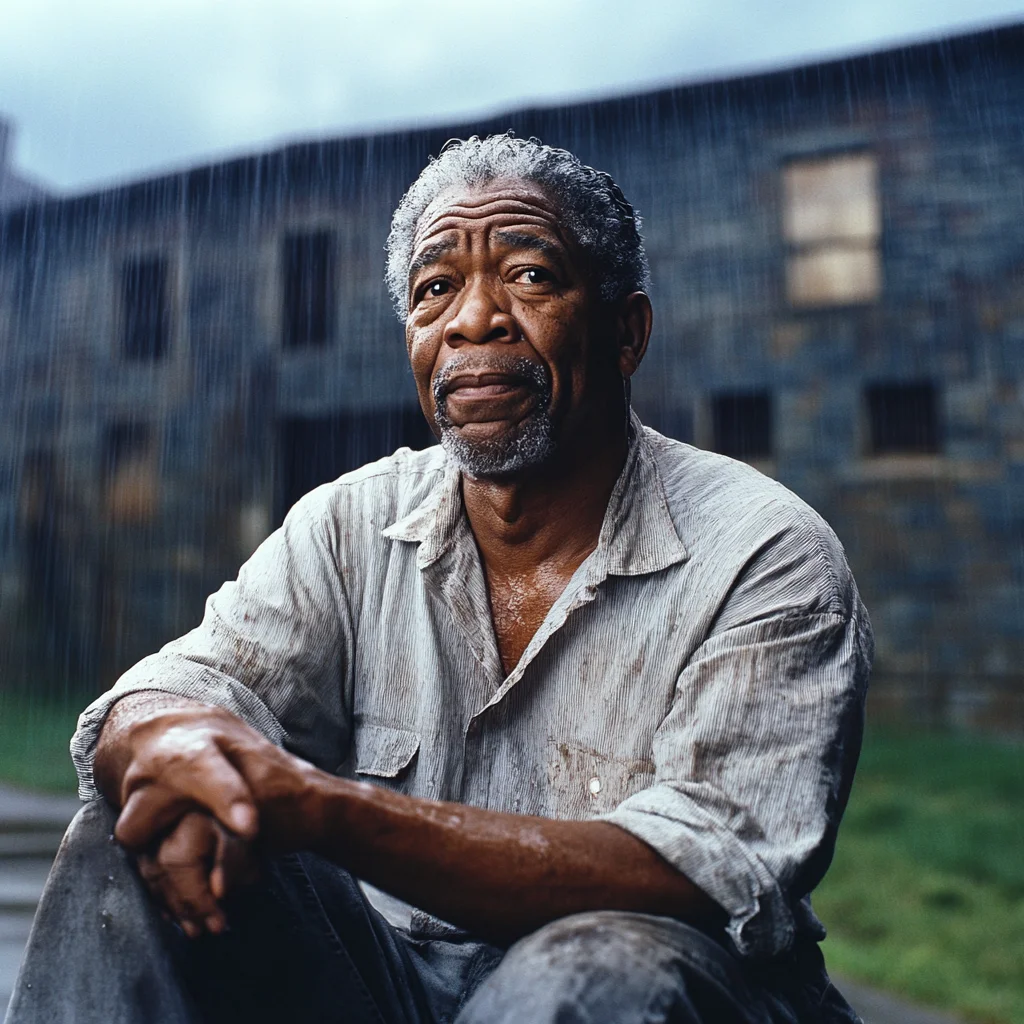
In Stephen King's original novella, Ellis Boyd "Red" Redding was described as a middle-aged white Irishman with graying red hair. Producers initially considered established stars like Harrison Ford, Clint Eastwood, Paul Newman, and Robert Redford for the iconic role. However, director Frank Darabont always envisioned Morgan Freeman in the part because of his authoritative presence and deep, resonant voice. Darabont retained the line where Red jests about his nickname coming from being "Irish" as a subtle nod to the character's original literary roots. Freeman's masterful performance went on to earn him an Academy Award nomination for Best Actor.
3. The Iconic Oak Tree Was a Real Landmark Destroyed by Nature
The majestic white oak tree near Lucas, Ohio, where Red finds Andy Dufresne's hidden letter and money, became a global pilgrimage site for movie enthusiasts. Estimated to be over 200 years old, the tree stood on private land near Malabar Farm State Park. Unfortunately, a severe lightning strike in 2011 split the trunk, and a strong windstorm in 2016 ultimately knocked down the remaining half. Fans still travel to Mansfield, Ohio, to see pieces of the wood that were preserved and crafted into memorabilia. The site remains an enduring symbol of hope and freedom for fans of the movie.
4. The Sewer Pipe Was Filled with Chocolate Syrup and Sawdust
The harrowing scene where Andy crawls through 500 yards of foul prison sewage to gain his freedom was actually much cleaner than it appeared. The filmmakers filled the interior conduit pipe with a mixture of water, chocolate syrup, and sawdust to achieve the dark, sludge-like consistency of raw sewage. Although the mixture tasted sweet, actor Tim Robbins still had to endure crawling through toxic-looking goo in a very tight space. The stream Andy plunges into after exiting the pipe was actually tested by local authorities and declared hazardous, requiring careful cleanup post-filming. The iconic moment of Andy raising his arms in the pouring rain remains one of cinema's greatest cathartic triumphs.
5. Morgan Freeman Threw a Baseball for Nine Hours Straight
During the scene where Andy first approaches Red in the prison yard to buy a rock hammer, Red is seen casually playing catch with a baseball. Director Frank Darabont required numerous takes from various angles to get the precise lighting and performance he wanted. As a result, Morgan Freeman spent nine continuous hours tossing the baseball back and forth on set. Freeman refused to complain during shooting, but he showed up to the set the following day wearing an arm sling due to muscle strain. His commitment to the scene helped establish the calm, unflappable nature of his character.
6. An Animal Welfare Rule Required a Naturally Deceased Maggot
The American Humane Association monitored the filming strictly to ensure that no animals were harmed during production. When the character Brooks feeds a live maggot to his pet crow, Jake, representatives objected to using a live insect as feed. They declared that feeding a live maggot to the bird was cruel to the insect and demanded a non-lethal alternative. The prop crew was forced to search through their bait supplies to find a maggot that had already died of natural causes. Only after finding a naturally deceased maggot were filmmakers allowed to shoot the feeding sequence.
7. Brad Pitt Was Originally Cast as Tommy Williams
The tragic role of Tommy Williams, the young inmate who holds the key to Andy's innocence, was initially offered to Brad Pitt. Pitt accepted the role but was forced to drop out after securing the lead role of Louis de Pointe du Lac in Interview with the Vampire. The part ultimately went to Gil Bellows, whose compelling portrayal gave the movie one of its most emotional turning points. Bellows later revealed that he had no idea the movie would become a legend when he auditioned in a tiny casting room. Pitt's departure proved to be a win-win, as both films went on to become classics of 1990s cinema.
8. Frank Darabont Turned Down Three Million Dollars to Direct It Himself
After reading Frank Darabont's brilliant screenplay, Castle Rock Entertainment executive Rob Reiner offered Darabont $3 million to hand over the directing duties. Reiner wanted to direct the movie himself with Tom Cruise as Andy Dufresne and Harrison Ford as Red. Darabont admitted that $3 million was a life-changing sum of money for an up-and-coming filmmaker at the time. However, he realized this was his one chance to make a truly great film and chose to direct it himself for a much smaller paycheck. Darabont's leap of faith preserved his personal vision for the story, steering it into cinematic immortality.
9. Filming Saved the Ohio State Reformatory from Demolition
The movie was shot at the abandoned Ohio State Reformatory in Mansfield, Ohio, which was scheduled for demolition. Built in the late 19th century, the castle-like facility had been closed in 1990 due to overcrowded and inhumane living conditions. The production spent months restoring portions of the crumbling building to make it safe enough for cast and crew to work inside. Today, the reformatory stands as a thriving historical museum and tourist attraction, drawing thousands of film lovers each year. The famous "Shawshank Trail" brings millions of tourism dollars to the local Mansfield economy annually.
10. Tim Robbins Spent Hours in Actual Solitary Confinement
To prepare for Andy Dufresne's psychological strain after months in solitary, Tim Robbins voluntarily spent time locked in isolation. He entered a real solitary cell at the reformatory, sitting in complete darkness with his hands cuffed for extended periods. Robbins also spent time talking to actual prison inmates and guards to understand the deep mental toll of long-term incarceration. He wanted to feel the physical sensory deprivation and claustrophobia that Andy experienced inside the lightless cell. His intense preparation translated into a remarkably subtle, stoic performance on screen.
11. Morgan Freeman Recorded His Narration Before Filming Began
Morgan Freeman's smooth voiceover narration is often cited as one of the best voice performances in cinematic history. Unusually, Freeman recorded the entire voiceover track inside an Iowa recording studio before principal photography even started. Director Frank Darabont played the recorded narration on set through loudspeakers to help set the pace and mood for the actors during filming. However, due to tape hiss on the original audio track, Freeman had to re-record the entire narration in a studio later. The original rhythm recorded prior to shooting laid the blueprint for the movie's hypnotic pace.
12. The Director’s Hands Subbed in for Tim Robbins in Close-Ups
In several tight close-up shots throughout the movie, the hands on screen do not belong to lead actor Tim Robbins. When Andy loads the revolver in the opening sequence, the hands holding the bullets are actually those of director Frank Darabont. Similarly, in the scene where Andy carves his name into his cell wall, Darabont substituted his own hands for the camera. Darabont preferred to shoot insert shots during pickup days when principal actors were unavailable, taking control of every micro-detail. He joked that inserting his own hands allowed him to get the exact framing he envisioned without taking up the actors' time.
13. It Bombed at the Box Office Before Becoming a Global Phenomenon
Despite overwhelming critical acclaim, The Shawshank Redemption was a commercial disappointment upon its initial theatrical release. The film grossed only $16 million during its initial domestic run, failing to cover its $25 million production budget. Audiences were initially put off by the film's title, lack of prominent female roles, and competition from blockbusters like Pulp Fiction and Forrest Gump. However, Warner Home Video shipped 320,000 rental VHS tapes across America, making it the most-rented video of 1995. It eventually gained the top spot on IMDb's Top 250 movies list, where it has remained for over a decade.
14. Frank Darabont Fought the Studio to Keep the Ocean Reunion Ending
Castle Rock Entertainment executives originally wanted the film to end with Red sitting on the bus heading toward the Mexican border, leaving Andy's fate open to interpretation. They felt a lingering, ambiguous ending was more artistic and aligned with classic independent cinema. Director Frank Darabont strongly fought back, arguing that after over two hours of grim prison misery, the audience desperately deserved a visual payoff. He insisted on showing Red walking along the sunny beach of Zihuatanejo and embracing Andy beside his boat. Test audiences reacted so overwhelmingly to the tearful reunion that the studio surrendered to Darabont's vision.
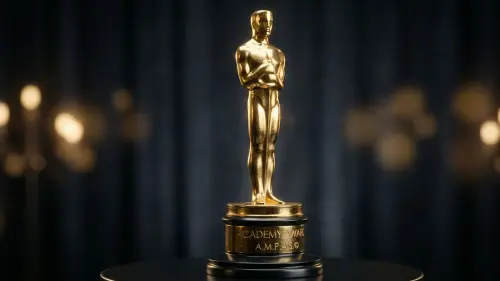
15. Thomas Newman’s Score Received an Oscar Nomination and Instant Legacy
Composer Thomas Newman created an iconic, subtle musical score that provided the emotional backbone for Andy Dufresne's long journey. Newman's minimalist score relied heavily on piano, cello, and subtle orchestral flourishes to build quiet tension rather than bombastic themes. The track titled "Brooks Was Here" remains one of the most heartbreaking compositions ever written for film. His work earned an Academy Award nomination for Best Original Score, losing out to Hans Zimmer's score for The Lion King. Despite losing the Oscar, Newman's tracks are frequently used in modern movie trailers and docudramas to evoke inspiration and hope.
Sources & References
This AI-assisted post was rigorously curated and fact-checked for accuracy by:
 Martin Roháček
How fun was this article? 🤔
Tap a star to rate it
🧠 Quiz: How closely were you paying attention?
10 questions — all answers are in the article above!
Enjoyed these facts? There's more! 💌
Fresh fun facts in your inbox. No spam, ever.