The Accidental Icon: 15 Fascinating Facts About Forrest Gump
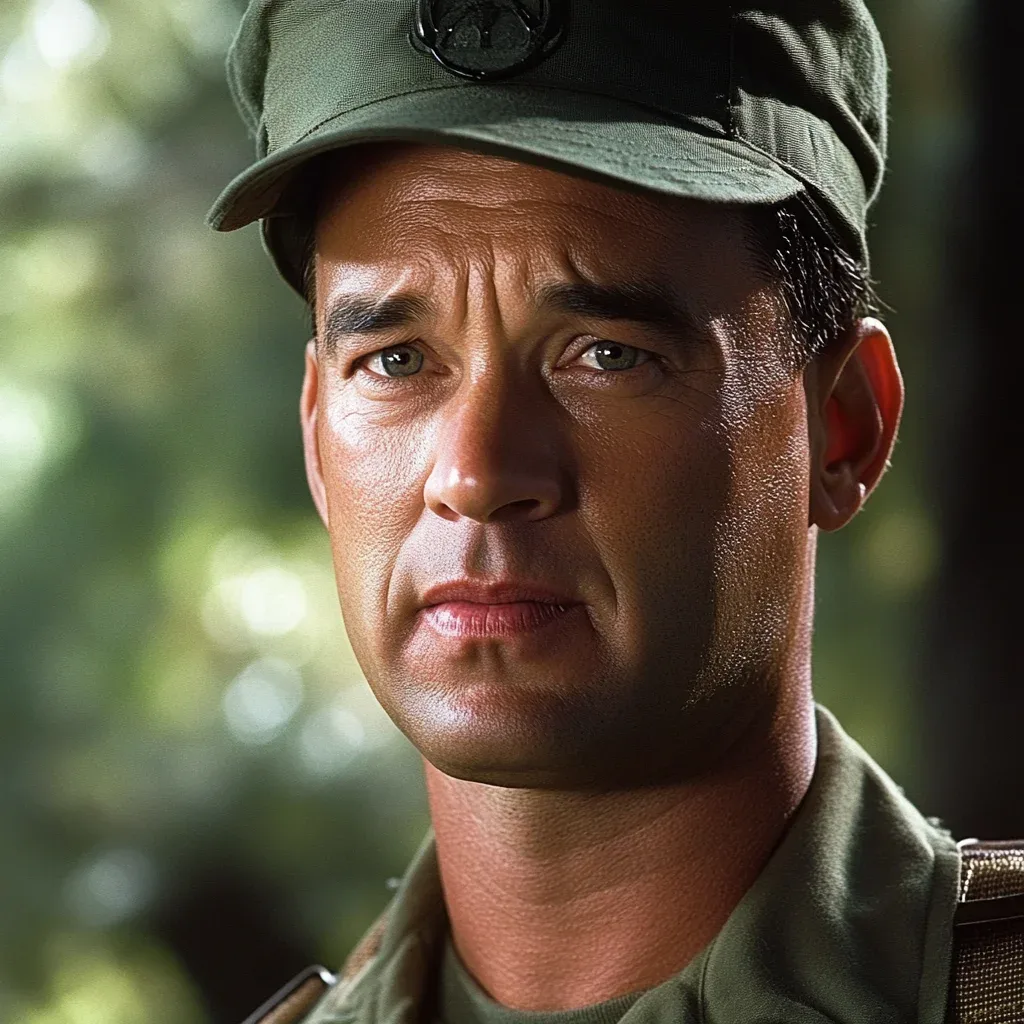
Released in 1994, Forrest Gump captured the hearts of audiences around the globe with its touching story, revolutionary visual effects, and unforgettable performance by Tom Hanks. While the film won six Academy Awards and generated hundreds of millions at the box office, its behind-the-scenes production was packed with surprising gambles, family secrets, and technical wizardry. From improvised iconic lines to multi-million-dollar personal bets by its lead actor, the journey to bring this epic tale to life is as extraordinary as Forrest's own life story. Here are 15 fascinating facts about the making and legacy of Forrest Gump.
1. The Original Novel Was Vastly Different and Far Darker
While the 1994 film portrays Forrest Gump as a gentle, endearing optimist, Winston Groom's 1986 source novel presented a wildly different protagonist. In the book, Forrest is a 6-foot-6, 240-pound cynical savant who swears heavily, smokes marijuana, and experiences bizarre adventures including going into space with an ape and surviving among cannibals. Furthermore, the author was notably disgruntled by the film's softened tone and major narrative changes, leading to financial disputes over royalties. Groom even opened his novel's sequel, Gump and Co., with Forrest explicitly warning readers never to let anyone make a movie about their life story. Despite these literary differences, the cinematic adaptation transformed the material into a beloved cultural masterpiece.
2. Tom Hanks Bet on Himself with a Profit-Sharing Deal
Instead of accepting a traditional upfront actor's salary, Tom Hanks opted to take profit-sharing points in exchange for a drastically reduced fee. This gamble paid off spectacularly when the film became a massive blockbuster, earning over $677 million worldwide at the box office. Hanks ultimately walked away with an estimated $60 million to $70 million from his backend deal, making it one of the most lucrative single-performance paydays in Hollywood history. Director Robert Zemeckis made a similar bargain, earning tens of millions while keeping the project alive when studio executives threatened production cuts. This arrangement granted the creative team unparalleled artistic freedom while ensuring unprecedented financial rewards.
3. Tom Hanks' Younger Brother Served as His Running Double
During the iconic cross-country running sequence where Forrest crisscrosses America, Tom Hanks was not the only member of his family on camera. His younger brother, Jim Hanks, stepped in as a physical double for many of the wide shots and strenuous running scenes. Jim possessed the exact same physical stature and naturally mirrored Tom's distinct, rigid running gait without requiring extensive choreography training. Using Jim saved Tom from absolute physical exhaustion during long days of shooting across remote locations nationwide. Today, Jim Hanks continues to work in Hollywood, frequently voicing Woody from Toy Story for video games and merchandise whenever Tom is unavailable.
4. Robin Wright Filmed Her Most Famous Song While Severely Ill
Robin Wright delivered one of the movie's most memorable moments when her character, Jenny Curran, performs Bob Dylan's "Blowin' in the Wind" naked on stage with only an acoustic guitar. What audiences might not realize is that Wright was suffering from a debilitating case of the flu and running a 100-degree fever during filming. The grueling shoot lasted for 15 hours straight, leaving the actress physically exhausted and trembling between takes. Rather than halting production, director Robert Zemeckis channeled her genuine bodily weakness into the scene to accentuate Jenny's vulnerability. Her raw, raspy vocal tone and delicate physical demeanor added a haunting layer of realism to the character's tragic arc.
5. Real Amputee Veterans Were Cast for Vietnam Battle Scenes
To ensure high visual authenticity and respect for military history, production designers avoided relying solely on prosthetic makeup for wounded soldiers in Vietnam. The film cast actual military veterans who had suffered limb amputations in real life to portray wounded men in the field hospital scenes. This decision provided realistic background portrayals and created a deeply authentic atmosphere during the harrowing rescue sequence. Gary Sinise, who played Lieutenant Dan Taylor, worked closely with these veterans to accurately capture the trauma and physical adjustments of living with disability. Sinise's deep connection to these extras inspired his lifelong advocacy for injured veterans through his real-world Gary Sinise Foundation.
6. The Famous Bench Was a Prop Moved to a Museum
The iconic park bench where Forrest sits to recount his life story was situated in Savannah, Georgia, at historic Chippewa Square. However, the bench seen on screen was actually a lightweight fiberglass prop created by the set design team rather than a permanent public fixture. City officials realized that leaving the prop bench outdoors would subject it to vandalism, theft, or severe weather damage. After filming wrapped, the bench was removed and placed into the Savannah History Museum, where it remains on public display today. Visitors can still tour Chippewa Square, though they must stand where the famous bench once rested for photographs.
7. Kurt Russell Secretly Voiced Elvis Presley
In the early scene where a young Forrest inspires Elvis Presley's iconic hip-shaking dance move while wearing leg braces, the voice of the King of Rock 'n' Roll was provided by an uncredited Kurt Russell. Decades prior, Russell had played Elvis in John Carpenter's acclaimed 1979 made-for-TV biographical film Elvis. Director Robert Zemeckis brought Russell into the recording booth to dub the dialogue for actor Peter Dobson, who physically portrayed Elvis on screen. Russell agreed to perform the uncredited voiceover as a fun favor to Zemeckis without requiring a prominent billing credit. This clever casting detail served as an easter egg for perceptive film enthusiasts and classic TV fans.
8. Haley Joel Osment Made His Feature Film Debut
Long before earning an Academy Award nomination for his breakout role in The Sixth Sense, child actor Haley Joel Osment got his big break in Forrest Gump. Osment played Forrest Gump Jr., appearing in the emotional final act of the movie alongside Tom Hanks. Casting directors discovered the young actor after seeing him perform in a popular national Pizza Hut commercial. His natural poise and expressive eyes convinced Zemeckis that he could convey the sweet innocence required for Forrest's son. The minor role launched Osment's Hollywood career, paving the way for his iconic stardom in late 1990s cinema.
9. Hanks and Zemeckis Personally Funded Key Scenes
When production costs began exceeding the original budget, studio executives at Paramount Pictures insisted on cutting several expensive sequence ideas. Paramount refused to pay for the extensive cross-country running sequence and a key scene involving Forrest's college football career. Believing these moments were essential to the emotional heartbeat of the film, Tom Hanks and director Robert Zemeckis agreed to cover the expenses out of their own pockets. The duo split the multi-million-dollar cost of shooting on location across the United States. In return, Paramount renegotiated their contracts, granting them higher percentages of backend revenue that ultimately yielded massive financial dividends.
10. The Ping-Pong Balls Were Completely Computer-Generated
Forrest's astonishing skill at table tennis made for hilarious and impressive montages, but none of the ping-pong balls seen during those matches were real. During filming, Tom Hanks and his opponents simply swung their paddles at thin air in front of camera operators. Digital visual effects artists at Industrial Light & Magic added the high-speed ping-pong balls during post-production using precise CGI tracking software. This technological solution saved production from hours of failed physical takes and allowed Zemeckis to control the humorous timing of every shot. Hanks was trained to move his head and eyes in sync with a rhythmic beat to make the visual illusion seamless.
11. Gary Sinise Wore Bright Blue Fabric to Erase His Legs
Depicting Lieutenant Dan Taylor's missing lower legs presented a unique technological challenge for the film's visual effects team in 1994. Visual effects supervisor Ken Ralston solved the problem by having actor Gary Sinise wear special bright blue fabric sleeves over his lower legs during filming. In post-production, digital artists used early chroma-key technology to erase Sinise's legs frame by frame and reconstruct the background behind them. Sinise also had to carefully maneuver his body into custom-designed wheelchairs with cutouts to hide his limbs during seated shots. The groundbreaking visual effect earned Industrial Light & Magic the Academy Award for Best Visual Effects.
12. The Movie Swept the 67th Academy Awards
When awards season arrived in early 1995, Forrest Gump dominated the 67th Academy Awards ceremony with 13 total Oscar nominations. The film won six Academy Awards, including Best Picture, Best Director for Robert Zemeckis, and Best Adapted Screenplay for Eric Roth. Tom Hanks won Best Actor, securing his second consecutive Oscar victory following his performance in Philadelphia the previous year. This feat made Hanks only the second actor in history to win back-to-back Best Actor Oscars, following Spencer Tracy in the 1930s. The sweeping critically acclaimed run solidified the film's standing as a towering pillar of 1990s American culture.
13. It Directly Inspired a Billion-Dollar Restaurant Chain
The fictional shrimping business created by Forrest to honor his late friend Bubba didn't stay fictional for long. In 1996, Viacom (the parent company of Paramount Pictures) partnered with restaurant operators to establish the first real-world Bubba Gump Shrimp Co. restaurant in Monterey, California. The concept proved enormously successful, expanding into a global chain with dozens of locations across North America, Europe, and Asia. Each restaurant features movie memorabilia, trivia host staff, and decor themed around the iconic film. What started as a comedic plot point became one of the most profitable film merchandise licensing spin-offs in cinema history.
14. Tom Hanks Improvised One of the Film's Line Additions
While the screenplay by Eric Roth was tightly structured, Tom Hanks added several brilliant character touches through spontaneous improvisation. During the scene where Forrest meets Bubba for the first time on the military transport bus, Hanks added a key line on the spot. After Bubba introduces himself, Hanks delivered the deadpan line: "My name is Forrest Gump. People call me Forrest Gump." Director Robert Zemeckis loved the unscripted line's charming literalness and chose to keep it in the final cut. The moment perfectly established the sweet, literal-minded logic that defined Forrest's perspective throughout his extraordinary life.
15. The Film Pioneered Historical CGI Insertion Techniques
One of the most groundbreaking artistic achievements of Forrest Gump was its ability to insert Tom Hanks seamlessly into historical archival newsreels. Visual effects artists used early digital manipulation software to place Forrest alongside historic figures like John F. Kennedy, Lyndon B. Johnson, Richard Nixon, and John Lennon. The visual effects crew used voice impressionists and early facial manipulation technology to alter historical figures' lip movements so they appeared to speak directly to Hanks. This innovative technique set new technological standards for period filmmaking, blending historical realism with fictional narrative in ways never before seen on screen.
Sources & References
This AI-assisted post was rigorously curated and fact-checked for accuracy by:
 Martin Roháček
How fun was this article? 🤔
Tap a star to rate it
🧠 Quiz: How closely were you paying attention?
10 questions — all answers are in the article above!
Enjoyed these facts? There's more! 💌
Fresh fun facts in your inbox. No spam, ever.